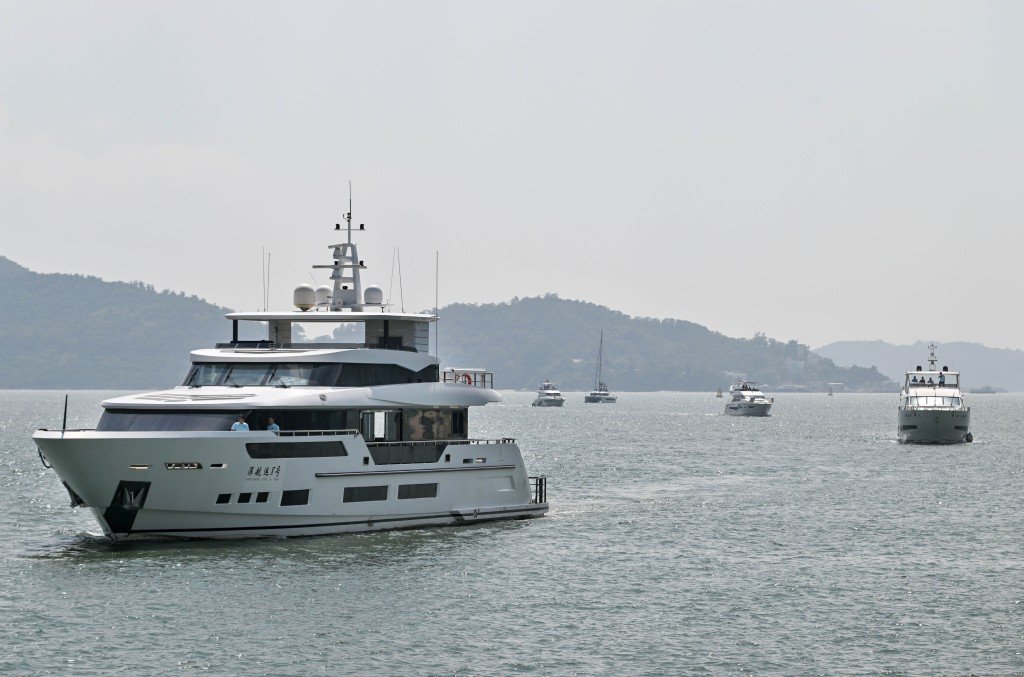
Nine Guangdong-registered yachts have applied to visit Hong Kong in the first month since the southbound yacht arrangement was launched, as industry representatives called for simpler mainland clearance procedures and better facilities in the city to encourage more owners to make the trip.
The Marine Department said that as of mid-November, nine Guangdong yachts had submitted applications to visit Hong Kong, with four also applying to use the city’s designated anchorage areas.
More than 40 people have also opened visiting-yacht service accounts through the department’s Electronic Business System.
The southbound travel of yachts from Guangdong was officially implemented on October 16, when five yachts from Shenzhen, Zhuhai and Guangzhou made the inaugural journey to Hong Kong.
Under the arrangement, eligible Guangdong-registered yachts can complete procedures in advance before going through mainland departure inspections at one of six designated control points: Nansha Ferry Terminal in Guangzhou, Shekou Cruise Homeport, Shenzhen Airport Ferry Terminal, Jiuzhou Port Passenger Terminal and Wanshan Port in Zhuhai, and Sunsea Yacht Club Marina at Zhongshan Port.
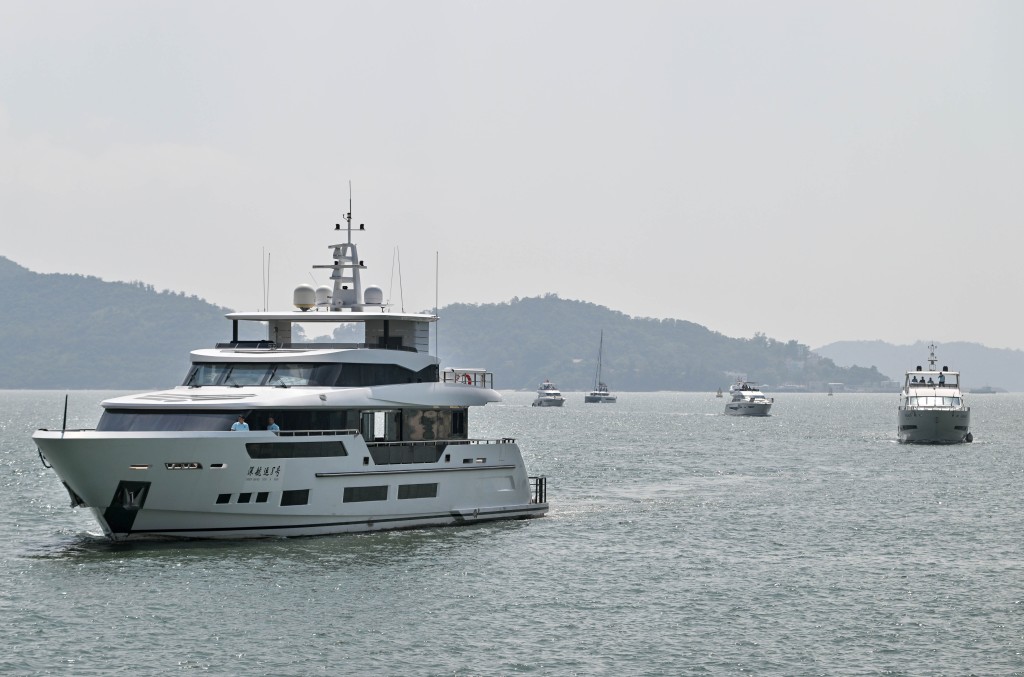
Hong Kong has also established five designated anchorage areas for visiting yachts at Stanley Bay, Tai Tam Bay, Repulse Bay, Three Fathoms Cove in Sai Kung and Tai O, with capacity for around 115 yachts.
Industry flags differing procedures at mainland ports
Hong Kong Yachting Association chairman Tommy Ho Wai-lok said the association had received inquiries from owners involving dozens of mainland yachts, suggesting there was considerable interest in visiting Hong Kong.
However, he said procedures and charges at the six mainland control points were not yet standardized, while some locations were unable to process all of the customs and quarantine documents required for a southbound journey.
“Sanitary quarantine cannot be done in Shenzhen; it has to be completed in Shekou first, which adds several hours,” Ho said.
Even when all documents were ready, approval could still take several days, he added, potentially discouraging some yacht owners from making the journey.
Ho said mainland authorities, including the Guangdong provincial authorities, had shown a positive attitude toward improving the arrangements.
The association is currently helping five yachts from Nansha complete the necessary procedures, while a group of yacht owners in Zhuhai is also preparing to travel to Hong Kong.
Ho said the association would meet the Department of Transport of Guangdong Province next week to discuss the arrangements.
He noted that mainland yacht owners generally have to apply each time they make a trip, unlike the comparatively flexible operation of pleasure vessels within Hong Kong waters, and said he hoped the procedures could eventually be simplified.
Calls for charging facilities and tourism routes
Ho also called for improvements to Hong Kong’s supporting infrastructure.
While privately operated yacht club berths are relatively expensive compared with those on the mainland, the government’s designated anchorage areas do not provide water or electricity, he said.
“Some new-energy vessels from the mainland cannot charge. If there is no electricity after they arrive, they cannot operate,” Ho said, suggesting floating pontoons and charging facilities be added.
He said visiting yacht owners had so far shown interest in cruising Victoria Harbour at night, visiting the Hong Kong UNESCO Global Geopark in Sai Kung and attending yacht shows.
Hong Kong could organize more yacht-themed events to encourage Guangdong owners to visit, he added.
Election Committee lawmaker Roy Chu Lap-wai said many yacht owners were likely still taking a wait-and-see approach and that the scheme should be assessed again after three to six months.
He said early procedural differences on the mainland were understandable, noting that the northbound arrangement for Hong Kong yachts also encountered difficulties with document submissions when it was first introduced before the process improved.
Chu said he would raise the issue with mainland authorities and hoped procedures could be streamlined.
He also called for better replenishment facilities at the five designated anchorage areas and said infrastructure should be incorporated when the government expands or develops new berthing facilities. Hong Kong should also increase the number of yacht clubs and berths over the longer term, he added.
Chu said landing facilities and transport connections could also be strengthened to encourage visitors to go ashore and spend.
The tourism industry could develop dedicated itineraries for mainland yacht travelers, such as routes linking Tai O, Cheung Chau and Hong Kong Disneyland, with private vehicles and tour guides arranged after passengers disembark.
Trips could also be combined with concerts or major events at Kai Tak for one- or two-day itineraries.
“It depends on how you sell it,” Chu said.
Marine Department expects gradual increase in yacht visits
The Marine Department said it expected the number of visiting yachts to rise gradually as owners became more familiar with the facilitation measures and designated anchorage arrangements.
It said it would continue monitoring developments and adjust the measures when appropriate.
The department has set up a dedicated website for visiting yachts and produced a guidebook on southbound travel for Guangdong yachts to help owners and masters understand the procedures. The material has also been distributed to the industry and yacht clubs.
According to the department, only around 30 mainland yachts visited Hong Kong each year in recent years, with most coming to take part in competitions.
It expects the streamlined arrangements and new anchorage options to attract more yachts from the Greater Bay Area and overseas, supporting tourism and other businesses linked to the yacht industry.
The department said it would continue reviewing the measures with the aim of building a healthy, sustainable and competitive environment for Hong Kong’s yacht economy.