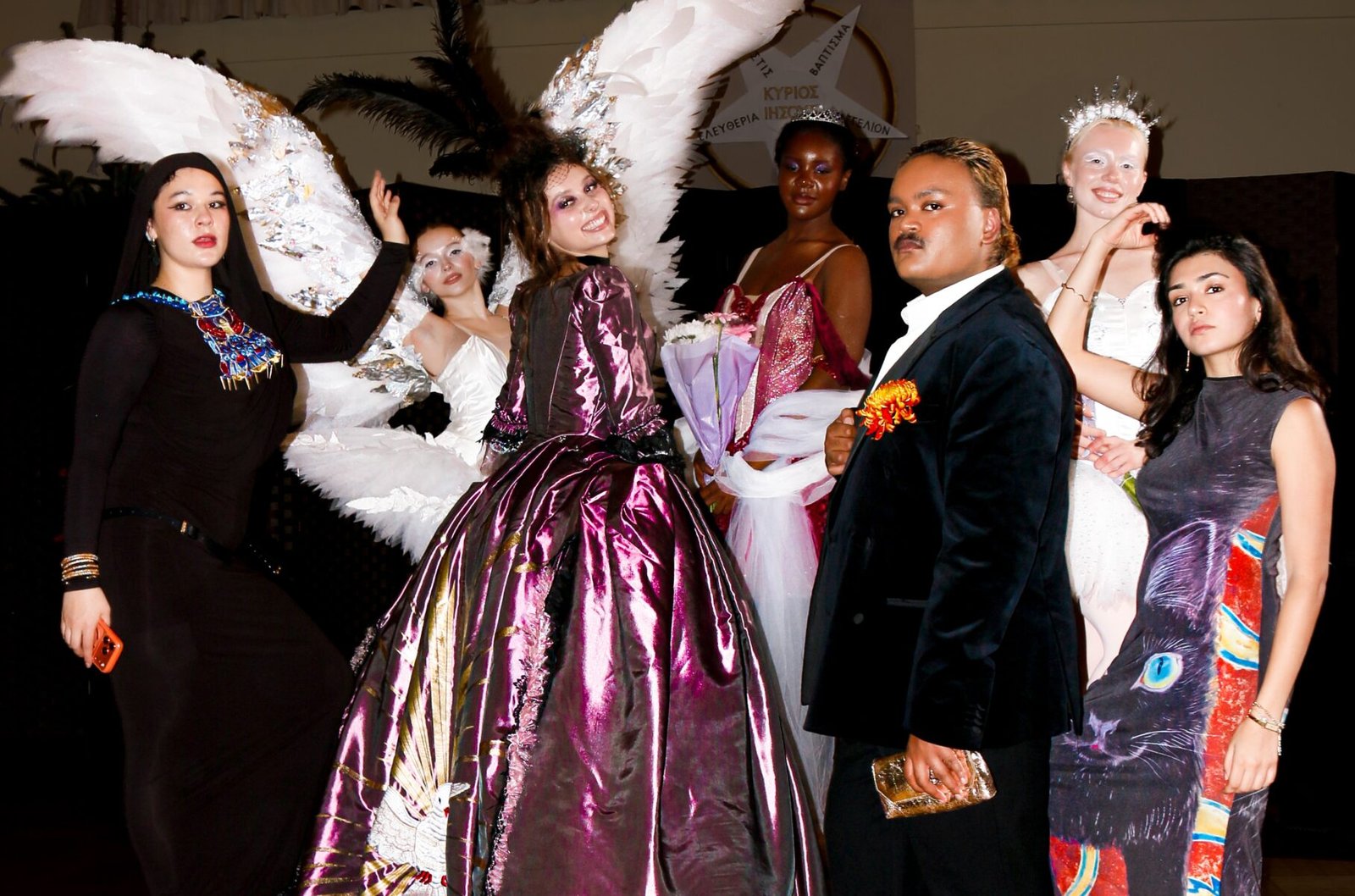
Inside the walls of the historic University of Oxford, the Fashion Society showcases a new generation of designers. Below, Wonderland got to know them a little better.
It’s hard to ignore the centuries of academic excellence that permeate every corner of Oxford. Walking through piles of fallen leaves having met their autumnal fate in Christ Church Meadows, the golden hues of a 4PM sunset envelop the brick walls of the college with an alumni list spanning prime ministers, nobel prize winners, philosophers, and even royalty. Somewhere in between the navy wool peacoats and leather high-rise hunting boots worn by the masses, a sense of bewilderment, charm, and envy falls upon those whose access to many parts of the city is restricted, for a lack of student or staff ID.
Even at the pub for a quick pint ahead of the evening’s proceedings, you wonder which of the behind-the-bar staff is a student trying to make ends-meet. Or which of its gray-haired drinkers is here to reminisce on stories of their alma mater in their alcohol-induced loud speech, trying to hear each other over the speakers blasting The Cranberries or the Rolling Stones. You even wonder if either of those bands were invited for some sort of performance in front of former scholars. And if anyone around you attended said performance.
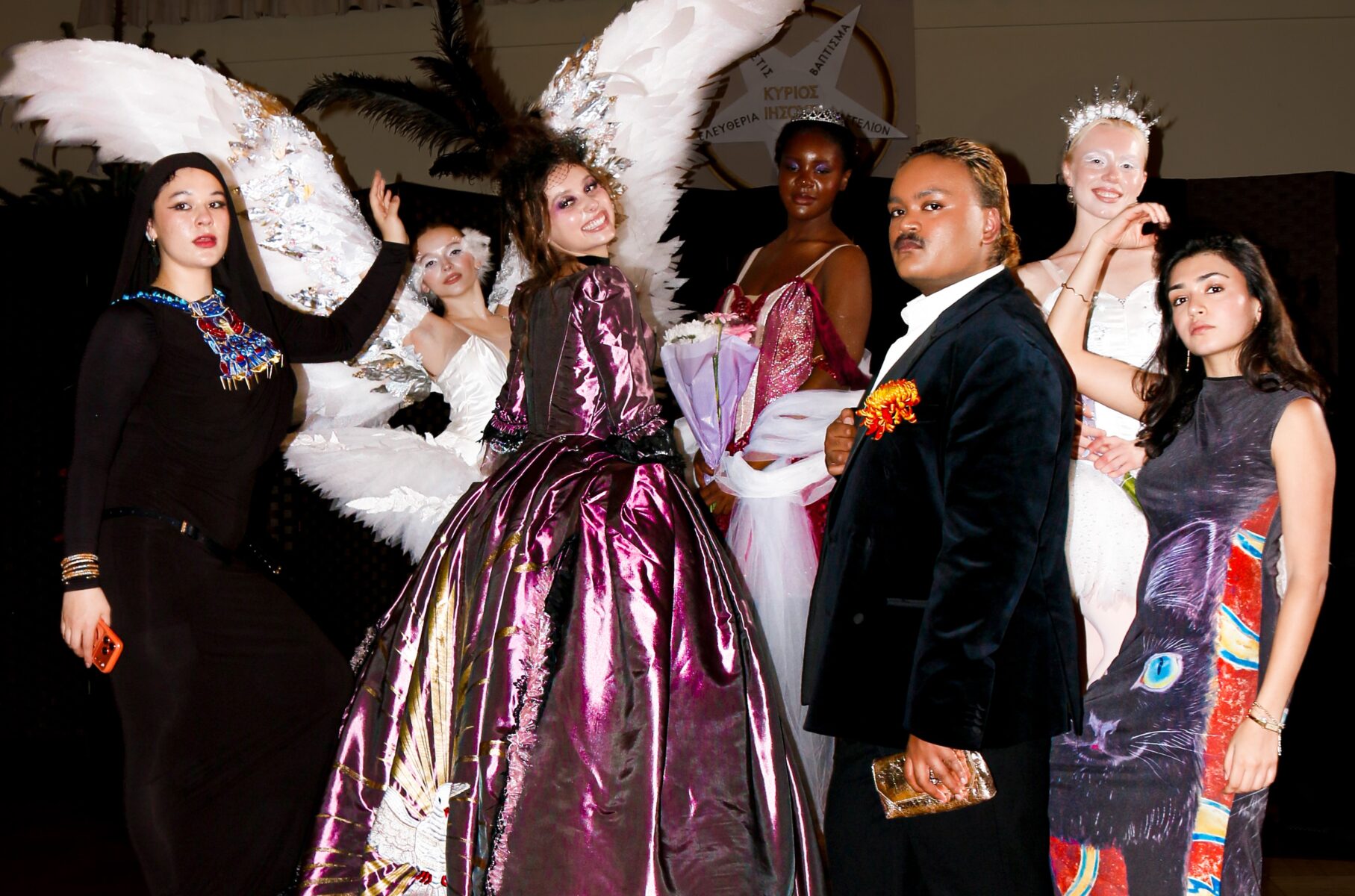
Last week, however, Regent’s Park College opened its doors to industry figures, as The Fashion Society hosted the very first edition of The New Guard, a fashion showcase highlighting a future generation of British talent. Founded by Jaami Al-Choudhury, President of the Oxford Fashion Society, alongside OFS Vice President Anayia Patel, The New Guard says it all in its name – it’s about time for change to bring along fresh facts. Together, the two feel “that there’s still so much work to be done in terms of giving emerging fashion talent viable opportunities for their work to be seen,” Al-Choudhury tells me. “It represents young people coming together to create spaces in which their work can be seen, heard and engaged with, and the inaugural edition was brought to our audience completely by students and our founding patron, Teplo Store. Outside of this we had no institutional support and so we did this to create a platform that would endure and also give our rising stars the chance to shine and present on a runway against the academic backdrop of the University of Oxford.”
Photography by Talula Du Feu
For its inaugural showcase, The New Guard selected six designers; Jasmine Eldogdog, a theatrical creator working on the edge of performance and runway; Alexandra Burch, a second-year Kingston University student whose classic tweeds find a new home under contemporary sustainable practices; Raon (Donghyeon) Kim of RAONBEAT, where sculptural bodies are ever so intimately presents; William Thirkell Jones, a sportswear proficient with an unconventional approach to bodily proportions; JAGO’s Jago Solloway, who challenges fabrics to find new form; and Alexia Angelidis, a Womenswear Design student who cuts edges with a romantic twist.
One by one (except as a pair in Burch’s case, where models walked down in tandem), each look stomped across the grand hall to the sounds of Troye Sivan’s “Party” and Rosalía’s “Berghain.” Mounted some few feet higher on the brick walls were portraits of Oxfordians past, as I like to imagine, proudly looking down on the fruits of their institutional labour, ushering a new era of thought leaders.
Below, I got to know the cohort of designers better, as I talked to them about what it means to be a part of The New Guard and what the future hopefully holds for them. Keep reading…
Jasmine Eldogdog
Congratulations on being selected as part of the first edition of Oxford Fashion Society’s The New Guard! What does being part of this initiative mean to you?
Being invited back to present with the Oxford Fashion Society already felt special because there’s a magic in how driven, supportive and collaborative students are. Stepping into the inaugural edition of The New Guard hits even harder as an emerging designer. Post-graduation you quickly feel the harsh reality of the industry and the lack of opportunities especially in design, so being unapologetic about building your own space matters.
Speaking with Jaami co-founder of The New Guard right from the beginning made it clear what this initiative was about, young creatives refusing to wait around for doors that the industry gate keepers don’t want to open and instead making our own room to be playful, experimental and to be seen.
For me, coming back to Oxford was about bringing a heavier dose of performative flair this time around for my audience, to show them the power of merging art forms, the design, the music, the dance, challenging the norms of runway.
How did you prepare for the show?
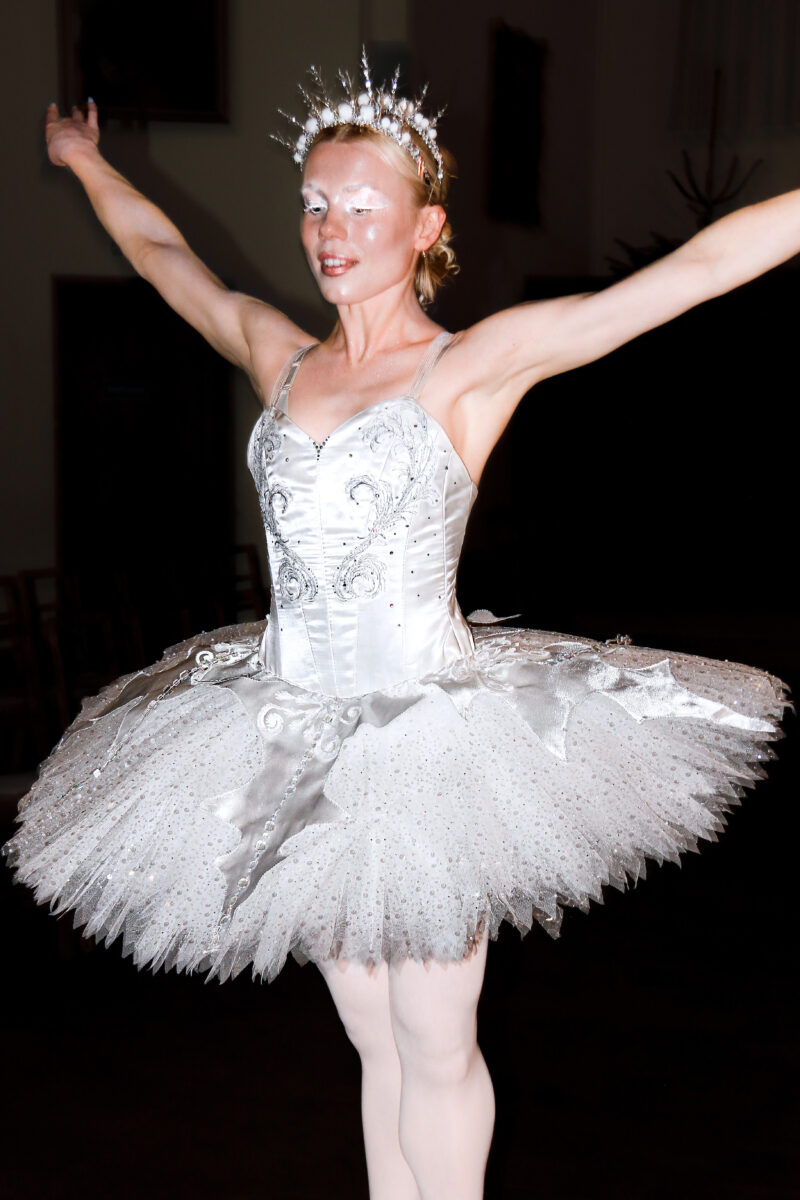
It started with curating pieces from my collection that would tell a fluid story while showcasing my background in performance construction. I ultimately brought four looks to the runway, Snow Queen, Sugar Plum Fairy, Swan Lake’s Odette, and Let them Eat Cake.
Every piece begins with a feeling for movement and the visceral impact it will have on an audience, rooted in British theatrical heritage and textile craftsmanship.
The first three looks are my interpretation of classical ballet characters with two originally created for a Nutcracker ballet I produced in my third year of university. Classical tutus look deceptively weightless but are the result of skilled craftsmanship passed down through mentorships, each one has at least 12 layers of pleated net packed onto a cotton bobbinette knicker taking up to a week to construct, though once finished they are built to last a decade.
For Odette I specifically reworked the look for this show, as a rebirth of an earlier design to reflect how far my technical skills have evolved. This involved creating a brand new classical tutu plate, alongside sculptural wings crafted with 450 hand cut feathers. To inform my design process I started by researching and sketching the anatomy and mechanics of a Swan’s wings.
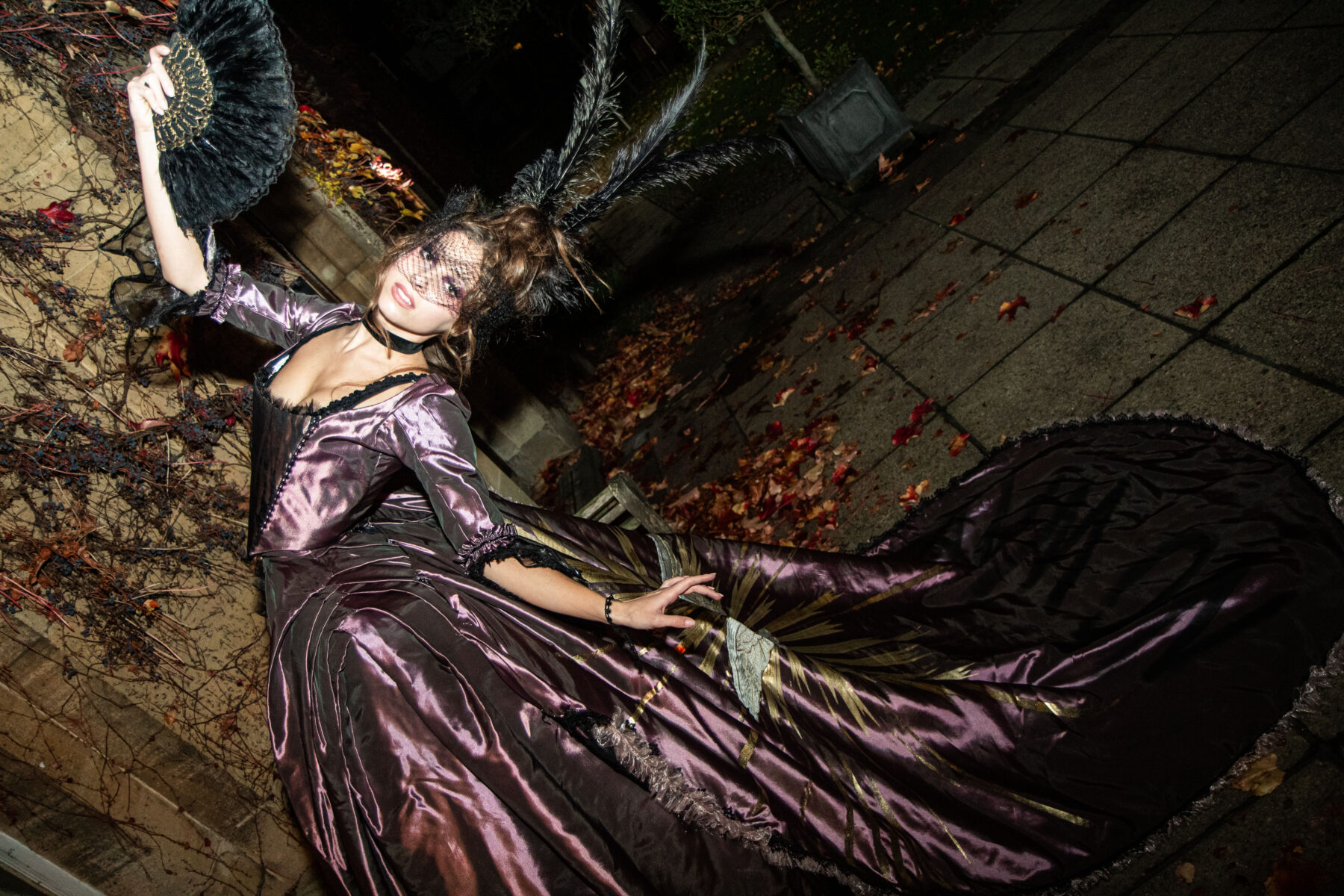
The closing look, Let them Eat Cake, an eighteenth century inspired dress which took a month from initial sketch and fabric sourcing to its debut at the Victoria & Albert Museum. I was inspired by an artefact I selected from the V&A’s archive, Vivienne Westwood Leopard Print Boots, and I re-imagined through themes of rebellion, theatrical femininity and political excess. Combining historical research with contemporary costume practice, the work explores the relationship between fashion, performance, and cultural symbolism. The costume was developed through corsetry, draping, structured silhouette construction, textile manipulation, hand embellishment, and experimental surface techniques, creating a contemporary interpretation of historical opulence influenced by punk aesthetics and performance costume design.
Textile craftsmanship is central to how I tell stories. I love combining hand drawn silk screen printing, gold foiling experimentation, digital embroidery and motifs of golden rays and doves of peace.
Beyond the sewing machine my process is deeply collaborative. I bring my performers into the studio early so the garments can breathe and evolve around their bodies and movement requirements. In the lead up to Oxford, preparation also meant stepping into full creative direction, running pre fittings, building a detailed show day shoot deck with hair and make-up and styling boards and creating editorial styling mood boards so the photographers knew exactly how to capture the pieces in motion.
How would you describe your design language in three words?
Beauty is truth.
How did you first get into fashion design and how has the relationship with your creations changed over time?
Creating things with my hands is second nature to me, as a dyslexic person I communicate through my creations. A visit to the V&A’s Alice In Wonderland exhibition inspired me to become a costume / fashion designer.
My studies as a costume designer at Wimbledon allowed me to learn the technical skills to enable me to bring my designs to life. During my studies, I learnt the importance of the person wearing the look. Movement and performance are important to my designs as is the message that my design conveys. I want my audience to have a visceral connection with my work. I’m always trying to tell a story. I’m always very mindful of the message I’m conveying. I want my audience to think, the first reaction to be wowed by the beauty but also to take a second look at the meaning behind it.
What’s next for you and your brand? Where would you like to take it?
I am working towards creating my first runway collection. I’m hoping to properly debut at London Fashion Week with my collection “Birds of Freedom.” I’m open to exploring the connection between performance and the runway. I’m open to working with likeminded creatives. I love to work with dancers. I’d like to see where life takes me. I feel alive when using my technical construction skills to tell a story.
Alexandra Burch
Congratulations on being selected as part of the first edition of Oxford Fashion Society’s The New Guard! What does being part of this initiative mean to you?
I’m really excited to be part of the first edition of The New Guard. It’s lovely to have my work recognised and to have the opportunity to show it alongside other emerging designers.
How did you prepare for the show?
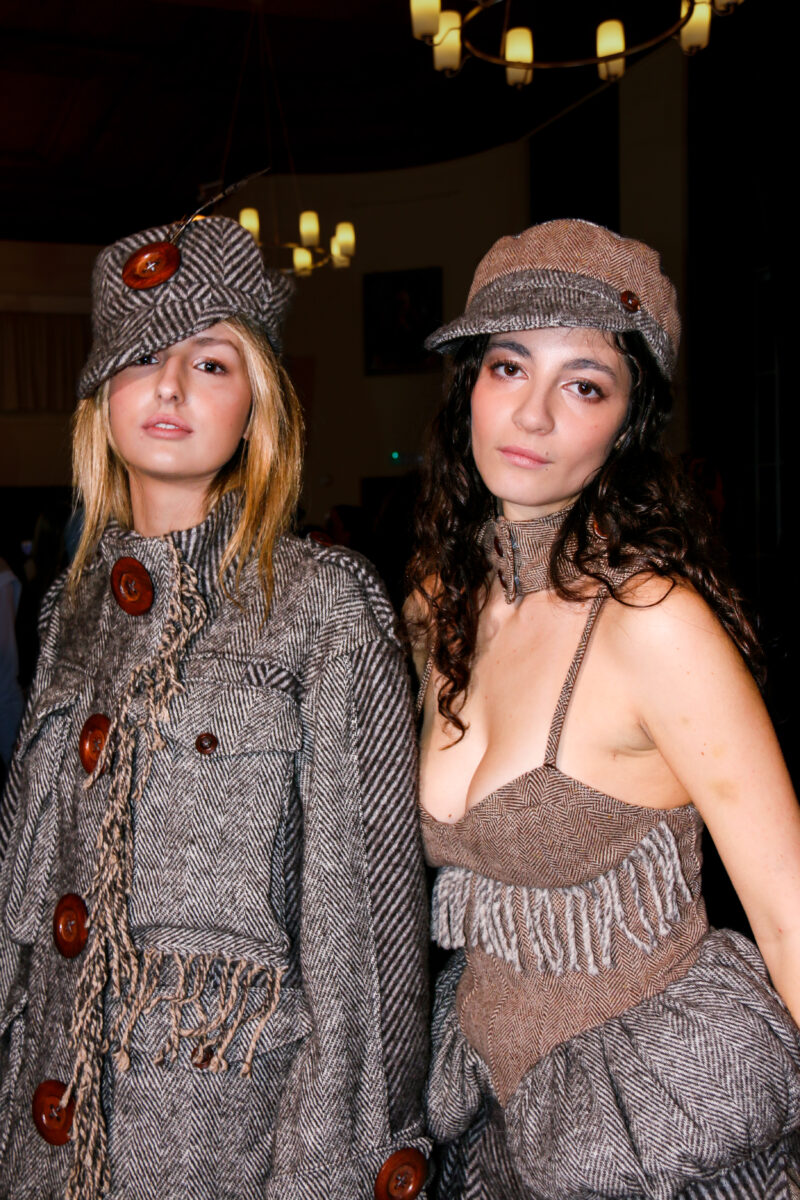
“Cotswold Remnants” is a collection I created this summer, inspired by my hometown in the Cotswolds and its heritage of blanket making. It started when a local blanket mill closed, and I salvaged some of their faulty tweed blankets, surplus stock and loom offcuts that would otherwise have gone to waste. I wanted my collection to be a commentary on the loss of traditional local craftsmanship in the UK, and I wanted to encourage the use of wool as a resource (the tweeds used are 100% British wool, undyed and naturally dyed). The collection was created for the Redress Design Award, an international sustainable fashion competition. I was flown to Hong Kong in September to represent the United Kingdom in the competition final – such an amazing experience!
How would you describe your design language in three words?
Romantic, tactile, vintage.
How did you first get into fashion design and how has the relationship with your creations changed over time?
I’ve always loved making things, but I first got into fashion when I started helping out at a local tailor and dressmaker, Naomi, at 15. We have since become very good friends, and I ended up working there part-time for years, still going back when I come home for the holidays. I have learnt a great deal from Naomi about garment construction and the process of making and altering clothes.
Since starting university, my approach to design has changed quite a lot. My family history and where I grew up have become a big part of my inspiration, and I love finding ways to bring those stories into my work. I’m working on a project about my family’s history in classic car rallying at the moment, and it has been so fun looking through all my dad’s archives.
What’s next for you and your brand? Where would you like to take it?
For now, I’m looking forward to continuing to develop my work and gaining more experience within the industry. I’d love to work for a fashion house after graduating, particularly somewhere where I can learn from talented designers and develop my technical skills.
Longer term, I’d love to start my own label. I’d like to create womenswear that combines my love of vintage influences and craftsmanship with a more thoughtful approach to fashion. I’d really like to build something that feels personal and has a story behind it.
RAONBEAT
Congratulations on being selected as part of the first edition of Oxford Fashion Society’s The New Guard! What does being part of this initiative mean to you?
As an artist and fashion designer working with both clothing and sculpture, I saw this show as a chance to connect the gallery and the runway. For me, fashion is a form of public art: it brings personal experiences and ideas into a shared social space through the body.
Clothing and sculpture are both ways for me to think through the body. In a gallery, I’ve worked with bodily presence through the forms themselves and the empty spaces around them. Here, the garments and sculptures came together on a living, moving person. I’m interested in that relationship: the absent body makes us more aware of the body that is there, and that living body brings the absent one to mind. Being able to share this with an audience through a live show was meaningful to me.
How did you prepare for the show?
I developed the concept throughout my MA at the Royal College of Art, and making the collection itself took around three months. For The New Guard, I selected looks with particular attention to how the clothing and sculptures would come together on one moving body.
I thought that when a relationship ended, all that remained was emptiness. But the body still remembered the warmth and pressure of an embrace, someone’s smell and the feeling of their skin. I began looking at what was still there within that apparent emptiness.
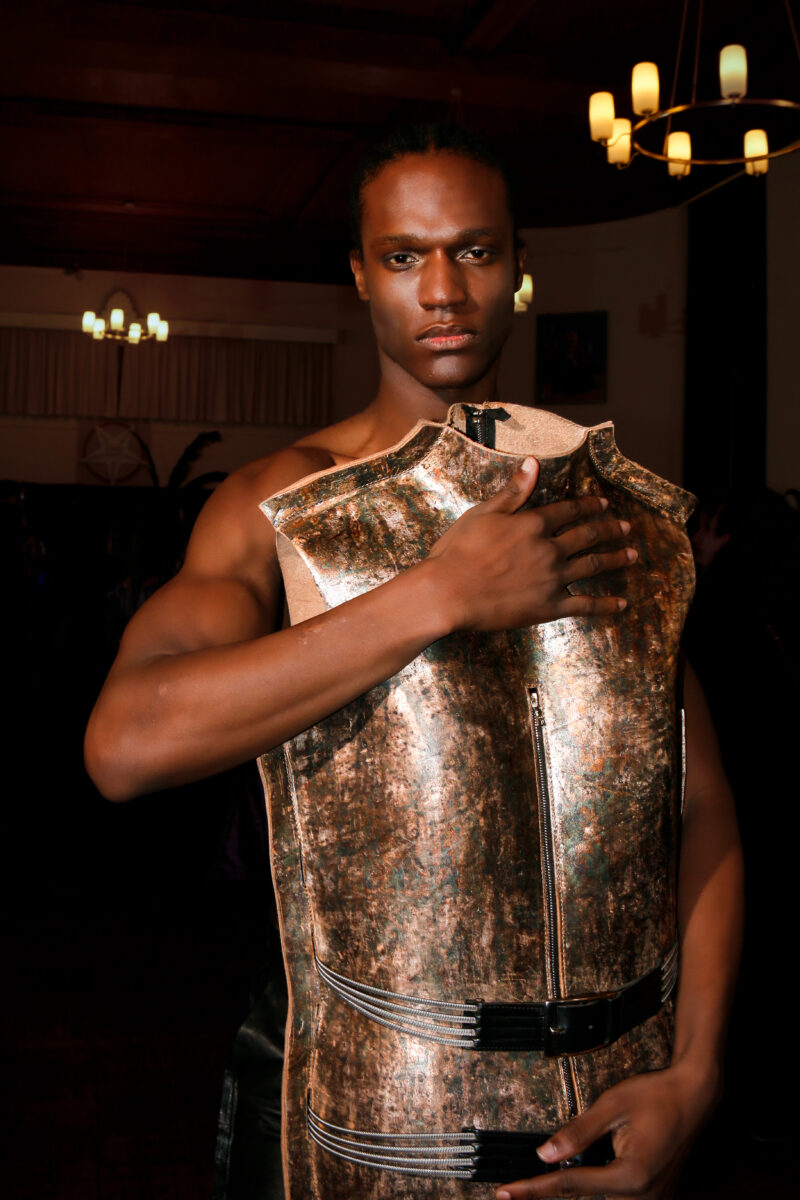
Working with leather gave me a physical way to approach this. I use water, heat and pressure to shape it. Once I let go, a fold or a pulled section can remain. The contact has ended, but the material has already been changed by it.
I moulded cowhide into sculptural forms and incorporated them into the garments, developing the draping and patterns so those forms became part of the clothes’ structure and silhouette. The jackets and trousers pulled or twisted to one side grew out of the sensation of being held or drawn towards someone. The person applying that force is unseen, but I wanted their presence to be felt through the shape of the clothes.
There’s a desire to protect and be protected, but also to possess and be possessed. I’m interested in how those desires can become something both people enjoy through mutual desire and consent. The tension in the clothes carries pleasure as well as attachment.
The softness of lamb nappa, the shrinkage of leather, and surfaces changed by silver leaf and oxidation gave me other ways to express those sensations. The wearer is physically present, while the clothes suggest the memory of contact with another body.
How would you describe your design language in three words?
Intimacy, sensuality, humanity.
How did you first get into fashion design and how has the relationship with your creations changed over time?
I was first drawn to the idea of fashion as a social space. Clothes carry so much about a person: their culture, relationships, desires and choices. I wanted to understand how we express ourselves and recognise one another through what we wear.
Over time, I’ve become more direct about my own life in my work. My experience as a gay man, my community, the people I love and the choices I make all find their way into it. Making has become a way of understanding those experiences, communicating with my community and finding pleasure in that exchange.
My approach to design has changed, too. Earlier, I was more focused on creating a strong sculptural form. Now, I also want to bring that language into familiar garments, using moulded leather or a distorted surface within a jacket or trousers. I like the possibility of someone recognising a familiar garment or feeling, then discovering something unexpected within it.
What’s next for you and your brand? Where would you like to take it?
I have exhibitions with several galleries coming up, and I want to develop both my clothing and sculptural work further, including more work with body casting. I’d also like to keep bringing the forms and material experiments from the sculptures into how I construct the clothes.
Intimacy and sensuality within the gay community will remain central to my work. There’s tenderness and pleasure in those experiences, but also desire, attachment, vulnerability and contradiction. I want to keep working with how those feelings coexist in relationships.
That’s where humanity comes into it for me. How do the relationships between our bodies and our clothes, alongside our relationships with others, shape the way we recognise ourselves and feel another person’s presence? What do we recognise of someone in a cast of their body, or in clothes they’ve worn? These are questions I want to spend more time with, through clothing, sculpture and installation.
There’s more to come from RAONBEAT, and I’m looking forward to sharing it.
William Thirkell Jones
Congratulations on being selected as part of the first edition of Oxford Fashion Society’s The New Guard! What does being part of this initiative mean to you?
I was very privileged to be asked to participate in such a varied and interesting event.
It’s extremely flattering to be highlighted as someone that has potential in this industry, especially when so many talented young designers are overlooked and underrecognised.
The platform cultivated by the team at Oxford Fashion Society is a brilliant idea which I’m sure will be lasting and my specific thanks must go to co-chairs Jaami and Anaiya for their continued faith in me.
How did you prepare for the show?
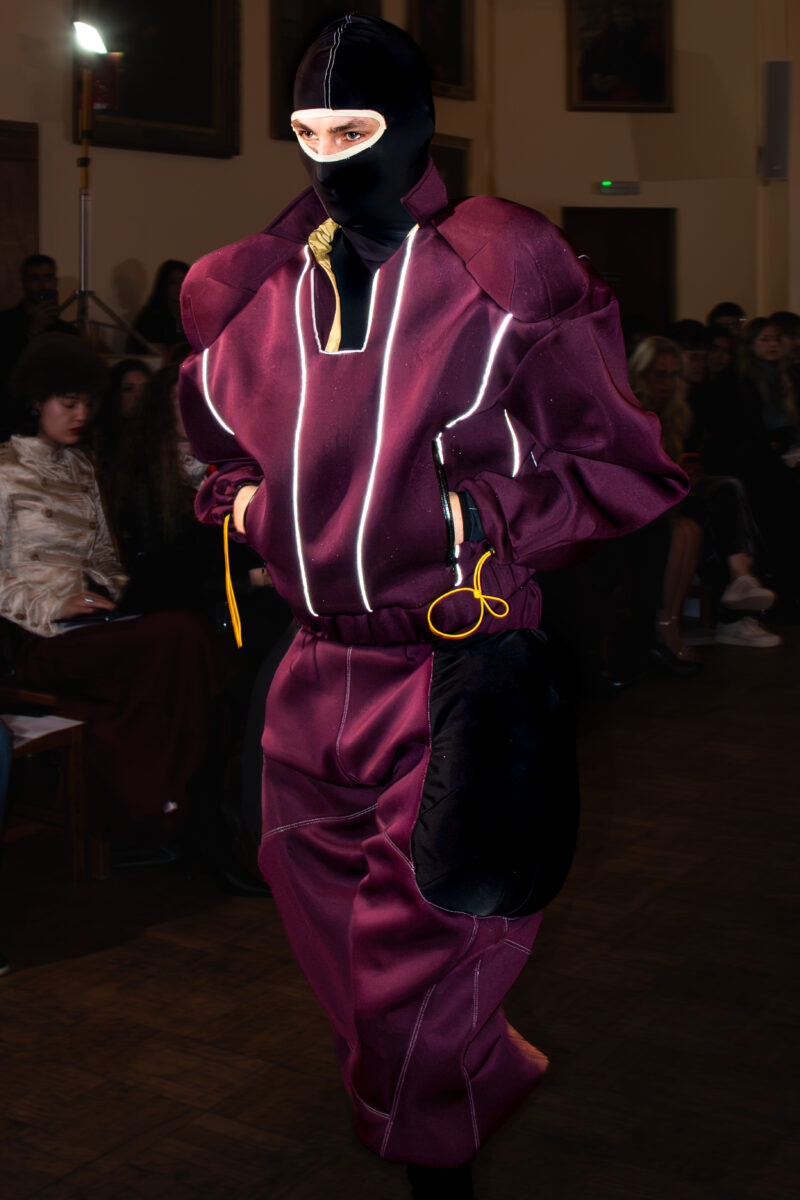
The collection exhibited is made up of garments from my graduate collection but I did retool and restyle them to fit the show. A particular concern of mine was whether the sportswear collection (all brightly coloured and futuristic) would look too visibly jarring against the historied backdrop of the college space, but I think this visual dissonance was an interesting foil to the other designers featured.
When revisiting these works to assess their aptness for the show, the collection struck me as overwhelmingly personal.This had not been immediately clear to me during the design process whereas a lot of references included enlarged sportswear draped over awkward adolescents in post-Soviet countries (we’d shove padding and foams along the shoulders or against the flanks of a model to mimic the ungainliness of their proportions). I’ve always strived to keep the work at a remove, mask my personality as a bloke, stay professional and aloof. But these looks are fun and successful because they are specific to my interests in all things sports, not in spite of it and this realisation has changed my approach to both ‘Dogsbody’ and design permanently.
How would you describe your design language in three words?
Ironic, tactile, playful.
How did you first get into fashion design and how has the relationship with your creations changed over time?
I first got into fashion design in my early teens, queuing for releases, collecting streetwear, dragging my mum (and more importantly her purse) to covert corners of east London. Most weeks I would sit in lessons trying to buy exclusive drops on my mobile under the desk with whatever little money I had. This kind of fanaticism inevitably leads you to become interested in how the items are made and which parts you like about them.
Having Enrolled at London College of Fashion, I toiled for a couple of years (skiving frequently) before studying under Per Gotesson who really understood my personality and helped me to shed preconceived notions of what is or isn’t fashion. I had lots of help from a couple of interns and was able to hone bits I liked into a coherent style which is present in this collection. As a designer, when the fitting goes well or feedback is good, it’s an incredible feeling of purpose and pride spliced together.
But it’s unrealistic to pretend that there isn’t lots of time when it’s maddening; buying the wrong thing at the trimmings store and having to go back can cause near debilitating rage. I’m not saying anything original here, this kind of mishap is happening to design students and young designers all over London everyday, and, in the spirit of The New Guard show, it’s good for me to exhaust some ink and column inches to acknowledge the frustrations and obstacles we all share.
What’s next for you and your brand? Where would you like to take it?
The name of the collection itself was a joke amongst friends whilst at university – a play on a collective desire to be a ‘Dog’s body’ or ‘helper’ for a larger designer and be provided a route into industry. Today, my desire is largely the same.
It’s no secret that fashion is a tough nut to crack. Being a part of a larger company as well as developing your own practice is a circle that needs squaring. My goal for the foreseeable future is to learn from leading designers with enumerably more experience than myself so that I can improve my practice in turn.
Dogsbody as a ‘moniker’ is the vehicle which drives this process of improvement. I am excited to explore any and all opportunities that stem from having been a part of The New Guard.
JAGO
Congratulations on being selected as part of the first edition of Oxford Fashion Society’s The New Guard! What does being part of this initiative mean to you?
For me, The New Guard was an opportunity to introduce my work as an emerging designer and establish myself within the industry. A chance to put my work in front of a new audience and present it in a different context. A lot of my work is usually experienced solely through photographs, so being able to see the pieces come together as a collection, worn by different models and presented on a runway, is particularly valuable.
How did you prepare for the show?
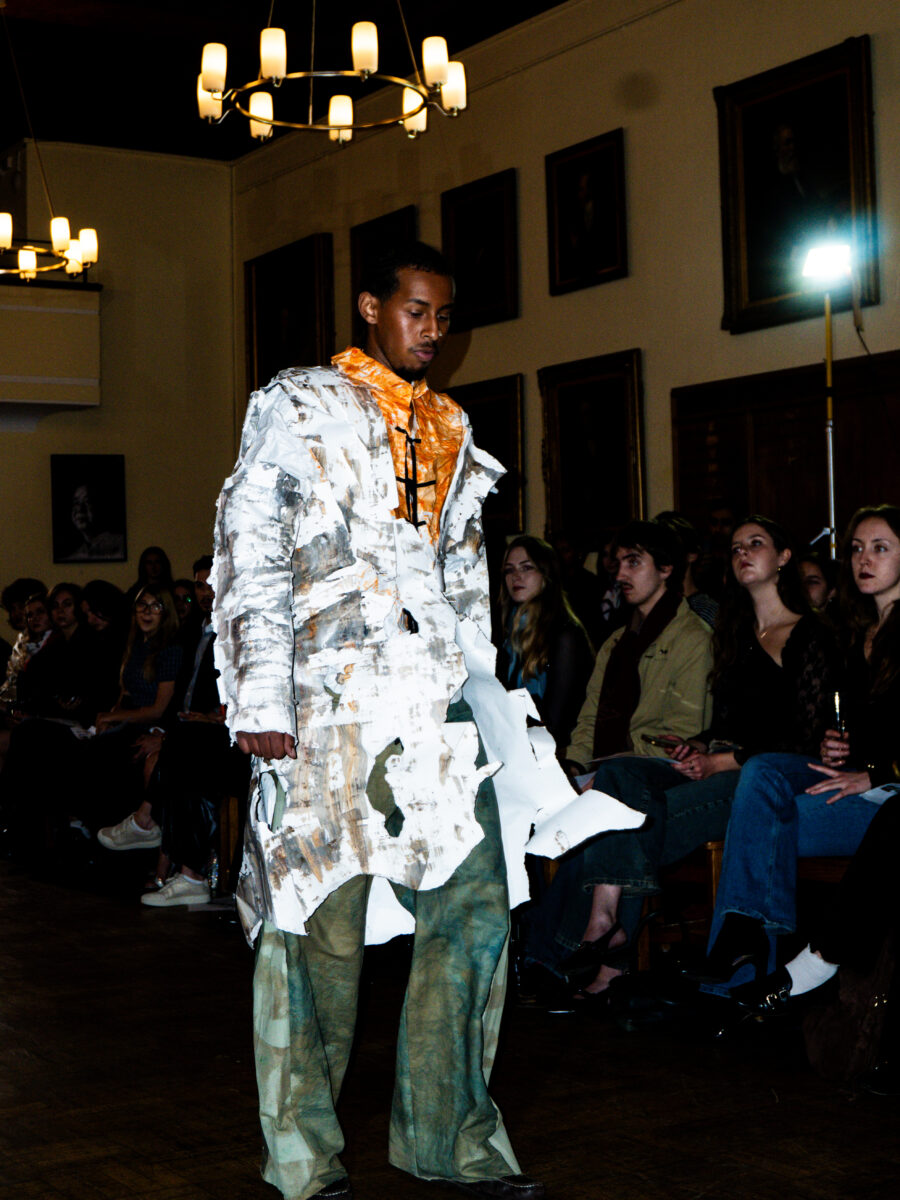
The collection draws on an ongoing interest in the beauty of deconstruction and disintegration, particularly how age, use, and the passage of time can create this natural beauty. I wanted to explore imperfection through the pieces, using techniques such as distressed printing, irregular striping and variations in texture to suggest the effects of wear and weathering.
Although I had more time to develop the concepts and research behind each piece, the actual making was relatively condensed, with some garments taking only a couple of days to complete. One piece I’m particularly excited about is the paper look, which was constructed entirely from paper. I experimented with different printing techniques to create a rusted, weathered appearance, alongside using natural colouring processes to achieve a deeper, more organic colour. It was important to me that the material itself became part of the story of the garment.
How would you describe your design language in three words?
Texture, detail, fresh.
How did you first get into fashion design and how has the relationship with your creations changed over time?
I first got into fashion through the UAL Fashion Foundation, having previously studied a more graphic-focused background at A-level. Initially, I was much more experienced in print, illustration and graphic composition, as those were the areas I was most familiar with.
As I’ve developed as a designer, my interests have shifted towards silhouette, material, and construction. While print still comes quite naturally to me, I’ve become increasingly interested in how garments are built, how different materials interact and how details, seams and unconventional fastenings can become integral to the design. I think my work has gradually moved from being predominantly image-led to becoming much more focused on the physical garment and the possibilities within its construction.
What’s next for you and your brand? Where would you like to take it?
I’m currently focused on developing JAGO alongside my second year at Central Saint Martins. I’m building the brand gradually through regular releases, introducing smaller accessories such as belts, beanies and hats before expanding into a wider range of garments. I want to establish a strong identity and build a market around pieces that are considered, individually developed and made with quality at the forefront.
Alongside the brand, I’ve also been developing one-off garments for celebrities and athletes, which has been an exciting opportunity to explore a different side of design and work on more individualised projects. I’d like to take that further, building relationships and creating pieces for people who want something distinctive. Ultimately, I’d like to grow JAGO into an established fashion label while continuing to develop my own practice as a designer.
Alexia Angelidis
Congratulations on being selected as part of the first edition of Oxford Fashion Society’s The New Guard! What does being part of this initiative mean to you?
It was a great honour to be able to showcase my work in The New Guard as an emerging designer. It was an excellent opportunity to put my name out into the industry by exposing my work and making new connections.
How did you prepare for the show?
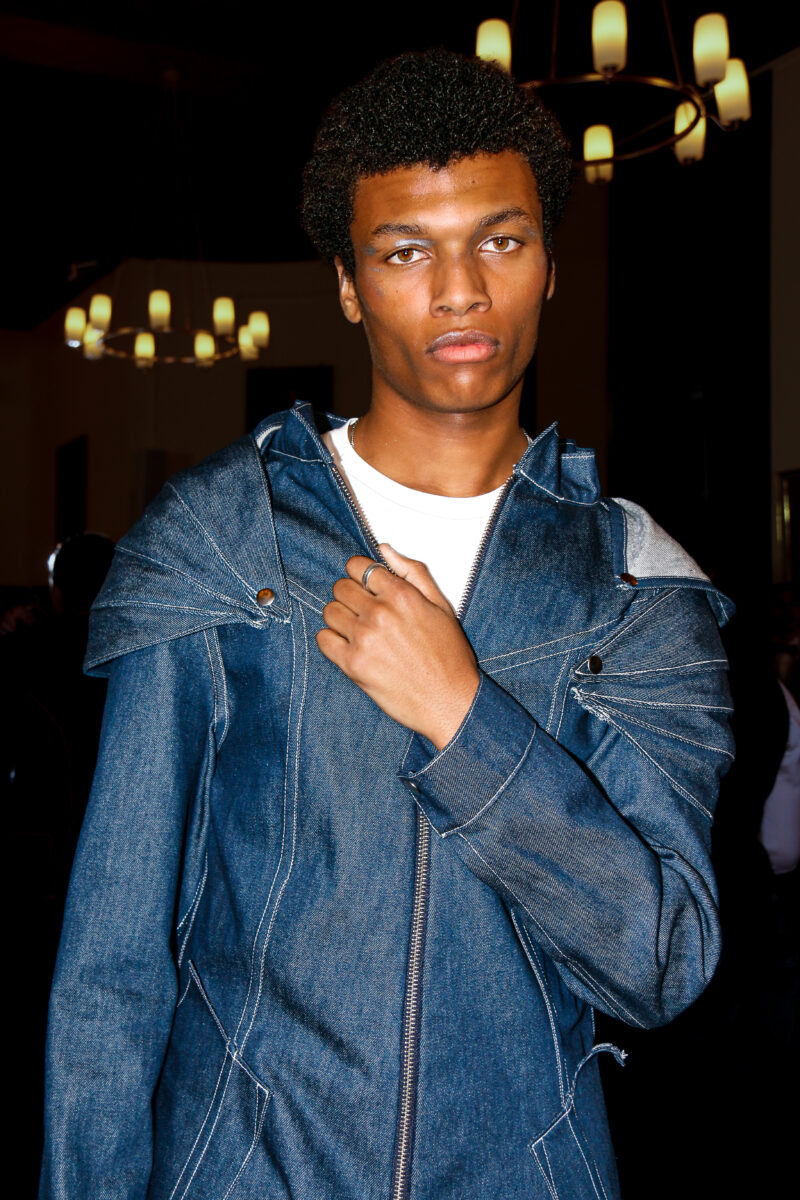
This piece was part of a group collaboration project from my second year at university, with sustainability around denim as the primary focus. Armour for the everyday and an outlet for heritage and acceptance. Sustainability as an oath, handed down through generations.
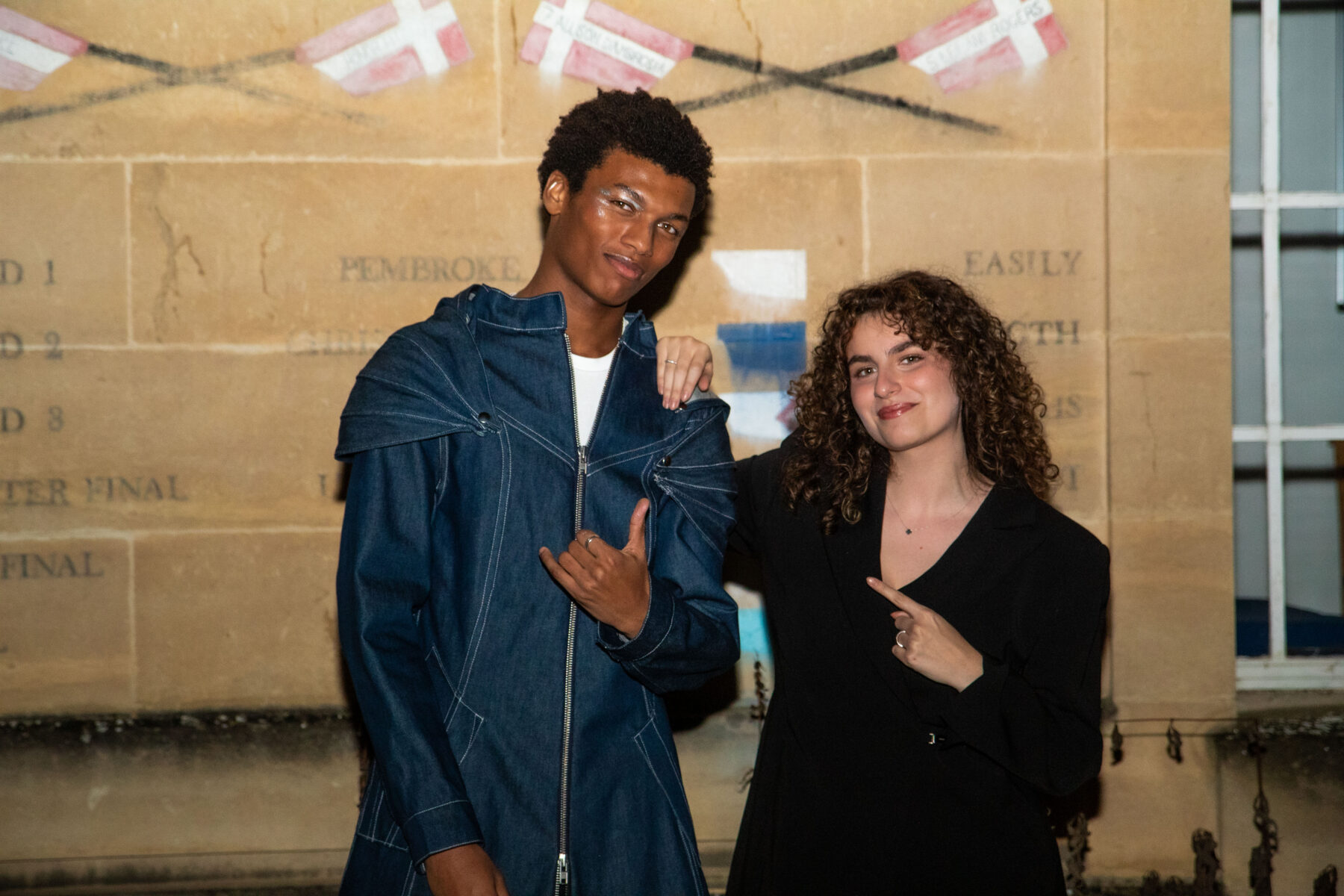
Through exploring wearability with a romantic aesthetic, I was able to create a design with interchangeable features, combined with neat construction. With the ability to remove the hood and/or armour-like shoulder pads, the wearer has the option to style the garment however they may please, whether it is in a more casual or fashionable setting.
How would you describe your design language in three words?
Romantic, refined, intentional.
How did you first get into fashion design and how has the relationship with your creations changed over time?
I have been artistic my entire life, constantly drawing and creating in some way. That evolved to drawing clothes and the realisation that artistic expression through fashion fascinated me. I began developing my drawing skills, experimenting with silhouettes and proportions when designing clothing, and eventually learned the process of creating in 3D straight away through draping.
Alongside my exploration of design, I continued developing my other art skills using a variety of media, which expanded my knowledge on the use of colour and texture. These techniques make the design development and experimentation of a project more interesting.
What’s next for you and your brand? Where would you like to take it?
Moving forward, I plan to gain as much experience as possible within the industry after my studies, so that I can work my way to a position where my input and design identity is recognised. I intend to work in a design team in a fashion house, specialising in womenswear, where I can build on my knowledge and hopefully make a positive impact on the fashion industry.
Words – Juliette Eleuterio