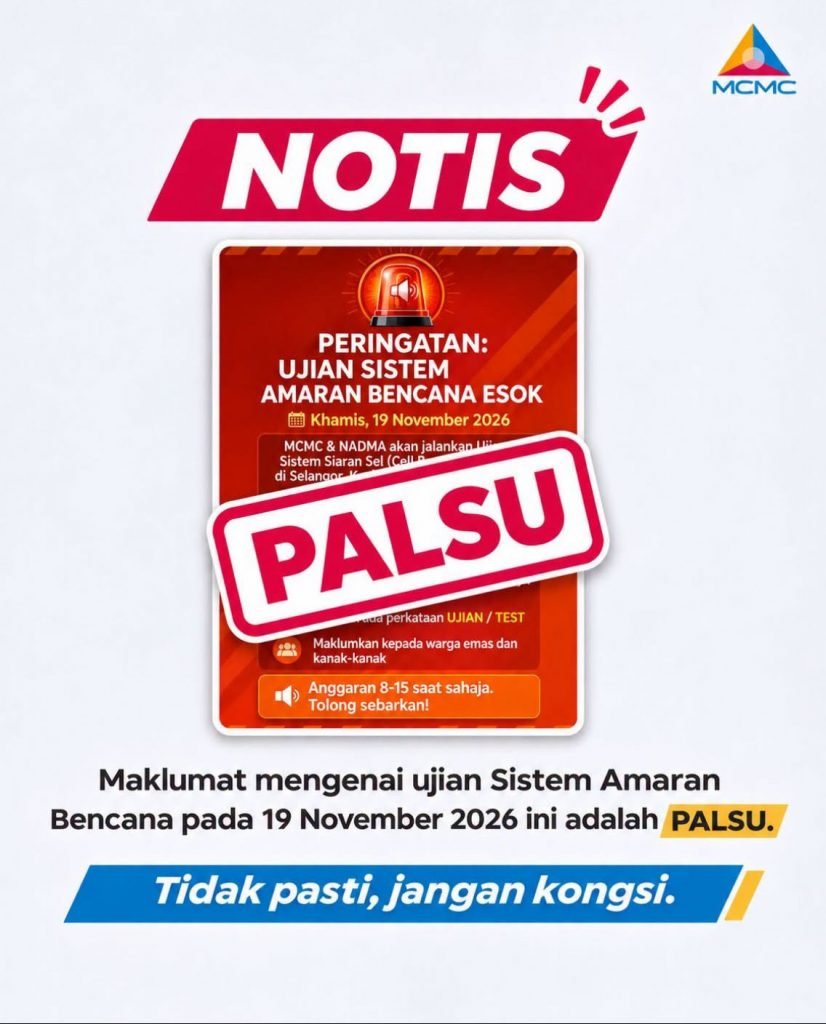
Malaysia’s new disaster alert system has caused confusion even before its public rollout.
After weeks of media reports about a scheduled test on 19 November 2026, the Malaysian Communications and Multimedia Commission (MCMC) has clarified that no public alert test will take place on that date.
In its latest statement posted at 11:37pm on 18 November, the MCMC describes viral information circulating on social media and WhatsApp about a disaster alert system test in Selangor, Kuala Lumpur, Kelantan and Pahang as false.
According to the regulator, the activity scheduled for 19 November is strictly an internal technical test to assess the readiness and effectiveness of the Disaster Alert System before a wider implementation.
This means members of the public in the four locations should not expect to receive disaster alerts on their mobile phones as part of the scheduled exercise.
However, what’s puzzling is that the supposed public test wasn’t merely a rumour circulating on WhatsApp. It had been reported by mainstream news outlets since October, with some mainstream media publications issuing reminders just a day before the scheduled test.
Disaster alert test reported by mainstream media since 11 October
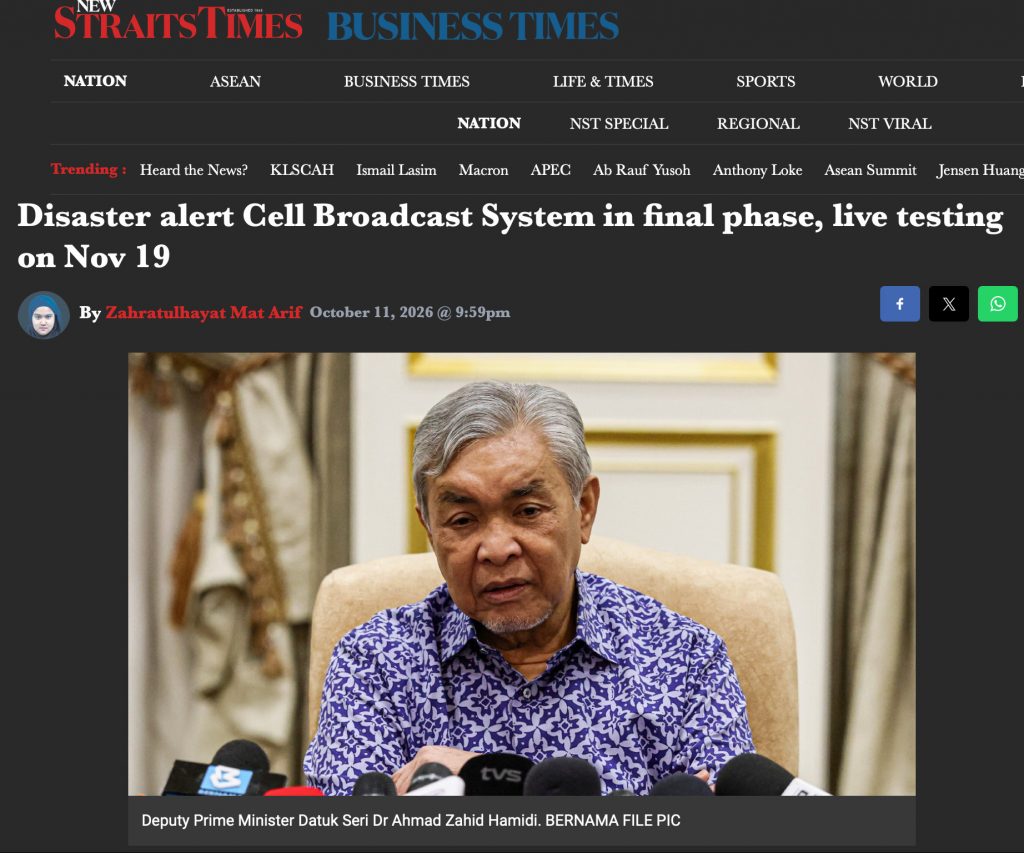
The scheduled test was reported by New Straits Times (NST) on 11 October 2026, in an article titled “Disaster alert cell broadcast system in final phase, live testing on Nov 19“.
This was followed by another NST editorial on 13 October discussing the upcoming test and the importance of an effective disaster warning system. The pilot exercise was expected to cover selected flood-prone areas in Selangor, Kuala Lumpur, Kelantan and Pahang.
The reports continued in the lead-up to 19 November.
On 18 November, The Star reported that MCMC had confirmed the scheduled technical readiness test when contacted. The regulator said the exercise would cover the process from initiating an alert to delivering it to mobile devices, ahead of a planned nationwide implementation by the end of 2026.
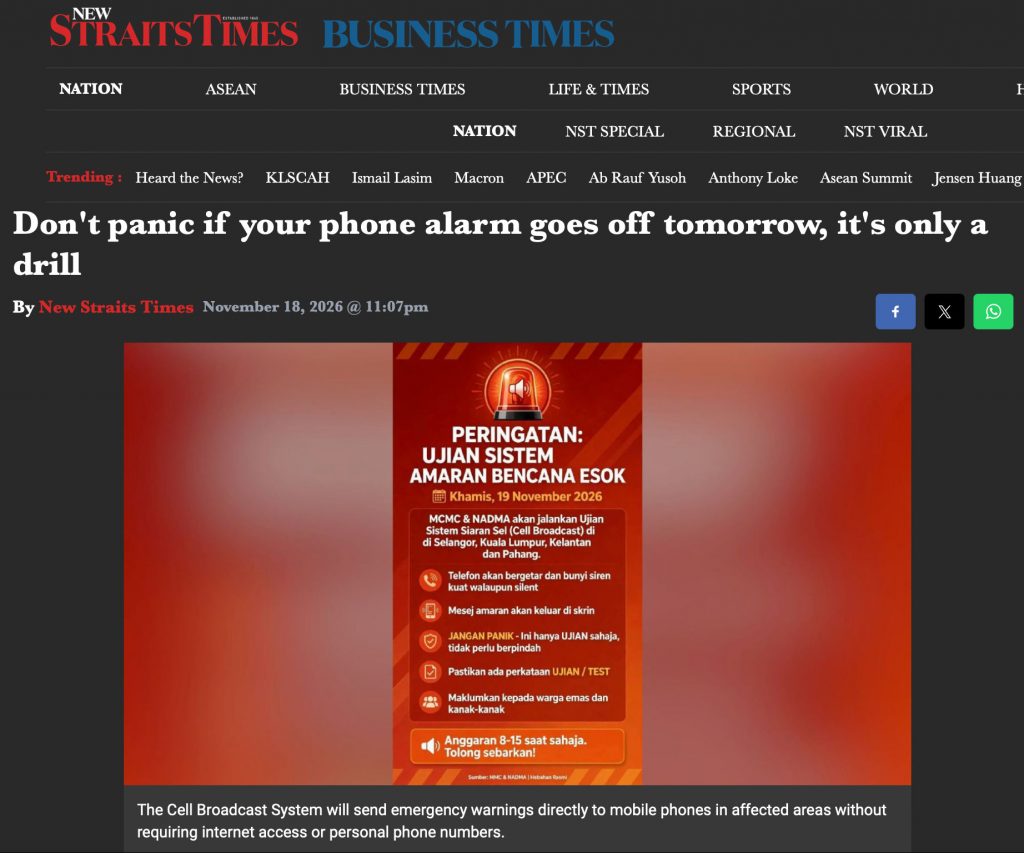
On the same day, NST published a reminder telling readers not to panic if their phones sounded an alarm the following day, as it was only a drill.
These reports which started since over a month ago would understandably have led members of the public to expect an emergency alert on their phones on 19 November.
What’s particularly interesting is that The Star had contacted MCMC directly just a day before the scheduled test. In the report, the MCMC confirmed the technical exercise and even encouraged users to ensure that their mobile devices are updated with the latest operating software.
MCMC’s latest clarification raises questions about how the scheduled technical test was communicated and why the impression of a public alert exercise remained uncorrected until the eve of the supposed test.
While MCMC has denied that a public test was scheduled, its statement does not explain how the earlier reports originated or whether there had been a miscommunication about what was actually scheduled to take place today.
How does the cell broadcast emergency alert system work?
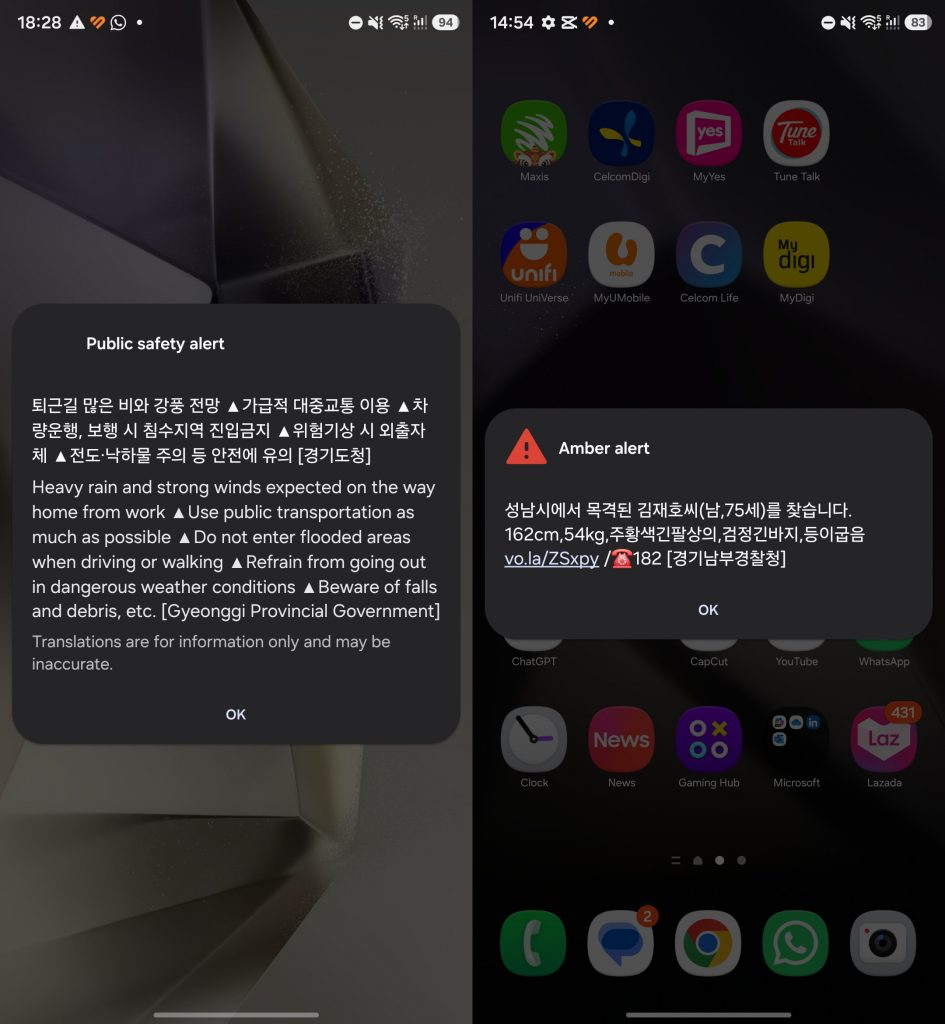
Cell broadcast technology allows authorities to blast emergency warnings and alerts directly to mobile phones within a designated geographical area using mobile networks.
Unlike conventional SMS, cell broadcast does not require authorities to send individual messages to specific phone numbers. Instead, an alert can be transmitted to devices connected to mobile network cells within the affected area.
The technology is particularly useful during emergencies such as floods and other natural disasters, where authorities need to warn a large number of people quickly.
These warnings will appear prominently on the phone’s screen, accompanied by an audible alarm and vibration to get the user’s attention.
Similar technology is already used for public emergency alerts in countries including Japan, Korea, the United States and the United Kingdom.
For Malaysia, such a system could provide an additional way to warn people of imminent danger, particularly during the monsoon season when flash floods and other weather-related emergencies can develop rapidly.