
Crypto and forex trading can expose accounts and capital to technical failures, weak security, and rushed decisions. Experienced traders share practical insights on protecting funds, managing risk, and staying disciplined. The article covers safeguards such as multisignature security, automated orders, position sizing, verification checklists, and economic calendar reviews.
- Preserve Multiple Withdrawal Routes
- Set Limits to Curb Decision Fatigue
- Prevent Silent Terminal Failures
- Check Economic Calendars
- Map Feed Dependencies
- Size Positions by Drawdown Budget
- Audit Dormant API Permissions
- Pause Amid Emotional Surges
- Resist FOMO Through Automated Orders
- Choose Longer Time Frames
- Prioritize Transparent Counterparties
- Take Breaks to Prevent Burnout
- Defend Accounts From Credential Attacks
- Reject Unverified Signals
- Test Multisig Recovery Plans
- Organize Critical Hardware
- Build a Verification Checklist
- Adopt Multisignature Security Architecture
Preserve Multiple Withdrawal Routes
The risk I watch most has nothing to do with price. It’s access: whether I can actually move money in and out when I need to.
I learned this building a trading app for buying tokenized U.S. stocks with USDC. Our earliest users were in India. When India’s Enforcement Directorate raided several crypto on-ramp companies in June, the rupee on-ramp we depended on went down. The app still worked, and people who liked it still couldn’t put money in. We added more on-ramp providers, and then that path was shut down too. More doors in the same wall didn’t help.
So I treat access as part of every position. I keep funds across more than one venue instead of one exchange I happen to like. I test withdrawals with small amounts regularly, not just deposits, because a withdrawal path you haven’t used lately is a guess. I keep anything I’m not actively trading in self-custody. And I always know my route back to my local currency, with a second route if the first one closes.
My advice to other traders: before you size a trade, ask how you’d get out if your exchange or your bank’s payment rail stopped cooperating for a week. If you don’t have a clear answer, that’s a bigger risk than the chart.
 Sunil vallath, Product leader and founder, fintech and digital assets.
Set Limits to Curb Decision Fatigue
One non-financial risk I actively manage is cognitive decision fatigue, particularly during sustained FX and gold volatility.
After long screen time or a run of losses, even a disciplined process can weaken. You override a setup, widen a stop or even take oversized risk to make back a poor session. How do I mitigate it? Well, willpower is not enough. I actually have to put down operational guidelines.
I define my trading windows around the London and New York sessions, set a maximum daily loss and trade count before I start, and impose a mandatory cooldown after two consecutive losses or around high-impact events such as US CPI or central bank decisions.
If a trade is not in my written plan, I don’t take it. From my experience, maintaining awareness of decision fatigue is an important aspect of risk management. This includes recognising when fatigue or changing market conditions may affect trading decisions. Maintaining decision quality is an important consideration in managing trading risks, although it cannot eliminate the possibility of financial losses.
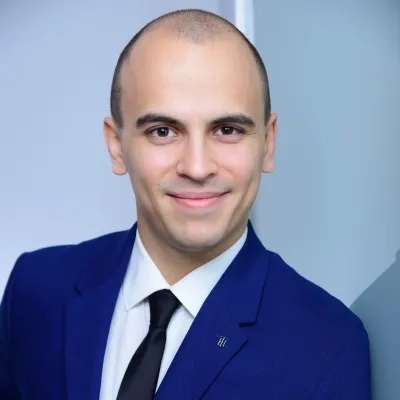 Georg Schmidt, Head of Market Analytics, Ultima Markets
Prevent Silent Terminal Failures
1. I’m more worried about silent failures. MT4 terminals appear to be functioning correctly when in fact they have ceased to trade with losses accumulating behind the scenes. Forced Windows updates with machines rebooting at 3 a.m. with terminals failing to relaunch are all too common. Broker server migrations with logins updating to reference a now-dead IP address also frequently occur. In my experience, losses incurred by a trader as a result of a frozen terminal holding a position open through NFP events far exceed any losses incurred as a result of trading strategy failure.
2. As I treat my trading environment as a production environment, I keep automatic OS updates for e.g. Windows disabled and perform manual patches on weekends. Terminals are set to auto-launch on boot of the machine. All EAs are set up to send a ‘heartbeat’ and as long as I receive corresponding push-notifications or log-entries within a given time frame, I assume everything is fine. Hard stop-losses are set up on broker side and never only within the EA itself. Journal-tab of MT4 terminal has to be checked on daily basis, not the equity-curve of the strategy.
3. Stop relying on that green connection icon! Unplug your VPS or PC on a Saturday and find out what happens to your positions. How does your EA restart? Do you know your broker’s backup server addresses? Write down your recovery steps before you need them. Remember, your strategy is only as good as the box it runs on.
 Ace Zhuo, CEO | Sales and Marketing, Tech & Finance Expert, TradingFXVPS
Check Economic Calendars
The non-financial risk I manage most carefully is timing risk — being in the market at the wrong moment, not the wrong price.
Early in my trading career I held a tight-stop EURUSD position straight into an NFP release I had forgotten was that day. The trade idea was fine; the timing was not. The spread widened, price gapped through my stop, and the loss had nothing to do with my analysis. That single afternoon rebuilt my routine. Now no session starts without a 60-second check of the economic calendar — high-impact events, bank holidays, session overlaps. I set alerts an hour before every major release, avoid opening fresh positions in the final minutes before them, and I know my broker’s server timezone cold, because “8 AM” means nothing until you know whose clock it is.
My advice to fellow traders: treat the calendar like a seatbelt. You don’t wear it because you plan to crash — you wear it because one moment of bad timing can undo a month of good decisions. Most beginners study entry signals obsessively and never learn when the market is simply too dangerous to be in. Master the clock before you master the chart.
 Wajid Khan, Founder, PipAtlas
Map Feed Dependencies
The biggest non-financial risk I actively manage is stale data, oracle latency and venue outages.
As an independent market maker doing multi-venue spot, perps and options, I learned that most blowups aren’t a bad view, they’re a good quote on a dead feed. On-chain, if your oracle lags by 800ms in a volatile tape, you’re offering free optionality to informed flow. That’s Loss-Versus-Rebalancing in real time.
I mitigate it three ways: 1) redundant price feeds with a kill-switch that widens spreads or pulls quotes when feeds disagree, 2) inventory-conditioned quoting – my size shrinks automatically as inventory builds, so a bad feed can’t fill me infinitely, 3) exchange-failure drills. I paper-trade the outage path, not just the strategy.
Advice to fellow traders: map your dependencies like positions. If you can’t tell me what happens to your book if Binance freezes, your RPC lags, or your custodian pauses withdrawals, you’re running leverage on uptime.
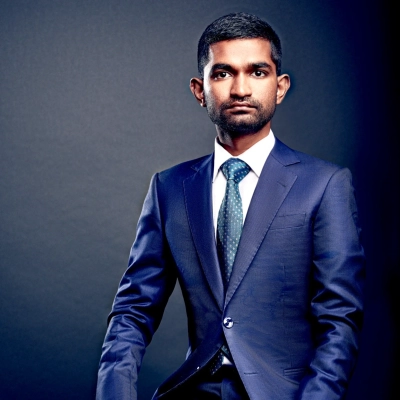 Rohan Rathod, CEO, TradePolaris
Size Positions by Drawdown Budget
Rule risk, not market risk, is the one I manage hardest.
The specific non-financial risk I plan around is the interaction between a trailing drawdown and position size. A trader can be profitable and still fail, because the floor follows their high-water mark. On a $100,000 account with a 6% trailing drawdown the floor starts at $94,000. Once the balance touches $103,000, the floor trails up to $97,000. You now have $6,000 of room instead of $9,000, while your position size is unchanged. The room shrank; the risk did not.
My mitigation is to size from the remaining drawdown budget rather than from account balance or conviction. Every morning I recalculate the distance from current equity to the floor, then risk only a third of the daily loss limit per trade. If the floor has moved up, the size comes down automatically, with no discretion and no renegotiating after a loss.
The advice I give other traders: write the constraint down as a number before the session starts. The rule that ends accounts is rarely the market. It is a size that stayed the same while the room got smaller.
 Ramsy Trader, Founder of ElitePropX, ElitePropX
Audit Dormant API Permissions
The risk I watch most isn’t price, but it’s access. Every bot, journal or tracker you’ve connected to an exchange holds a key to your account, and most traders don’t remember half of them.
What I’d recommend:
– Anything that only needs to look gets a read-only key. It can’t trade or withdraw, and the exchange enforces that on its own servers.
– Keys that can trade are locked to an IP address. Withdrawal rights, never.
– Once a quarter (or monthly), open API management on every exchange and delete what you don’t recognise.
The quiet danger is the old trading key from a bot you stopped using two years ago. Nobody thinks about it until something moves.
We built TrueHold on read-only keys for exactly this reason.
 Azat Tulegenov, Co-founder, TrueHold
Pause Amid Emotional Surges
The non-financial risk I manage hardest doesn’t show up on any chart. It’s my own emotional state, because a rattled mind makes worse decisions than a bad setup ever will.
I teach stock market and investing education rather than handing out trade calls, so I’ll frame this as a habit, not a strategy. What I watch most closely in anyone new to markets, including myself, is that pull to react to a headline before the feeling behind it has actually passed. A Fed day drops, a CPI print comes in hot, and suddenly there’s this flood of do something right now. That urge is the risk. Not the news itself. The panic the news triggers. I’ve watched more people get hurt acting on emotion than from any single market move, and I mean that pretty literally.
How I handle it is almost embarrassingly simple. I build a gap between the feeling and whatever I might do about it. When something stirs me up, I don’t trade on it in that moment. I wait, write down what I think is happening and why, and let the adrenaline drain out first. A viewer messaged me once after a rough options trade he’d made chasing a scary headline, and the pattern was textbook. He acted inside the emotional spike instead of after it. I’ve seen this go a hundred different ways and it almost always traces back to that same window.
My advice to fellow traders is the same thing I come back to constantly: the market will still be there in twenty minutes. The feeling that you have to act this second is almost never telling you the truth. Slow the decision down, and you’ve already managed the biggest risk most people never even name.
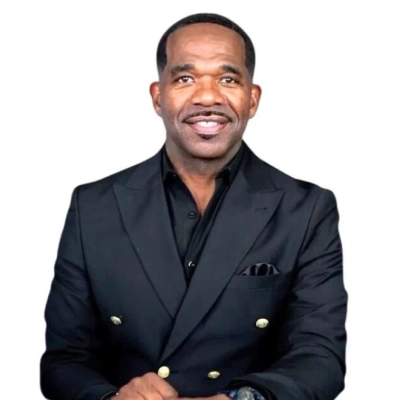 Larry Jones, Founder & Host, STOCK UP! with Larry Jones
Resist FOMO Through Automated Orders
Especially when it comes to crypto, managing the psychological impact of FOMO and periods of high volatility is one of the biggest considerations you can take.
It’s natural to be affected by short-term price movements and influencer campaigns that promise the world when it comes to money, but ensuring you stay focused on your trading goals can make all the difference in overcoming short-term risks.
To mitigate the risk of panic selling during volatility or buying into assets generating hype online, try to set up automated orders using pre-set stop-loss and take-profit orders. This helps you avoid moving money around on a whim and stay true to your strategy.
If you find that you’re more prone to emotional investing, try to commit to writing down your trading plans and keep them in a visible place near your screen. This can prevent impulsive reactions while helping to keep you in tune with your financial goals.
 Vsevolod Smirnov, Head of Marketing, Just2Trade
Choose Longer Time Frames
Hi, I’m a trader, investor and behavioral finance educator, and if I understand the question correctly, I think I can provide a good answer here.
If it’s a “non-financial risk” factor, I would assume this would be outside of the world of stop-losses and take profit levels, correct? If so, this would fall into the #1 success factor in all of trading, and that’s trading psychology, which I have dedicated the back half of my career to.
The best thing I have ever done for my own trading psychologically is to step back and trade on longer time frames, and by longer, I mean the daily and the weekly. Everything about it is +EV, from the lack of constant pressure to the lack of news events you need to concern yourselves with, to the accuracy of the technical analysis, to the results themselves, to the life you get to have back.
I don’t know what it is with everyone thinking they have to scalp all day and drive themselves into madness. Ignore the fake success stories you see on social media. Trade for 15 minutes a day (or even a week) with no time pressure and watch your year-over-year results instantly go much higher.
 Patrick Vishy, Behavioral Finance Educator, No Nonsense Courses
Prioritize Transparent Counterparties
I actively manage regulatory and governance risk in crypto trading by prioritizing clear transparency about where my assets and data are held and who governs any counterparty. I mitigate this by selecting custodians and exchanges with documented governance, designing systems that can absorb regulatory change, and keeping abreast of regulator guidance and credible reports. My advice to fellow traders is to verify custody arrangements and governance structures before allocating funds and to treat transparency as an essential control. These steps reduce operational surprises and preserve flexibility as rules evolve.
 Ankit Sarawagi, Curator, CFO Matrix
Take Breaks to Prevent Burnout
One of the biggest non-financial risks I manage in forex trading is psychological burnout. I think a lot of traders underestimate how much pressure they put on themselves by expecting to find trades and make money every single day.
From my experience as a trading coach, I’ve seen students get frustrated and mentally exhausted, especially during difficult market conditions. Instead of accepting that it might not be a good week to trade, they keep looking for opportunities, hoping the market will somehow turn in their favor. That’s when emotional decisions start taking over, and one losing trade can easily lead to revenge trading.
Personally, I try to remove that expectation altogether. I follow a routine, and one thing I find helpful is keeping my brokerage account separate from the charts I use for analysis. Just because I’m looking at the market doesn’t mean I need to place a trade.
I also believe financial stability plays a huge role in trading psychology. If someone is depending on their next trade to pay their bills, they’re already putting themselves under unnecessary pressure. For example, risking $100 on a $100,000 account is very different from risking $50 on a $1,000 account. The percentage of capital at risk is significantly different, and that can affect how someone handles a loss.
Another thing I always emphasize is mental preparation. If you’re angry, frustrated, exhausted, or dealing with personal problems that are affecting you emotionally, I genuinely think it’s better to sort those things out before sitting in front of the charts. Trading requires patience and clear decision-making, and forcing yourself to trade when you’re not mentally prepared can make things worse.
My advice is to stop treating trading like a sprint. It’s a marathon. You don’t need to trade every day, and you certainly don’t need to make money every day. Sometimes taking a break and accepting that the market isn’t offering anything worthwhile is the best decision you can make. Having adequate capital, realistic expectations, and the patience to wait for good opportunities can put you in a much healthier position psychologically over the long term.
 Adlu Rahman, Co-Founder & Head Coach, Scalping Hub
Defend Accounts From Credential Attacks
One of the most overlooked non-financial risks in crypto and forex trading is operational security. A trader can make the correct market decision and still lose access to funds through compromised credentials, phishing attacks, or unauthorized account activity. I consider account protection particularly important because a single security failure can undermine months of disciplined trading. My recommended baseline includes phishing-resistant multi-factor authentication, dedicated trading credentials, and withdrawal restrictions wherever supported.
The challenge is that security failures often originate outside the trading platform. Compromised email accounts, malicious browser extensions, and fraudulent login pages can expose sensitive information. In cryptocurrency trading, approving a malicious wallet transaction can also create irreversible consequences. I recommend separating trading accounts from everyday online activities, using hardware-based authentication when available, and verifying wallet addresses and transaction permissions before authorization.
A practical risk-management framework involves reviewing account permissions monthly, monitoring login activity, and testing recovery procedures at least twice a year. For example, a trader using multiple exchanges should maintain separate credentials and avoid unnecessary API permissions. API keys that only need access to market information should never receive withdrawal privileges.
My advice is to treat cybersecurity with the same discipline applied to trading strategies. Strong authentication, limited account permissions, and clear recovery procedures reduce exposure to preventable operational failures.
Protecting access to your assets is just as important as protecting their market value.
 Omer Malik, CEO, ORM Systems
Reject Unverified Signals
My background is in security operations, where managing non-financial risk isn’t optional — it’s the entire job. The discipline transfers directly.
The biggest non-financial risk I see parallels what I manage on the ground: **information integrity**. In security, acting on bad or unverified information leads to wrong deployments, missed threats, and real consequences. In trading, the equivalent is making decisions based on noise — rumors, social sentiment, or unverified signals — rather than a clean, pre-established read of the situation.
What we do operationally is assess a site *before* personnel are ever assigned. We look at access points, traffic patterns, and prior incidents — not assumptions. I apply the same logic to any position: what does the actual structure of this market look like right now, not what am I *hoping* it looks like based on what someone posted.
The advice I’d give is the same I give new officers: **slow decisions made in advance beat fast decisions made under pressure.** Define your read of the environment before you’re in the middle of it. Once you’re reacting emotionally to movement, you’ve already lost the frame that should be guiding you.
 Alexander Smith, Operations Manager, Elite Security
Test Multisig Recovery Plans
The non-financial risk I manage hardest is custody failure. Bitcoin has no password reset: lose the keys and the position is gone no matter what the chart does. Chainalysis has estimated roughly 3.7 million BTC are likely lost for good, most of it to operational mistakes rather than hacks. My mitigation is a 2-of-3 multisig with keys stored in separate locations, plus a written recovery plan someone I trust can actually follow. My advice to fellow traders: run a full recovery drill once a year with a small amount. I call it a Key Continuity Plan, and it matters more than any entry signal.
 Colin Reed MBA, Independent Consultant — AI Operations & Purchasing Power Strategy, Modern Wealth Model
Organize Critical Hardware
Trained as a chemical engineer with over 20 years in software development, I view trading through a systems-oriented engineering lens. One major non-financial risk I actively manage is physical hardware accessibility–specifically, the risk of misplacing cold storage devices, physical authenticators, or backup drives when rapid action is required.
I mitigate this by structuring my physical workstation like an indexed database. All backup hardware, connection cables, and physical security tokens are cataloged in dedicated storage using QR labels so any tool can be located instantly without friction.
My advice to fellow traders is to eliminate physical clutter and systematically organize your trading hardware. When volatility hits, searching through disorganized drawers for a critical device is an entirely preventable failure.
 George Holevas, Founder, SnapFind
Build a Verification Checklist
One non-financial risk I actively manage is operational risk: making a decision from bad inputs, poor process, or compromised access. Managing property operations for hundreds of units taught me that the problem is often not the asset — it’s the workflow around it.
In renovations and maintenance, I don’t rely on memory; I use scopes, vendor checks, updates, and real-time portals. I treat crypto/forex the same way: written trade plan, entry/exit rules, alerts, journal, and no impulsive moves from a headline or a Reddit thread.
For access risk, I keep it boring: strong 2FA, separate email, withdrawal allowlists where available, and I never click “urgent” links from DMs or fake support accounts. In property management, unclear communication creates expensive mistakes; in trading, unclear source verification can drain an account.
My advice: build a checklist before you need it. If you would not approve a contractor, lease, or repair without verification, don’t approve a trade or wallet action without the same discipline.
 Cédric Rose, Founder & Property Manager, Management 305
Adopt Multisignature Security Architecture
The most significant non-monetary element from a non-financial perspective in my job of working on decentralized technologies is the fragility of architecture in the sphere of private keys management. While market players may largely focus on the volatility of prices, in reality, it is rather about the operational risks associated with the use and storage of permission to sign. If your key is stored in a hot wallet or a single-signature environment, you have no protection from phishing or from having some hacker breaking into your computer.
In my work of implementing digital solutions, I tend to defend the use of advanced security architecture rather than simply rely on passwords. I advocate for the use of multi-signature schemes where several different environments are responsible for approving transactions captured using hardware security modules or disconnected signing devices. Thus, you will always be able to avoid a case of signing by a single point of failure, whether it is captured computer or any other method of social engineering attack. In case of larger companies, one also must consider protocol governance risks. I have encountered several projects’ cases where upgradeable contracts give power to a centralized group of people to change the logic of a project overnight.
I think the key for anyone working with digital assets is to pay attention to operational security as though we were dealing with enterprise infrastructure. Never deal with valuable contracts making your money using regular browsers and hot wallets. Use special hardware device and verify the correct condition for upgrades of the smart contracts.
 Sudhanshu Dubey, Delivery Manager, Enterprise Solutions Architect, Errna