Taiwanese government officially confirms suspension of investment negotiations
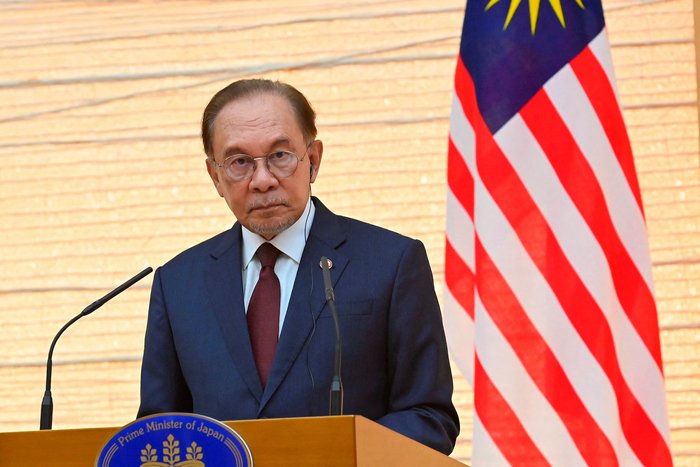
Anwar Malay Prime Minister’s remarks
Fear of Vietnam·Inniro investment exit

Malaysian Prime Minister Anwar Ibrahim’s remarks on Taiwan caused a rift in the economic relationship between the two countries as Taiwan put investment negotiations with Malaysia on hold.
According to Hong Kong’s South China Morning Post (SCMP) on the 11th (local time), Taiwan’s Ministry of Foreign Affairs officially confirmed at a press conference the previous day that investment negotiations with Malaysia were put on hold. Taiwan’s foreign ministry spokesman Xiao Guangwei said the decision was aimed at protecting national sovereignty, economic security and investor rights and took issue with Anwar’s remarks on Taiwan.
Initially, the negotiations were scheduled for the end of October to discuss investment cooperation and investor protection across industries, including semiconductors. However, the conflict between the two sides, sparked by Anwar’s remarks, has not subsided, and it has been temporarily put on hold.
The conflict began when Anwar called Taiwan “part of China” in an interview with Al Jazeera in August. At the time, Prime Minister Anwar likened China’s use of force in Taiwan to a situation in which the Malaysian government prevented the separation of states in the country.
Taiwan strongly protested the remarks, saying they justified China’s annexation of Taiwan’s armed forces. Taiwan’s foreign ministry criticized Anwar’s comments in a statement in August, saying they “seriously undermined the political mutual trust between the two sides.” However, Prime Minister Anwar reaffirmed his position to stick to the existing “One China” policy despite Taiwan’s opposition. Since then, the difference between the two sides has not narrowed, and Taiwan eventually suspended investment negotiations scheduled for the end of October, citing sovereignty, economic security and investor protection.
In response to Taiwan’s hard-line response, the Malaysian government has belatedly started to deal with it. Malaysia’s Minister of Investment, Trade and Industry Johari Abdul Ghani told SCMP on the 11th that he values economic and investment relations with Taiwan. In particular, it emphasized the contribution of Taiwanese companies to the electronics and semiconductor industries and said it would provide a stable and predictable investment environment.
Hwang Yi-rui, chief representative of Malaysia’s Friendship and Trade Center in Taiwan, also explained that Anwar’s remarks on the same day were not official policy announcements. Prime Minister Anwar then explained that Taiwan had no ill will and emphasized a peaceful solution to the cross-strait problem.

In Malaysia, Taiwan is one of the major investors. Taiwan’s approval for investment in Malaysia in the first quarter of last year was 1.7 billion ringgit (about 558 billion won), ranking fifth after Singapore, the United States, and China. In particular, the cooperative relationship between the two sides is remarkable in the semiconductor industry. In February, Taiwanese semiconductor company Chip Bond opened a semiconductor packaging and inspection plant worth about $200 million (about 268 billion won) in Penang, Malaysia. Another Taiwanese semiconductor company, ASE, also expanded its local production facilities last year by completing its fifth semiconductor packaging and inspection plant in Penang.
As the industrial connection between the two sides is deep, there are concerns that the conflict could put a significant burden on the Malaysian semiconductor industry if new investments by Taiwanese companies are disrupted.
Experts pointed out that if the diplomatic conflict is prolonged, Malaysia could be at a disadvantage in the competition to attract investment in Southeast Asia. This is because Taiwanese companies may turn to other Southeast Asian countries such as Vietnam and Indonesia.
“Malaysia is still an attractive investment destination for Taiwanese companies, but there are other options for Taiwanese investors,” said Lin Kai-min, honorary chairman of the Taiwanese Chamber of Commerce in Malaysia.