New York
Nvidia CEO Jensen Huang resigned from the company he founded this week after reports of multiple affairs, including one with a subordinate and one with a woman whom US officials feared could be working with Chinese intelligence.
But salacious reports about spies, lies and sex threaten to overlook the very serious issues at stake for America’s second-most valuable company.
Here’s what else you need to know:
Huang has long advocated for selling chips in China, saying at the Milken Institute annual meeting in 2025 the market for AI chips in China would eventually reach $50 billion, an amount that “is like Boeing — not a plane — the entire company.”
Washington had other ideas. The Biden administration issued restrictions on exports of the chips to keep them out of China’s hands, hoping to prevent Beijing from using the technology to advance its military and AI systems.
Even after Nvidia specifically developed a less powerful chip that complied with US export regulations and could be sold in China, the Trump administration still slapped restrictions on its sale.
At the time, Nvidia said that would mean a $5.5 billion hit to its bottom line.
Regardless, Huang and President Donald Trump have enjoyed a close relationship.
By early this year, the US government had cleared 10 Chinese companies to buy its powerful H200 chip, Reuters reported.

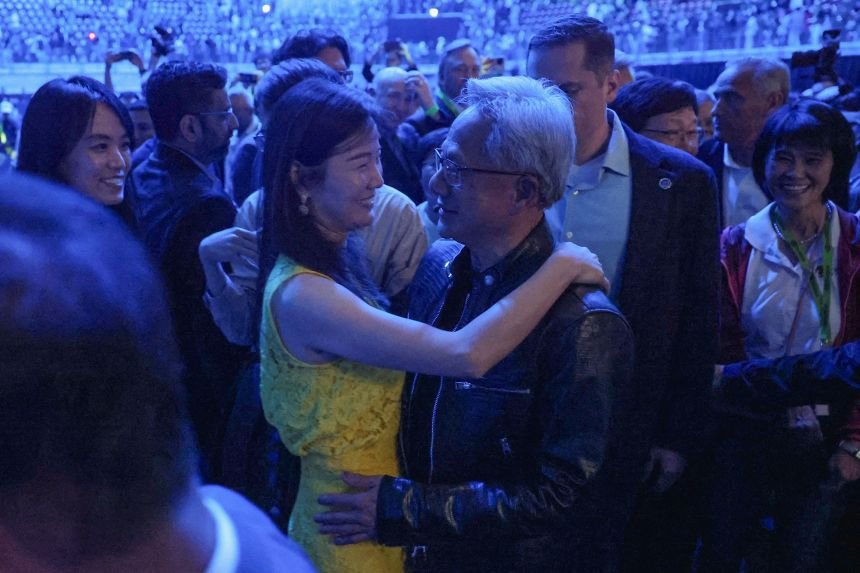
Alice Huang was an executive at Singapore-based customer Megaspeed, an Nvidia customer. She was identified by the US government as having an affair with Jensen Huang, along with being a potential Chinese intelligence asset.
Megaspeed is under investigation for potentially diverting highly coveted US semiconductors to entities in China in violation of US export controls. Megaspeed has purchased more than $4 billion worth of Nvidia chips, some analysts estimate.

CNN 5 Things
How Low-Tech Spycraft May Have Helped Bring Down AI’s Top CEO
In the wake of NVIDIA CEO Jensen Huang’s stunning resignation, many are asking how an alleged Chinese spy was able to reportedly get so close to one of Silicon Valley’s most influential executives. As President Donald Trump prepares for another trip to China this week, we talk to someone who used to investigate corporate espionage in Silicon Valley about how AI firms will need to rethink how they do security going forward.
—
Guests: Phil Mattingly, CNN Chief Domestic Correspondent and Anchor & Frank Figluizzi, former FBI Assistant Director
Host/Producer: David Rind
Showrunner: Felicia Patinkin
Nov 15, 2026 • 29 min
But Trump officials have been focused on Megaspeed for months. Some Treasury staffers believed that Megaspeed should be put on a Commerce Department blacklist because of concerns the company funneled advanced chips into China.
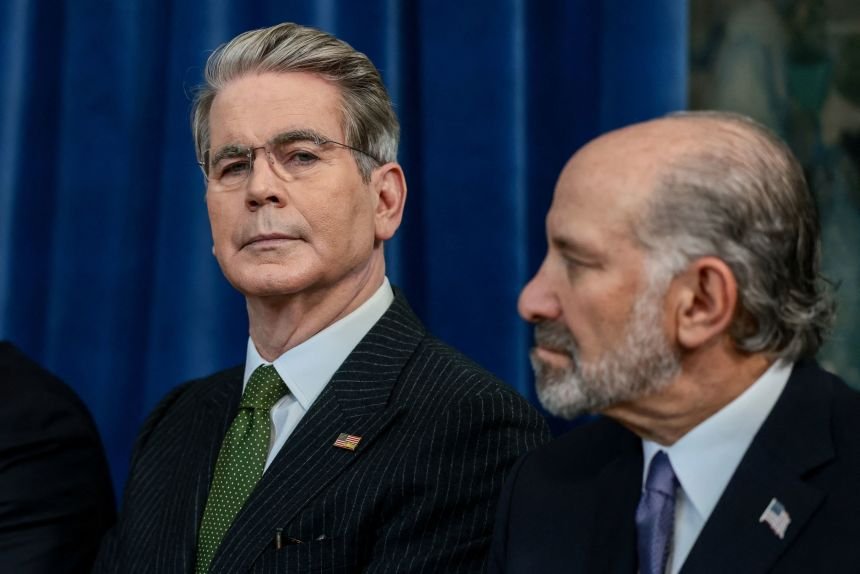
The Commerce Department dragged its feet putting Megaspeed on the so-called “entity list,” despite Commerce Secretary Howard Lutnick being briefed months ago about Huang’s relationship with Alice Huang, people familiar with the matter told CNN.
Megaspeed has denied any wrongdoing and said it is a “compliant and legal company.”
Nvidia said its China business went to “zero” after April 2025 US trade restrictions.

The Commerce Department’s refusal to put Megaspeed on the entity list has led to public infighting amongst members of the Trump administration. Treasury Secretary Scott Bessent publicly accused Lutnick’s Commerce Department of delaying the labeling of Megaspeed as a national security threat. The infighting has led to some discussions over whether Lutnick should be dismissed, according to people familiar with the conversations.
Trump still backs Lutnick, his longtime friend. In a statement, the White House said Trump “maintains complete confidence in the secretary and his ability to carry out the position as the most transformative Commerce Secretary in modern history.”
On Friday, Lutnick voluntarily agreed to testify to the Senate Banking Committee.
Another important name in this saga: Super Micro Computer.
Back in March, the California-based company’s founder was charged with smuggling $2.5 billion worth of servers with Nvidia chips to China – a violation of US export laws. The company, which was not named in the indictment, said at the time it is cooperating fully with the investigation against the three accused individuals.
It shows how Nvidia chips were still making their way to China despite strict export controls.
There’s an unfathomable amount of money flowing through the AI ecosystem. Some call it circular financing.
And one of the biggest financiers is Nvidia. Over the summer, Nvidia joined forces with the likes of Apollo, BlackRock, Blackstone, Brookfield, Goldman Sachs and KKR to lend out more than half a trillion dollars.
That $500 billion will go to build AI infrastructure.
Separately, Nvidia committed $105 billion this year toward a massive OpenAI data center. Nvidia’s strategy of backstopping deals and investing in companies that, in turn, buy its products now faces fresh scrutiny without Huang in the picture – the powerful figurehead who drove so many of those deals.
One central question that remains is whether Huang lied to Nvidia’s board and to the company’s investors. Some already think so. A shareholder lawsuit filed Monday claimed Huang was deceptive when asked about his affair with Alice Huang.
The former CEO could face consequences from other avenues as well. Congress also wants answers and is prepared to subpoena Jensen Huang if he doesn’t voluntarily testify, the chairman of the Senate Banking Committee said.