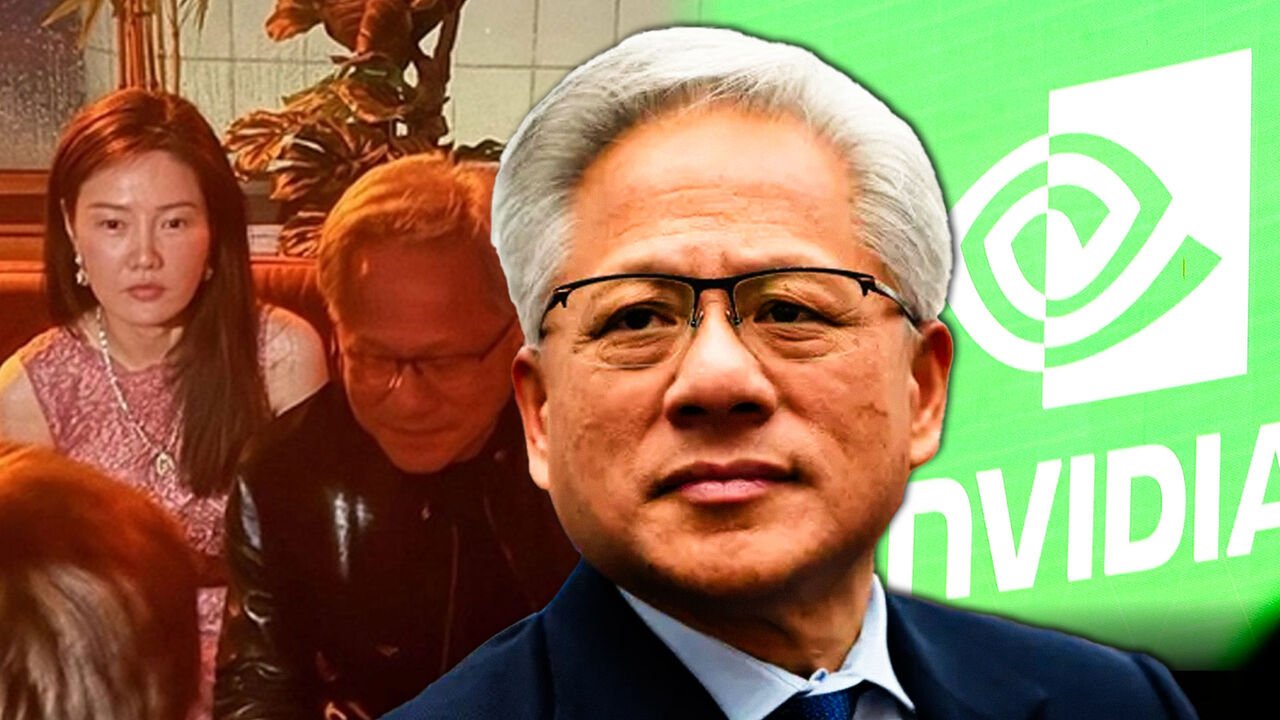
Nvidia and its chief executive, Jensen Huang, have been sued in a proposed class-action lawsuit accusing them of misleading shareholders by concealing Huang’s alleged ties to Alice Huang, suspected of working for Chinese intelligence, adding to growing scrutiny over the chipmaker’s business and national security exposure.
The complaint, filed on November 9 in a federal court in San Jose, California, alleges that Nvidia and Huang failed to disclose the relationship and the national security concerns it raised, which the shareholders claim threatened the company’s reputation and business prospects. Jensen Huang sent a message to Nvidia employees on November 8 in which he acknowledged having an affair and apologised to both his family and company staff.
Nvidia’s board announced an investigation into the matter, with independent directors engaging external legal counsel to examine the circumstances surrounding the relationship. The company has maintained that there is no evidence that national security or proprietary corporate information was compromised, according to earlier reports.
The proposed class-action lawsuit, filed by shareholders led by Mark Kistenmacher, alleges that Nvidia and Huang failed to disclose the relationship and the national security concerns surrounding it. The shareholders are seeking unspecified damages, Reuters reported. Huang had earlier addressed the personal matter in a communication to employees, acknowledging his infidelity.
The controversy has also drawn attention from US lawmakers over the distribution of advanced artificial intelligence chips and the possibility of restricted technology reaching China through third countries. Democratic members of the House Foreign Affairs Committee have sought answers from Commerce Secretary Howard Lutnick on the administration’s export policies, while Republican lawmakers have also sought a closed-door discussion with Huang.
Nvidia shares closed 4.3 per cent lower on November 9, wiping out approximately $190 billion from the company’s market capitalisation, Reuters reported. The lawsuit was filed five minutes after the US stock market closed.
Who is Alice Huang?
Alice Huang built a career in Chinese finance before emerging in a very different arena: the global race for artificial-intelligence chips. Known also as Huang Le, the Chinese businesswoman held senior roles at a Shanghai investment firm before becoming the controlling shareholder of Singapore-based cloud-computing company Megaspeed International, according to more than 30 publicly available financial records, corporate filings, and company materials reviewed by Reuters.
Nvidia lists Megaspeed as an official cloud partner on its directory. Megaspeed attracted public attention in October 2025, when The New York Times reported that the company was under US investigation over whether it was helping Chinese customers obtain advanced Nvidia chips subject to Washington’s export controls.
Alice Huang has since been thrust into the spotlight because of her links with Jensen Huang. The two are not related. The New York Times reported last month that US authorities had concluded she was a Chinese intelligence asset who passed information to Beijing while developing a close relationship with the Nvidia CEO. Reuters could not independently verify the intelligence allegation, which China has denied.
Huang’s China pitch under scrutiny after scandal
Jensen Huang’s comments on the company’s prospects in China have resurfaced amid reports concerning his relationship with Alice Huang. Speaking to Fortune in an interview conducted in October, before The New York Times reported the allegations, Jensen Huang described the opportunity for Nvidia in China as “large and growing”. The remarks came weeks before he acknowledged having an affair with Alice Huang.
The comments have attracted renewed attention to Huang’s longstanding efforts to secure access to the Chinese market, despite US export restrictions and Beijing’s push to strengthen its domestic semiconductor industry. Huang has consistently opposed tighter restrictions on semiconductor sales to China. However, the reported relationship does not establish that it had any bearing on his position regarding export controls.
Photographs shared online reportedly show Jensen Huang and Alice Huang together in Taipei in June 2024. The duration of their relationship, however, remains unclear. During the Fortune interview, Huang was asked whether he expected Nvidia’s sales in China to recover. He acknowledged that relations between Washington and Beijing would involve a “natural tension” that “lasts a long time”.
While maintaining that Nvidia would continue to leave China out of its revenue forecasts, as it has since August 2025 because of regulatory uncertainty in both countries, Huang stressed the market’s growth potential. “I think the opportunity in China is large and growing, just like the AI market across the world is large and growing,” he told Fortune.

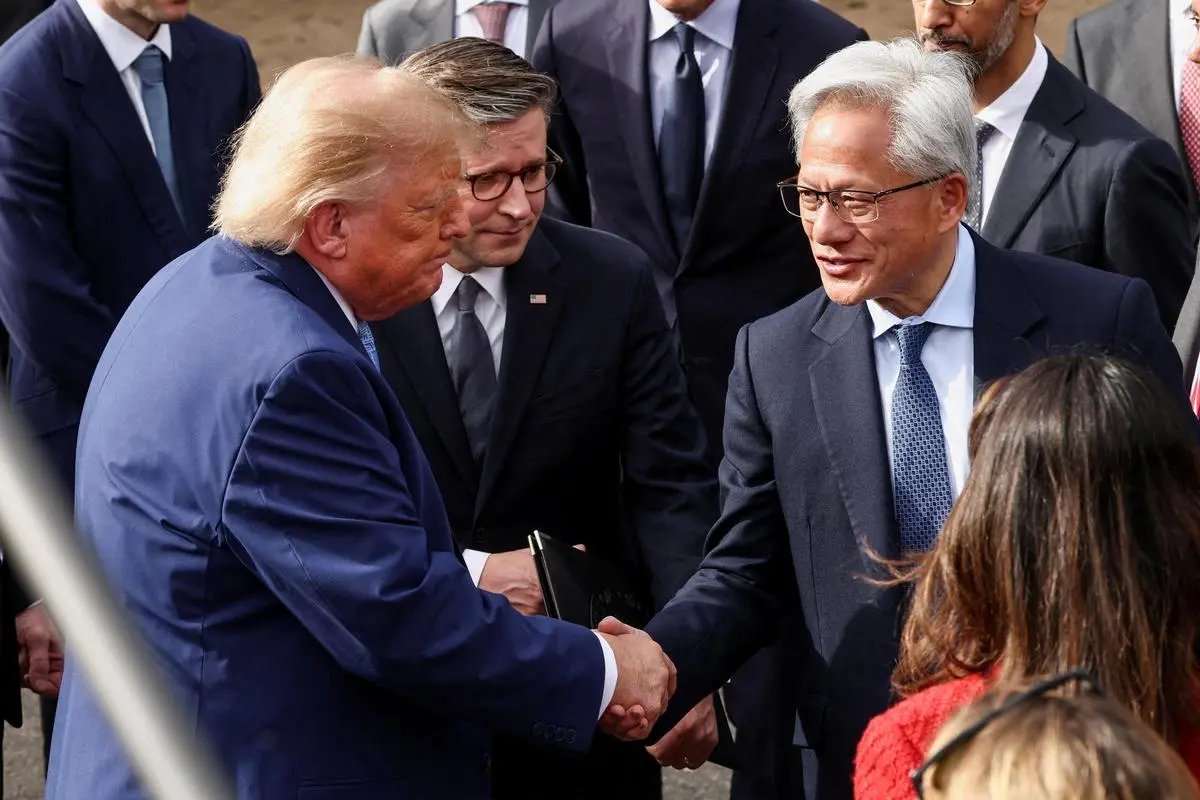
US President Donald Trump greets Jensen Huang as US House Speaker Mike Johnson looks on after speaking to the media at the White House in Washington, DC, on September 29, 2026.
| Photo Credit:
KEVIN LAMARQUE/REUTERS
Washington first imposed restrictions on advanced semiconductor exports to China in 2022 before tightening the measures in 2023. The curbs prompted Nvidia to develop alternative chips tailored to the Chinese market. However, those alternatives also came under regulatory scrutiny. Nvidia’s China-specific A800 and H800 chips were affected by the 2023 restrictions, while its H20 model subsequently encountered licensing requirements.
Huang has repeatedly urged the US administration to permit chip sales to China. In October 2025, he said Nvidia’s share of China’s advanced AI chip market had declined from 95 per cent to zero under US export controls. In December 2025, US President Donald Trump announced that Nvidia would be permitted to sell its H200 chips to approved Chinese customers, with the US government receiving a 25 per cent fee on sales. Huang had met Trump to discuss export controls days before the announcement.
Why are Nvidia chips so important?
Nvidia designs advanced components, originally created to handle 3D visuals in video games, called Graphics Processing Units (GPUs). These have the power to crunch colossal amounts of digital data, so they are also used at scale to train and run artificial intelligence.
ChatGPT’s 2022 launch showcased the potential of AI, sparking an investment gold rush as governments and tech giants raced to develop the technology further. With chip orders pouring in, Nvidia’s market valuation has soared to $4.5 trillion—currently on par with Apple as the world’s two most valuable companies.
Trump’s response
US President Donald Trump took a sympathetic tone towards Jensen Huang on Monday, saying the Nvidia CEO was “suffering greatly” and didn’t know that a woman he had an affair with was an alleged Chinese spy. Trump also danced around the question of when he personally became aware of intelligence linking the chip boss to Alice Huang.
Trump said he was not aware of the allegations when Huang accompanied him to China in May. Huang is a key figure in the AI revolution and close to the US President. “No, I didn’t hear about it then. But a lot of people have heard about it,” Trump said. Huang has also attended numerous White House events, including a state visit by Chinese President Xi Jinping in September.
(with inputs from agencies)
Also Read | When the machine gets it wrong, who pays?
Also Read | Google AI privacy: never sold, still worth a fortune