A new cross-border project is helping young women build confidence, find a community and tell their stories through fashion.
Bringing together participants from the north, south and beyond, Wear Her Story combines textile heritage with creative technology, giving girls and young women an opportunity to explore their identities while learning new skills.
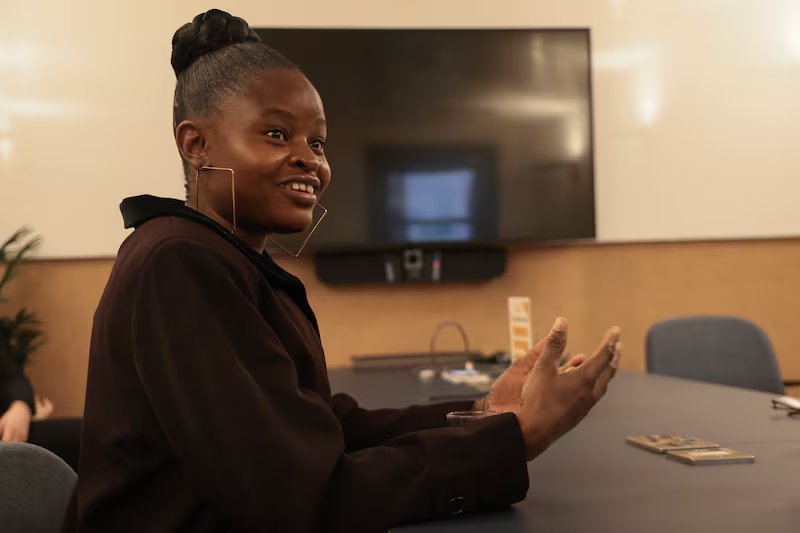
Among them is Bankole Oluwatoyin, a fashion designer who is finding the confidence to develop her business in Belfast.
The designer behind Afrocentric fashion and lifestyle brand La’ Nike Zibah had been considering restarting her business since moving to the city, but felt uncertain about how her work would be received in a different cultural setting.
Through Wear Her Story, she is finding both encouragement and a sense of belonging.
“It’s something personal to me, it’s a way of letting my voice be heard,” she tells The Irish News.

Developed by Dundalk Institute of Technology (DkIT) in partnership with women’s charity Glow NI, Wear Her Story is a PEACEPLUS Changemakers project funded by the Special EU Programmes Body.
Over 15 months, participants will take part in creative workshops, museum visits and wellbeing activities, working towards a final exhibition and showcase in 2027.
Its next workshop takes place at Vault Artist Studios on November 14 as part of the RE[act] Festival, using archive footage of the Irish linen industry to encourage conversations about memory, place and Northern Ireland’s textile heritage.
Participants will draw on their own experiences and family memories to develop stories together, which will inform designs created in later workshops.
For Glow NI chief executive Treasa McClure, giving young women an opportunity to be listened to is central to the project’s purpose.
“A lot of the time girls come into Glow and it’s like nobody’s ever actually listened to their opinion before or valued what they’ve said,” she explains.
“We hope through the project that they realise that their thoughts and feelings are valued and that their designs matter and that they can put their own feelings and personality into the pieces they create.”

The project also opens up opportunities for young women who might otherwise struggle to access creative activities or specialist equipment.
Participants will explore everything from designing with recycled paper to 3D printing, laser cutting and creating clothes in virtual reality.
There are plans to make digital dresses that participants can virtually try on using their smartphones, as well as a virtual space in which to exhibit their work.
For founder and project lead Jacqueline Toal, an assistant lecturer at DkIT, the idea brings together two areas of her own working life.
Having spent almost eight years in textiles before moving into immersive technologies, she wanted to connect Irish fashion heritage with new ways of designing and storytelling.
“The idea was to use Irish textile and fashion heritage and get young women to think about their own heritage, where they came from, their memories and things that mean something to them,” she explains.
The young women will also help shape the workshops, with opportunities to suggest ideas and influence what they do.
“It’s very much about listening to the young women, that’s what it’s all about,” says Jacqueline.
Fashion is already part of Bankole’s family history. Her mother and grandmother were both designers, and she is now interested in exploring how African fabrics and Irish textiles might come together in her own work.

Although she already designs and makes clothes, she is keen to discover what different technologies could bring to her business.
“It’s important for me to explore the other side of fashion,” she says.
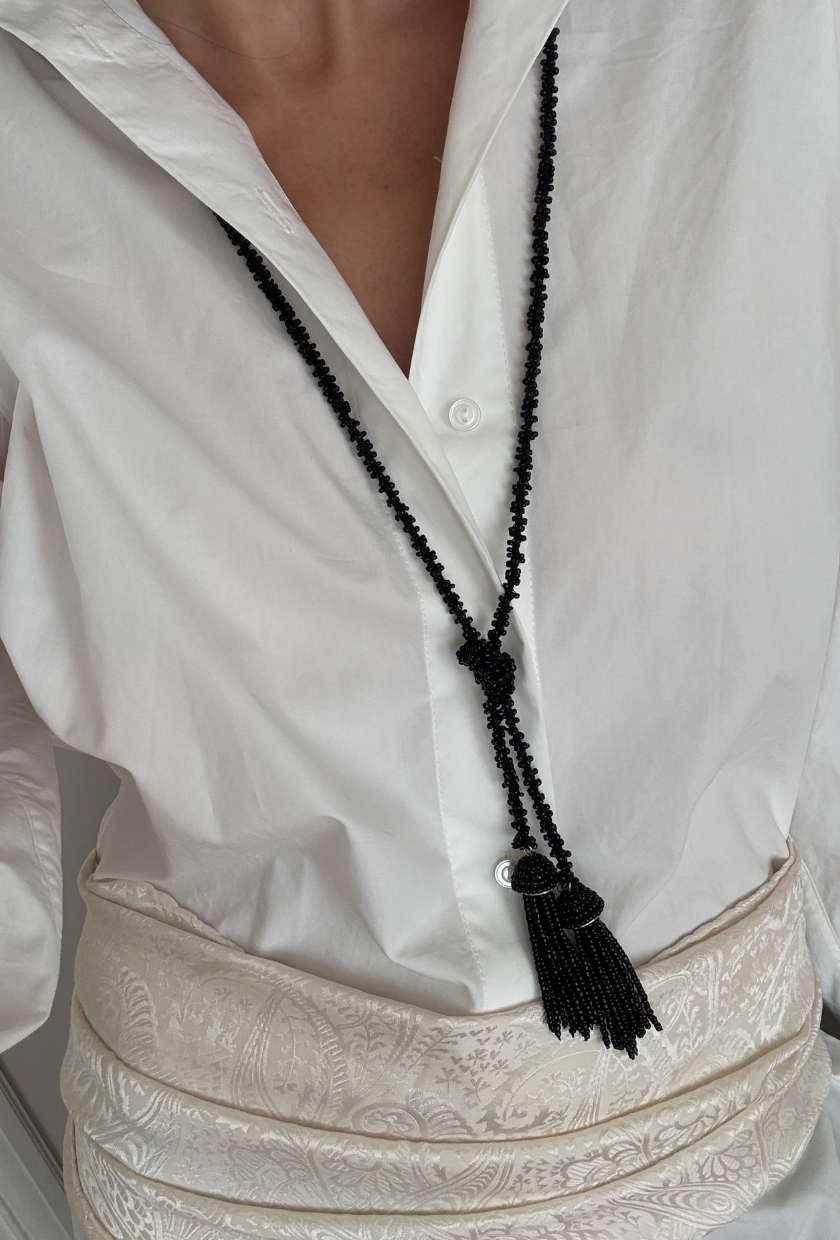
During our interview, she is wearing one of her own designs, a piece she credits the programme with encouraging her to create.
“Without the programme, it would probably just be another idea in my head and that wouldn’t get to come out,” she says.
Designing clothes allows her to turn those ideas into something others can see, using fabrics and styles to express her creativity and cultural identity.
“Fashion helps me to express myself, giving a voice to things that I’ve imagined in my head, and then I’m able to put them down and express them through clothing.”
Treasa sees a similar opportunity for self-expression in Glow NI’s wider work, which includes creative art therapy.
“Sometimes, particularly we notice in groups, it can be difficult for girls to talk about how they’re really feeling and say it in front of other people,” she explains.
“This is just a totally safe way to do it in a completely creative way.”
Alongside the creative work, the organisers hope friendships and connections with artists and facilitators will continue beyond the project.

Treasa wants participants to leave with the confidence to keep reaching out, whether they want advice, a collaborator or help taking their next step.
“It’s having the confidence to back yourself and expand your network.
“In addition to developing skills and experimenting with fashion, what we want to instil through this project is confidence,” she says.
Bankole hopes to build on the skills and connections she is gaining through Wear Her Story.
“I’m grateful and excited as to what this offers for me and my other colleagues in the future,” she says.
Her ambition is to eventually take La’ Nike Zibah worldwide.
“Once you put your mind to doing something, you can achieve it,” she says.
For more information on Wear Her Story visit @wear.herstory on Instagram or contact wearherstory@dkit.ie.