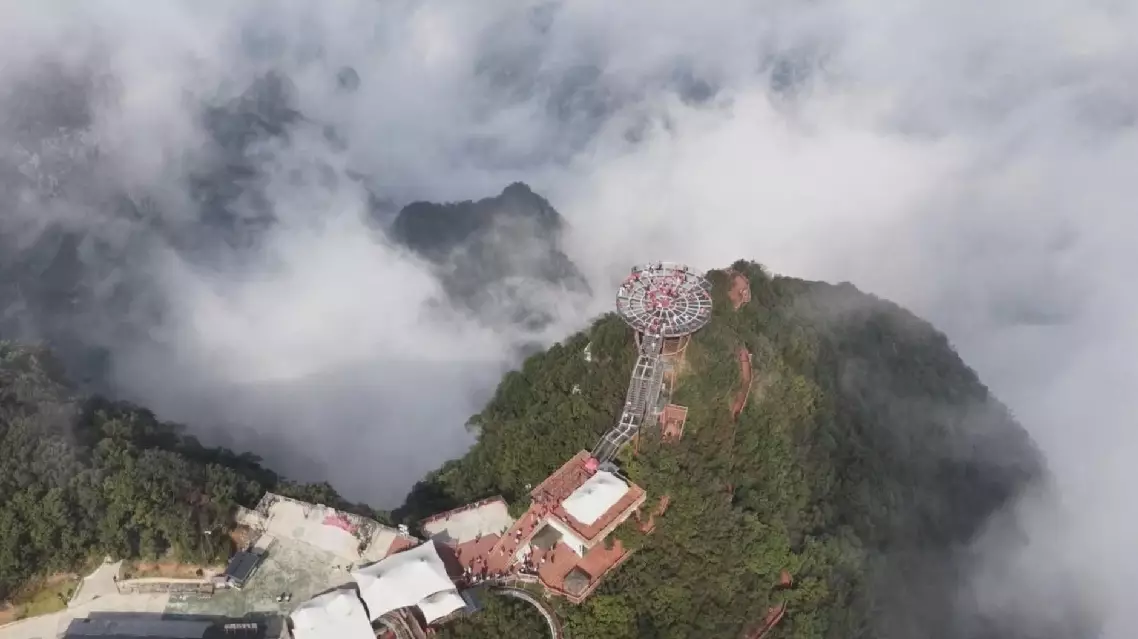
International visitors have been joining in the tourism rush during China’s week-long National Day holiday from Oct. 1-7, with many ditching the traditional sightseeing itineraries to instead immerse themselves in the rhythms of everyday Chinese life through all manners of activities.
With an expansion of visa-free entry policies and an increasing “China Travel” trend spreading online, more and more overseas visitors have been encouraged to make the journey to the country. Rather than glimpsing cityscapes through a car window, many are now keen to explore the streets and alleys on foot as they take in the country’s authentic charms.
In Zhangjiajie, a UNESCO World Heritage site in central China’s Hunan Province, the viral via ferrata ladder at Qixing Mountain — an iron-rung climb bolted to a cliff face more than 100 meters high — has become a must-try challenge for overseas visitors after sweeping social media platforms abroad.
“I saw a lot of videos of people doing it and a lot of friends of mine saw it as well and sent it to me. I’m excited of course. We can’t wait to do it,” said Italian tourist Gianandrea.
“[The coach is] very professional yes. And we understand, we’re good, it feels very safe and we’re going to, I’m excited [despite] those nerves,” said British tourist Jonah.
As night fell in Zhangjiajie, the 72 Wonder Towers, a landmark complex of traditional-style architecture, blazed with lights, and performers of the local Tujia ethnic group in traditional costumes drew the crowd on the bonfire square into a dance.
Visitors from abroad strolling by stepped into the line, moving to the drumbeats, no one minded the footwork, and no language barrier stood in the way as guests from around the world shared the moment.
“Wow, it’s so beautiful, isn’t it? It’s really wonderful. The people are really wonderful. I love it here. I’m loving China. It’s great fun,” said Sebastian from the UK.
In southwest China’s Yunnan Province, the family of Belgian tourist Marie, on their sixth trip to China, skipped the packed itinerary and signed up for a Yunnan cooking class, browsing a local market with their instructor in search of small-grain coffee, fresh vegetables, spices and wild mushrooms still flecked with dew and earth.
“We like to travel this way and the cooking class has brought a lot of different memories. This is definitely in my top three most memorable trips ever,” said Belgian tourist Alan Cerutti.
In Shanghai, the immersion took a quieter, more personal form, as Elif, a Swiss tourist, arrived with a hair salon already picked out on social media, hoping to try an authentic Asian-style haircut.
“Already to cut and dye long hair (in Switzerland), it’s like 200 (Swiss) francs [around 240 U.S. dollars]. [Here] it will cost me a little less than half the price of what I would pay in my country. I think it’s good to go, so it’s kind of like a souvenir that you just keep with you,” said Elif.
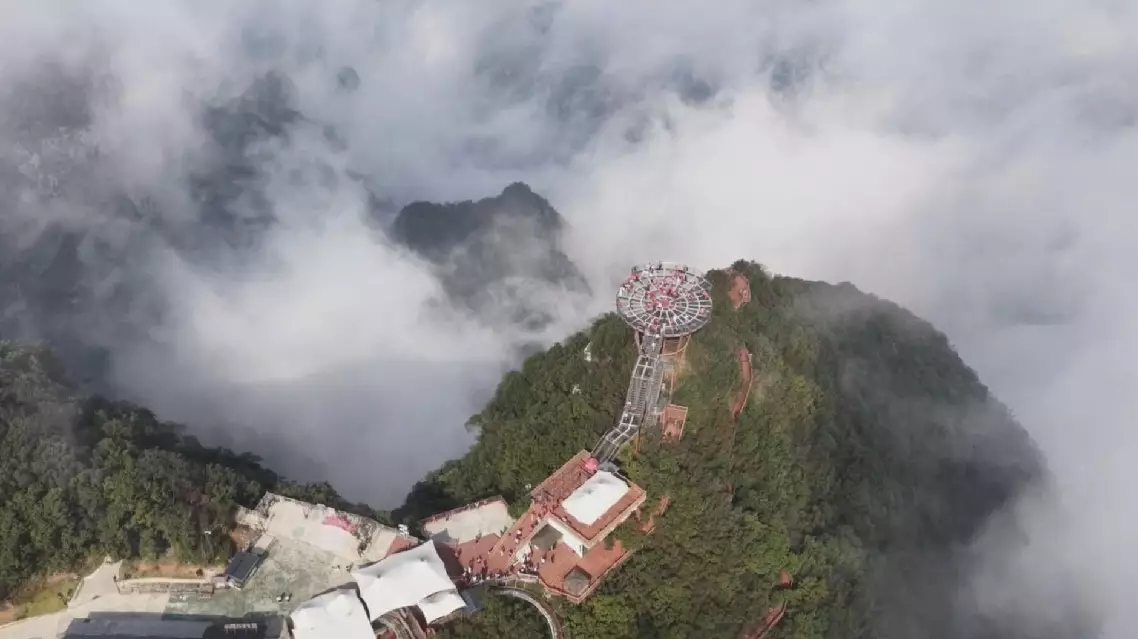
Int’l tourists embrace everyday activities during China’s National Day holiday
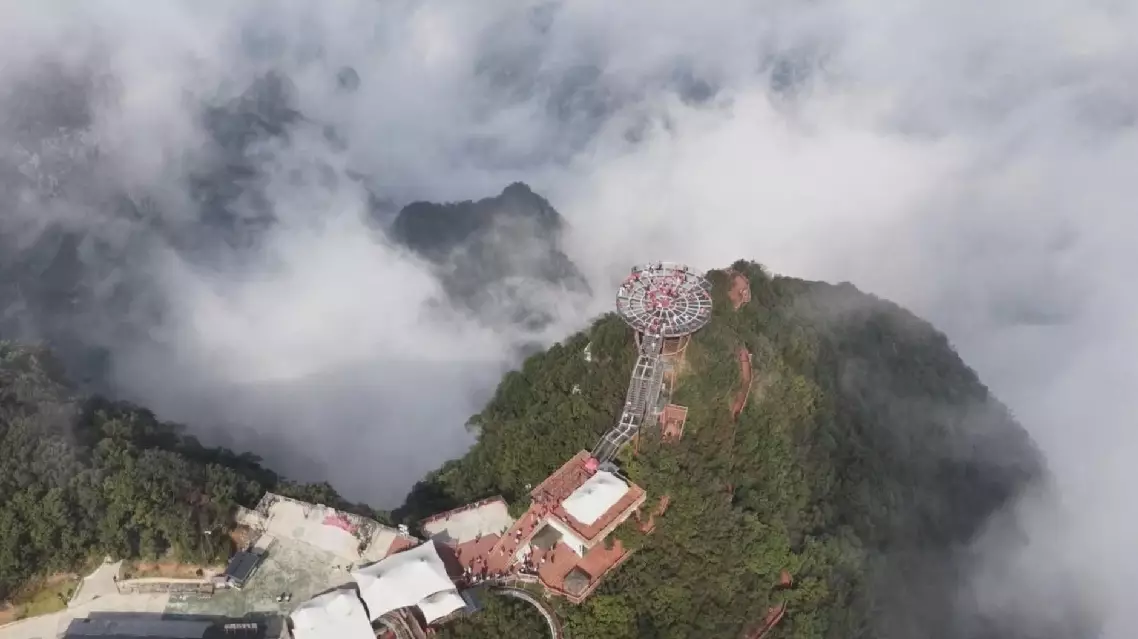
Int’l tourists embrace everyday activities during China’s National Day holiday
China’s 16th Arctic Ocean expedition achieved the country’s first video call spanning the North and South Poles on September 25, coinciding with the Mid-Autumn Festival, using a domestically developed satellite system with a delay of no more than one second.
The expedition deployed four vessels — Xuelong, Xuelong 2, Jidi, and Tansuo 3 — to study extreme environmental changes in the Arctic amid accelerating global warming. On September 29, China’s research icebreakers Xuelong and Xuelong 2 returned to Shanghai after completing their missions, while Jidi and Tansuo 3 continue their expedition tasks and are expected to return in mid-October following a three-month journey.
The expedition team held a satellite video conversation with China’s Antarctic Qinling Station, extending festive greetings to their polar scientific research counterparts and testing a large-scale constellation designed to provide global broadband internet and support integrated space-Earth 6G networks.
“This is the first time that China has used a domestically developed communications satellite system to make a video call across the largest latitude span,” said Liu Feng, a senior engineer at the National Marine Data and Information Service.
The around-13,000-satellite GW constellation, led by China Satellite Network Group (SatNet), is China’s first mega low Earth orbit satellite internet project. During the polar test, the maximum uplink and downlink speed reached around 30 megabits per second, equivalent to taking about 10 minutes to download a 1GB file. The equipment can also be used for emergency rescue and maritime communications.
“During the test period, it also supported real-time communications among Xuelong, Jidi, Tansuo 3, the National Marine Data and Information Service and the Polar Research Center. After Jidi and Tansuo 3 entered ice zone operation areas, their communication could not be guaranteed. So file transfers and navigation logs had to be transmitted through the SatNet equipment,” said Zhang Bin, an engineer at the National Marine Data and Information Service. The successful test of the domestically produced satellite communication equipment marks China’s independent control over polar region communications. The equipment ensures that data remains within the country, effectively safeguarding data security.

China holds first video call between North, South Poles via homegrown satellite system