I’m an astronomer. Here’s why Elon Musk’s planned one million satellites could be a very bad idea

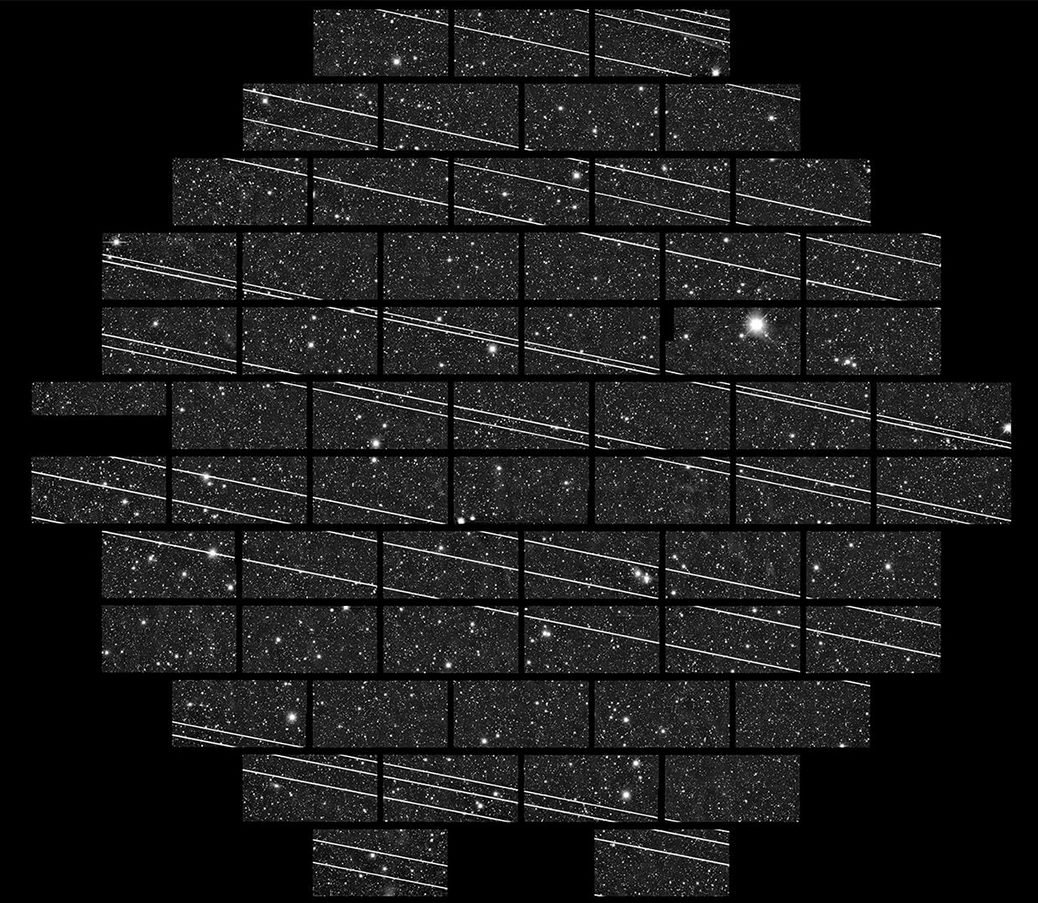
A 333-second exposure captured using the Blanco 4m telescope at the Cerro Tololo Inter-American Observatory (CTIO) shows 19 streaks that astronomers attributed to Starlink satellites. Credit: NSF’s National Optical-Infrared Astronomy Research Laboratory/CTIO/AURA/DELVE

News that SpaceX has been granted permission by the US government to launch a million satellites into orbit is potentially catastrophic for astronomy, but could also have serious, wider global consequences.

In terms of astronomy, the impact could be disastrous.

There would be 60 times as many satellites as there already are in our Starlink-filled skies and these data centre satellites are expected to be considerably larger and therefore much brighter.

They are also planned for higher orbits, meaning they will remain visible for longer after sunset.
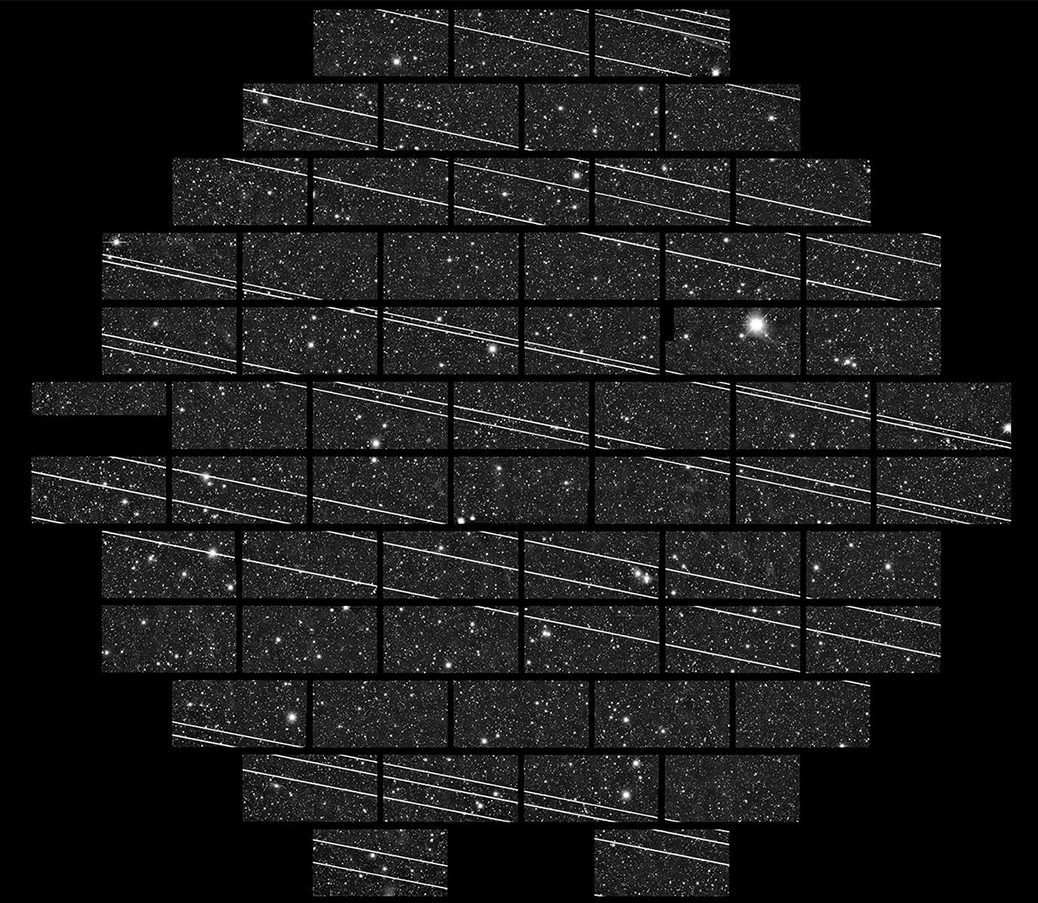
A 333-second exposure captured using the Blanco 4m telescope at the Cerro Tololo Inter-American Observatory (CTIO) shows 19 streaks that astronomers attributed to Starlink satellites. Credit: NSF’s National Optical-Infrared Astronomy Research Laboratory/CTIO/AURA/DELVE

The result could be a dramatic reduction in the amount of astronomical observation possible from anywhere on Earth.

Putting so many large satellites into orbit also present enormous risks.

Orbital space is already becoming so congested that active traffic management is needed to prevent collisions.
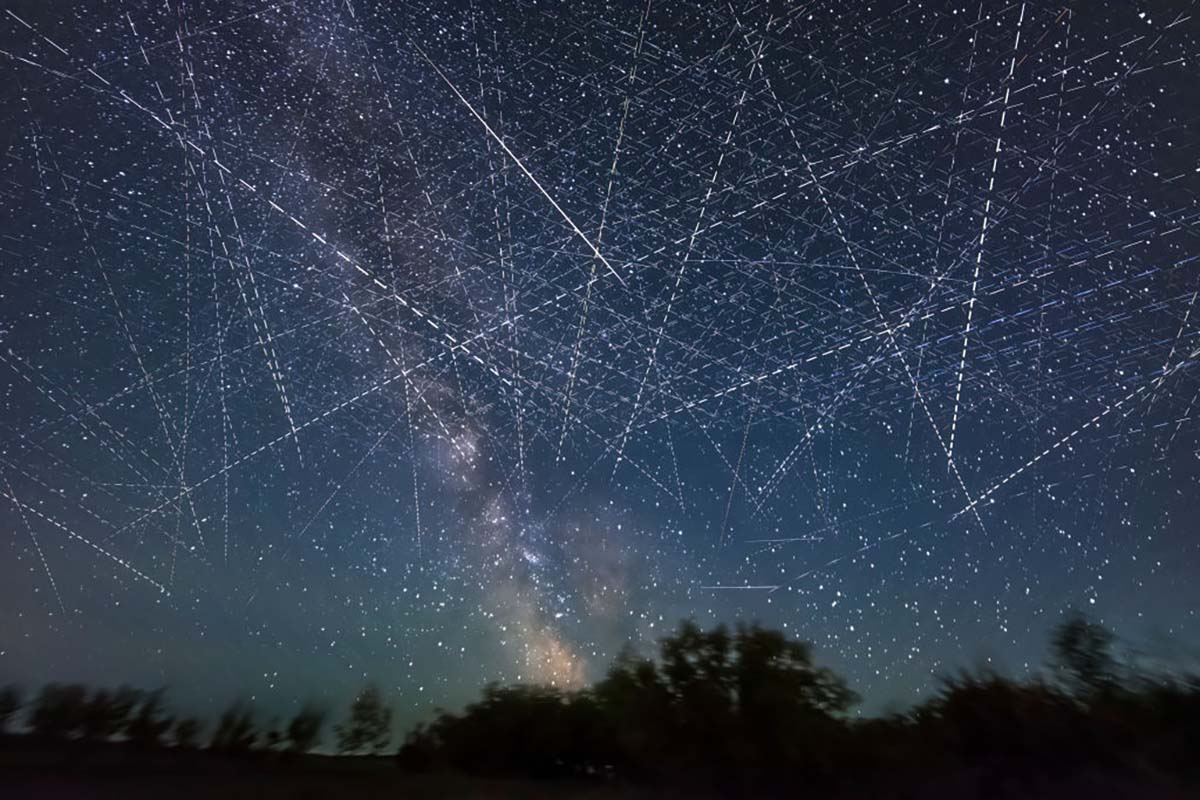
Exposures taken over 30 minutes showing the passage of artificial satellites across the night sky. Credit: Alan Dyer/VWPics/Universal Images Group via Getty Images

With a million satellites, that system would have to be exceptionally effective.

Even a single collision could generate debris, which could then strike other satellites, creating yet more debris and triggering a chain reaction.

This is known as the Kessler syndrome and could eventually make low Earth orbit unusable, potentially for centuries.
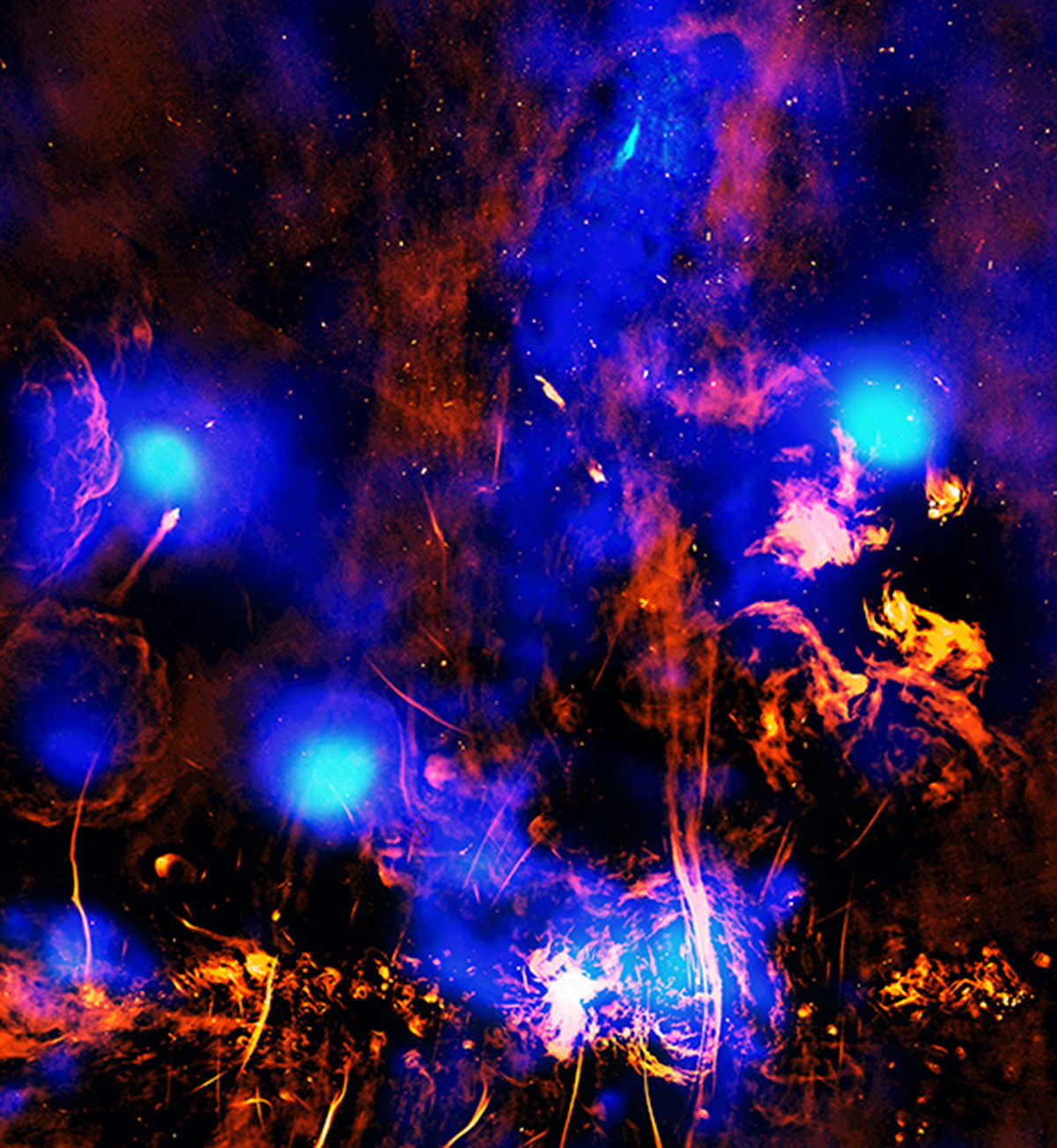
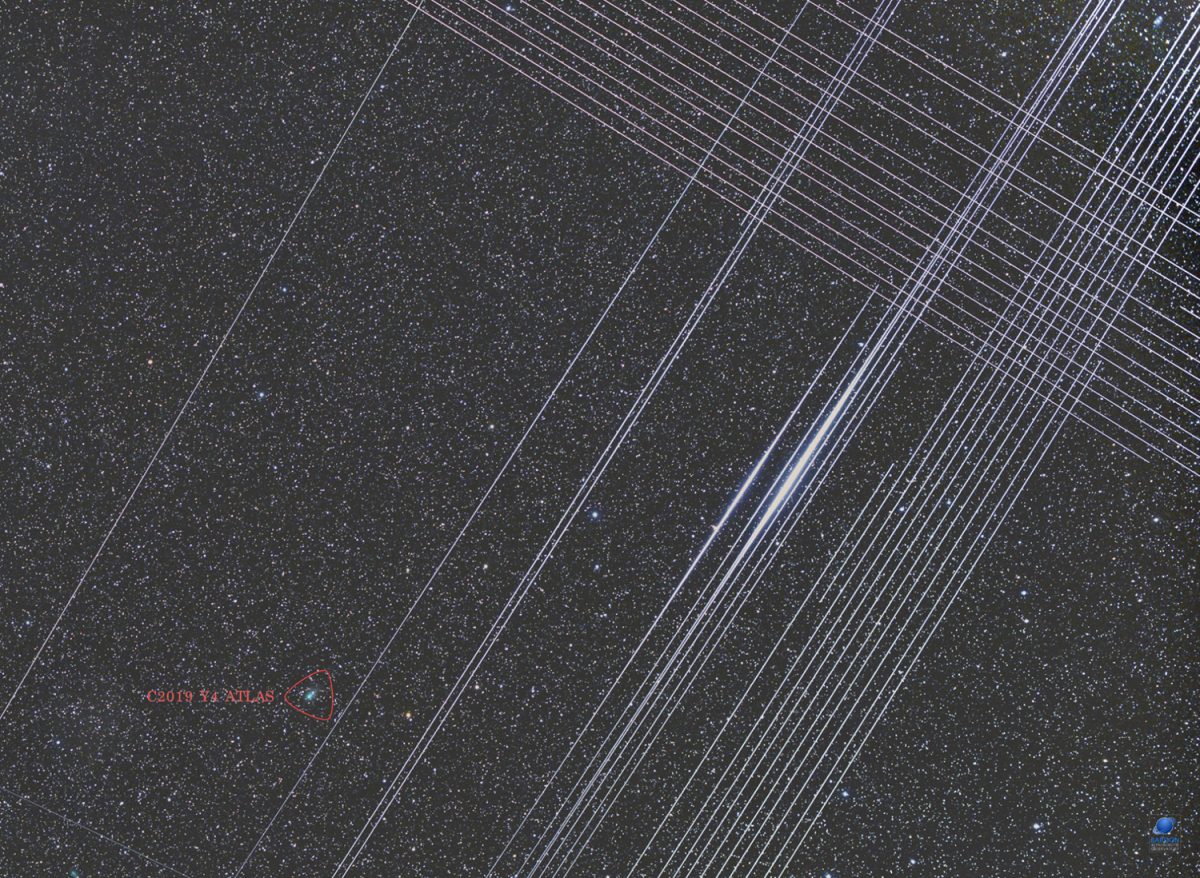
Image of the region near the centre of the Milky Way galaxy showing the supermassive black hole Sagittarius A*, a chimney and a vent funnelling cosmic material outwards. Captured by the Chandra X-Ray Observatory and the MeerKAT telescope. Credit: X-ray: NASA/CXC/Univ. of Chicago/S.C. Mackey et al.; Radio: NRF/SARAO/MeerKAT; Image Processing: NASA/CXC/SAO/N. Wolk
Credit: X-ray: NASA/CXC/Univ. of Chicago/S.C. Mackey et al.; Radio: NRF/SARAO/MeerKAT; Image Processing: NASA/CXC/SAO/N. Wolk
Zdenek Bardon captured Starlink satellite trails while imaging Comet C2019/Y4 (ATLAS) from Rasošky, Czech Republic on 19 April 2020. Credit: Zdenek Bardon

Finally, there are serious questions about what happens when these satellites reach the end of their lives.

The standard approach is to de-orbit them and allow them to burn up in the Earth’s atmosphere.

However, burning up a million large satellites, containing a wide range of complex chemical compounds, could have significant and currently unknown consequences for the upper atmosphere.

The ozone hole is a reminder of just how vulnerable our atmosphere can be.

We simply do not know what the cumulative effects of releasing such large quantities of material could be.

What are your thoughts on this news? Let us know by emailing contactus@skyatnightmagazine.com

Source link

Leave a Reply

Your email address will not be published. Required fields are marked *