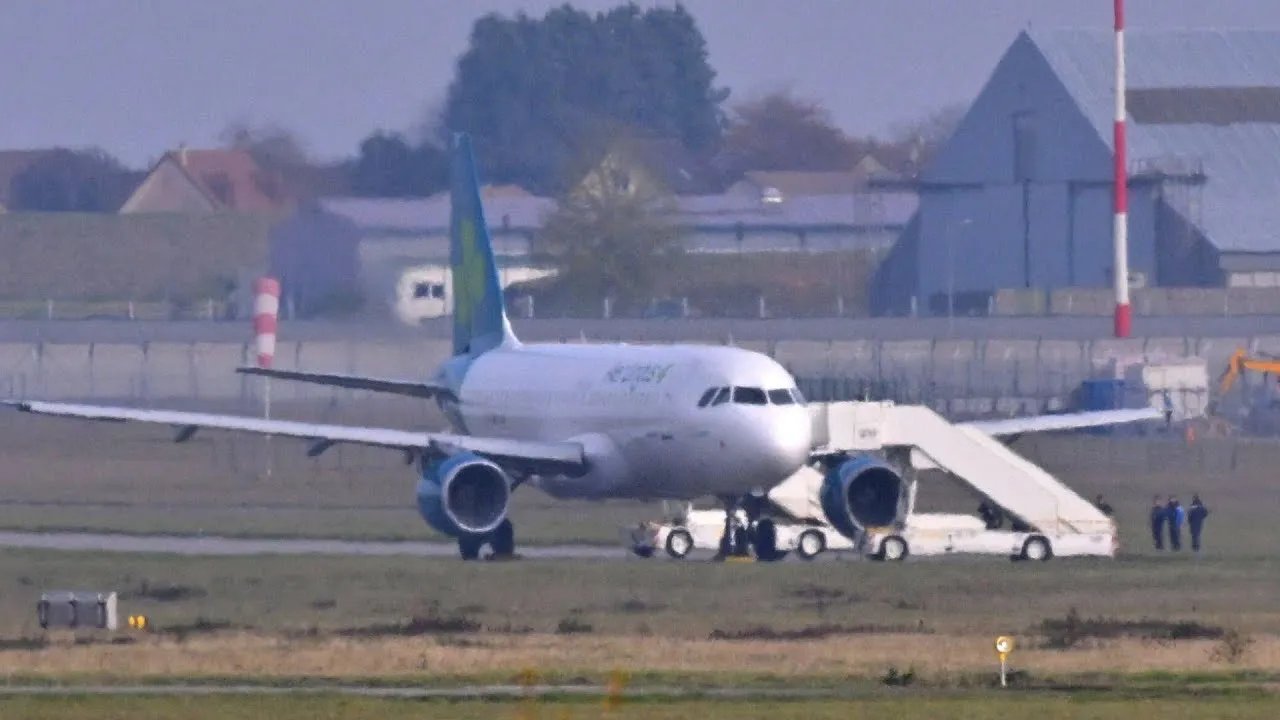
At least 18 flights were reportedly affected by bomb threats across Europe on Thursday, disrupting air travel in France, Italy, Austria, Romania, Poland, Belgium, Bulgaria, the Czech Republic, and Spain. The incidents follow a similar wave of threats earlier this week, triggering emergency landings, diversions and security checks
Multiple bomb threats targeting passenger aircraft have disrupted air travel across Europe for the second time this week, forcing emergency landings, flight diversions and extensive security checks. At least 18 flights reportedly received threats on Thursday, November 5, alone, according to the BBC.
The latest incidents came two days after at least seven flights were targeted on November 3. An earlier threat had also forced a Wizz Air flight travelling from London to Sofia to divert to Budapest on November 2.
Aircraft across several European countries have been escorted by fighter jets, diverted to alternative airports and subjected to security inspections. Although the threats have caused significant disruption, no explosives have been found on the aircraft inspected so far.
Although the threats prompted significant disruption, initial security inspections have not found explosives on the affected aircraft. Authorities have also not identified who is behind the threats.
What flights were cancelled on Thursday?
Several European flights were forced to change their routes or undergo security checks on Thursday following fresh bomb alerts.
An Aer Lingus flight, EI402, travelling from Dublin to Rome was diverted to Evreux airport in France, around 100 km west of Paris. The aircraft landed safely as a precaution, the airline said in a statement.
 More from Explainers
According to Reuters, the Airbus A320 was carrying 151 passengers and six crew members. They were moved to safety, while bomb disposal teams began inspecting the aircraft.
In another incident, a Finnair aircraft travelling from Helsinki to Rome was escorted by Italian Air Force jets before reaching its scheduled destination. A source familiar with the matter told Reuters that the aircraft was escorted safely to Rome. A Finnair spokesperson said the plane landed as normal.
Finnair also confirmed that another flight, operated by Jettime, travelling from Helsinki to Vienna had received a bomb threat. Both aircraft landed safely. While security checks in Rome found nothing suspicious, the inspection in Vienna was still under way, the airline said.
Other affected flights included an Aegean Airlines service from Thessaloniki to Milan and a Ryanair flight from Porto to Milan. Both landed in Milan.
Two Wizz Air flights were also affected. A service from Milan to Bucharest landed at Henri Coandă International Airport, where nearly 200 passengers were evacuated. Another flight travelling from Milan Malpensa to Warsaw was diverted to Vienna following a bomb threat.
Belgian media also reported that an aircraft belonging to Polish airline LOT was forced to land at Brussels’ Zaventem airport.
LOT also confirmed that another of its flights, travelling from Warsaw to Paris, was affected. The aircraft was stopped while taxiing and directed to a designated parking stand for security checks. An inspection found no hazardous items. Passengers were told they would continue their journey on another aircraft.
Meanwhile, Spain’s airport authority reported bomb threats affecting three flights at Madrid airport. Security inspections ruled out any danger, although it was not immediately clear whether these included the Ryanair flight from Madrid to Sofia.
Bulgaria reported threats against three Ryanair flights travelling to Sofia from Copenhagen, Madrid and London Stansted. The first two aircraft landed in Sofia, while the London flight was diverted to Plovdiv.
According to the BBC, the four flights heading to Prague had departed from Greece, Ireland and the UK, with two originating in the UK. Czech police said inspections found no explosives aboard any of the aircraft.
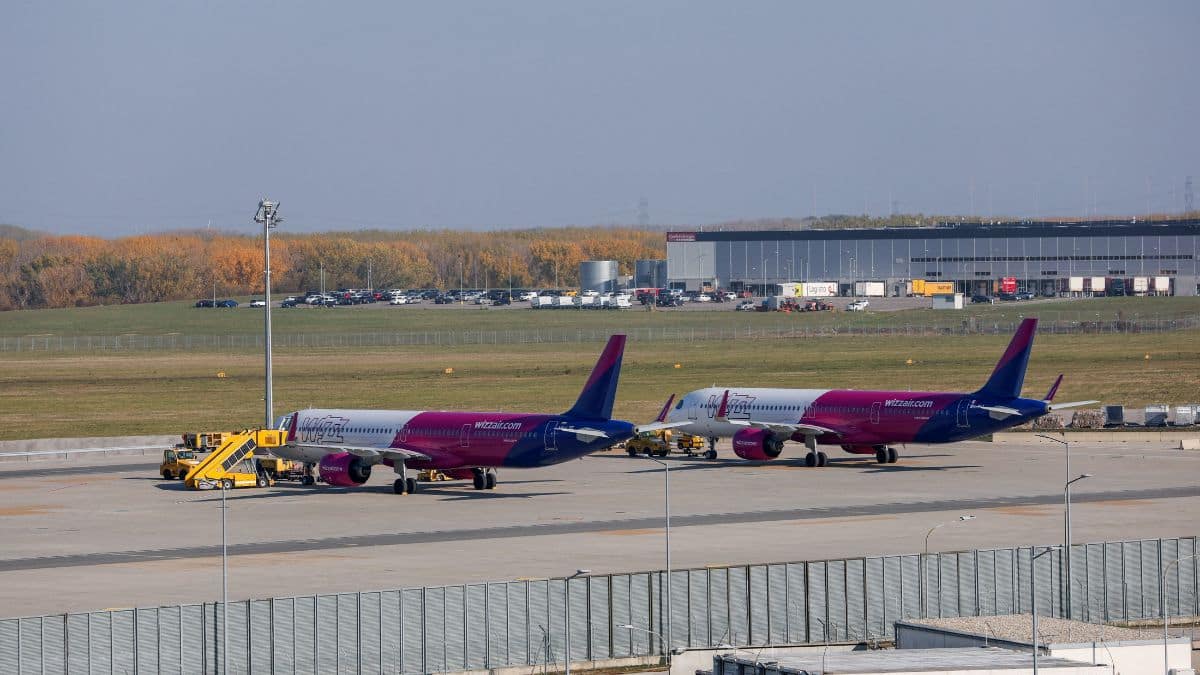
WizzAir aircraft at Vienna Airport after a Wizz Air flight from Milan to Warsaw was diverted to Vienna, and a Jettime-operated flight from Helsinki landed safely in Vienna after both received bomb threats, amid a series of similar threats affecting flights across Europe, in Schwechat near Vienna, Austria. Reuters
What happened on Tuesday?
The latest round of threats followed a series of similar incidents on November 3, when at least seven flights across Europe were targeted.
According to Sky News, two flights heading to Warsaw, two to Sofia, two to Rome and another travelling to Murcia in Spain received bomb threats.
One of the affected aircraft was a LOT Polish Airlines Boeing 737 MAX travelling from London Heathrow to Warsaw. It was originally scheduled to land at Warsaw-Chopin Airport but was diverted to Warsaw-Modlin Airport after a bomb alert was raised at 9.54 am. The aircraft was carrying 181 people and landed safely seven minutes later.
The threat was cancelled at 12.21 pm, according to the airport’s website. A LOT spokesperson said security officials found no suspicious items during the inspection. Passengers were subsequently taken to Warsaw-Chopin Airport by coach.
A Scandinavian Airlines flight from Copenhagen to Warsaw also received a threat. The aircraft landed at Warsaw-Chopin Airport, where authorities conducted security checks. No explosive device was found.
Spain was also affected when a Ryanair flight from Manchester made an emergency landing at Murcia Airport. All 114 passengers and seven crew members disembarked and underwent security checks.
Francisco Lucas, the Spanish government’s delegate in the Murcia region, said on X that the Civil Guard had ruled out the presence of explosives following an inspection.
Two other flights operated by Ryanair were checked at Rome’s Fiumicino Airport. One was travelling from Lisbon and the other from Dublin. The latter was escorted by the Italian Air Force before landing.
Airport operator ADR said both aircraft underwent security procedures, including searches of the planes, baggage, passengers and crew. No explosives were found, and the alerts were cleared. The airport said there was no threat to its premises and other flights continued operating.
Bulgaria also reported threats against two aircraft travelling to Sofia. A Wizz Air flight from Milan’s Bergamo airport was carrying 176 passengers, while a Ryanair flight from Dublin had 185 passengers on board. Both landed safely, and security checks found no explosives, the country’s transport ministry said.
The threats had also affected a Wizz Air flight travelling from London to Sofia on November 2. It was diverted to Budapest after receiving a bomb alert. Hungary’s defence minister said a Hungarian Gripen fighter jet was scrambled to escort the aircraft.
Who is behind the threats?
Authorities have not publicly established who is responsible for the repeated bomb alerts. However, the incidents have raised questions about possible attempts to disrupt European transport networks.
According to Reuters, the threats come amid concerns among European officials about what they describe as “hybrid attacks” and acts of sabotage linked to Russia and Iran. Both Moscow and Tehran have denied conducting such campaigns.
The BBC reported that Rome airport authorities received an emailed threat from a group calling itself “Fighters of the Male State”. The group claimed it was targeting a “feminist regime”.
Matthew Borie of Osprey Flight Solutions, which advises airlines on aviation security threats, told Sky News that the concentration of incidents across Europe meant “there could be a Russian angle”.
He also cautioned against focusing on just one country, and said, “We need to keep in mind, though, that Iranian hybrid warfare is just as active in certain pockets of Europe as well.”
Borie said travellers should not be alarmed, pointing to the “coordinated response mechanisms” used by national authorities. These can include deploying NATO fighter jets to escort aircraft when necessary.
What has the UK government said?
The repeated threats have also affected flights departing from British airports, including services from London and Manchester.
Responding to the incidents on November 3, a UK government spokesperson said, “The UK has one of the most robust aviation security systems in the world, with well-tested processes for dealing with any potential threats, as well as malicious hoax threats, like those we’ve seen today.”
The spokesperson added, “Our world-leading police and intelligence agencies work closely every day to keep us safe, using the tools they have to assess and respond to potential threats.”
UK Transport Secretary Heidi Alexander has described the incidents as “malicious hoax threats”, according to the BBC.
“The UK government takes these threats seriously, but we understand these have been malicious hoax threats,” Alexander said.
With inputs from agencies