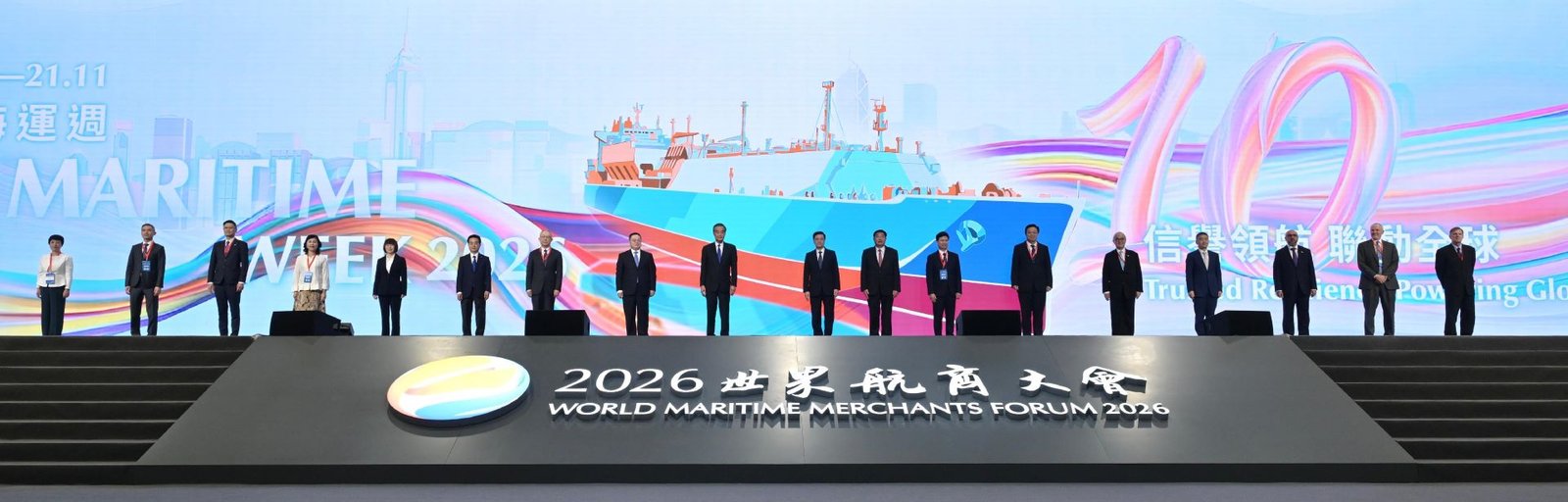
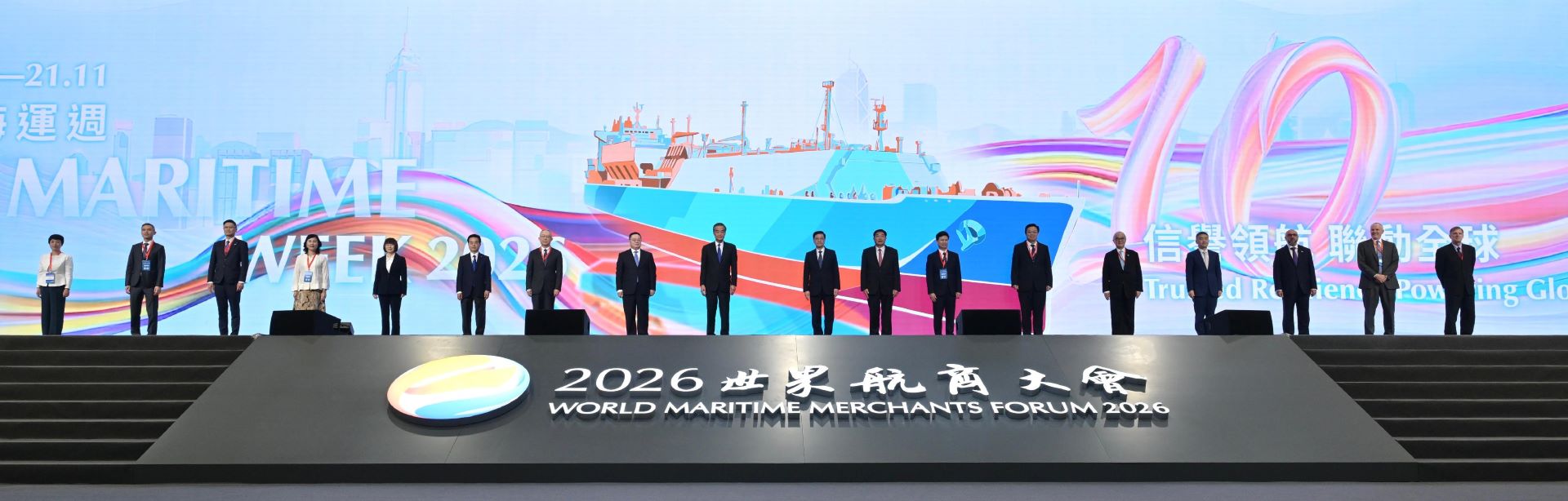
Government officials and industry practitioners discussed the need to strengthen multilateral collaboration to transform the global shipping industry through cross-border digitalization and decarbonization initiatives.
They made their remarks on Monday at Hong Kong Maritime Week 2026 and the World Maritime Merchants Forum 2026, organized by the Hong Kong Shipowners Association and co-organized by the Hong Kong Maritime Museum. This year marks the 10th anniversary of Hong Kong Maritime Week and the sixth edition of the World Maritime Merchants Forum.
Themed “Trusted Resilience Powering Global Maritime Trade”, the forum aims to address the challenges facing the global shipping industry amid complex geopolitical shifts, supply chain fragmentation and heightened market volatility.
ALSO READ: Chan: New partner ports to boost Hong Kong’s global hub status
Chief Executive John Lee ka-chiu said the Hong Kong Special Administrative Region will launch initiatives to empower the digital-green transitions of the global shipping industry.
“To unlock the full commercial potential of the green transition, we are advancing from physical bunkering to a market-driven, globally oriented and diversified green fuel-trading platform,” Lee said at the opening ceremony.
The chief executive said that the SAR government has announced the establishment of a dedicated task group comprising industry experts. It will advise on the strategic direction, infrastructure setup and market-tailored operating rules regarding the setting up of a platform for diversified green fuel trading.
“The initiative will integrate the entire value chain by forging partnerships to promote green fuel trading that will help establish Hong Kong as an international hub for green maritime fuel trading,” Lee said.
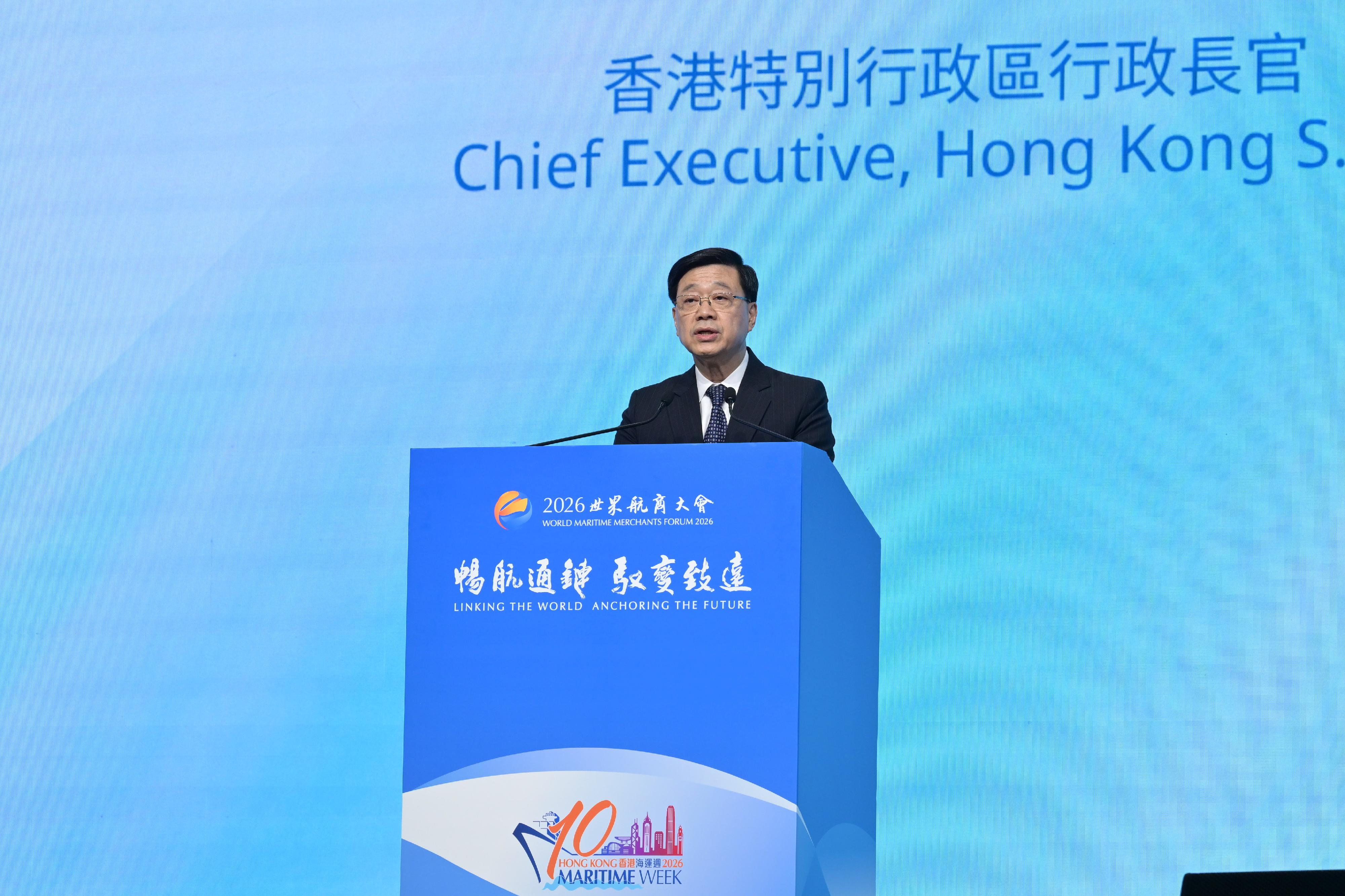
“Today, I am pleased to announce another agreement — the establishment of a green shipping corridor between the Port of Hong Kong and the Port of Piraeus in Greece. This landmark collaboration is a significant step forward in driving decarbonization along major Asian-European shipping routes,” Lee added.
The SAR also signed memorandums of understanding with Hainan province and Guangdong’s Zhanjian on Monday. While the Hainan MoU establishes a partner port relationship with Hainan’s Yangpu Port, the Zhanjiang MoU focuses on establishing the SAR’s first green energy corridor that connects mainland green fuel products with global maritime markets.
Addressing the forum, Vice-Minister of Transport Li Xinghu said the ministry will assist Hong Kong in stabilizing its port infrastructure, and will guide it regarding the rational division of labor and balanced port development within the Guangdong-Hong Kong-Macao Greater Bay Area, strengthening interconnectivity and building a green and intelligent world-class port cluster in the Greater Bay Area.
READ MORE: HK maritime week to highlight growth potentials, new port partnerships
Leung Chun-ying, vice-chairman of the National Committee of the Chinese People’s Political Consultative Conference, said, “The Hong Kong SAR should plan ahead and lead in the new development of digital intelligence and green shipping.”
The industry is undergoing an irreversible shift toward digitalization and green energy, Leung added; while the learning curve is steep, proactive planning is essential for long-term competitiveness.