By
Bloomberg
Published
October 26, 2026
Luca de Meo’s honeymoon at Kering SA is over.

The Gucci-owner has joined rivals LVMH Moet Hennessy Louis Vuitton SE and Hermes International SCA in confirming that the nascent recovery in China has stalled. And US sales, which had been compensating, have slowed down too.
While most top-end labels are grappling with the delay to luxury’s long-vaunted revival, there is more at stake for Kering and its chief executive officer. De Meo is embarking on an experiment in the luxury sector. A key plank of his plan is having the company’s disparate fashion divisions working more closely together. The former automotive executive also has developed “brand playbooks” setting out clear identities for each house.
But Gucci is not yet firing on all cylinders, and the rest of Kering’s fashion brands are all grappling with creative transitions. Alexander McQueen and Balenciaga each look set to recruit their second couturier in three years.
To put Kering on firmer footing, De Meo must stop Gucci from being ghosted by shoppers. The upheaval at the other brands also underlines the need to take designers with him on his turnaround, which borrows its blueprint from the auto industry.
There is no doubt that De Meo made an incredibly strong start. Within weeks, he had strengthened Kering’s balance sheet by renegotiating the terms of a deal to potentially buy the shares in Valentino it does not already own. He also sold the company’s nascent beauty business to L’Oreal SA for €4 billion ($4.5 billion). That helped to cut borrowings from €10.5 billion at the end of 2024, to €3.3 billion as of June, excluding store leases.
There were signs of improvement at Gucci too, as the brand reconnected with consumers in the US.
But last week, De Meo reported that Gucci sales had gone backwards again. The label’s third-quarter revenue fell 6% from a year earlier excluding currency movements. That was worse than the 3.3% decline expected by analysts. Kering’s stock price fell as much as 17% in response on Friday, its steepest one-day drop in decades. Almost all of the gain since De Meo’s arrival has now been erased.
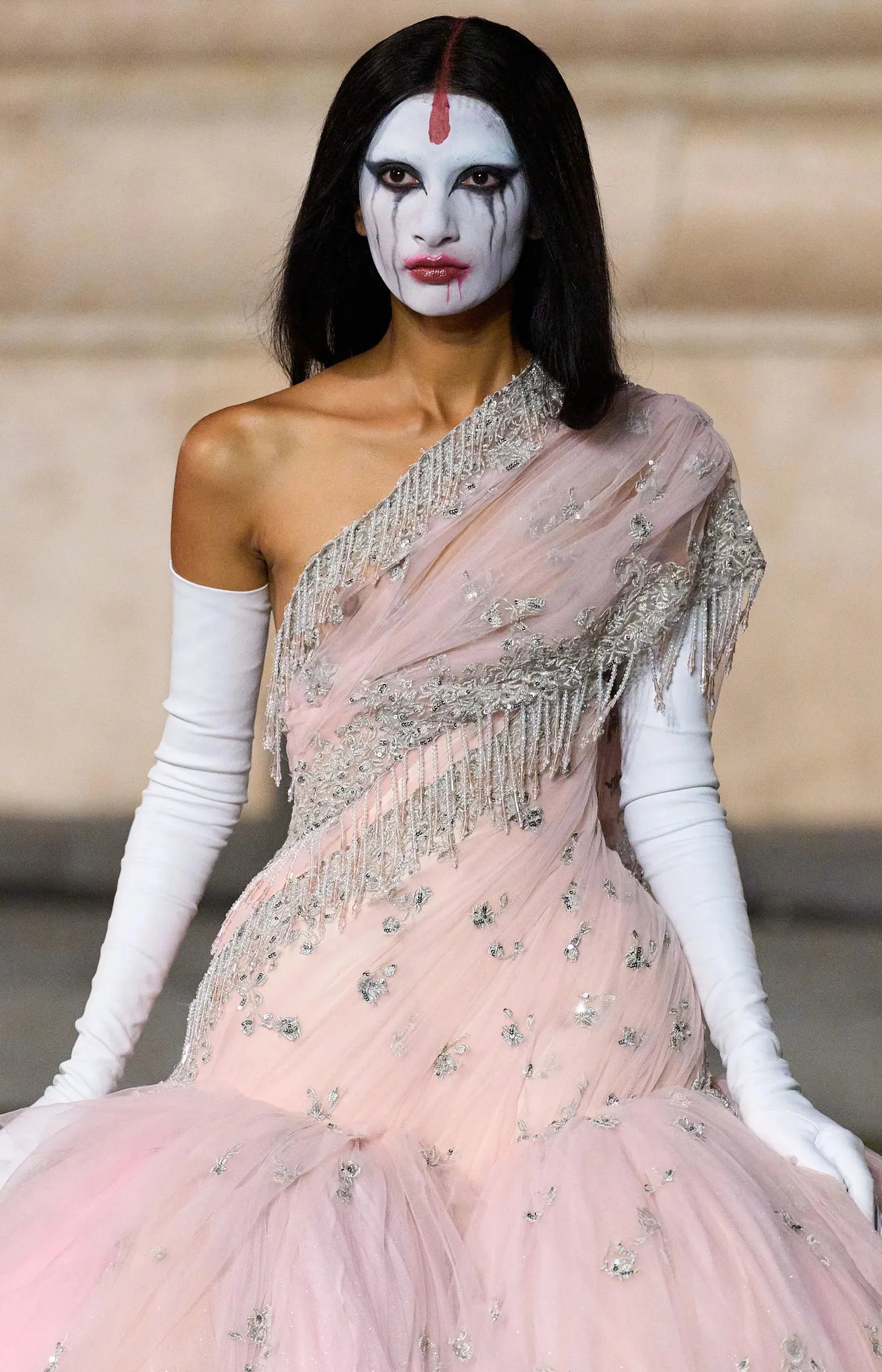
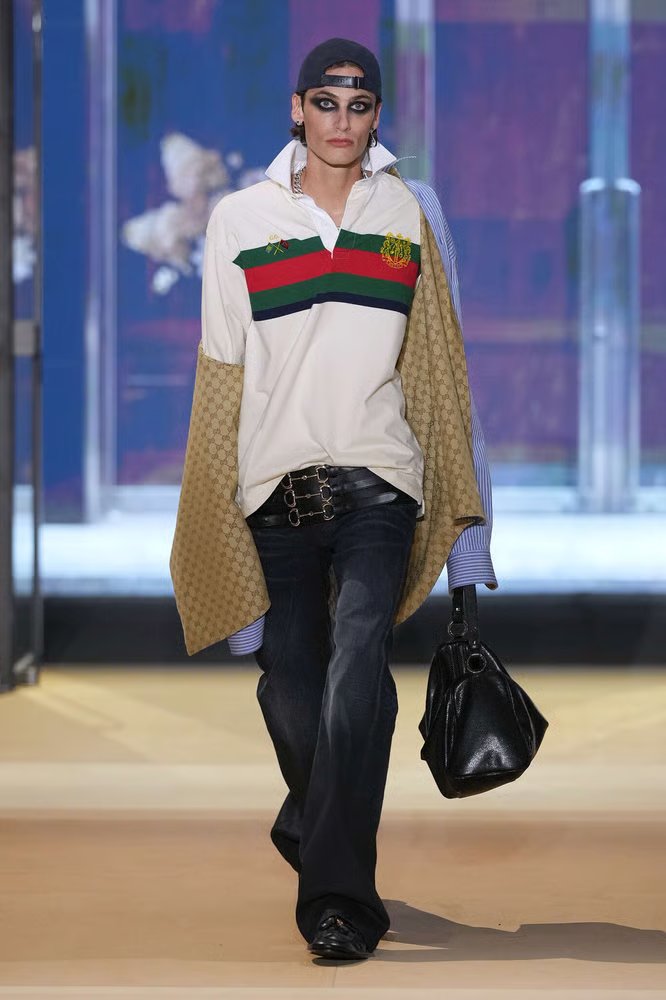
Gucci’s strength or weakness is the biggest driver of Kering’s performance. At its peak, the brand accounted for more than 60% of the company’s total revenue. But Gucci creative director Demna Gvasalia has yet to set out a compelling vision. Like De Meo, his initial success with the label didn’t last long.
Sales at Gucci stores fell 9% in the third quarter. Kering Chief Financial Officer Armelle Poulou — De Meo was not on the analyst call — blamed this on less newness at Gucci than a year earlier, when parts of Demna’s first (and well-received) La Famiglia collection initially hit stores. Primavera, his next major range, arrived between July and September this year. More divisive, it appealed mainly to cutting-edge customers. A broader, more wearable selection known as Gucci Core will arrive in November. Gucci also had 25 fewer stores than at the start of the year.
Given that Demna’s designs were meant to reestablish Gucci as a fashion leader and revitalize sales, this isn’t a great look, especially next to the frenzy over Matthieu Blazy’s creations for Chanel Ltd. Even Dior’s slower progress under Jonathan Anderson appears to be accelerating, with LVMH CFO Cecile Cabanis telling analysts two weeks ago that Anderson’s collections were building consistently season after season.
Sales might pick up as more of Gucci Core comes into stores. A new look for the label’s boutiques will be unveiled in November too — and once the midterm elections are out of the way, US consumers may be more willing to spend again.
But how long will De Meo give Demna to get Gucci going in the right direction?
For De Meo that question is compounded by the change underway at Yves Saint Laurent, which in recent years has been the most stable house at Kering. Saint Laurent is still performing relatively well, yet Creative Director Anthony Vaccarello is departing the house after a decade, while Seán McGirr is leaving Alexander McQueen. There is also speculation that Pierpaolo Piccioli is set to exit Balenciaga after less than two years.
All three, like Demna, were appointed by De Meo’s predecessor, Francois-Henri Pinault, who is now chairman.
De Meo has seamlessly fit into Kering’s C-suite and the front row of its fashion shows, with his impeccably tailored suits, expensive watches and dapper breast-pocket handkerchiefs. It’s natural that the former Renault SA CEO would want to stamp his authority on the houses.
Creative resets are time consuming, though. It can take about 18 months for a designer to reach their full potential. The shakeups at Kering’s brands risk pushing the results of De Meo’s strategic blueprint further into the future. And any new names will be De Meo’s hires, making him fully responsible for their success or failure. (It was De Meo who moved Francesca Bellettini from her job as deputy CEO and head of brand development for Kering into the role of president and CEO of Gucci, so he already shares responsibility for the label’s recent struggles.)
Presumably any new designers he appoints will agree to the guidelines in his brand playbooks. But there must also be room for some fashion magic.
De Meo may take the challenges in his stride. After all, he is used to dealing with the brutal competition and thin margins of the car industry.
Even so, it is time for Demna — and De Meo — to start delivering.