RCS (Rich Communication Services) was supposed to make Android texting feel modern, so much so that Google dragged Apple into supporting it, even without blue bubbles. Then Samsung Messages shut down and left Android users with nowhere else to go.
That’s because, as of this summer, Google Messages is the only Android app that can send RCS. Samsung shut down Samsung Messages in the US on July 6, and AT&T set its own Advanced Messaging RCS to sunset the same month, leaving Google’s app as the last option standing.
Google hasn’t yet released a public way for other apps to use RCS, and all three major US carriers now run their RCS on Google’s servers. So the open texting standard Google spent years pushing on Apple now runs through one Google app on Google’s servers.
RCS was supposed to be the SMS of modern messaging
Google even got Apple on board

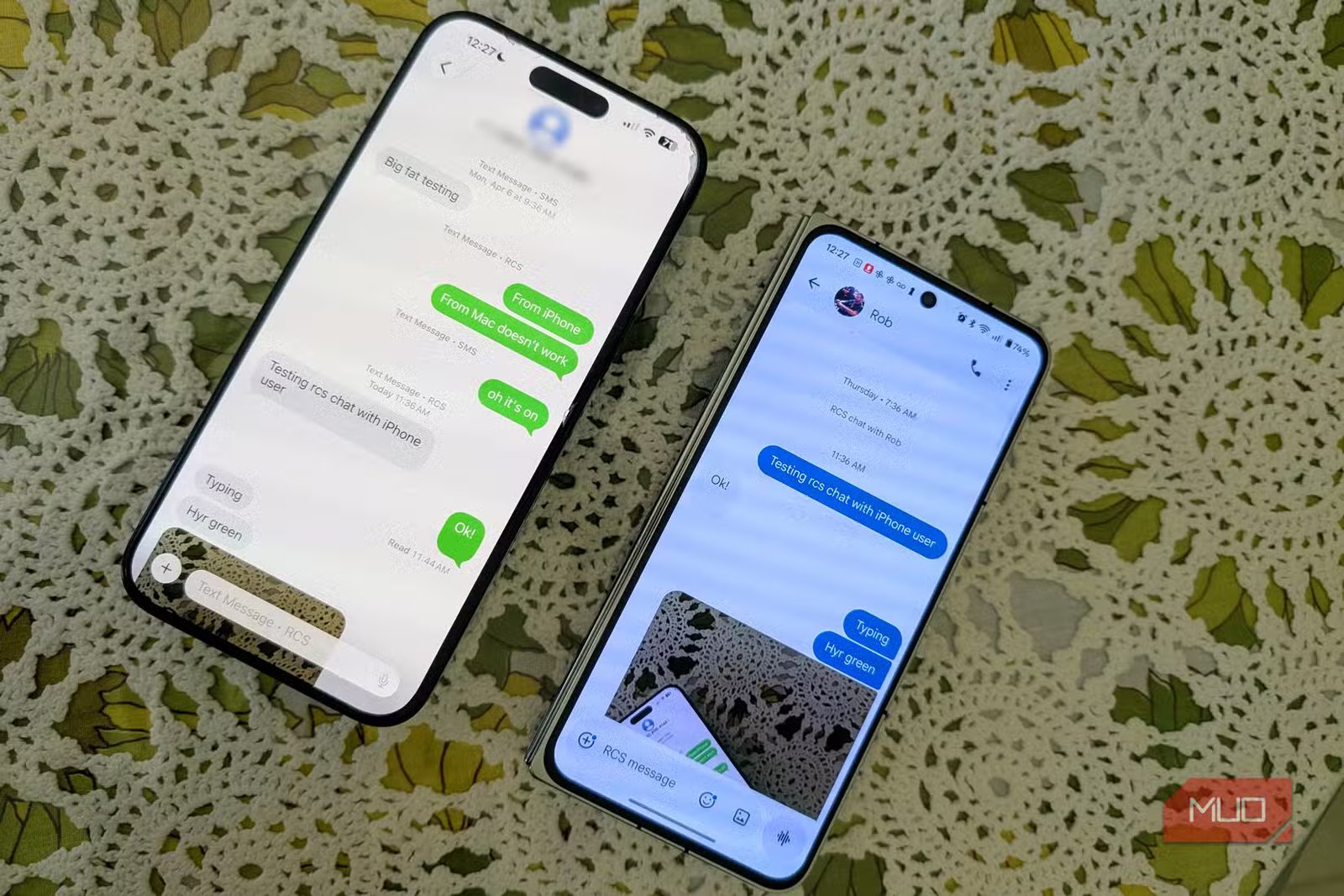
Giving credit where it’s due, Google did the heavy lifting to make the carrier standard RCS a real thin when it bought provider Jibe Mobile in 2015. Apple held out for years before it added RCS in iOS 18, and in May 2026, the two companies started rolling out end-to-end encrypted RCS between Android and iPhone in beta.
Now group chats actually work, photos arrive at higher resolution, and cross-platform texts are starting to get a lock icon. It’s too bad the story doesn’t end there, because that’s a big win in itself.
Every other Android texting app is locked out of RCS
Seven years of a missing API
rcs
The problem here is that no other apps besides Google Messages can send RCS on Android, because Google hasn’t publicly shared a way to do it. Back in 2019, Google shelved a set of planned RCS APIs, with a note saying they were pulled from Android Q. These APIs never came back, and it’s now seven Android versions later.
In 2021, XDA found an Android Messages API that let other apps send RCS through Google Messages, but it was restricted to Samsung’s apps. Beeper only got RCS working by reverse-engineering Google Messages for the web, noting there was no published API. As recently as October 27, a GrapheneOS contributor found that Jibe RCS provisioning requires DroidGuard, an internal Play Services API third-party apps can’t call.
And switching to Textra or Fossify Messages now means giving up RCS entirely.
Google’s stock answer to critics is this: spam. When it started blocking RCS on rooted phones and custom ROMs through Play Integrity checks, a spokesperson told Android Authority, “a large volume of RCS spam comes from automation, which typically relies on modifications to the sending device.”
Your carrier’s texting service now runs on Google’s servers
Check who’s actually carrying your chats

AT&T and T-Mobile both moved their RCS backend systems to Google’s Jibe platform in 2023, and Verizon did the same in 2024. You can check your own provider by tapping your icon in Messages, then tapping Messages settings > RCS chats.
That means when you send RCS messages, they necessarily travel through Google’s RCS infrastructure. Google uses your phone number, device identifiers, and SIM card number. It may keep that data for a month, and will check whether your contacts have RCS every time you send a message. Photos and videos are temporarily stored on Google’s servers, too.
The built-in end-to-end encryption RCS offers doesn’t apply to Google knowing your number, your SIM, and which contacts it checks when you hit Send.
The cross-platform version between Android and iPhones is still in beta, too, and both parties need a supporting carrier for it to even work.
Carriers don’t mind because they still get paid
Business messages are the real money

Carriers had reasons to give up providing their own RCS systems. Verizon’s own RCS backend drew complaints about send and receive errors, and it was then able to hand that headache to Google. Google pitched Jibe Cloud as a way to run RCS on Google-hosted infrastructure, so the carrier keeps its name on the service while Google runs the servers.
The bigger reason is business messaging. Google’s RCS for Business traffic is billed according to each carrier’s rate card, so every airline boarding pass and delivery alert still earns carriers money. Juniper Research expects operator revenue from business RCS to grow from $1.2 billion in 2025 to $3.1 billion in 2027, and US business RCS traffic jumped from 494 million messages in 2024 to 3.2 billion in 2025.
While US deal terms aren’t public, India can provide an example. Airtel’s RCS deal with Google reportedly has an 80:20 revenue split in Airtel’s favor. Carriers keep the revenue while Google keeps the infrastructure.
Google Messages is good, and that’s exactly why the lock-in matters
The fix is a single public API provision

To be completely fair, Google Messages keeps getting better, with features like the recently added per-chat themes. The Jibe consolidation also helped manage the carrier to carrier mess that made early RCS so unreliable. Most of us won’t even notice the lock-in.
And that’s the problem. Previous Samsung Messages users are already missing features Google’s app still lacks, and they have no leverage. A competitor can’t win them over with a better app, because a better app can’t send RCS.
Google could change that with a public, versioned RCS API for Android, guided by the same integrity checks it already uses. Until then, Android’s “open” texting standard only works in one app, on one company’s servers, with that same company’s permission.
Open standard, closed door
Google spent years telling Apple to get the message, but on Android, it built the only messenger allowed to deliver it. Competition is good, as we all know. Allowing other app makers teh ability to compete with Google Messages can only make the service better in the long run.