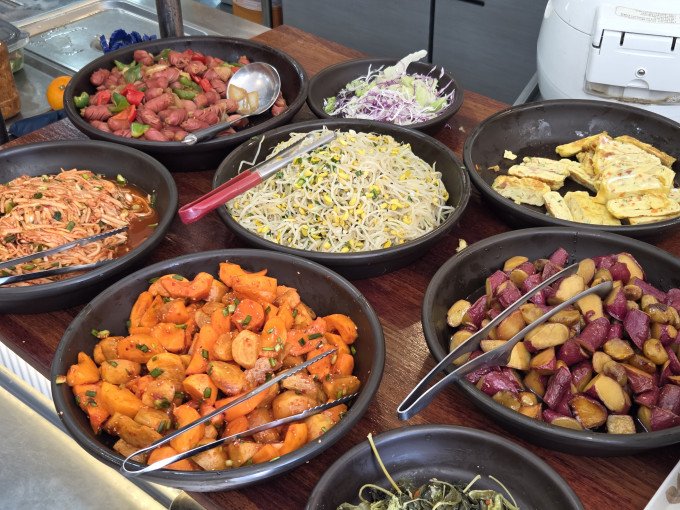
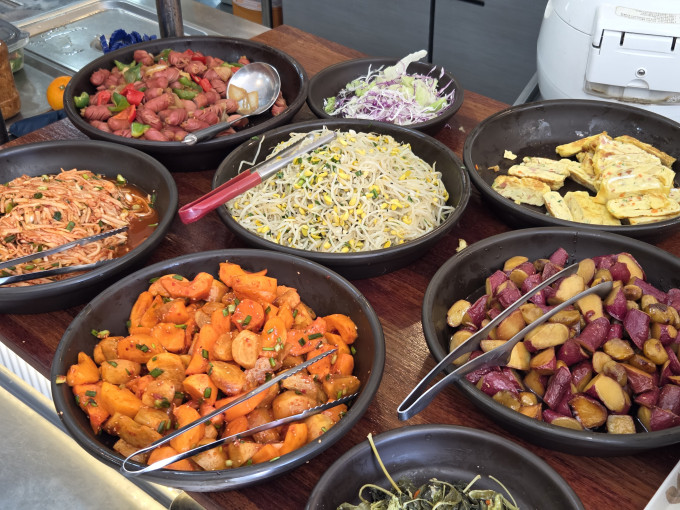
A table set with Gochang specialties, featuring seasonal greens and a variety of side dishes. Provided by Children’s Science Donga
A recent health checkup showed my blood level of low-density lipoprotein (LDL) cholesterol was high. LDL is what we commonly call “bad cholesterol.” The doctor’s prescription was simple: cut out fried foods, dairy fat, and alcohol. Avoid trans fats and reduce saturated fat as much as possible.
With these new dietary restrictions in place, I got on a bus to Gochang in North Jeolla Province on November 6. I was headed there to cover the Earth Love Explorers (ELT) “Junior Gourmet Culture & Ecological Exploration Camp,” held on November 6–7. A gourmet camp when there’s hardly anything I’m allowed to eat? I arrived in Gochang with that worry, only to be greeted by clear autumn skies.
● A seasonal table rich with dishes, even without a single fried food
My worries melted halfway away as soon as I sat down to lunch on the first day. The seasonal table laid out at “Goidol Ecological Table” in Gochang-eup was abundant despite not having a single fried dish. Home-fermented glutinous red pepper paste, foods made with fermented ingredients, and seasonal greens filled the table.
I took a bite of the persimmon kkakdugi made with sweet, crisp persimmons. A gentle sweetness spread after the crunchy texture. Even without oily food, the meal was far from boring. Side dishes featuring bokbunja (Korean black raspberry) and hwangto sweet potatoes, both Gochang specialties, added to the joy of eating.
The story behind the table continued into the afternoon wetland exploration. Jang I-gwon, professor in the EcoScience Department at Ewha Womans University, who explained the diverse organisms living in the Ungok Ramsar Wetland, said, “Delicious food is the result of a region’s natural environment and its long-standing ecosystem working together over time.”
Professor Jang pointed to the red loess soil as the secret behind Gochang’s food. About 46% of Gochang’s total area is covered in loess. He explained, “Gochang has been an area of advanced agriculture since the Bronze Age,” and interpreted the presence of more than 1,600 dolmens as evidence that food was plentiful back then.
The foundation that nurtures Gochang’s flavors stretches from land to tidal flats. The Gochang Tidal Flat spanning Simwon-myeon and Buan-myeon is one of the “Getbol, Korean Tidal Flats” inscribed as a UNESCO World Natural Heritage site in 2021. According to Gochang County, as of 2022, the tidal flat clam farms in Gochang produced about 12,000 tons of Manila clams, accounting for roughly 50% of national production.
At “Bajiragi,” a restaurant in the town center, you can enjoy knife-cut noodle soup and savory pancakes, both packed with plump clam meat. Hearing that climate change is reducing clam populations made the umami lingering in my mouth feel a little heavier. Sitting in front of the plates made it much more tangible that preserving the environment and ecosystems is essential if we want to enjoy these foods for a long time.
● Mung bean hummus instead of butter and cheese
Breakfast on the second day was made by the ELT members themselves. The brunch session began with a lecture titled “Delicious Botany” by Jeong Min-gyeong, former researcher in the Department of Bio-Life Science at Sungshin Women’s University. Jeong explained, “Mung beans may sound like just another bean, but they actually taste sweeter than soybeans and, biologically speaking, they’re closer to red beans.”
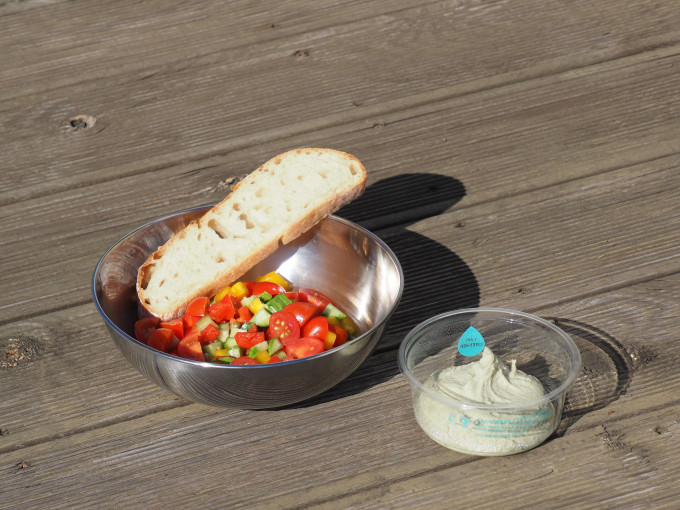
Earth Love Explorers members prepared brunch with hummus made from mashed mung beans and fresh vegetables. Provided by Children’s Science Donga
Gochang is the hometown of Jeon Bong-jun, the “Mung Bean General.” The region has developed mung bean products and hands-on programs to commemorate him. At the camp, Kim Nu-ri, CEO of the local company “Milgwabori,” led a session on making a mung bean brunch. The participants finely mashed mung beans into hummus, chopped vegetables, and served them together on bread.
Hummus is usually a Middle Eastern dish made by mashing chickpeas. At the camp, mung beans were used instead of chickpeas. For a reporter who has to stay away from butter and cheese, mung bean hummus was a welcome dish. Its nutty, creamy flavor paired beautifully with the crunch of fresh vegetables. A reporting trip that began with a list of foods I couldn’t eat ended up revealing the joy of discovering foods I could.
● Temptations in an alley of restaurants with 1,000 years of combined history
The highlight of the camp was the Gochang Gourmet Culture Street Festival, held for the first time this year. From November 6 to 8, restaurants and young local businesses along Seongsan 2-gil in Gochang-eup showcased Gochang’s culinary culture. The combined operating history of the main eateries that have kept watch over this alley exceeds 1,000 years.
One dish that caught everyone’s eye was the Gochang-style bibim jjambbong-jjajangmyeon, which is eaten by pouring stir-fried black bean sauce over spicy seafood noodle soup. Because of its oiliness, I couldn’t eat much, but I still shared in Gochang’s unique food culture by watching the ELT members enjoy it. It must have been a bit spicy for the children, who soon ran off to get ice cream. Bokbunja ice cream from “Sangha Farm Farmers Café Sangha” helped cool down the heat.
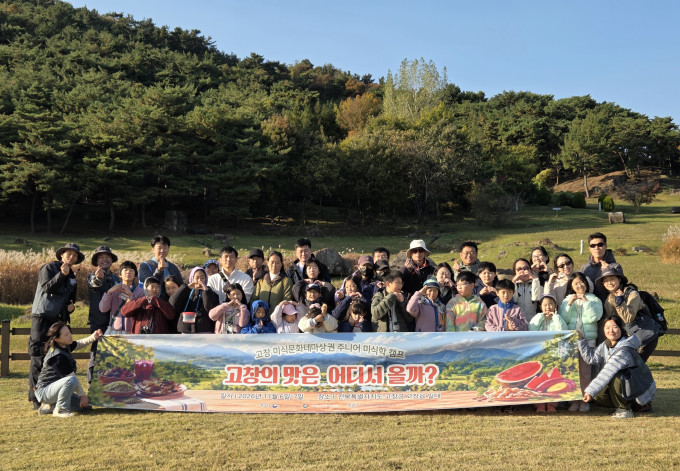
Around 40 Earth Love Explorers members joined the Gochang gourmet camp and explored local sites such as the dolmen complex and the Ungok Ramsar Wetland. Provided by Children’s Science Donga
For a reporter who has to be selective about what to eat, Gochang’s table was both comforting and reassuring. Fermented foods, seasonal greens, mung beans, seafood from the tidal flats, and specialties grown in loess soil—each meal carried a piece of Gochang’s nature. In a way, I first came to understand with my palate the message emphasized throughout the camp: “Protecting nature is the same as protecting the dining table of the future.”
I still don’t know how much my LDL cholesterol level will drop by the next checkup. But at least while I was in Gochang, I could forget my worries about what to eat.
※Gochang Gourmet Guide
Goidol Ecological Table: 32-1 Bugwi-gil, Gochang-eup, Gochang-gun, North Jeolla Province
Bajiragi: 47 Wolgok-ro, Gochang-eup, Gochang-gun, North Jeolla Province
Gochang Restaurant Alley: Around Seongsin 2-gil, Gochang-eup
Copyright ⓒ DongA Science. All rights reserved.