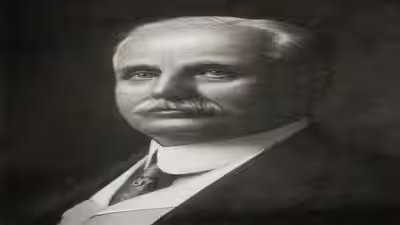
Long before Frank Woolworth opened his first shop, he had personally experienced shopping as a poor customer. Once, being mocked for carrying loose change while shopping with his brother, he learned a valuable lesson. This childhood memory would be infused into his eventual business, making inexpensive merchandise its selling point.Early struggles and a five-cent pioneerAccording to the Woolworth Museum, Woolworth was born on 13 April 1852 in Rodman, New York. He grew up on his parents’ farm, left school at sixteen and worked on the farm. A family friend named Daniel McNeil helped him find work in commerce.On 24 March 1873, Woolworth started an apprenticeship at Augsbury and Moore, a dry-goods store in Watertown. He worked without pay for three months in return for board and lodging. The apprenticeship lasted for six months, and he earned $3.50 a week from the fourth month, the Woolworth Museum noted. He struggled with customers but proved his mettle in delivery, organising stock and arranging displays.In 1877, Moore wanted to clear surplus goods and put Woolworth in charge of a display where every item cost only five cents. Woolworth covered it in red cloth and added a large price sign. Customers bought the stock, and the store was forced to procure more merchandise from its wholesaler. The result gave Woolworth an idea to consider; it was whether a shop built around one low price could be self-sustainable.False starts, Lancaster success and rapid expansionWoolworth’s first five-cent shop in Utica, New York, however, did not last. Undaunted by the failure, he next opened in Lancaster, Pennsylvania, on 21 June 1879, according to the Woolworth Museum. The tipping point had come with an offer from a former employer named William Moore, who advanced $300 worth of stock, the museum noted.The Lancaster store opened as the F.W. Woolworth Great Five-Cent Store. Its first day’s takings were $127.65, according to the Woolworth Museum. Within a fortnight, Woolworth opened another branch in Harrisburg, managed by his brother Sumner. When the landlord sought higher rent, Sumner moved it to Reading, and the next stop was Scranton. Relatives and former colleagues helped establish five-and-ten-cent shops across North America.Woolworth organised independent chains into the Friendly Rival Syndicate. Members pitched ideas and bought common merchandise while retaining their own businesses. According to the Library of Congress, in February 1905, F.W. Woolworth & Company was formally incorporated. Employees and friends were allowed to buy shares, although the stock was not put up for public sale. In 1912, Woolworth and five other retailers merged their businesses and brought together 596 stores across 37 states under the company, the Library of Congress noted.
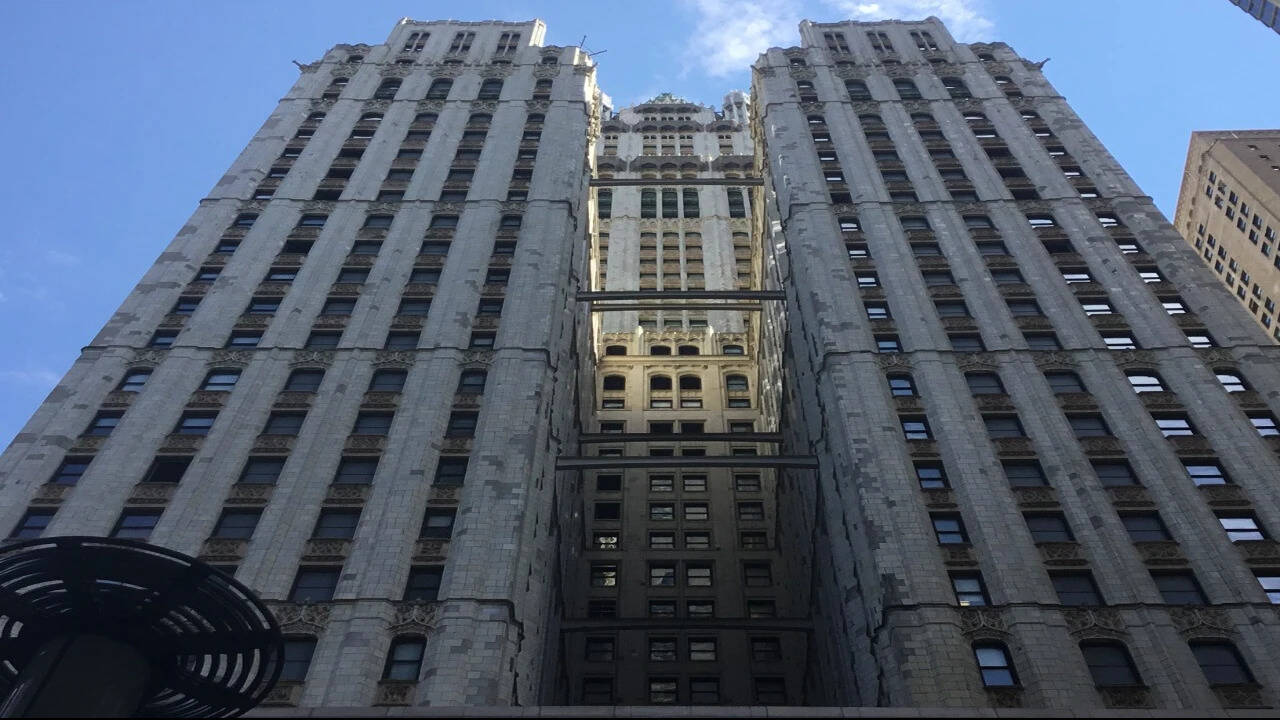
Image of the Woolworth Building. (Image Credits: Wikimedia Commons)
Going global and wartime pivotsWoolworth established a British subsidiary in 1909 and appointed his second cousin, Fred Moore Woolworth, in charge, the Library of Congress noted. The first shop in Britain opened on Church Street in Liverpool. The management team included experienced employees and William Lawrence Stephenson, who had worked for a British supplier.The British business prospered quickly. The Library of Congress records 44 stores in the British Isles by 1914. The company’s headquarters in New York, the Woolworth Building, was completed in 1913. It stood over 792 feet tall and remained the world’s tallest building until 1929, the Library of Congress noted. The chain continued to expand in 1924 and 1926 when the company opened up in Cuba and Germany.During the First World War, European supplies had become difficult to obtain. Imported goods represented a quarter of Woolworth’s sales and a larger share of its profits. Drawing from his experience of factory visits in Europe, Woolworth encouraged American manufacturers to produce goods domestically. By 1915, US sources had been established for all previously imported items, the Woolworth Museum noted.End of an eraWoolworth passed away on 8 April 1919 after four decades of leading the company. The Woolworth Museum recorded 1,100 stores in the chain at his death, with outlets in the United States, Canada, Ireland and Great Britain. The Library of Congress traced the later corporate changes: the company came to be known as Venator Group in 1998. In 2001, it disposed of its non-athletic business and took the name Foot Locker, Inc.