By Noah Rothman
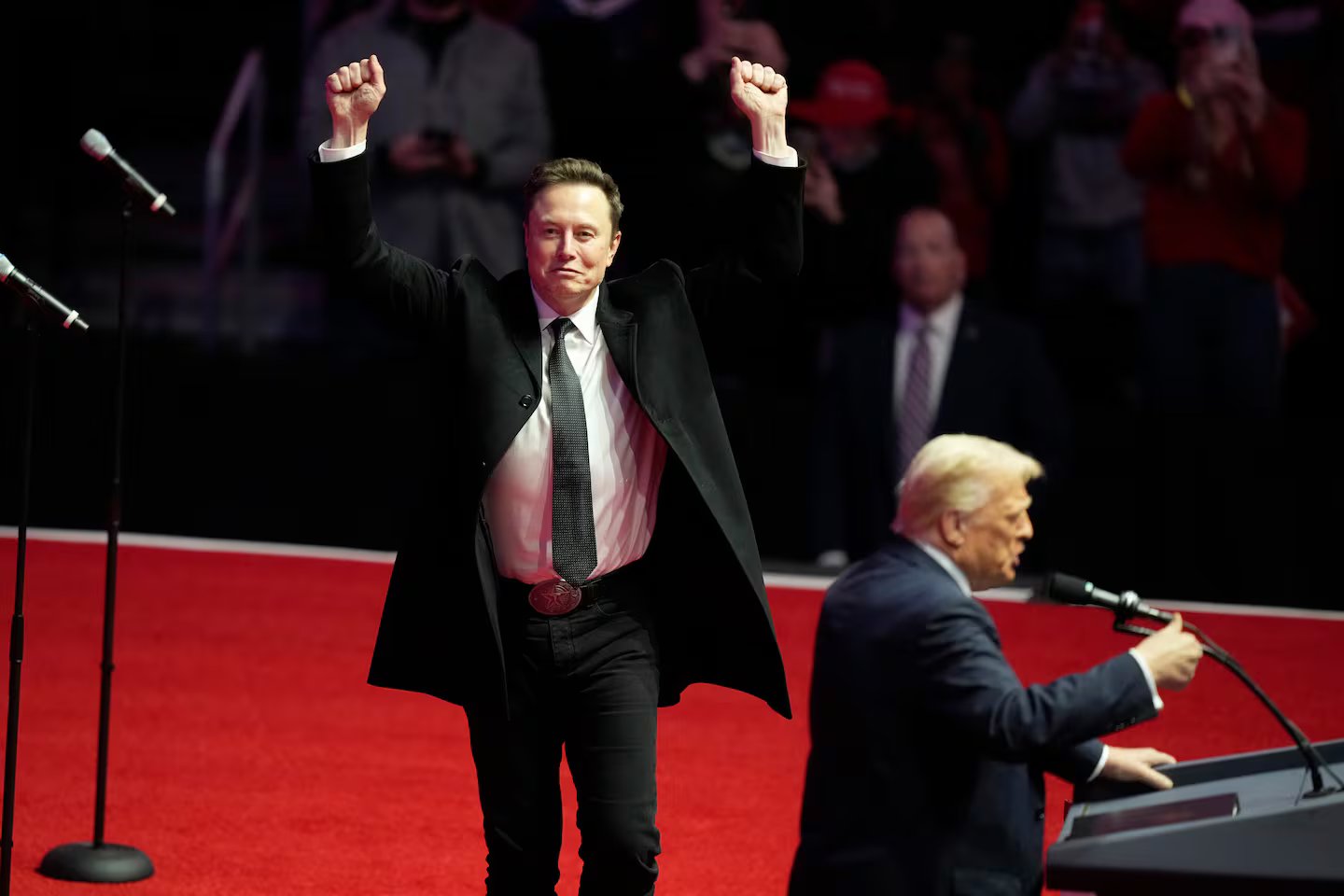
Call it prudence. Call it the snake-bitten experience of having been burned. Either way, the wisest political professionals in the Democratic Party have warned the progressive activist class not to underestimate Elon Musk’s political operation this year, as so many did in 2024.
Musk plugged $290 million into that election cycle on behalf of Donald Trump and his preferred candidates. His PAC’s field operation ran the president’s voter-contact effort in places like Pennsylvania, which may have proven crucial in that and other swing states. Who can say how much Musk’s ownership of the social media platform X boosted the GOP’s visibility among lower-propensity voters who sent Trump back to the White House? The answer is unlikely to be none.
But that was then. Musk seemed to lose his manic passion for political combat after his experience with the DOGE committee, along with other embarrassing episodes, seemed to teach him why government cannot be run like a business. The world’s richest man has assumed a far lower profile in 2026, but he’s still trying to push the GOP’s candidates across the finish line. Since January 2025, Musk has dropped at least $270 million on Republican groups and super PACs (according to his second-quarter FEC disclosure). A little more than half of that went to the Senate Leadership Fund — an establishmentarian outfit that supports the GOP’s incumbents and nominees in the upper chamber of Congress. Add what he spent before July of this year and his total spending on the 2026 midterms balloons to nearly $370 million.
That’s some intimidating profligacy. Musk’s contributions to the GOP’s overall largesse should not be understated. Money matters on the margins. Placing the right ads, fielding smart direct mail campaigns, and funding a robust get-out-the-vote operation represent the sine qua non of a successful political operation. But money isn’t everything, especially when it’s used to drive up turnout in the absence of a persuasive message. American political history is littered with the husks of flush campaigns that still floundered because of mediocre candidates.
Jeb Bush fought his way through the 2016 primary cycle with $130 million at his command. Despite Donald Trump’s famous tight-fistedness in that cycle, he defeated Bush. Tom Steyer spent $350 million on himself in the 2020 Democratic primary for president, only to drop out. Things didn’t go much better in his bid for California governor, where he spent $200 million on himself. Former New York City mayor Michael Bloomberg pumped a staggering $1.1 billion into his campaign for president in 2020. For his expensive troubles, he won only a single contest — in American Samoa.
In general elections, too, money can only get a candidate so far. Texas Senate candidate Beto O’Rourke, a Democrat, amassed an $80 million war chest in 2018, but he still lost to the incumbent Republican, Ted Cruz. Amy McGrath’s $90 million couldn’t overcome Senator Mitch McConnell’s 2020 incumbency advantages in Kentucky. South Carolina’s Jamie Harrison raised $130 million that year, but Senator Lindsey Graham easily took home the prize. At the national level, both Hillary Clinton and Kamala Harris outspent Trump. You know the rest of that story.
Money talks, but only if it is speaking on behalf of a candidate or cause with inherent merit. Voters are not thoughtless herd animals who do only what their television tells them. Musk’s money can’t hurt, but the Republican Party must pair his beneficence with a compelling message. As so many voters are telling pollsters this year, that’s the missing part of the GOP’s 2026 strategy.

Trump might have won the culture war in 2024. Things are different now.
What could make voters forget about the price of gas, the war with Iran, and the daily doses of crazy from President Trump and choose to keep Republicans in charge of all three branches of government?
Elon Musk believes that fear and loathing of transgender individuals, who make up about 1 percent of the country’s population, might do the trick. To that end, a chunk of the $276 million Musk has poured since July into Republican races is being used to promote an anti-transgender message aimed at undercutting three Democratic candidates for Senate: James Talarico in Texas, Sherrod Brown in Ohio and Josh Turek in Iowa.
An anti-transgender ad tagline, “Kamala is for they/them, President Trump is for you,” was famously credited with helping Trump beat Kamala Harris in 2024. Can it do the same for Republicans in the 2026 midterms? There is reason to believe it won’t.
For one thing, the anti-trans campaign runs up against the actual consequences of Trump’s anti-transgender rights crusade, from attempting to kick patriots who happen to be transgender out of the military to cutting federal funding for gender-affirming medical treatments. While Americans may have their doubts about transgender women and girls competing in female sports, I suspect there are still enough decent people who will recoil from Trump’s use of an anti-transgender slur against Annie Andrews, a Democratic candidate for Senate in South Carolina. Andrews is not transgender and is running against Senator Darline Graham, who was appointed to the seat following the death of her brother, Lindsay Graham.
But even if there aren’t enough decent people left in the country, the anti-transgender attack ads that Musk is helping to underwrite require voters to forget too much of the economic pain from Trump tariff and war policies.
Musk, the world’s first trillionaire, doesn’t understand that pain. Driven by his own demons and inability to accept a transgender daughter, he knows nothing of what it means to pay more for gas, groceries or other necessities; or what it means to lose a job and the health benefits that go with it. More cut off from real life than even Trump, he’s the last person Republicans should rely upon as their rescuer.
Republicans have long benefitted from the distraction created by the culture wars. But as a Sherrod Brown ad put it, “With everything going on, that’s what they’re talking about?”
Musk’s anti-transgender advertising blitz is an acknowledgement of everything else that’s wrong under total Republican rule. In itself, it’s an advertisement for change, and against the economic status quo under Trump and his fellow Republicans.
He’s helping Democrats make the oligarchy argument
Election day is less than a month away, and Republicans are getting desperate. President Trump is promising Americans $5,000 checks if Republicans hold their majorities in Congress. The GOP is spending money defending solid red states like South Carolina, diverting resources away from more competitive races. And they’re relying on major donors, like Elon Musk, to give them a fighting chance.
So far this election cycle, Musk has poured at least $366 million into Republican campaigns and PACs — making him the largest single donor of the midterms. That gargantuan figure no doubt worries Democrats. After all, in 2024, Musk spent nearly $300 million to help Trump and Republicans win, and he’s trying to do the same thing for the midterms.
But while the resources Musk is providing the GOP puts Democrats at a disadvantage, there’s reason to believe that his money will have less of an impact in the midterms than it did during the last presidential election. First, one of the strategies deployed by Musk’s super PAC is to turn out low-propensity voters rather than persuade swing voters. That’s much easier to do in a presidential cycle with Trump at the top of the ticket than it is during the midterms, when low-propensity voters are mostly tuned out.
Second, Musk has made himself a deeply unpopular figure. Since Trump was inaugurated for his second term, Musk’s net favorability rating has dropped by more than 20 percentage points. His money might help Republicans raid the airwaves with ads, but if Democrats highlight where the money is coming from, then Musk could add more baggage than his money is worth. Voters are already tired of big spending in elections, and if anything, Musk’s involvement in the midterms could give the Democrats’ base all the more reason to turn out.
Musk, in other words, is only lending more credence to the notion that America is an oligarchy — a theme that Democrats, particularly Senator Bernie Sanders of Vermont, have successfully seized to energize their base. Money might still be able to buy elections, but it has diminishing returns. And as Abdul El-Sayed showed when he won the Democratic senate primary in Michigan, that’s especially true when the source of the money is unpopular.
Trivia by Victoria White

The first episode of “Love is Blind” Season 11, this time set in Boston, premieres on Netflix on Oct. 14. Locked inside individual pods, 30 Boston-area singles will chat and try to fall in love before ever laying eyes on each other. Before it was the name of a hit reality TV show, the term “love is blind” was a common turn of phrase. What was the first documented use of the idiom?
- “The Merchant’s Tale” by Geoffrey Chaucer, published around 1477
- “The Two Gentlemen of Verona” by William Shakespeare, published in 1623
- “The Picture of Dorian Grey” by Oscar Wilde, published in 1891
Check back next week for the answer.
Last week’s answer: The correct answer was B.
By the 1800s, reporters were already covering the White House and the presidency. But it wasn’t until 1929 that President Herbert Hoover formally established the position of press secretary and hired George Akerson in the role.
This is an excerpt from Globe Opinion’s weekly politics newsletter Right, Left, and Center. Sign up here to get it delivered to your inbox every Wednesday.
Noah Rothman is a senior writer at National Review and a regular contributor to Globe Opinion. Joan Vennochi is a Globe columnist. She can be reached at joan.vennochi@globe.com. Follow her @joan_vennochi. Abdallah Fayyad can be reached at abdallah.fayyad@globe.com. Follow him @abdallah_fayyad.