Elon Musk took a potshot at billionaire Mukesh Ambani a day after the SpaceX founder accused Indian “oligarchs” of frustrating his attempt to deploy Starlink broadband in India.
In a dig at the chairman and managing director of Reliance industries, Mr Musk posted: “Is Ambani the real boss of India?”
He had earlier said his efforts to launch Starlink’s internet service in India is “being blocked by certain oligarchs in order to maintain their monopolistic chokehold on the Indian people”.
“You can guess who they are,” he said on Wednesday without naming anyone.
Mr Musk’s SpaceX has been seeking regulatory approval to deploy satellite internet in India, where Mr Ambani’s Reliance Jio and Sunil Bharti Mittal’s Bharti Airtel have spent years creating a virtual duopoly in the telecom market. The two companies together account for almost 910 million broadband subscribers, more than 80 per cent of the total, according to latest government data.
Explaining the scale of his company’s operation, he said: “Starlink is licensed in over 165 countries and has spent five years complying with every single law and requirement of the government of India, so why still no license?”
Mr Musk’s comments created a political stir in country, eliciting a response from the leader of opposition, Rahul Gandhi.
“Wait till you meet the other one,” said Mr Gandhi in an apparent reference to country’s wealthiest businessman Gautam Adani, who like Mr Ambani shares close ties with Indian prime minister Narendra Modi.
“This is indeed troubling,” wrote Mr Musk.
Earlier on Thursday, India’s government responded strongly to Mr Musk’s previous accusations, dismissing them as “baseless and misconceived”.
“A post is being circulated on social media regarding the fairness of India’s regulatory framework for satellite communication services and suggesting it’s being applied in a discriminatory manner,” the communications ministry said in a statement on Thursday, without naming the American billionaire, adding that it had. “put in place a fair and non-discriminatory authorisation framework” for satellite communication services.
Three players had sought licences for satellite communications and were now awaiting approval, the ministry said, without naming any.
The Times of India, however, identified the firms as Mr Bharti-backed Eutelsat OneWeb, Mr Ambani’s Reliance Jio, and Mr Musk’s Starlink.
Earlier on Thursday, Lauren Dreyer, vice president of business operations for Starlink, said at the India Mobile Congress that the American company stood “ready to serve India as soon as India is ready”.
Starlink had been developing relationships by establishing MoUs with Jio, Airtel, and other players, she said, and “working closely with state governments to listen and learn how Starlink might be able to best serve once it is authorised”.

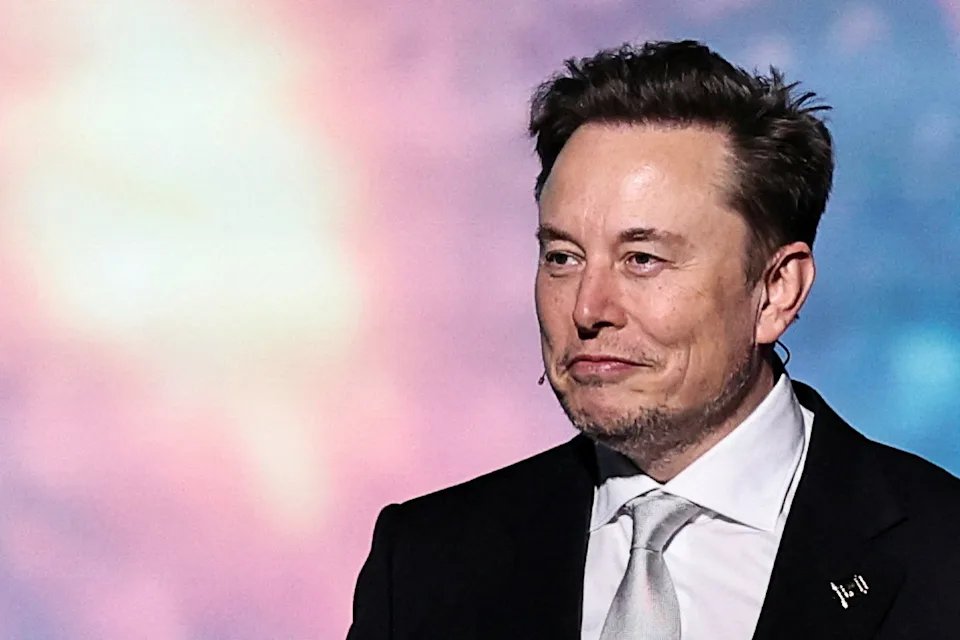
File: Elon Musk attends the Saudi-US Investment Forum, in Riyadh, Saudi Arabia (Reuters)
In a series of X posts, Mr Musk said Starlink in India would “enable high-speed, affordable internet connectivity for those who can’t afford current prices or who don’t have a connection at all”.
So the obstructions holding up its deployment, he added, were a “crime against the people of India!”
According to data from the Telecom Regulatory Authority of India, the country had about 1.1 billion internet subscribers by the end of March, making it a lucrative telecom market.
There was a gap between urban and rural areas, however. While rural India had roughly 48 internet connections per 100 people, urban centres had up to 126.
Mr Musk believes he can bridge this gap, but his satellite internet service is receiving pushback from regulators over security concerns, which the company denies. In June, Bloomberg reported that Indian regulators had frozen the approval for Starlink over fears that its terminals could be used despite the service not being licensed.
Meanwhile, Mr Ambani’s Jio Platforms, which is headed by his son Akash Ambani, told shareholders in June that the company is planning to roll out low-orbit satellite communications in the country.
It is looking to set up a network of around 1,600 Low Earth Orbit satellites across the country.