The Most Pronounced Currency Moves Were Weakness in Yen and Australian Dollar, Not a Broad Shift Toward Safe-Haven Assets
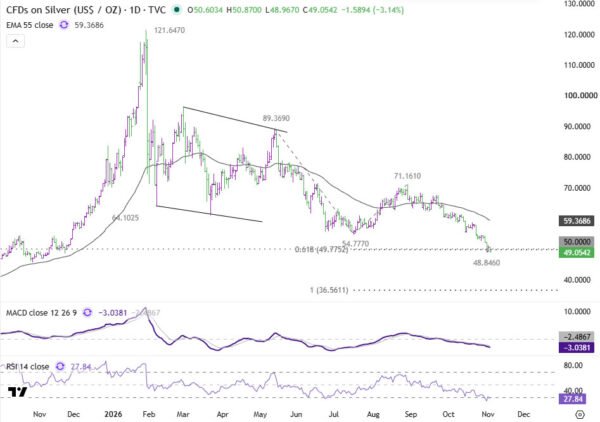
What’s happening: Dollar lacked clear direction on Tuesday as investors approached the US midterm elections amid renewed technology-sector weakness, AI financing concerns and Middle East uncertainty. Dollar Index hovered around 101.84, fourth among the eight major currencies on the ActionForex heat map, with NZD and CAD leading gains while Yen underperformed all seven counterparts and Australian Dollar fell after the RBA’s 6–3 hike to 4.85%. Oil recovered modestly from Monday’s sharp decline, and Silver fell more than 3% toward $49.
Why it matters: Selling in Asian and European technology shares has not produced a conventional flight to safety, with Yen and Swiss Franc among the weaker currencies. Equity-market caution has yet to translate into a unified defensive FX trend, leaving the election results and the next test of AI sentiment as the immediate catalysts.
Dollar lacked clear direction on Tuesday as investors approached the US midterm elections against a backdrop of renewed technology-sector weakness, persistent AI financing concerns and uncertainty over the Middle East. The most pronounced moves in currency markets were weakness in Yen and Australian Dollar rather than a broad shift toward safe-haven assets. Meanwhile, oil recovered modestly from Monday’s sharp decline as diplomacy and military tensions continued to compete for influence over energy prices.
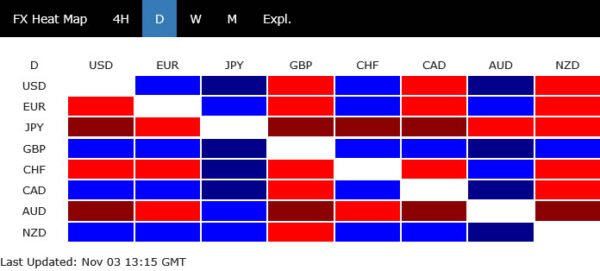
Dollar Index hovered around 101.84, little changed on the day, with the ActionForex daily currency heat map placing Dollar fourth among the eight major currencies. NZD and CAD led gains, followed by GBP, while EUR and CHF occupied the lower middle positions. AUD and JPY were the weakest, with Yen underperforming all seven counterparts.
- NZD and CAD: led gains
- GBP: followed the leaders
- Dollar: fourth among the eight majors, Dollar Index around 101.84
- EUR and CHF: lower middle positions
- AUD and JPY: weakest, with Yen underperforming all seven counterparts
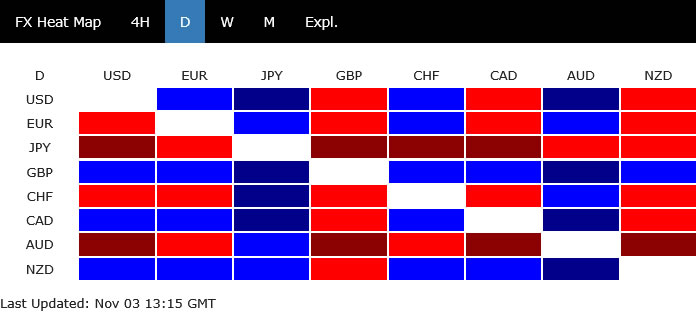
This distribution is notable because selling pressure in Asian and European technology shares has not produced a conventional flight to safety. Yen and Swiss Franc were both among the weaker currencies, while Dollar’s performance varied across pairs. The contrast suggests that equity-market caution has yet to translate into a unified defensive positioning trend across major FX markets.
Attention now turns to the election results and whether the technology-led decline remains concentrated in selected markets or begins to affect broader investor sentiment.
Follow the midterm results, Iran-driven oil moves and AI-sentiment tests on the ActionForex Telegram channel.
US Midterms Approach as AI Financing Concerns Weigh on Equities
Voting is underway in the US midterm elections, with results expected to emerge overnight into Wednesday’s Asian session. Markets enter the event with expectations already leaning heavily toward Democrats gaining control of both chambers of Congress.
Polymarket pricing indicated approximately a 77% probability of a Democratic sweep, suggesting that a significant portion of the expected political outcome has already been incorporated into market positioning.
That does not eliminate the potential for volatility. A surprise Republican sweep could prompt renewed upward pressure on Treasury yields and Dollar, according to the scenario outlined by Standard Chartered’s Steve Englander. Conversely, a Democratic sweep could sharpen scrutiny of AI regulation, corporate policy and the rapid expansion of data centres, even if the electoral result itself is widely anticipated.
The market reaction may therefore depend less on which party wins than on whether the outcome alters expectations for fiscal policy, AI investment and financial conditions.
For now, however, the more immediate source of market pressure is the deterioration in technology-sector sentiment.
Technology Selloff: Concentrated, Not Yet Global
Nasdaq Composite fell 1.07% to 25,164.32 on Monday after initially gaining approximately 0.7%, producing an intraday reversal of nearly 1.8 percentage points. S&P 500 declined 0.51%, while Dow Jones Industrial Average managed a modest 0.41% gain.
The pressure has also extended beyond US markets.
South Korea’s KOSPI dropped 3.59% on Tuesday, while Taiwan’s benchmark declined by a similar amount. European technology stocks also weakened, with semiconductor manufacturers among the notable losers.
Nevertheless, the broader equity picture was mixed. Hong Kong and Australian benchmarks posted modest gains, while European indices showed smaller declines than their technology sectors. US equity futures were also mixed ahead of the opening bell.
The distinction matters: this is not yet a synchronized global equity selloff, but a concentrated deterioration in technology and selected growth-sensitive assets.
Strong corporate earnings and resilient economic activity remain counterweights to the bearish narrative. The concern is centred on whether the extraordinary scale of AI investment can be financed and translated into future revenues without creating excessive pressure on valuations or credit markets.
The midterm results could amplify these concerns if they introduce unexpected policy or regulatory risks. Equally, a largely anticipated electoral outcome may leave investors focused on corporate earnings, financing developments and the next phase of technology-sector performance.
Oil Recovers as Iran Diplomacy and Military Tensions Compete
Oil prices recovered on Tuesday following Monday’s steep decline, although the rebound remained modest relative to the previous session’s losses.
WTI crude rose toward $98.52, while Brent traded around $106.60, after oil fell sharply on Monday amid renewed optimism surrounding US-Iran diplomacy.
Diplomatic Signals vs Military Risk
The earlier decline followed comments from President Donald Trump suggesting that renewed attacks on Iran were not under immediate consideration. Asked whether he was contemplating military action after the midterms, Trump answered “no” and indicated that an agreement with Iran remained possible.
Vice President JD Vance also referred to constructive conversations with Iranian representatives, while Qatari mediators continued efforts to advance negotiations.
However, the diplomatic signals have not removed the risk of renewed military confrontation.
The US carried out limited strikes on Iran’s Qeshm Island in the Strait of Hormuz, which American officials characterized as defensive operations. Iranian officials subsequently warned that a negotiated settlement remained distant, with Tehran maintaining its conditions for reopening Hormuz.
Iran also reiterated that further US military action would provoke a forceful response, while Qatar continued to emphasize that both sides remained engaged in mediation.
| Diplomatic signals | Military and negotiating risks |
|---|---|
| Trump answered “no” when asked about military action after the midterms and said an agreement remained possible | US limited strikes on Iran’s Qeshm Island in the Strait of Hormuz, characterized by American officials as defensive |
| Vance referred to constructive conversations with Iranian representatives | Iranian officials warned a negotiated settlement remained distant, with Tehran maintaining its conditions for reopening Hormuz |
| Qatari mediators continued efforts, emphasizing both sides remained engaged | Iran reiterated that further US military action would provoke a forceful response |
The competing developments leave oil trading between the prospect of diplomatic progress and the risk of another escalation.
Monday’s decline demonstrated how sensitive prices remain to indications of a potential agreement. Tuesday’s partial recovery, meanwhile, suggests that investors are reluctant to remove the geopolitical risk premium while critical negotiating differences remain unresolved.
The implications extend beyond energy markets. Elevated oil prices continue to influence inflation concerns and monetary-policy expectations, particularly in economies where central banks are confronting persistent price pressures.
However, the immediate transmission into currencies was less straightforward. CAD strengthened, but NZD recorded a comparable gain against Dollar, making it difficult to attribute Canadian Dollar’s relative performance specifically to Tuesday’s oil rebound.
The clearest conclusion is that oil remains highly responsive to geopolitical headlines, while its influence on major FX movements is being complicated by other market-specific developments.
Australian Dollar Falls on RBA Pause Signal, While Yen Underperforms
Australian Dollar was among the weakest major currencies after RBA delivered its widely expected 25bps rate hike but accompanied the decision with more cautious guidance than investors had anticipated.
The cash rate target rose from 4.60% to 4.85%, but the decision passed by a 6–3 vote, with three Board members preferring to hold rates unchanged.
The November statement also omitted September’s explicit reference to further increases if necessary. Governor Michele Bullock subsequently suggested that the central bank had reached an appropriate point to assess the cumulative effects of tightening already delivered.
Despite substantial upward revisions to inflation forecasts, markets interpreted the divided vote and softer guidance as signalling a potential pause.
The Australian Dollar’s weakness is particularly notable against Canadian Dollar, given BoC’s continued willingness to consider further tightening. The resulting divergence in expected policy paths reinforces the bearish technical developments in AUD/CAD.
As discussed in our detailed analysis, AUD/CAD’s break below key support following the RBA decision raises the possibility of a larger bearish reversal, although important longer-term support remains to be tested.
Yen was even weaker, declining against all seven other major currencies on the ActionForex heat map.
USD/JPY advanced toward 158.28, keeping the pair within sight of the psychologically important 160 region.
The weakness occurred while Japanese markets were closed for a holiday. BoJ had held its policy rate at 1.25% at its October meeting, and investors will receive the meeting minutes later in the week.
The available evidence does not establish a definitive driver for Tuesday’s Yen underperformance. Nevertheless, its position at the bottom of the currency rankings reinforces the broader observation that equity-market caution is not generating a conventional safe-haven response in FX.
Silver Falls Below $50 Despite Oil Recovery and Stable US Yields
Precious metals presented another unusual cross-market divergence.
Silver fell more than 3% toward $49, surrendering Monday’s recovery and slipping back below the psychologically important $50 level. Gold also declined, but its losses were substantially smaller at around 1%.
The resulting relative weakness pushed the Gold/Silver ratio toward 80.
- Silver: down more than 3% toward $49, back below $50
- Gold: down around 1%
- Gold/Silver ratio: toward 80
- Copper and platinum: weaker alongside technology equities
- US Treasury yields and Dollar: relatively little movement
The decline is notable because oil rebounded while US Treasury yields and Dollar showed relatively little movement. At the same time, copper and platinum weakened alongside technology equities.
This pattern is consistent with pressure on growth-sensitive assets, potentially reflecting broader risk reduction amid concerns over AI-related financing.
However, direct evidence of forced liquidation or positioning-driven selling remains unavailable, so the connection should be treated as a plausible interpretation rather than an established cause.
Our separate analysis examines silver’s renewed weakness below $50 and the Gold/Silver ratio’s approach toward 80, including the technical levels that could determine whether the selloff develops into a deeper bearish move.
Election Results and AI Sentiment: The Next Tests
The next several sessions will test whether the latest technology-sector weakness remains contained or spreads more broadly.
US midterm election results will begin emerging overnight, while AMD and Super Micro earnings provide an immediate test of investor confidence in AI-related investment.
Wednesday brings euro-area and UK Services PMIs, euro-area inflation data, US ADP employment figures and ISM Services. Treasury financing announcements will also attract attention.
Thursday’s BoE decision and Friday’s US nonfarm payrolls report will provide further tests of monetary-policy expectations.
For now, Dollar’s position in the middle of the currency rankings, alongside weakness in Yen and Australian Dollar, suggests that FX markets have not embraced a unified defensive narrative despite renewed pressure on technology shares.
Oil remains caught between diplomatic hopes and renewed military risks, while silver’s underperformance provides another indication that selling pressure may be concentrated in growth-sensitive assets.
The midterm results could reshape the immediate market outlook, but whether technology-sector concerns begin affecting broader financial conditions may prove equally important in determining the next sustained move.
Related Coverage
RBA and Australian Dollar
- RBA Hikes to 4.85% as Inflation Outlook Worsens, But 6–3 Vote Exposes Policy Divide: RBA raised its cash rate by 25bps to 4.85%, but the 6–3 vote revealed disagreement over the need for further tightening. Updated forecasts showed a substantial deterioration in the inflation outlook, with December 2026 headline CPI revised from 3.6% to 4.5% and underlying inflation expected to stay elevated through much of 2027, while weaker growth, falling housing prices and rising unemployment complicate the policy trade-off. The Board retained flexibility to tighten further but stopped short of an explicit commitment, and the divided vote suggests another hike may be harder to deliver.
- AUD/CAD Breaks Key Support After RBA Hike — Is a Bigger Bearish Reversal Beginning?: Australian Dollar weakened after the RBA hike as the 6–3 vote and cautious guidance suggested the central bank may pause further tightening. Despite sharply higher inflation forecasts, markets now expect little additional RBA tightening, while BoC retains the possibility of further hikes. The contrast reinforces pressure on AUD/CAD, which has broken 0.9778 support and signalled a medium-term top at 1.0011, with 0.9722 and the 55-week EMA near 0.9660 the next levels and a sustained breakdown opening the way toward 0.9607 and eventually 0.9411.
Metals and Swiss Data
- Silver Falls Back Below $50 as AI Risk Concerns Spread — Gold/Silver Ratio Nears 80: Silver erased Monday’s rebound and fell back below $50 even as oil recovers, Treasury yields remain stable and Dollar softens. The weakness coincides with Nasdaq’s sharp reversal, renewed concerns over AI infrastructure financing and selling in Asian technology shares, raising the possibility of broader risk reduction. Gold has held up comparatively better, pushing the Gold/Silver ratio toward 80, and with silver testing critical support and the ratio approaching a potential breakout, the next moves could show whether the decline is temporary or a deeper bearish reversal.
- Swiss CPI Rises to 1.5%, But Energy Accounts for Nearly All Monthly Inflation: headline CPI accelerated more than expected in October, rising from 1.0% to 1.5% yoy against a 1.3% consensus. Energy and fuels contributed approximately 96% of the net monthly CPI increase and imported product inflation surged from 2.1% to 3.7%, while core inflation remained unchanged at 0.5%, domestic product prices declined and services costs fell on the month. The release shows a sharp energy-driven increase but limited evidence that broader domestic price pressures are strengthening.
FAQ
Why did Dollar lack direction on Tuesday despite the technology selloff?
Dollar Index hovered around 101.84, little changed, and ranked fourth among the eight major currencies on the ActionForex heat map. Selling in Asian and European technology shares has not produced a conventional flight to safety: Yen and Swiss Franc were among the weaker currencies, and Yen underperformed all seven counterparts. The equity weakness is concentrated in technology and growth-sensitive assets rather than a synchronized global selloff, so caution has yet to translate into unified defensive positioning in FX.
Why did Australian Dollar fall after the RBA raised rates?
The RBA delivered its widely expected 25bps hike, lifting the cash rate target from 4.60% to 4.85%, but the decision passed by a 6–3 vote and the November statement omitted September’s explicit reference to further increases if necessary. Governor Michele Bullock suggested the bank had reached an appropriate point to assess the cumulative effects of tightening. Despite substantial upward revisions to inflation forecasts, markets read the divided vote and softer guidance as signalling a potential pause.
How are oil prices responding to the Iran situation?
Oil recovered modestly on Tuesday, with WTI toward $98.52 and Brent around $106.60, after falling sharply on Monday on optimism about US-Iran diplomacy. Trump said “no” when asked about military action after the midterms, but the US carried out limited strikes on Iran’s Qeshm Island and Tehran said a settlement remained distant. Oil is trading between the prospect of diplomatic progress and the risk of escalation.
Key Takeaways
- Dollar lacked direction on Tuesday, with Dollar Index around 101.84 and fourth among the eight majors on the heat map, while NZD and CAD led gains and Yen underperformed all seven counterparts.
- Selling in Asian and European technology shares has not produced a conventional flight to safety, with Yen and Swiss Franc among the weaker currencies.
- Voting is underway in the US midterms, with Polymarket pricing about a 77% probability of a Democratic sweep; Standard Chartered’s Steve Englander sees a surprise Republican sweep as a risk for higher Treasury yields and Dollar.
- Nasdaq Composite fell 1.07% to 25,164.32 on Monday after an intraday reversal of nearly 1.8 percentage points and KOSPI dropped 3.59% on Tuesday, yet this is a concentrated technology deterioration rather than a synchronized global selloff.
- WTI rose toward $98.52 and Brent traded around $106.60 as diplomatic signals competed with US strikes on Qeshm Island and Iranian warnings, leaving oil highly responsive to geopolitical headlines.
- The RBA raised its cash rate to 4.85% by a 6–3 vote with softer guidance, pressuring Australian Dollar, while USD/JPY advanced toward 158.28 with Yen weaker against all seven other majors.
- Silver fell more than 3% toward $49 and Gold about 1%, pushing the Gold/Silver ratio toward 80, though direct evidence of forced liquidation remains unavailable.
What to Watch Next
The immediate tests are the election results overnight, particularly whether they change expectations for fiscal policy and AI regulation or leave investors focused on earnings, and AMD and Super Micro results as a read on confidence in AI-related investment.
Wednesday’s euro-area and UK Services PMIs, euro-area inflation, US ADP and ISM Services, followed by Thursday’s BoE decision and Friday’s US nonfarm payrolls, will test monetary-policy expectations. Watch also USD/JPY relative to the 160 region, the BoJ meeting minutes later in the week, and whether Silver can reclaim $50.
Stay ahead of Thursday’s BoE decision, Friday’s payrolls and the next moves in Dollar and Yen—join the ActionForex Telegram channel for regular market updates and analysis.