Keith Richards performed several times at London’s legendary Marquee Club with The Rolling Stones, but in 1992 he also did a solo gig at the venue. There were only four accredited photographers covering the event, and one of them was Londoner David Koppel, now 65, who immediately realized that one of the best shots wasn’t on stage, but in the stands, where Mick Jagger was enjoying the concert alongside his brother, Chris. “Mick, can I take a picture of you guys?” he asked. “Nah, fuck off,” Jagger replied. But the opportunity was too good to resist, so he took the photo anyway. “In defiance, he stuck his tongue out and as I continued to snap, he lifted his right hand over his left shoulder and took a swipe at me. I fell backwards but continued taking photos, capturing the moment he hit out at me,” Koppel recounts in his new book, Spotlight. The photo of Jagger sticking his tongue out is one of the iconic images featured in the 300-page memoir that illustrates Koppel’s golden decade, from 1986 to 1997, when the photographer hounded the biggest stars of the day. “It brings together all the stories and everything I’ve done. I haven’t left anything out; I have nothing to hide,” he tells EL PAÍS.
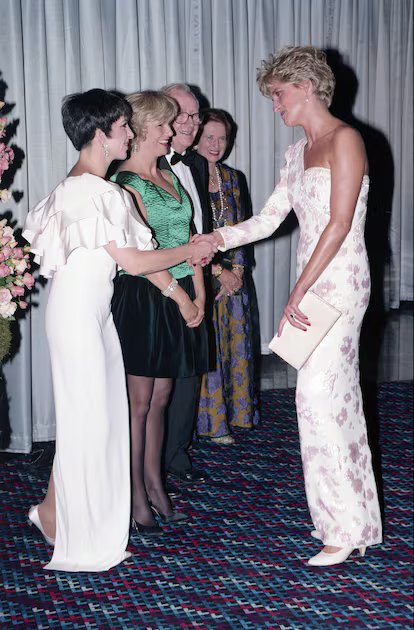
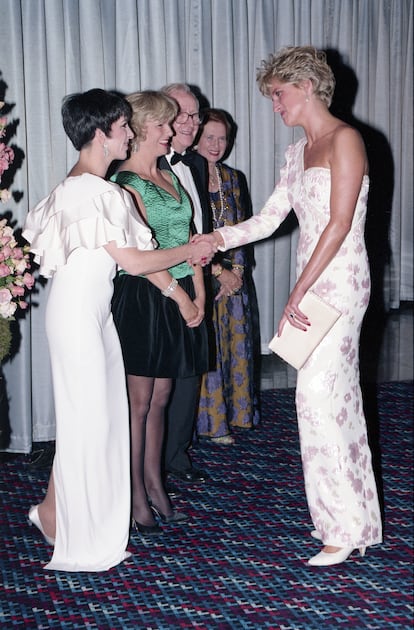
Koppel retired from the hectic life of a paparazzi photographer years ago. “Now I focus on landscape photography, I paint, and I combine painting with photography on the computer. That’s what I’m passionate about today,” he says while sipping tea. His calm demeanor contrasts with the wild adventures he recounts in Spotlight, adventures that suggest he was capable of almost anything to get a good photo to sell. For example, he speaks about the 1991 London premiere of Stepping Out, attended by Diana, Princess of Wales. Since Koppel wasn’t on the official list of photographers, he bought a ticket to the movie and smuggled in a dismantled Nikon, which he put together in the theater’s restroom. After posing as an usher, he managed to get an exclusive photo of the Princess greeting Liza Minnelli, then was found out by a Buckingham Palace aide. He never heard back from the Palace, but figured he was placed on some kind of blacklist. “There goes the knighthood,” he jokes in the book.
Spotlight also reveals that Jagger wasn’t the only celebrity to lash out at Koppel. Bob Dylan hit him with a rolled-up newspaper in 1993 the day after Koppel photographed him with his son Jakob as they were leaving a hotel. Earlier, in 1987, the paparazzo followed David Bowie to a club in Soho, pretended to be a guest at the party, ignored Bowie’s request not to take photos, and ended up getting punched by him. “You are SO rude,” Bowie told him, before a bodyguard threw him out and took his film roll. Six days later, Koppel was the only photographer invited to a charity event where Bowie was being honored. “I spent most of the time hiding behind my camera, terrified that he might recognize me,” he writes.
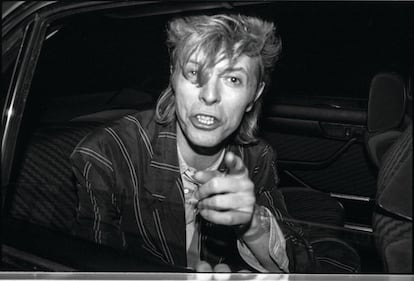
Koppel now looks back on these incidents fondly. “I don’t mind that David Bowie and Mick Jagger hit me. That’s fine by me,” he tells EL PAÍS. “But getting punched by a reality TV star… that wouldn’t interest me at all. I’m not interested in people these days,” he adds. “It’s completely different; I’m no longer part of that world. Michael Caine and Paul McCartney [whom he says tops the list of celebrities who’ve treated him well] were great stars, but nowadays celebrities don’t have that depth or class. Anyone can become famous in the blink of an eye while the value of fame has undoubtedly diminished.”
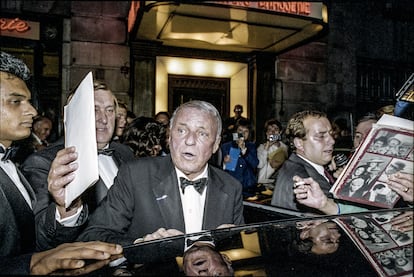
The price tag on celebrity photos has also plummeted. “The economic landscape has changed a lot. I used to get paid a lot of money for those kinds of photos, and the newspapers that bought them spent a lot of money. They wanted exclusives,” Koppel says. One photo in the book is of the stack of invoices from his work for The Sun, The Mirror, and Hello!. The invoices show that in 1990 he charged £402.50 (€480) for a photo of Elton John and £460 (€560) for one of Andrew Lloyd Webber. In the book, he describes how he earned up to £5,000 (almost €6,000) for an exclusive photo of Pierce Brosnan with his daughter and for one of Marlon Brando after a lavish dinner at a Chinese restaurant where Koppel — who opened the taxi door for the actor and “fired off six frames in two seconds” —was also dining. “Nowadays, it’s very rare for anyone to pay anything for a photograph, so all the photographers who were doing this kind of work when I was—or at least most of them—have retired. They say it simply doesn’t pay,” he tells EL PAÍS.
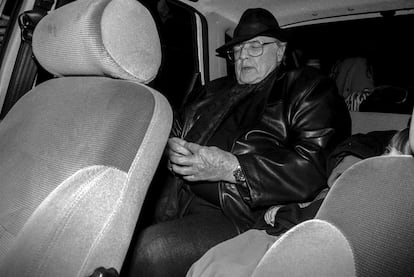
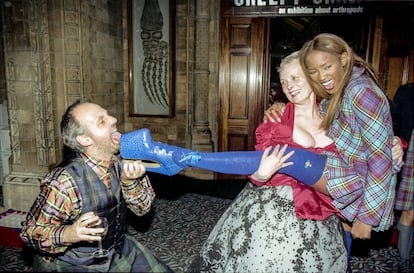
The photo Koppel has been paid most for is one of characters from a British TV series whose names he doesn’t mention because he isn’t particularly interested in them and didn’t bother to include the photo in his memoir. “It wasn’t even a good photo; it didn’t turn out very well. It was really boring,” he says. “But they paid me £10,000 for it. Back then, they’d pay crazy amounts for just about anything,” he admits. Among his favorite photos in Spotlight are a 1992 shot in which Michael Caine is laughing hysterically while Michael Winner and Sean Connery share a passionate kiss right next to him, and one in which stylist Sam McKnight licks the platforms of Naomi Campbell who has her arm around designer Vivienne Westwood in 1993. “Now everything is sanitized. The PR people control everything: there has to be promotion, there has to be advertising… It’s all staged. What I love about my book is that nothing is staged—no one is posing. I don’t like posed photos,” Koppel says.
Before smartphones and social media, Koppel’s world revolved around tip-offs from drivers or doormen. Otherwise, he simply followed his own instincts. He would work late, chasing celebrities from nightclubs to hotels, from movie sets to restaurants before developing his film in the early hours of the morning in order to get it to the newsrooms ahead of his rivals. “Everything changed when Getty Images started buying up all the agencies and signed licensing agreements with newspapers, so that the newspapers had access to all the material Getty received daily, while the poor street photographer wasn’t paid a thing. I don’t think freelance photographers have a relationship with newspapers anymore,” he says.
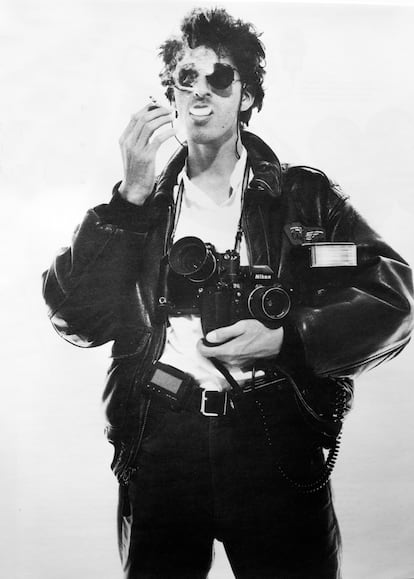
Spotlight follows Koppel’s first book Limelight, published in September last year. Limelight showcased his work as the official photographer of the legendary London nightclub to coincide with its 40th anniversary. Koppel had a freer rein with Spotlight and scanned 5,000 negatives for the memoir, which he then narrowed down to 1,200 photos, ultimately selecting 250. “I could spend the rest of my life making a book a year and still not use up all the photos,” he says.
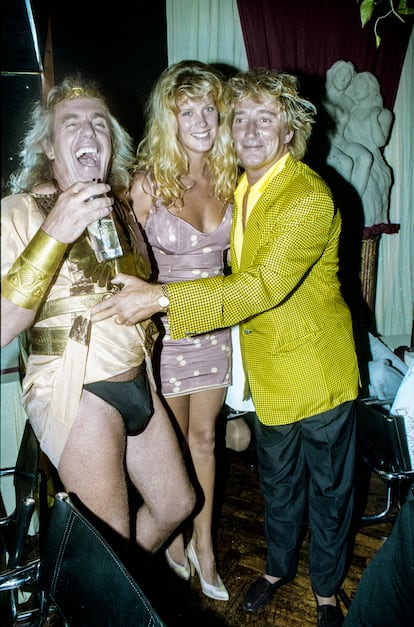
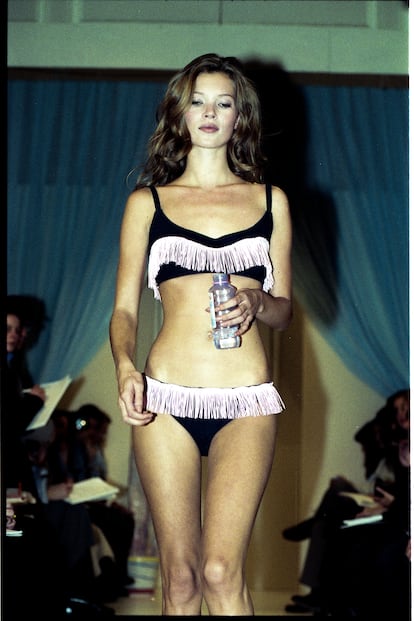
His archive includes never-before-seen images of Frank Sinatra, Jack Nicholson, Madonna, Michael Jackson, Prince, Kate Moss, and Rod Stewart. Other stars slipped through the cracks due to minor slips: “Once I got into Mickey Rourke’s limousine and was taking pictures of him but later realized I didn’t have any film. It happened to me again at a fashion show where three supermodels were standing together, and I thought I was photographing them, when in fact I wasn’t.”
Koppel continues to earn royalties from his photographs, which have been consistently featured in publications and exhibitions. He also represents other photographers and artists, including his uncle, Frank Hermann, and in 2004 he founded Pap Art, an online gallery specializing in the convergence of photography and art. “In a way, I create new works based on the older work I’ve done,” he explains. His interest in celebrities faded at the turn of the century, and he now prefers to capture deserted beaches and cloudy skies. “Is there any famous person I’d like to photograph right now?” he wonders. “Probably not. Maybe someone like Sydney Sweeney… but not for a photo shoot; I don’t like photo shoots. I don’t watch many movies either, so I don’t know who the biggest celebrities are. I only know Sydney Sweeney because I’ve heard of her, but I don’t know who’s in the spotlight right now,” he admits.
Koppel traces his love affair with photography back to age nine, during a walk with his father on a beach in the south of England. “He put a 35mm SLR camera in my hands, I looked through the viewfinder and said, ‘This is what I want to do.’ He had his arm around me, very protectively, and I felt completely safe looking through the viewfinder,” he recalls. Koppel links that childhood memory to feeling “totally safe and at ease,” something he later sought to recapture through his work as a photographer. “Which is ironic because, in the end, I found myself caught up in a lot of unsafe situations. It was daily: getting in a car and going out to chase someone. I was willing to go to any extreme to get the photos I wanted,” he says. Hundreds of fascinating images depict his exploits.
Sign up for our weekly newsletter to get more English-language news coverage from EL PAÍS USA Edition