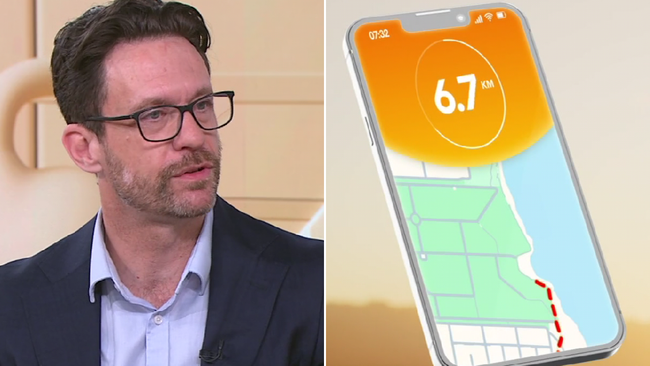
Millions of Australians could be unknowingly exposing their movements and exact locations through fitness and health tracking apps.
Apps such as Strava allow users to track their running routes, cycling journeys, and workout times, with some information shared publicly online.
WATCH THE VIDEO ABOVE: Fitness apps exposing Aussies to stalking danger
Know the news with the 7NEWS app: Download today
But cyber security expert and former police detective Toby Dagg said users could be revealing far more than they realise when uploading their exercise data.
“When we’re posting information about our runs and our times, we’re sharing a lot more than might be immediately apparent to us,” he said.
“There’s a lot of very precise geolocation data that travels with those updates, and that can be revealed publicly, can be revealed via the app, but can also be revealed via websites.”

In 2018, cybersecurity researchers were able to identify the locations of United States troops in Mali and Niger through publicly accessible data from fitness tracking apps.
Dagg said if the location data of highly secured US military personnel could be exposed, ordinary Australians were at serious risk of unknowingly sharing their movements.
Woman tracked through fitness app

The warning comes after a woman reported receiving a message from a man on a fitness app who told her he had seen her on the road and would come to say hello.
The man later showed up at a cafe where she was sitting with friends.
Dagg said the incident demonstrated how precisely people could be tracked through information shared during their workouts.
“Not only is it the actual route or the actual time and start time and finish time that’s being revealed, but the precise location of people along those routes as they complete their workouts,” he said.
He warned that publicly available exercise data could also allow people to identify patterns in someone’s movements, including when they leave home and when they return.
Dagg warned the risks extended beyond strangers tracking a person’s location, with the information also potentially being exploited in cases of coercive control and domestic violence.
How to protect your location
Dagg said users should review the privacy settings on their fitness tracking devices and apps before sharing workout information online.
He said users could often limit the information made public, including details about where their exercise sessions begin and end.
“We’d like them to be set at the highest level of privacy by default, but that’s not often the case,” he said.
“Before you do, really work your way through the settings and find out what privacy options are available.”
The warning extends beyond fitness tracking apps, with social media platforms including Snapchat also offering location-sharing features that can reveal users’ whereabouts.