

Quick overview
- WTI and Brent crude futures opened lower on Monday, with WTI at approximately $82.70 and Brent at around $89.30.
- Investors are reassessing the Federal Reserve’s December rate outlook following comments from Treasury Secretary Scott Bessent regarding excessive tightening.
- Upcoming U.S. GDP and PCE data releases could drive market volatility, influencing expectations for monetary policy and commodity prices.
- Thanksgiving may lead to thinner trading conditions, increasing the potential for exaggerated price movements in the oil market.
Live USOIL Chart
USOIL

WTI and Brent crude opened lower on Monday, extending selling pressure as investors assess the Federal Reserve’s December rate outlook and prepare for key U.S. economic releases.
WTI and Brent Open Lower
U.S. WTI and UK Brent crude futures started Monday’s Asian trading session on the back foot, with both benchmarks extending their declines. WTI slipped to approximately $82.70 per barrel, while Brent fell by around $3 to $89.30, reflecting renewed pressure across the energy market.
WTI Crude Futures
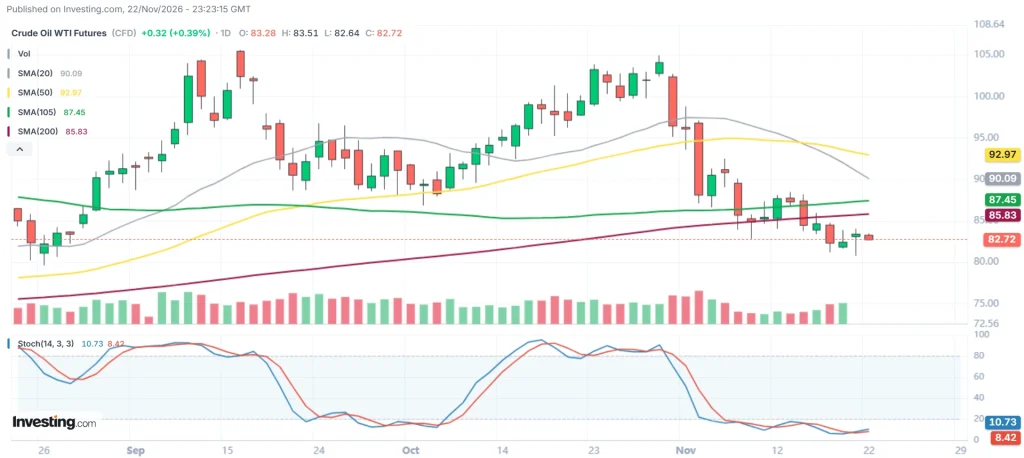
The weakness comes as investors reassess the outlook for U.S. monetary policy following Treasury Secretary Scott Bessent’s warning against excessive Federal Reserve tightening ahead of its December decision.
Brent Crude Futures
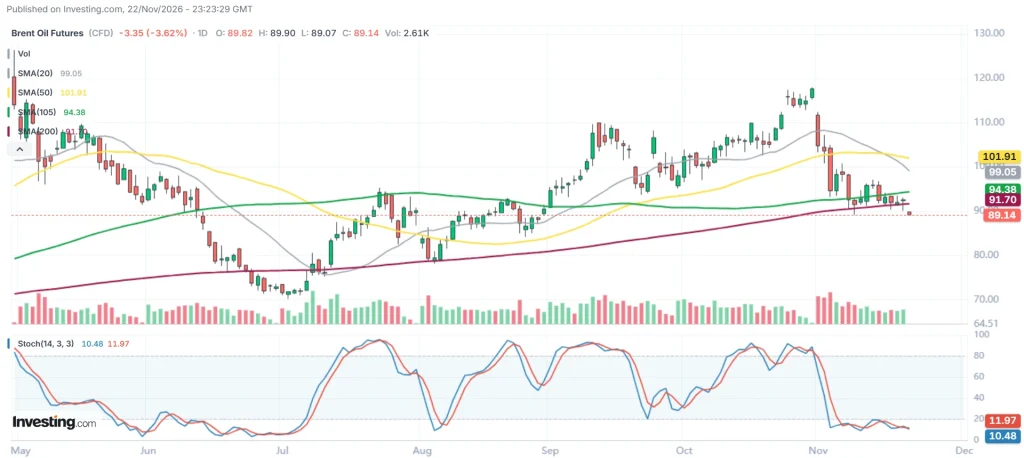
Bessent’s Comments Add to Fed Rate Debate
Markets have largely priced in a 25-basis-point rate increase in December, while more hawkish policymakers, including Federal Reserve Governor Christopher Waller, have raised the possibility of a larger 50-basis-point move.
Bessent’s comments challenge the more aggressive position but have done little to change the quarter-point increase as the prevailing market expectation. However, if the recent equity sell-off deepens, investors could begin pricing in a pause instead.
For crude oil, weaker prices would support the administration’s argument that energy-driven inflation is easing, potentially reducing pressure on the Fed to tighten policy further. A renewed oil rally, however, could strengthen the hawkish argument by adding to inflation concerns.
GDP and PCE Data Could Drive Volatility
Markets are now turning towards Wednesday’s U.S. GDP revision and October personal income and outlays report, including core PCE inflation, the Federal Reserve’s preferred price gauge. The Beige Book will also provide additional insight into economic conditions.
Stronger growth and persistent inflation could reinforce expectations for restrictive monetary policy, potentially supporting the dollar while weighing on commodities. Softer figures could ease rate concerns and provide some relief.
Thanksgiving will bring thinner trading conditions and an early U.S. market close, increasing the possibility of exaggerated price movements. For oil, the immediate direction will depend on whether weaker energy prices persist or demand and supply concerns trigger another rebound.

Skerdian Meta
Lead Analyst
Skerdian Meta Lead Analyst.
Skerdian is a professional Forex trader and a market analyst. He has been actively engaged in market analysis for the past 11 years. Before becoming our head analyst, Skerdian served as a trader and market analyst in Saxo Bank’s local branch, Aksioner. Skerdian specialized in experimenting with developing models and hands-on trading. Skerdian has a masters degree in finance and investment.