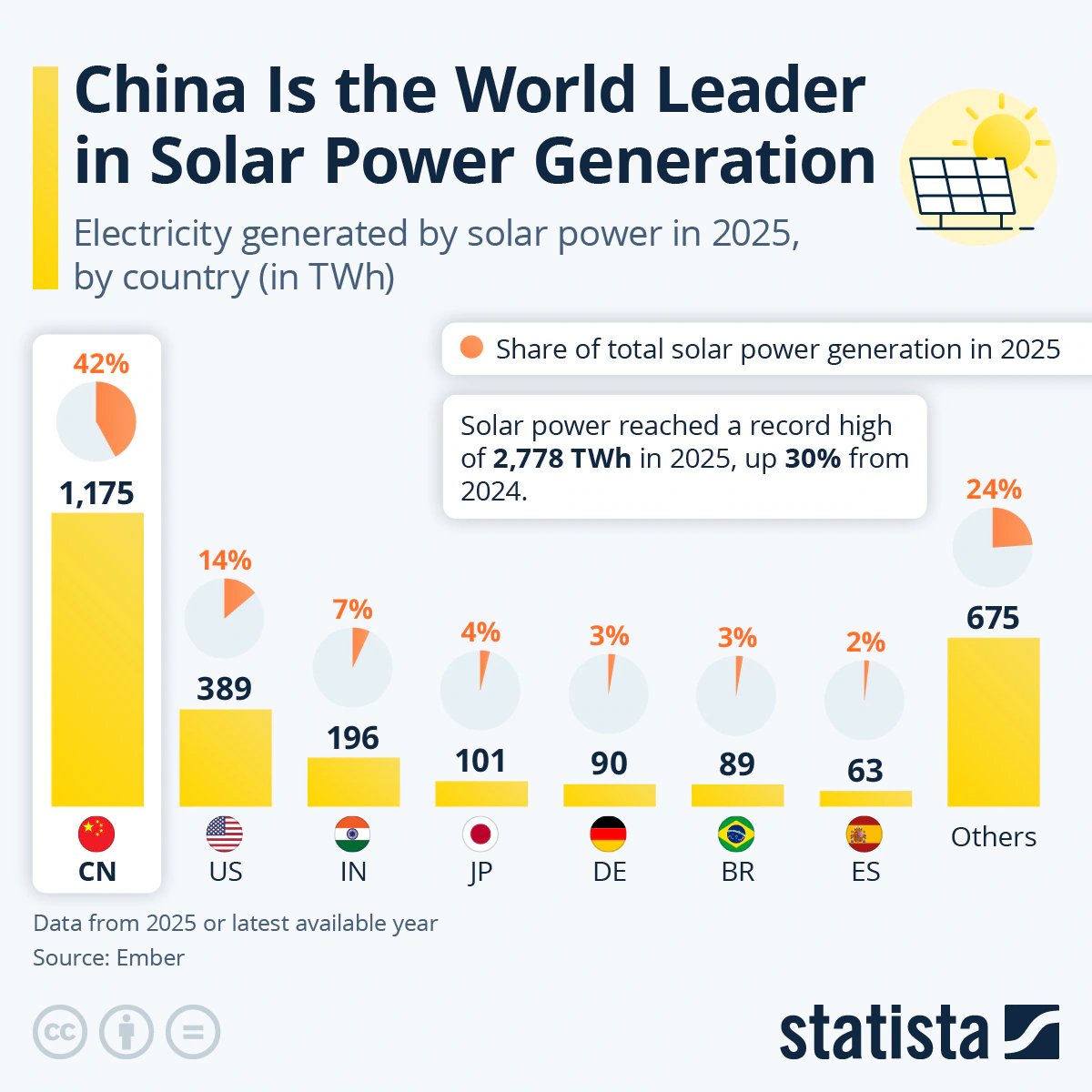
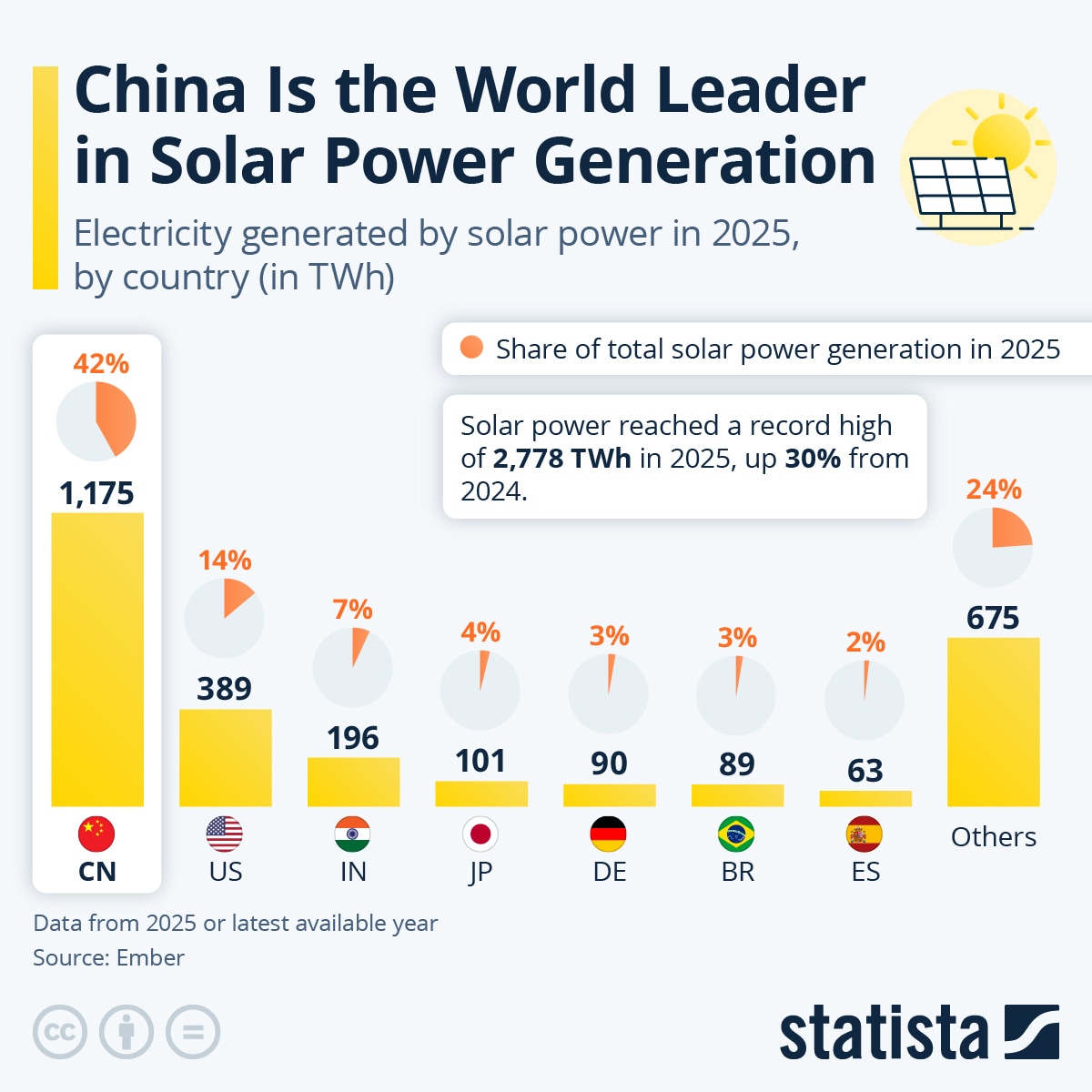
India’s rooftop solar boom has a new uncertainty to contend with. China, the world’s dominant solar manufacturing hub, has proposed restrictions on exports of key solar manufacturing technologies. The move could complicate India’s efforts to build a self-reliant solar industry, but does it threaten to make rooftop solar installations costlier for households?
Industry executives believe the immediate impact on residential rooftop solar prices is likely to be limited. However, the bigger challenge could emerge over time, as India attempts to move beyond assembling solar panels to manufacturing the cells, equipment and technology that power them.
China has proposed export controls on 12 solar manufacturing technologies, including processes used to produce certain silicon wafers, advanced solar cells and polysilicon. The proposed restrictions cover technologies such as TOPCon, heterojunction and back-contact solar cells, while some emerging technologies, including perovskite and tandem cells, face proposed export prohibitions.
Also Read | Layoffs Are Rising In Tech, But These Skills Are Helping People Unlock Better Pay
The measures are part of a broader revision of China’s export-control framework. They are proposals, not a blanket ban on finished solar panels, and the public consultation is scheduled to close on November 15, 2026. The restrictions could nevertheless affect countries attempting to develop domestic solar manufacturing capabilities.
Will Rooftop Solar Prices Increase In India?
For households planning to install rooftop solar, the good news is that a significant price increase is not inevitable. “India is better insulated than it was a few years ago,” Rakesh Malhotra, Founder of Livguard (SAR Group), told NDTV.
Malhotra pointed to government-backed schemes such as the PM Surya Ghar Muft Bijli Yojana and PM-KUSUM, which have encouraged investments in domestic manufacturing through Domestic Content Requirement (DCR) provisions.
India’s solar cell manufacturing capacity is also expanding. Malhotra expects capacity to reach around 25 GW by FY26 and grow towards 60 GW by FY27.
As domestic production increases, dependence on imported cells should gradually decline, reducing the exposure of residential rooftop consumers to overseas supply disruptions.
“It is difficult to put a precise percentage on it, as it depends on the final scope and timing of any restrictions,” Malhotra said, adding that the impact on residential rooftop solar prices is expected to be minimal.
Vijay Menon, COO of Navitas Solar, also believes Chinese restrictions are unlikely to trigger a marked change in rooftop solar prices.
According to Menon, India’s existing solar module manufacturing capacities have stabilised and are sufficient to cater to domestic demand. “The proposed restrictions could, however, delay access to manufacturing machinery, technical support and advanced production processes,” he told NDTV.
China is not proposing to stop shipping finished solar panels to India. The concern is whether Indian manufacturers will be able to access the technology needed to make increasingly advanced solar cells and equipment themselves.
India’s Solar Manufacturing Boom Has A Missing Link
India has made considerable progress in solar module manufacturing. But manufacturing capacity alone does not mean the country has achieved complete self-reliance.
The gap between modules and upstream components remains significant.
According to a Council on Energy, Environment and Water (CEEW) analysis, India had approximately 173 GW of solar module manufacturing capacity as of March 2026, compared with around 30 GW of solar cell manufacturing capacity. The country remains dependent on imports for a large share of its cells, along with upstream materials such as wafers and polysilicon.
This is where China’s proposed restrictions could become a bigger concern.
Menon said India’s solar self-reliance would have to extend beyond modules to cells, wafers, ingots, polysilicon, manufacturing equipment and the technology behind them. “2027 can be an important milestone for strengthening domestic cell availability, provided projects under development are commissioned and stabilise production,” Menon said.
But he cautioned against treating that milestone as complete self-reliance. Deeper independence in polysilicon, manufacturing equipment and intellectual property could take beyond 2030, depending on investment, technology access and policy support.
Malhotra believes solar inverter technology is another critical area India needs to develop. “India needs to build deeper capability in inverter design and set up manufacturing at scale,” he said.
Developing domestic inverter manufacturing alongside solar panels would bring India closer to a self-reliant solar ecosystem.
Why R&D Could Matter More Than Another Solar Factory
The next phase of India’s solar ambitions may depend less on adding manufacturing capacity and more on developing technology. Menon believes research and development (R&D) will determine whether India can compete with global manufacturers over the long term.
He suggested manufacturers progressively allocating around 2-3 per cent of annual revenue towards R&D, supported by government funding for shared laboratories, pilot production lines and industry-academia partnerships.
For a manufacturer generating Rs 1,000 crore in annual revenue, that would translate into Rs 20-30 crore a year. The focus should include higher-efficiency solar cells such as TOPCon and back-contact technologies, alongside longer-term research into perovskite-silicon tandem cells.
Menon also highlighted the need to develop indigenous manufacturing processes, equipment and critical materials. India’s climatic conditions create another opportunity for research. Solar panels must withstand heat, humidity, dust and microcracks while maintaining performance over decades.
AI-assisted inspection, better manufacturing processes and solar panel recycling could further improve efficiency and reduce dependence on imported materials. For households, the payoff could be tangible: more electricity from the same rooftop, fewer defects and better value over the lifetime of a solar installation.