
Photo-Illustration: by The Cut; Photos: Courtesy of Chanel
Listen to fashion critic-at-large Cathy Horyn read her review.
From the very first, his fashion made people feel better. That sensation, more than anything else, perhaps, was the shock of his debut at Chanel last fall, when Matthieu Blazy trotted out from the wings at the Grand Palais and 2,000 people stood in rapturous applause. He had thrown out the tweeds and Coco kitsch of his predecessors, fired up the studio and workrooms with his energy, and showed us what was possible — and not just for a couture house that opened for business in 1915 but for fashion.
That evening, running the length of the Grand Palais were a dozen glowing planets, a symbol of Chanel’s reach beyond Paris and 31 Rue Cambon. On Monday, a flock of migratory birds was winging down the exhibition hall over the heads of Dua Lipa and Nicole Kidman, whose voice was heard on the soundtrack reading two passages by Virginia Woolf, from Orlando and To the Lighthouse. Blazy and his partner have a house in southern Italy near a wildlife reserve, and that was the source of the orange-billed flock. This time, the 2,200 guests didn’t stand, maybe because the shock had settled into awe.
That response is reasonable. A few years ago, people were lamenting that heritage brands like Chanel and Dior had become virtual dodo birds. After the excitement of the late 1990s, when designers like John Galliano, Alexander McQueen, and Marc Jacobs shook up the industry, many brands, having grown by billions of dollars in the fat years, were less inclined to take creative risks. They became marketing machines. And people wondered why these brands deserved so much attention, given how lazy their offerings were.
Blazy, who is 42, helped change the perception that big luxury brands were too encumbered — by history, success — to move adventurously forward. Now everyone wants to know his secret. It clearly helps that Blazy has the trust of his boss, Bruno Pavlovsky, who runs the fashion division at Chanel. And it helps that he has felt free to inject his personal tastes into the collections, whether it’s an affection for nature or for fairy tales (a theme of his July couture show). Blazy is not at all strategic in that respect. If an idea or an image delights him, he goes for it. He doesn’t seem to second-guess himself, and unlike some of his design peers, he is not overly concerned about what his audience will think. He’s also not trying to be cool.
But Blazy’s real strength is that he recognizes the breadth and depth of Gabrielle Chanel’s story. She was the personification of fashion itself — a woman born in 1883 who changed with the new century, who continued to evolve and invent almost till the end of her life in 1971.
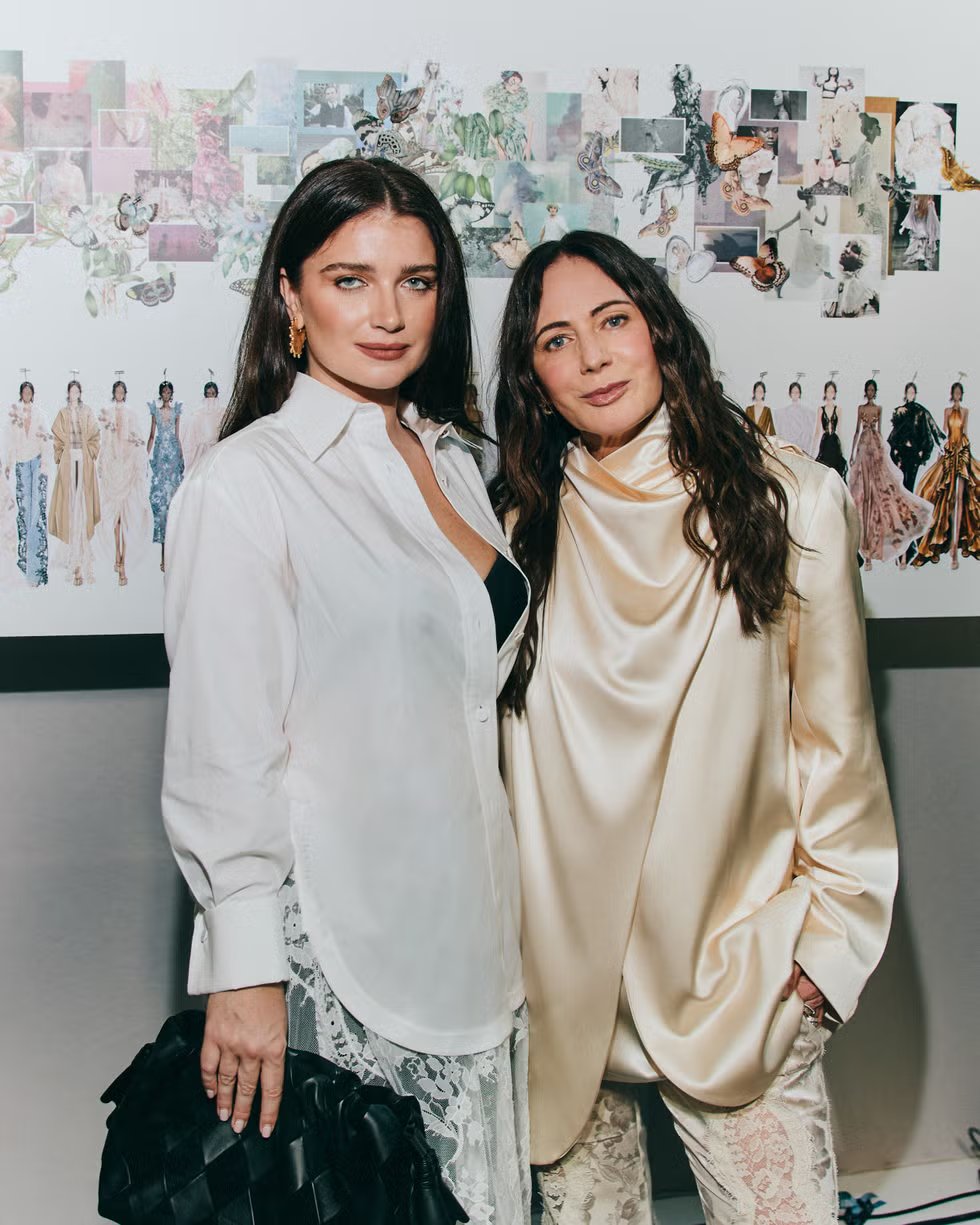
The other day in the Chanel studio, looking at a collage of photographic portraits of her — from girlhood to young bohemian with bobbed hair to an aged, rather crowlike deity — Blazy said, “She was constantly having fun.” He added, “I found it very remote from what we think she was. When we see the interviews in the ’60s, we think she’s this greedy old lady who hates everything. But I don’t think she was. I think she was having a bad day.”
Blazy’s empathy for Chanel, along with his curiosity, has led him, I think, to the understanding of how much room there is in her story. This is also the beauty of Giorgio Armani; and, in all likelihood, Dario Vitale, the new creative director of Emporio Armani and Giorgio Armani Accessories, will dig into the corners of that story, just as he did (briefly) at Versace, making connections to contemporary reality. This is the weakness today of many great brands, notably Balenciaga, McQueen, Saint Laurent, and to an extent, Dior. Their current creative directors can barely penetrate the worlds of the founders. Everything remains on the surface. And of course it shows in the products they make.
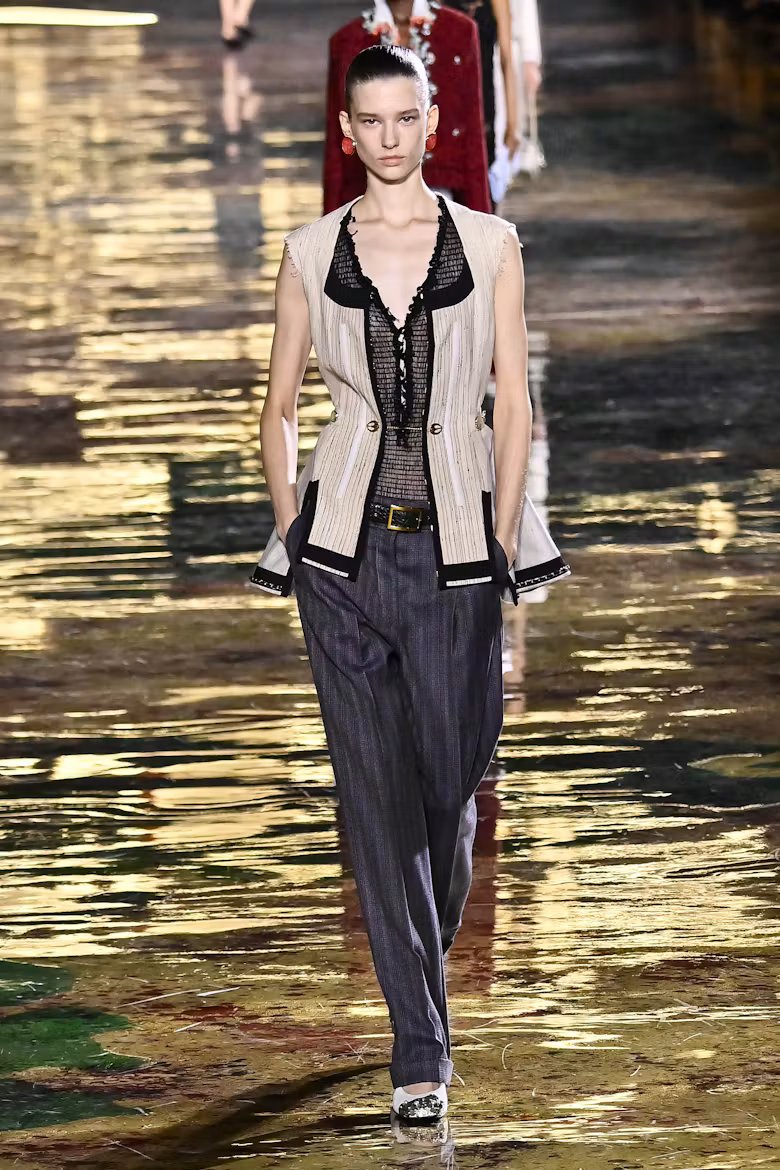
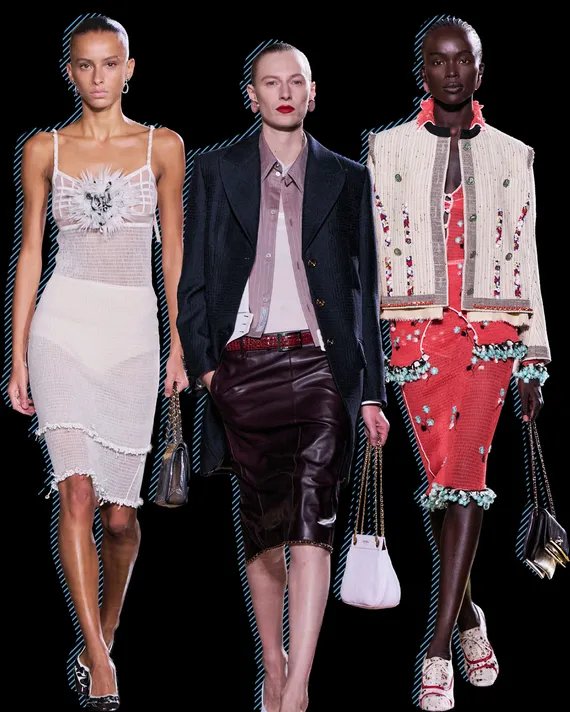
With each collection, Blazy has dug into the foundations of the house. This time, he considered the many selves of Chanel, beginning with the woman who came of age during the Edwardian era, or from around 1900 to the First World War. He took elements of Edwardian dress, such as a snug jacket (with a corset underneath) and the ultrafashionable hobble skirt of that period, and ingeniously adapted them, as Chanel herself might have. Those jackets, done in different fabrics with frayed edges have in the back only the tracings of corsetry bones. Like the long black jacket worn by Julia Nobis with a burgundy leather skirt — the same color as the lining of a Chanel bag — and a pale burgundy shirt with an undone gentleman’s white formal waistcoat, they’re a new and surprising addition to Chanel.


From left: Photo: Courtesy of ChanelPhoto: Courtesy of Chanel
From top: Photo: Courtesy of ChanelPhoto: Courtesy of Chanel

Photo: Courtesy of Chanel
Some of the early knit styles in the show, including delicate tops evoking a henley jersey, were based on Edwardian underwear, men’s as well as women’s. I loved how Blazy organized the show, tracking Chanel’s early influences and social connections, like, for example, her friendship with the painter Édouard Vuillard (registered in a trio of zanily colorful knit outfits) and her admiration for Edgar Degas. That was conveyed with two ballerina dresses, their bodices done in rough, poorish fabrics and skirts thick with tulle, the underlayers of a pale blue one made to look dirty. Dirty white is a Chanel color.


From left: Photo: Courtesy of ChanelPhoto: Courtesy of Chanel
From top: Photo: Courtesy of ChanelPhoto: Courtesy of Chanel
Again, Blazy found unexpected things to say about Chanel. As he put it, “I needed to start from the past in order to see what she unlocks later.”
This process of discovery has also been an amazing creative journey for Blazy. With this collection, he has introduced a more eclectic mix of masculine tailoring, including subtly striped morning trousers, sleeveless jackets, and a superb black tailcoat. He has expanded the shirt offering from Charvet, notably with an indigo-blue blouse based on workwear. He’s dropped the waist a bit on skirts, and sometimes added a wide belt, for a lankier attitude. And he’s effortlessly incorporated more nakedness in the clothes, chiefly through fine knits and semitransparent skirts. “It’s sexy,” he said, then added slowly, “but not too sexy.”


From left: Photo: Courtesy of ChanelPhoto: Courtesy of Chanel
From top: Photo: Courtesy of ChanelPhoto: Courtesy of Chanel

Photo: Courtesy of Chanel
He didn’t get around to the boxy Chanel cardigan suit, an innovation of the 1950s and 60s, until the midpoint of the show, more than 40 styles in. He finished with a leaner, more modern version of the suit in pitch black with strappy sandals, each adorned with a bird.

Photo: Courtesy of Chanel
Well, he had a lot to say about the present in those early layers of a woman’s radical life. But as he acknowledged the other afternoon in the studio, it was not without a purpose. “I need to move on,” he said.
Matthieu Blazy has already made enormous strides. Just imagine how many doors this work has opened for him as a designer and which he will eventually take us through.