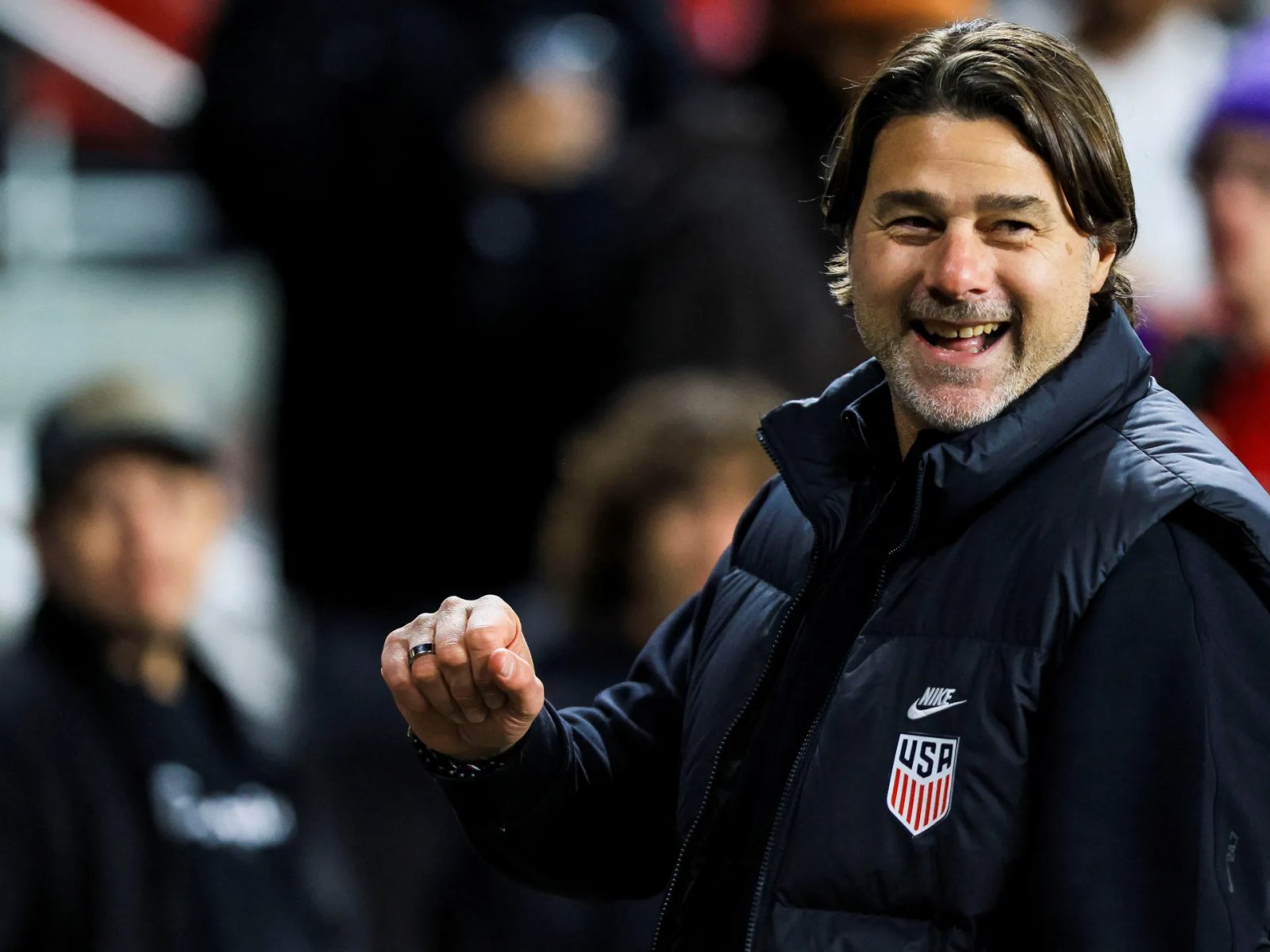
Manchester United will be led by a third manager in three years when Mauricio Pochettino takes charge of his first match since replacing Michael Carrick.
The fact that the Premier League clash is against their fierce rivals Liverpool – the team that, with United, are joint record English top-flight champions – is an added twist to a sordid recent tale for the Manchester club.
Recommended Stories
list of 4 itemsend of list
When Sir Alex Ferguson retired after lifting a then-record 20th league title in 2013, the Red Devils had climbed to the biggest and richest club in the world.
Now, apart from not being able to claim a Premier League crown since 2013, they are laden with debt – and worse still, they sit inside the relegation zone.
Can Pochettino save Man United from relegation?
The last time United were relegated from the top flight was in the 1973–1974 season. That came only six years after one of the club’s greatest nights – the lifting of the European Cup (now the Champions League), making them the first English club to do so.
Their fall this time around has not come quite as quickly, with their last crowning as European champions in 2008, and they have not been relegated – yet.
Few expect them to be. It would be unthinkable given the changed landscape of the entire footballing world, which has become awash with finances that clearly separate the elite and their resources from the rest.
When Pochettino was introduced to the media for the first time on Friday, the gathered press did not mention the word “relegation” even once.
So the simple answer is: yes, he can save the club from relegation. The longer equation is that the alternative would surely be the greatest shock in the history of a game famed for upsets and underdogs.
What problem does Pochettino need to solve first at United?
Words like identity, fitness, formation, and one that Pochettino awkwardly dropped on Friday, “philosophy”, have dogged every manager at Old Trafford since Ferguson’s departure.
“We arrived with the idea to create something from scratch, with our own philosophy and how we like to work,” Pochettino told the gathered reporters.
“We need to improve our players, find a way to perform, but the future and identity of the club is very clear.
“It is an historic club with an amazing years competing and being one of the best in the world.
“It is difficult to find another club that is the size of United. We need to be open-minded to do our best, and the players need to buy the idea that we need to improve.
“The job is to get the rest of the historic club, Manchester United, into a different place to where we are now.”
All of that can wait, because Liverpool are the next opponents, and for United, they do not come any bigger.
The Manchester derby has taken on a new level in recent years – although the tide there may also soon turn, depending on City’s appeal against their charges – but the rivalries against the Reds and Leeds United have the deepest roots for United fans.
A recent defeat to the revived latter still weighs heavily.
Pochettino needs to find a way for the team to start winning, and it needs to come soon. The club’s opening to the season is their worst since 1986, and one win – the worst return in the league – has left United just one point off bottom place.
By the time Pochettino and his United players walk out to the hostility of the Anfield crowd, they could be at the very foot of the table.
Will Pochettino change United’s formation?
The easiest part of the equation for Pochettino is the formation. With the United States national team, which he left to join United, the Argentinian deployed the 4-2-3-1 tactic that even Ferguson had evolved to in his final years.
Pochettino’s Tottenham, the club he made his managerial name with, were always set out in the same way with Harry Kane leading the line.
The United squad – which were moved to an uncomfortable 3-4-3 by Carrick’s predecessor, Ruben Amorim – are built for Pochettino’s style, but the task of melding them together had eluded Carrick and will be the key to their imminent return.
What long-term problems does Pochettino face at United?
The off-field troubles at United are well documented. The club are weighed down by the debts accrued with the Glazer family’s 2005 purchase.
Jim Ratcliffe’s investment three years ago has seen the Englishman and his INEOS group take control of footballing matters, but the annual interest the club pays remains a heavy burden.
The ownership is committed to its plan to rebuild the Old Trafford stadium to increase capacity and, with it, move the club to a more sustainable future.
That means the spending power that once saw United lead the way in transfer signings has diminished to the point where they cannot compete financially with Liverpool, City and Arsenal on the domestic front, let alone Spanish giants Real Madrid and Barcelona on the continent.
This is no easy fix for the manager or their owners, and is undoubtedly the long-term challenge for everyone involved.
What signings will Pochettino and United target in January transfer window?
Although the squad is set up for a 4-2-3-1 formation, they lack strength in depth.
Striker Benjamin Sesko has had an injury-plagued start to his United career since his move two seasons ago, and the Serbian international was far from the finished product when he arrived.
The 23-year-old’s absence this season has left a glaring hole up front, with Cameroon forward Bryan Mbeumo admirably leading the line with great endeavour, but lacking the presence a lone striker requires.
Despite needing a world-class finisher and being well stocked at the back, United have problems at the other end of the pitch, shipping 30 goals in all competitions this season.
Only two teams have conceded more than United’s 19 in the Premier League.
Luke Shaw’s availability at left-back has left United exposed in that position and made their failure to sign Lewis Hall in the summer all the more galling.
The Newcastle defender has since shone on international duty for England, and a move for the exciting 22-year-old in January seems the most obvious attempt United must make to appease their hugely unsettled fanbase.
What is Pochettino’s best Premier League finish?
Pochettino’s second-place finish with Tottenham in 2017 remains the North London club’s best league finish since 1962, only two years after their last top-flight title.
Will Pochettino be given enough time by United’s owners?
Pochettino will be the ninth manager to take charge of United in the last 13 seasons, and that does not include a further three interim coaches.
United fans never turn on their manager, and only recently, for the first time in the club’s history, have they turned on the players.
The same clearly cannot be said of the ownership.
It felt that Pochettino corrected his “philosophy” faux pas before he had finished that same answer on Friday. It was a word most associated with Louis van Gaal’s time at the club, and was rejected by players and fans alike.
United have an inbuilt philosophy and identity that buys players and managers time, built on attacking football and endless running.
The modern trend towards a high press should suit that mentality. To do that, Pochettino needs to unite the sleeping giants of Manchester. How long he will have to do so, based on the patience shown with his predecessors, is, however, anyone’s guess.

