How university life in Changsha became an opportunity to bring language, culture, and free knowledge together.

When I moved to Changsha, China to study Electrical Engineering and Automation at Changsha University of Science and Technology (CSUST), I was also thinking of a different kind of infrastructure: the infrastructure of knowledge, language and cultural representation on the internet.
As a polyglot Bengali and Sylheti-speaking student, far away from Bangladesh, the Wikimedia projects were a way to stay connected to my language and be part of a global movement for free knowledge. In 2019, that interest began to take shape beyond individual edits, through in-person gatherings that brought Bangla Wikipedia contributors and Chinese Wikimedians together. In 2020, I was featured by Changsha Evening News for my involvement in promoting cultural exchange between Bangladesh and China as a cultural ambassador.
Celebrating International Mother Language Day in Changsha

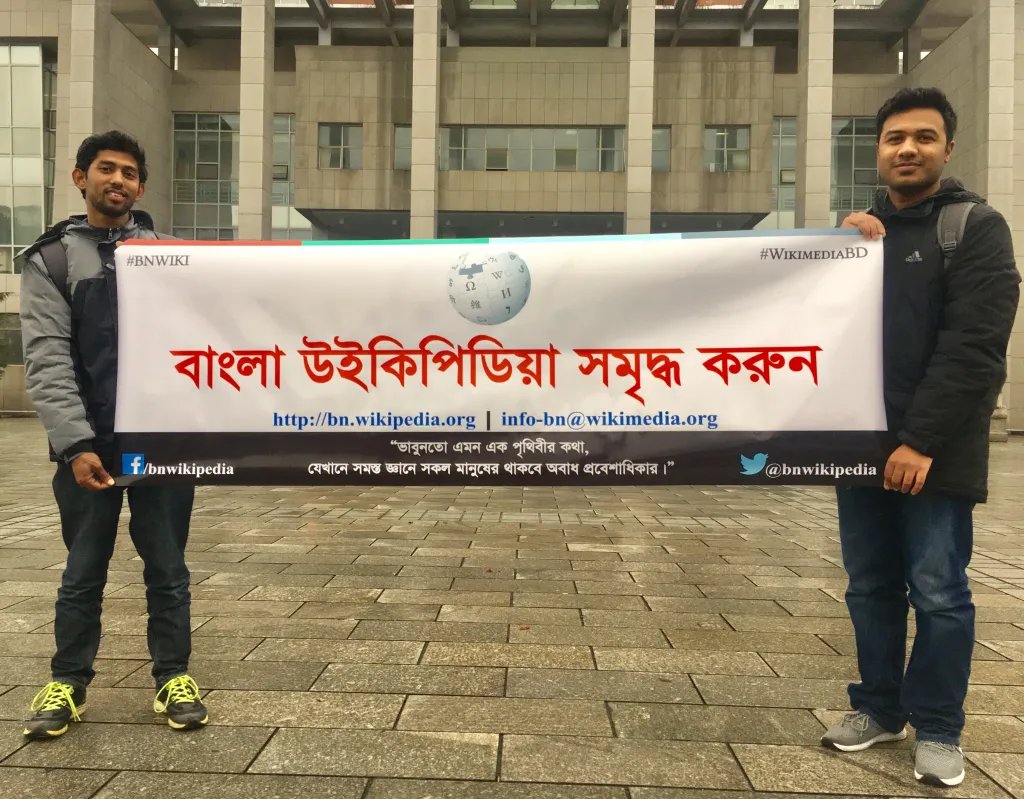
On 21 February 2019, International Mother Language Day, a Wikimedia gathering took place in front of the Library Complex at CSUST. The event commemorated the martyrs of the Bengali Language Movement and created a space to discuss Wikipedia with two communities in mind: the mainland China Wikipedia community and the Bangla Wikipedia community.
The event is documented on Meta-Wiki, where I was privileged to organise and lead such an initiative. For the first time in its history, the event expanded beyond Bangladesh, demonstrating how the Wikimedia movement can connect language communities across borders. The gathering was also connected to the developing Hunan Wikimedians community, which was created by me in October 2018.
For me, the significance of the gathering went beyond marking a date on the calendar. International Mother Language Day carries a particular meaning for Bengali speakers: it reminds us that language is bound up with identity, dignity, and the right to be heard. Connecting that history with Wikimedia created an opportunity to talk about how people can preserve and expand their language’s presence in the digital world.
Wikipedia is built through individual contributions, but a contributor community grows when people meet, exchange ideas, and encourage one another to participate.
Bringing the conversation back on Victory Day

On 16 December 2019, Bangladesh’s Victory Day, another Bangla Wikipedia gathering took place at CSUST, near the international student dormitory on the Yuntang campus. Bangladeshi students met Chinese Wikimedia contributors to discuss the use of Bangla online, ways to contribute to Wikimedia projects, and opportunities for cultural exchange.
I documented the gathering in a report for Prothom Alo. It was the second such gathering organised by me at the university in 2019, following the February event.
The December meeting even more highlighted the importance of local context in Wikimedia outreach. However, in practice, Participation was difficult because Wikipedia was blocked in mainland China at the time. In the meantime, I could manage the Global IP block exemptions to ensure that I can continue my contributions smoothly across all Wikimedia projects. When talking about these realities with people from different language communities, the conversation about contribution brought the conversation back down to the ground in the realities people actually faced.
It was about more than editing an encyclopedia. It was also about helping people learn about each other’s histories and cultures. On Bangladesh’s Victory Day, the participants welcomed each other and talked about Bangladesh’s Liberation War and how cultural exchange can continue.
What I learned about community and free knowledge

Thinking back on my experience at CSUST I realised that, contributing to Wikimedia can be more than just writing or editing articles. It can also mean helping people find a project, creating opportunities for contributors to connect, documenting community activities, and building bridges between language communities.
Although these activities were insufficient in terms of size, they were set in a meaningful context: a university in China where students from different countries lived and studied together. That environment facilitated a combination between the local experience and the global movement.
Since then my work with Bangla Wikimedia projects and work supporting Sylheti language representation has continued to deepen my interest in linguistic diversity. At its heart, the question remains the same: how can communities make their knowledge, histories and languages more visible and accessible to the online world?
From that time, I also began translating and reshaping Wikipedia articles into news reports aimed at a broader audience beyond Wikipedia. These reports were started to be published in various Bangladeshi newspapers, including Prothom Alo, Jugantor, The Financial Express, and others. In 2021, I was awarded the BCYSA Outstanding Journalist Award for my work that showed a dedicated effort to document communities, preserve cultural knowledge, and translate information across languages.
My experience in Changsha showed me that this work needs both digital inputs and human connections. An edit might add a fact to an article, a gathering can introduce someone to the community that keeps knowledge growing.
My role as the Campus Director for the Hult Prize at Changsha University of Science and Technology was a constant combination of multilingual communication, education, and community building within the Wikimedia movement and in global academic settings. In June 2022, I was officially appointed as a 2022 Alumni Liaison (校友联络员) for the International College of Changsha University of Science and Technology, and ended up with my Changsha chapter.
One simple lesson from my experience for Wikimedia contributors working in smaller and under-represented language communities: start with the people around you. A university campus, a cultural event, or a conversation between speakers of different languages can be an entry point to free knowledge. The first step might be a small get-together, but the relationships formed can endure long after the event has ended.
Can you help us translate this article?
In order for this article to reach as many people as possible we would like your help. Can you translate this article to get the message out?