24
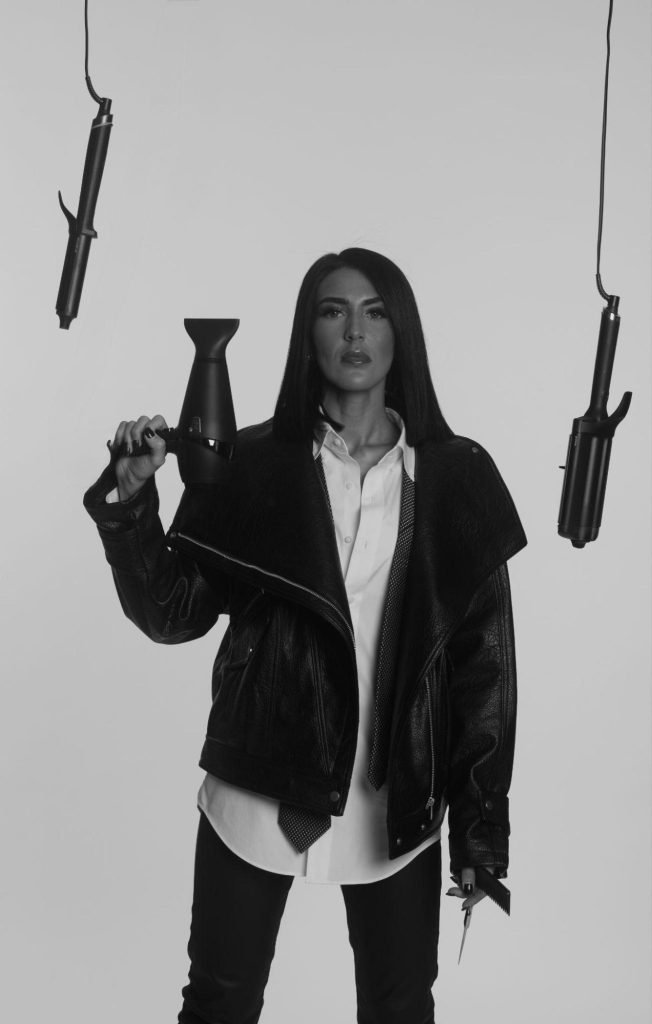
Young hairstylists are increasingly building international careers across several countries and, in some cases, across several continents at once. Samia Benmostefa shared exactly this kind of career story with us. Over more than a decade, she has worked as a stylist in France, in Paris and Marseille, and in Asia, in Singapore and Hong Kong. Today, she is continuing to develop her career in the United States. Her experience also includes photo shoots, backstage theater work, and runway shows. Here, she explains how each of these beauty markets has shaped her approach to the craft.
Samia, you’ve worked across several fashion markets around the world. Which country would you say had the biggest influence on your approach to styling?
I got interested in hairstyling as a teenager. I wanted to master techniques that weren’t standard and learn how to create looks that would genuinely suit each individual client. I started in France, where I earned my Certificate of Vocational Aptitude from the Academy of Paris in 2015, the diploma that allowed me to work professionally as a hairdresser. I followed that with two more years of training to earn my Advanced Professional Diploma in Hairdressing. That’s where my career as a stylist really began, and what I learned there still shapes a large part of my craft today.
(Courtesy)
More than ten years have passed since then. Where did your career continue after you finished your training?
I spent time building my portfolio and kept training in different techniques with L’Oréal and Kérastase. I had the opportunity to become the manager of a busy salon in the South of France. It was a real challenge at first, but it helped me grow as a leader and gave me the opportunity to train and support a team of stylists. I eventually became the salon director.
In November 2024, a door I never expected opened for me in Asia: I joined Love Hair in Singapore for a short time, then transferred to Hong Kong as a senior hairstylist. I worked with a wide range of clients, tailoring each color service to their individual style and goals. I used a color fan to assess which tones suited them, and I often recommended French balayage for a natural-looking result. Over time, French balayage one of my signature techniques.
Did teaching and managing change how you saw your own technique?
Teaching others is one of the best ways to teach yourself. Watching my apprentices at work, I noticed parts of my own process that I could simplify or improve. I trained many apprentices in Marseille and collaborated with the René Attoyan School, where I served as an apprenticeship mentor. The experience in Singapore was just as valuable for me as it was for the local stylists I was training in balayage.
And that eventually led to your training program in Singapore?
Love Hair’s founder, Toni Marie Ovenden, invited me back to Singapore in February 2025. I spent a month working directly with the salon’s team. We reviewed everything from color theory and skin-tone analysis to sectioning techniques and product selection, and held several hands-on sessions with real clients.
You also worked backstage at Paris Fashion Week. Can you tell us more about that?
You also worked backstage at Paris Fashion Week. Can you tell us more about that?
It’s an unforgettable experience for any stylist. Backstage at Paris Fashion Week with L’Oréal was completely different from working in a salon. I was one of twenty stylists working on the same show, and each of us had our own group of models to get ready. There was no flexibility in the schedule: you had to work fast and create a look that fit the show’s overall creative direction.
Even after events at that level, you’re still constantly training. You recently attended L’Oréal education events, correct?
Right. I don’t think there’s a point where a stylist gets to stop learning. There’s always something to work toward. In March 2026, I completed L’Oréal’s Introduction to French Blending course, and in April, Olaplex’s Total Transformation Pro Difference. Both were interactive sessions with working artists. I also really enjoyed a training session at the L’Oréal Professionnel Academy in New York City, and I try to attend sessions like that whenever the opportunity comes up.
Did those experiences change your approach, or has anything stayed the same as it was in France and Asia?
The thing that will always stay with me is my attention to the person in the chair. Every beauty market has its own approach, its own techniques, even its own pace of service, but the essence of the work doesn’t change. Clients come to me wanting to express something through a new cut or color. They want a natural, personalized look delivered with polished technique, often within a limited time. I keep those principles at the top of my priorities no matter which country I’m in.
(Courtesy)
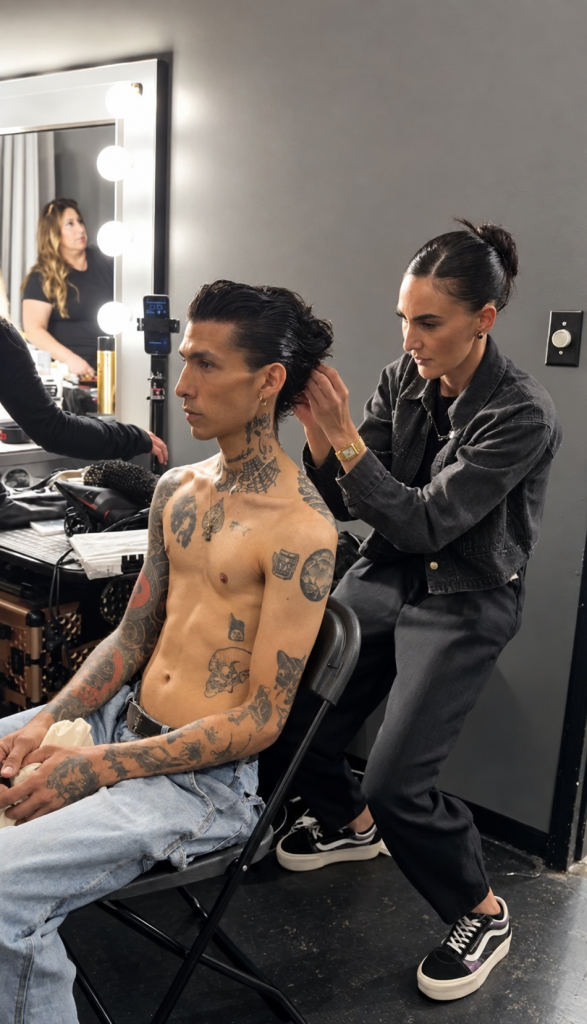
Since moving to the United States, you’ve also worked at backstage during New York Fashion Week. How did that experience compare with your previous Fashion week in France and your work in Asia?
Backstage during New York Fashion Week was an important milestone in my U.S. career. The pace was intense, with early call times, several models to prepare, and a specific creative direction for each show. I had to adapt quickly, work closely with the lead hairstylists and the rest of the team, and deliver polished looks under pressure. I especially enjoyed meeting artists from different backgrounds and learning how backstage teams operate in New York. After working in France and Asia, this experience confirmed that I could adapt to a new market and made me even more determined to develop my editorial and runway career in the United States.
What are you working toward next in your career here?
I’d like to build a name for myself in editorial and commercial beauty work in the U.S., and keep teaching. I want to bring my French color training and international experience into more ambitious creative projects. I also see a lot of value in helping clients understand the choices behind a look and creating something that really suits them.
Last question: what advice would you give a stylist who wants to move to another country, or even another continent, and start their career there?
At first, you should say yes even to projects that aren’t especially glamorous. You won’t get hired for runway shows right away, and that’s normal. You might start small, and then eventually get to the point where you’re training other stylists yourself. That’s when you realize your craft can travel with you: you can show up, contribute at a high level, and keep growing, regardless of geographic or language barriers.
The Daily Front Row editorial team was not involved in the creation of this article.