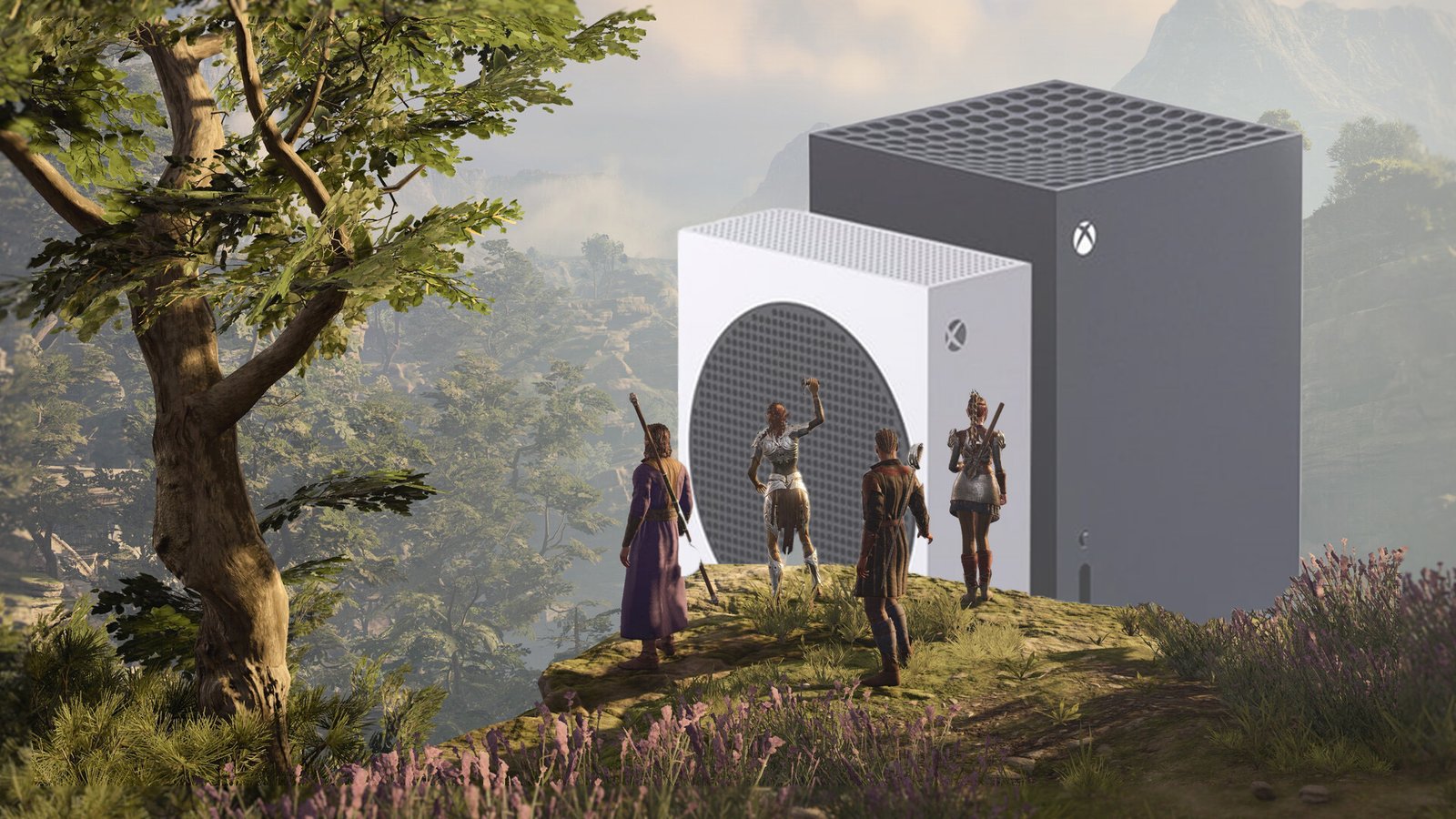
The Xbox Series S has found itself in the crosshairs once again this week after former Tekken director told a panel at the Console Game Developers Conference in South Korea, that he wished hardware like the Series S had never been released. Going as far as to call it “extra work for a slightly weaker child.”
Reported and translated by Inven Global, apparently Katsuhiro Harada complained about the console’s lower memory, and joked that he hoped Microsoft isn’t planning a “Helix S” for next gen. The comments have now fired up the Xbox Series S’s most passionate detractors, who are using these quotes as definitive proof that the Series S is holding the entire industry back and, frankly, I’m tired, boss.
The argument is inherently anti-consumer, elitist and completely ignores the benefits of game optimization for everyone and every console, not just Xbox Series S. More importantly, it ignores the current state of the market and what consumers can actually afford right now and for the foreseeable future.
Optimization is a feature, not a bug

It’s not the first time we’ve heard this sentiment. Of course, Larian wrestled with the Xbox Series S over Baldur’s Gate 3 so much it ultimately delayed the launch of the game on the Xbox ecosystem, but the memory optimizations they engineered to make split-screen work on the S directly resulted in massive RAM and VRAM improvements across the PS5 and PC versions of the game.
Meanwhile, I can’t help but notice the glaring double standard again here when lower-spec hardware comes up in industry discourse. Hardware like the Steam Deck and the Nintendo Switch 2 don’t receive the same vitriol. Nobody claims Valve’s hardware is “ruining PC gaming” when developers have to tweak settings to get a Verified badge. As Harada himself admitted on the panel, developers gladly shift their mindset for the Nintendo Switch 2 because it’s viewed as its own distinct platform. Yet Xbox offering an entry-level piece of hardware for current gen, using similar architecture is treated as some kind of unforgivable burden on the industry.
It’s important to note though that Harada has since clarified that his comments were simply made to “liven up the room.” That hasn’t stopped the onslaught of told-you-so-themed posts around the Series S, however.
Consumers are going to be priced out of the next-gen arms race
The loudest critics of the Xbox Series S, demanding developers should abandon lower-spec hardware, are frankly out of touch with the economic reality facing the gaming industry right now and the near future.
We are right now witnessing a brutal hardware price crisis, driven by bloated compontent and RAM costs. God only knows what eye watering prices we can expect for early adopters of the Xbox Helix and PlayStation 6, but all signs right now point to price tags that will keep early adoption out of reach for the average consumer, normal families. Us peasants aren’t going to be in a position to drop $1000 on brand new hardware. I want what I already have to work for me for as long as possible before I have to choose financial ruin or giving up gaming all together.
A dramatic and hyperbolic statement perhaps, but this is close to the reality for many gamers my age with a family, the days of me buying a new console day one are long gone. My Xbox Series S is going to be a family heirloom.
In this environment, we should be pushing studios and developers harder than ever to optimize games for the systems we actually own right now. Even Harada had to acknowledge this on stage. There are more Series S users than Series X in the United States currently, developers can’t simply ignore this player base because optimizing memory budgets is an inconvenience.
FSR 4.1 is also changing the narrative

Thankfully, newer industry advancements are making the whole “Xbox Series S is holding gaming back” argument feel more lame as the years go by.
For something lower powered like the trusty Series S this is a lifeline. Instead of expecting normal people to shell out hundreds of pounds or dollars for a brand-new box every few years, tools like FSR 4.1 let developers get far better results out of the hardware sitting under our TVs right now.
Xbox Series S is our cheapest ticket to Grand Theft Auto 6

While I’ve touched on the current economic mess of modern-day hardware, the Xbox Series S isn’t immune to this. It originally launched at an incredibly accessible price of $299, but Microsoft’s ‘budget” console has been hit with it’s own steep price hikes, placing a 512GB model at $499 nowadays.
It’s no longer as accessible, but the reality is that even at $499 the Xbox Series S is the cheapest possible way to play GTA 6 at launch. GTA 6 is the biggest entertainment release of the decade, hands down, and having a lower barrier to entry for such a release isn’t a flaw in Xbox’s strategy. Though I will say, I am praying for some kind of discounts on the console heading in to Black Friday to bring it back down closer to those golden day prices.
Even better, dataminers snooping through the Xbox GTA 6 preload files have spotted libraries matching Microsoft’s FSR 4.1 GDK sample. While Rockstar hasn’t confirmed whether FSR 4.1 will be active at launch or patched in post-release, the groundwork is clearly there, and any rendering boost will go an especially long way on the Series S.
Hardware prices continue to spiral and move next-gen upgrades further from reach for the average consumer, and as this continues, the narrative around the Series S is going to age terribly (and in my opinion, it already has.)
Sooner or later, the industry will give this consumer-friendly little white box its flowers for forcing developers to optimize better, and I will be first in line.

Join us on Reddit at r/WindowsCentral to share your insights and discuss our latest news, reviews, and more.