What is Avatar: Seven Havens?
Avatar: Seven Havens is a direct continuation of The Legend of Korra, which was a direct continuation of Avatar: The Last Airbender. It is animated by Avatar Studios and produced by the original creators, Michael Dante DiMartino and Bryan Konietzko.
It has been 11 years since we got anything really new for the Avatar series. The Legend of Korra wrapped up in 2015, and despite not paying attention to its announcement or marketing material. I started watching Avatar: Seven Havens on its launch day after seeing a few clips cross my social media feed.
To be completely clear about my experience with the Avatar series, I have watched the original show more times than I can count. I’ve rewatched it throughout the last decade. But when it comes to The Legend of Korra, I have only watched seasons 1 and 2. I did not enjoy or agree with the decisions in the season finale of 1 and the lore changes in season 2. Going into Avatar: Seven Havens, I only have this amount of knowledge, and I found myself really enjoying it to the point of eagerly awaiting the next episodes.
However, even with my general excitement, Avatar: Seven Havens suffers from a lack of quality in many areas that were apparent from the first episode. If this show is to go on for 4 seasons, it needs a massive overhaul if it is to live up to the quality bar set by its predecessors.
Pavi, Nisha and Ellora
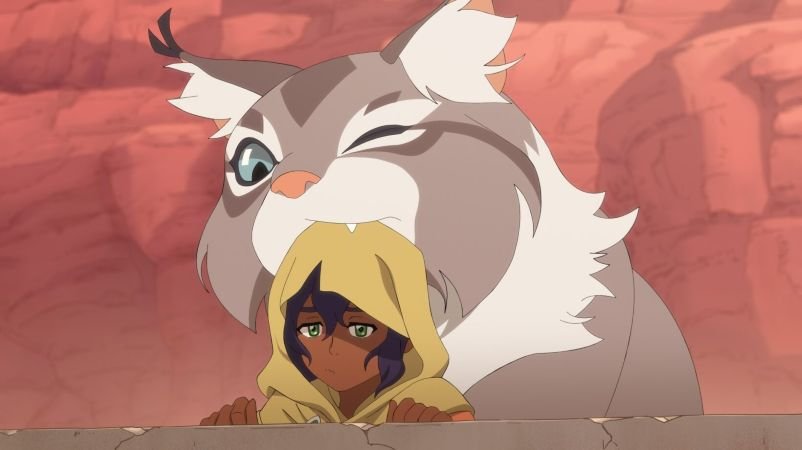
Avatar: Seven Havens opens with Pavi, a homeless child surviving on her own out in the wild and sneaking into one of the seven havens, Ellora. After being discovered as the Avatar by Jae, an airbender in Ellora’s Bending Brigade (or guards). She is brought to their Commander, Karthik, who reveals there are two Avatars, as Pavi has a twin sister named Nisha, who has been trained in secret by Karthik.
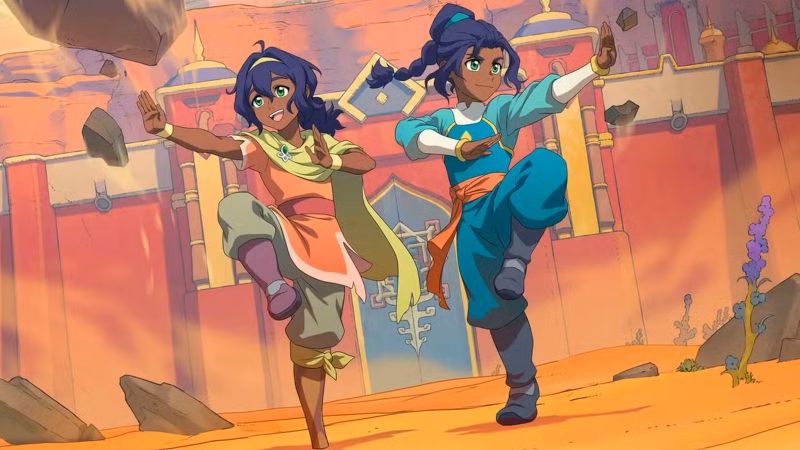
Throughout the season, Pavi and Nisha train together, have fun, and fight back mysterious red diamonds filled with energy that makes people go crazy. There is a greater mystery between Pavi and Nisha that is unraveled over time, as there have never been twin avatars before. Their memories are essentially blank for the last couple of years of their lives. All of this culminates in a very gripping storyline that involves two kids who have a lot of responsibility on their shoulders and a mystery that gets harder and harder for them to handle emotionally.
When it comes to the overall story, the little moments of fun with Pavi and Nisha help you get attached to them. In one episode where they have to track down bandits. Listening to Pavi being an annoying kid who repeats the same words over and over while trying to understand what they mean felt so endearing. Meanwhile, Nisha keeps pushing herself to try and be the hero of the story despite her obvious shortcomings, seeing that she is a child way in over her head. But what solidifies this continuation of the overall Avatar universe is how the finale is handled. It is paced perfectly and sets the stage for what will come later. I just hope that everything surrounding Avatar: Seven Havens is handled better, including the animation.
The Animation for Avatar: Seven Havens isn’t Good
Avatar: Seven Havens features a new art style that leans more toward a kid-friendly presentation. I think this is fine, as The Legend of Korra went too far with a mature presentation in its runtime. Meanwhile, Avatar: The Last Airbender established the Western anime style Korra used all the way back in 2005. The shift in style is noticeable, but not as noticeable as the quality of the animation (or lack thereof).
When it comes to general scenes of just talking, or the many fighting scenes, it all feels blocky and sloppy. The fighting, especially, is a pain point for the animation. It all lacks fluidity and impact for most of these types of scenes. Meanwhile, all the way back in 2005 with Avatar: The Last Airbender, and especially so with The Legend of Korra, the fights looked beautiful in motion and were always exciting. Outside of certain scenes with the anomalies and the parts of the finale, the animation is a major letdown.
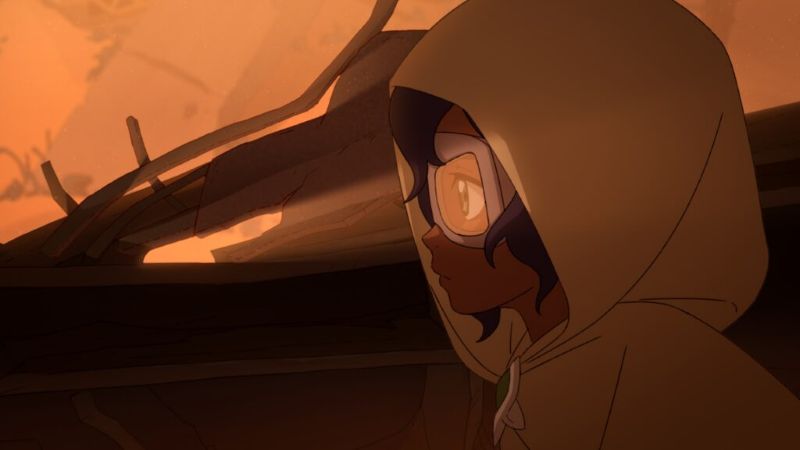
The best example of the worst in the animation was in the fourth episode during a fight scene. One of the bandits cuts an icy bind from their companions, but they only cut one side, yet it shows both ends being cut. Meanwhile, the up-close and personal attacks look floaty, and when someone is pushed into a pipe, the debris that traps them looks like JPEGs being moved on top of the character. But the animation shines in the scenes involving Pavi, Nisha, and the anomaly. It is focused, has weight, and the music takes over for the most part, making the scenes feel as tense as they need to be.
The Elemental Bending Feels Weak and Inconsistent
That’s not to mention just how lackluster the bending feels for each element. It feels like each element is just being used to throw different variants of rocks at people most of the time. There will be some cool tricks, like when Karthik makes an air bubble around someone’s head to silence them. Some waterbending moves use the original flowing water techniques we saw in Avatar: The Last Airbender. Earthbending and firebending feel particularly lackluster overall.
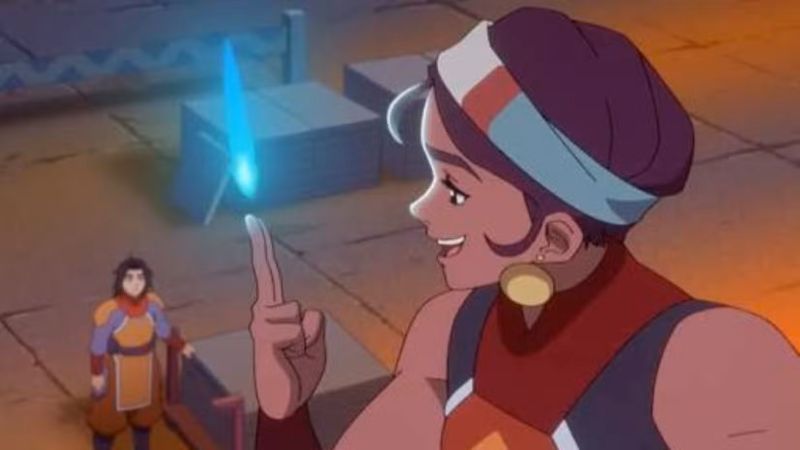
But a major inconsistency in the series lore involves a single scene with a firebender welding in one episode. She is seen using a small spike of blue flames to weld something near some red rocks, and this should be seen as a mistake. While on the outset it looks like a substitute for a blow torch. There is an actual lore reason for blue flames existing in the Avatar universe. In fact, there is only one character in the entire series that uses those flames, and to spare you some details, she is a psychotic villain in Avatar: The Last Airbender who spent her life perfecting firebending to make only those blue flames, as they burn the hottest. No one else, even in Korra, used blue flames either. It is just very strange to see a non-important character using something like that in Avatar: Seven Havens.
Decent Voice Acting and Music
Finally, Avatar: Seven Havens has a decent voice cast overall. Jae, voiced by Major Curda, Pavi, voiced by Saheli Khan, Nisha, voiced by Aishu Devan, and Karthik, voiced by Akshay Khanna, are standouts in the cast overall. But when it comes to other characters, they either feel wooden or fall flat. The leader of Ellora especially sounds like she’s away from her mic more than other characters. The little thief in the story is also the only believable child-sounding character in the series, as Pavi and Nisha sound too mature for their ages (they are 9 after all).
The music in Avatar: Seven Havens is pretty good overall, however. I really enjoy the female vocalists on some tracks, and others that play during fight scenes or ones where Pavi and Nisha take on the anomalies. None of these tracks are particularly great. None of the music I picked up on sounded off or bad in any way.
Closing Remarks on Season 1 of Avatar: Seven Havens
Seeing as it has been over 10 years since The Legend of Korra, Avatar: Seven Havens definitely fills the void. The show is exciting and, at times, funny as well. I absolutely adore Pavi and Nisha, and look forward to seeing them in future seasons. I just hope that the overall quality of the show’s animation, choreography, and consistency with the elemental bending gets improved. It’d be a shame to see the first new show in the Avatar universe lack the quality of its predecessors. I do recommend it for those who watched the original Avatar, and even those who watched Korra. But it’s hard to recommend for newcomers, considering the knowledge you need and the quality of the show itself.
Cons
Lackluster Fighting Scenes