What happens in Round Top doesn’t necessarily stay the same in Round Top.
Round Top, the town, has a population of 90. Round Top, the antiques show, can swell to 300,000 visitors annually.
Three times each year – in October, January and March – the two-lane, 16-mile stretch between Carmine and La Grange fills with big white tents on either side. Their signs, which mostly proclaim “Antiques!”, are seemingly endless, too.
Round Top has been a place to hunt for buried, decorative treasure for nearly 60 years. A French chandelier; an Italian hutch; a complete set of British bone china.
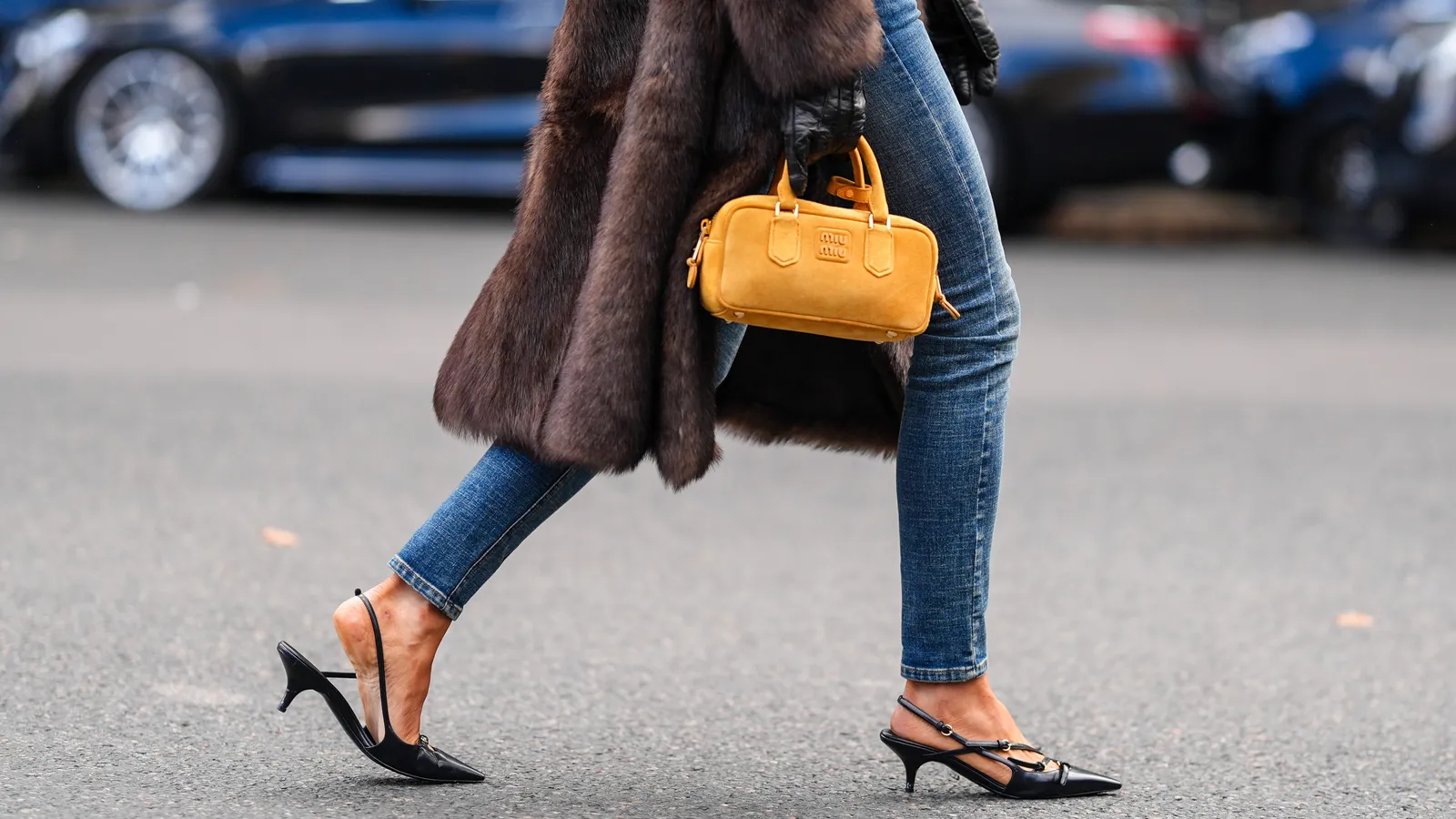
Lately, some of those visitors are no longer shopping for the old stuff. They may be in the market for new stuff from contemporary brands – if they’re there to shop at all. In recent years, the bounty has tilted toward fashion as much as furnishings. A dealer in patina game tables or brass bar carts might find herself next to a jewelry brand or handbag designer. This October, Round Top
played host to brand events on an international scale:
Supermodel Molly Sims introduced a YISE Beauty product at a Hotel Lulu dinner and Bader Ranch pop-up, while Staub unveiled a new Dutch oven color at a dinner hosted by Houston chef Marcia Smart.
HOUSTONCHRONICLE.COM:
Inside Lauren Bush Lauren’s first trip to Round Top for a FEED x Katie Kime dinner
That shift has been unfolding on social media, too. A post questioning why fashion brands Sézane and Hunter Bell were at the fall show drew tens of thousands of views – and a debate over what belongs at Round Top. As the show grows, so do the numbers of people asking what exactly this Texan tradition is becoming.
“The first time I ever went was 15 years ago, and it was a totally different place,” says Brooke Wise, owner of the NAN Collective. “Yes, it’s an antique show. That’s how it started. But everything evolves, so I see both sides of it.”

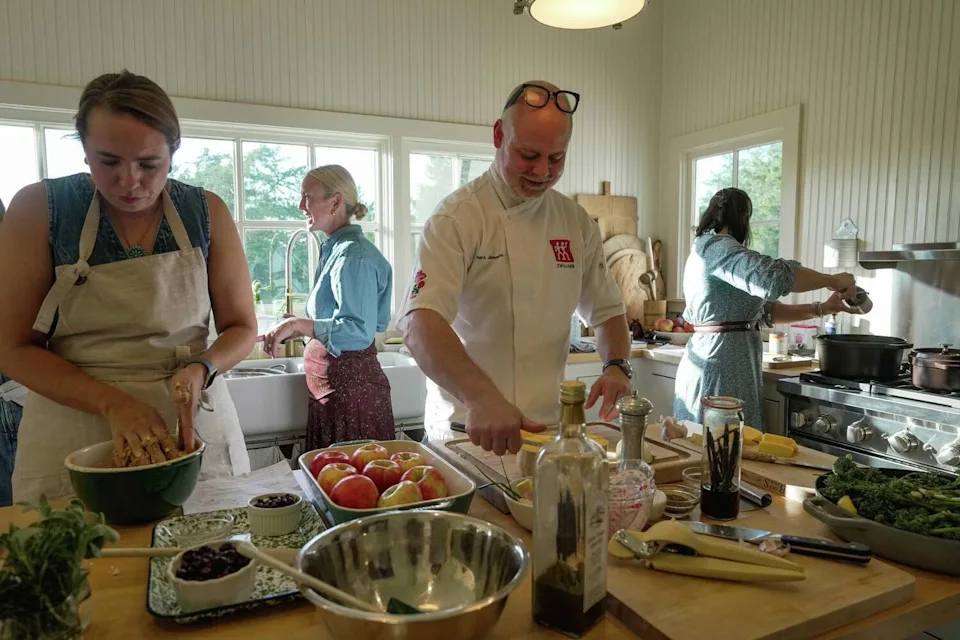
Bernard Janssen, 51, a Zwilling chef, teaches a cooking class at Kitchenette Farm in Round Top on Thursday, Oct. 15, 2026. (Raquel Natalicchio/Houston Chronicle)
A history of high-profile support
In 1968, Emma Lee Turney sent a short press release to Life magazine, promoting her first antiques fair in Round Top. She’d earned the moniker “godmother of antiques” for organizing previous shows in Houston, Austin, Fredericksburg, Rosenberg and Galveston.
That is how Hazel Ledbetter, then a prominent figure in the River Oaks philanthropic and social scene, knew Turney. As the story goes, Ledbetter is who encouraged Turney to take a look at Round Top. A fellow antiques dealer, Ledbetter began buying land in and around Round Top and restoring some of the town square’s historic buildings in 1959. She purchased several farms, houses and properties, including what is now the Winedale Historical Center.
Ledbetter famously brought Claudia “Lady Bird” Johnson to her antiques shop, which is now Hotel Lulu, around 1967.

Hazel Ledbetter with Lady Bird Johnson outside of what is now Hotel Lulu, circa 1967. (Courtesy of the Bell family)
Ledbetter’s remaining Round Top properties were sold to Faith and Charles Bybee in the late 1960s.
Around that time, Turney was working to get the Original Round Top Antiques Fair up and running. The inaugural showing drew 6,000 shoppers and 26 dealers peddling mostly American country antiques. The smell of barbecue smoking on pits outdoors wafted between their booths.
The show was an immediate success. The support of high-profile women such as Ledbetter, who was joined by Faith Bybee and Ima Hogg on opening day, helped Turney put Round Top on the map. Has social media shifted the focus away from antiques and vintage to fashion and brand events, or has any publicity always been good publicity?
Decades later, in 1997, CBS Sunday Morning aired a profile on Turney and her antiques fair. By then, the show had become so popular it garnered a wait-list. Then-decorating editor of House Beautiful Mary Ellisor Emmerling suggested Turney utilize a tent to accommodate the overflow. The first was 200 feet of yellow-and-white stripes that cast a gleaming orange glow depending on the time of day and the Texas sun.
Part of the thrill was angling for sneak peeks between the tent slats before the fair officially opened. Somehow red SOLD stickers always seemed to claim the best pieces in advance. That hasn’t changed.
The Round Top ‘uniform’
Turney wrote a book called “Antiques Business as a Lifestyle” in 1978 and another, “Denim and Diamonds,” to mark the 30th anniversary of her antiques fair in 1998.
The latter title could describe what’s now called the Round Top uniform. There are hundreds of videos and guides online breaking down, or poking fun at, the look: wide-brimmed hat, vintage Levi’s or a sundress, cowboy boots and a wrist stacked with carats.
Some folks aren’t thrilled about fighting in traffic with the party buses of girl trips in town from the big cities. Or having to book their Airbnbs and hotel rooms a year in advance, at a premium. One antiques dealer said it’s become tough to get a decent dinner under $50 or $60 during the antiques show. For a small business owner committed to a three-week stint, those expenses start to add up.
Content creator Walker Ward (@walksauce42_) cosplayed “moms at Round Top” driving in from River Oaks, dripping turquoise and dropping $5,000 on cowboy boots at Blue Hills to his 812,000 Instagram followers.
The feedback was mostly light-hearted; Round Top vendors tagged each other and poked fun at themselves. Others singled out the seemingly wealthy women from Houston, Austin, Dallas and San Antonio who’ve made Round Top a backdrop for social media and not necessarily for antiques.
Another video, by slow fashion and thrifting content creator Emily Fenves (@thelanderline) accumulated 67,000 views for questioning why French knitwear brand Sézane and womenswear designer Hunter Bell had a presence at the 2026 fall show.
It struck a chord. Fenves’ post brought the discussion about which brands and businesses belong or don’t belong at Round Top to a head. And a debate ensued in the comments.
“Maybe I would not have noticed if she weren’t next to Sézane,” she told the Chronicle. “I know Sézane is a beloved brand. I have noticed this huge effort to grow and have tons of marketing, influencers and ads. That in and of itself is a red flag to me and leans into fast fashion. It just feels misplaced for Round Top.”
Fenves, who is based in Austin, has a background in social work. She started the Lander Line after hitting a consumption wall and what felt like an addiction to shopping. Her social media account focuses on thrifting, slow fashion and ethical shopping habits. She’s made a point to attend nearly every Round Top antique show for the past eight years.
“I have seen its growth. I think growth is great. There were always brands that were not vintage and not small that used good materials. Now I see it much more,” Fenves explains. “I was at Blue Hills and saw a few of these pop-ups; at first, it was kind of a vibe. It was a party that started to feel off-putting. It didn’t feel like the right time or place.”
Fenves defends her post as simply an observation of change. Dozens, if not hundreds, of followers agreed with her perspective in the comments.
“Change isn’t always bad. The changes at Round Top have brought more and more people,” she adds. “I totally stay away from the influencer events and dinners. That’s not how I do Round Top, but it doesn’t bother me. It’s the shift away from antique and vintage things.”
Bell’s husband happens to be Ledbetter’s great-grandson. The Houston-based fashion designer responded to some of the discourse in Fenves’ post. Bell says her brand is slow fashion. Each collection takes six months to design.

Hunter Bell inside her pop-up tent at Blue Hills. (Bailey Hart/for Hunter Bell )
“When you walk into our tent, we are intentionally focused on making that Round Top experience at Blue Hills,” Bell told the Chronicle. “Our print designer made custom wallpaper. Our dressing rooms are a tribute to Round Top. To Royer’s Round Top Café. To Texas. We’re not coming from some uncharted territory. We made a Round Top T-shirt so there are price points that are available to everyone.”
She’s celebrating 20 years of her eponymous label and wanted to use her pop-up at Blue Hills as a test for a prospective brick-and-mortar store.
For her, the Round Top experience is about being “footloose and fancy free.” The Texas woman is her muse.
“I’ve engaged in the history of Round Top through my husband’s family and in-laws, giving back what’s been given to us,” Bell says.
HOUSTONCHRONICLE.COM:
Hunter Bell’s great-grandmother-in-law helped restore Round Top. Hotel Lulu dinner honors her legacy
Two small businesses that Fenves looks for at each show are Wise’s NAN Collective and Natalie Lindsey Vintage.
NAN Collective, which stands for No Approval Needed, specializes in vintage Levi’s. Wise and Lindsey share a tent at the Compound and frequent some of the invitation-only events around town.
“Social media has shown the facets. It’s not just an antique show anymore,” Wise says. “Sometimes it feels like everyone’s showing up in a costume. But for me it’s a place where I can dress however I want without judgment.”
She cites new ownership at some of the more prominent Round Top venues as the impetus for the antique show’s commercialization. First came the dinner events, which initially catered to interior design professionals. Then came interior designers Joanna Gaines and Kelly Wearstler, who gave the show and town real exposure on social media.
“Now it’s something that’s become aspirational, like an Aspen,” Wise says. “We’re right in between Houston, Austin and Dallas and you can have an experience for a day and feel ‘cool.'”
She recalls when Round Top had only two true antique venues. When they became too popular, she started driving out to Excess and Excess II to dig for affordable treasures. Now she drives even further.
Still, the success has helped NAN Collective’s bottom line.
“Look, there’s no place to stay overnight – this is a great problem. But the infrastructure isn’t ready for it, especially for vendors,” Wise says. “We finish each day, and we’re like, ‘What do we eat? Where do go? ‘ There’s talk about creating something that’s just for vendors. But also, what direction are we going? What do people want, and how are we keeping this authentic?”
‘Other people’s business’
Mark Dooley has been showing in Warrenton, the town just south of Round Top, for 30 years.
It takes him two weeks to set up North Star Antiques, his imports from France, Belgium and Denmark, in the fields of Excess II, and another seven days to break everything down.
His sales philosophy is old school. He just piles the stuff up, and after people come buy it, he goes out and gets more.
“I like to stock things up three rows tall and let you pick out what your heart desires,” he says. “We keep it fun, like the old Round Top was. We try to sell things as cheap as we can. There’s no better place for designers and dealers to shop for wholesale.”
He ships 15 to 18 containers from Europe to the U.S. each year. Some of Dooley’s best dealers, mostly in the Northeast, the East Coast and California, will pull the trigger on a purchase from a video or photograph he sends via text message.
“If those people agree with me, I know my eye and gut are correct,” he says.
He shares his no-nonsense approach with Turney. Dooley was 26 when they first met.
“I did the winter shows with her. Quality time, talking to her, sitting down. She was a neat lady, and without her foresight in taking dealers and inviting the right people, this wouldn’t happen,” he recalls. “She wasn’t sweet or have a singsong voice, she was very direct. If she didn’t like the way you displayed something, she would say, ‘You can do better than that.’ Not in a mean way, just matter of fact.”
Turney’s way of doing business didn’t agree with everyone. And that was OK with her. “She was a strong woman. If she was a man, they would’ve had no issues with her,” Dooley added.
He says that Turney wouldn’t allow Smokey Renck and B.J. Renck to show at the Round Top antiques fair. So in 1981, they opened the “Original” Warrenton Antique Show and Sale.
He keeps a signed copy of “Denim and Diamonds” in a bookcase and says he was completely unaware of any fashion brands coming to Round Top this year. Dooley doubts that Turney would have paid them any mind either.
“She didn’t really worry about other people’s business, as long as the red barn dealers were doing well,” he says. “She would only really care about her show and her flock.”
Dooley has customers who can spend $10,000 to $15,000 in the blink of an eye. He also wants the young San Antonio couple furnishing their first house to afford cool chairs that aren’t so new.
He says both clients are welcome. At Excess and Excess II, they just don’t want to be over-produced.
“There are gorgeous booths at Marburger,” Dooley says. “Some people do prefer to show up at Marburger, take their Instagram photos, buy a couple things and go home.”

Inside Marburger Farm during the fall 2026 antiques show. (Ethan Good Photography/for Marburger Farm)
Ed Gage and John Sauls struck gold when they founded the Marburger Farm Antique Show in 1997. It quickly gained a reputation as the Round Top destination for European antiques. And, in general, for being a bit fancy.
Kelly Wearstler, Gwen Stefani, Joanna Gaines and Matthew McConaughey have shopped Marburger. Unlike other venues, there’s an admission fee ranging from $10 to $25 during the five-day show; on average, most shows span from 10 days to two weeks.
It’s become tradition for Marburger veterans to tailgate in the parking fields on early admission day, which is typically a Tuesday. By mid-morning, shoppers crack open bottles of champagne from the trunk beds of their Range Rovers and Mercedes G-Wagens.
Brook Partners, which also owns and operates Dallas Art Fair, purchased Marburger in 2021.
At some point, they identified areas for improvement. Dealers requested a more even terrain and better temperature control. So Brook Partners leveled the ground and lined up a cluster of historic buildings to create a town-square layout. They formed a sort of Main Street. They built a food pavilion overlooking a pond on the property. Hospitality became the next focus. Tailgating not only survived, but was folded into an on-site experience included with an early admission ticket.
“We’re aware of the mixed feelings about Round Top overall,” chief marketing officer Theresa O’Dea notes. “We’re not worried about that. Marburger has retained its soul.”
The fall show in October brought a record number of more than 15,000 shoppers.
With the cost of gas, mid-term elections and war in Iran, Dooley braced himself for a much slower antiques show. Like O’Dea, he confirms that many fellow vendors agree the fall show was their most successful ever, several times over.
“It’s a lot of pressure. Because the show is bigger, there’s a lot of competition,” Dooley says. “My only fear is that it’s going to price out a section of the population. For most problems, you’ve got to use nuance. Property taxes are high. It’s costing more to stay here and all that gets priced into what buyers pay.”
Subscribe
There’s more to Houston with the Chronicle. Subscribe today for just 25¢.
This article originally published at At Round Top, fashion and lifestyle brands draw crowds – and questions about what the show is becoming.