Key Takeaways:
- The November 2026 Shenzhen trilateral of Trump, Xi, and Putin is less a “New Yalta” establishing a durable great-power condominium than an attempt to manage strategic rivalry, as the three lack a shared vision of order and sufficient mutual trust.
- The summit produced only a symbolic declaration on nuclear risks, energy supply, and UN reform, with no breakthroughs on Ukraine, Iran, or Taiwan, while highlighting divergent priorities: U.S. transactional leverage, Chinese centrality, and Russian recognition.
- A true great-power directorate risks treating Ukraine, Taiwan, Europe, and the Global South as objects of negotiation; lasting stability requires competitive multipolarity constrained by sovereignty, international law, and the participation of affected states.
The Reshaping of the International Order, the Return of Spheres of Influence, and the Temptation of a Great-Power Directorate in the Twenty-First Century
Introduction: The World at a Time of New Geopolitical Arrangements
International history sometimes appears to advance through spectacular ruptures, yet its most profound transformations often take place through discreet negotiations, strategic compromises, silent power struggles, and arrangements among major powers. The contemporary world appears to be entering precisely such a period of international restructuring. The war in Ukraine, the strategic rivalry between Washington and Beijing, Russia’s return as a confrontational power, tensions in the Middle East, the militarisation of the Indo-Pacific, the fragmentation of the global economy, and the relative weakening of multilateral institutions have brought a fundamental question to the forefront: are we witnessing the preparation of a new world order, negotiated explicitly or implicitly by the three principal strategic powers of the planet—the United States, China, and Russia?
The expression New Yalta is particularly evocative. It refers to the February 1945 conference, when Franklin D. Roosevelt, Winston Churchill, and Joseph Stalin met in Crimea to discuss the organisation of Europe following the defeat of Nazi Germany. The meeting symbolised the emergence of an international system dominated by the victorious great powers, whose decisions would determine the political, military, and ideological balance of the planet for several decades. It also became one of the founding moments of Europe’s division and the subsequent structuring of the Cold War. The historical circumstances of the conference are documented in the United States Department of State’s account of the Yalta Conference.
Eighty years later, the international configuration is profoundly different. The United States no longer enjoys the uncontested preponderance that characterised its position at the end of the Second World War. China has become a leading economic, technological, commercial, and military power. Russia, despite the structural limitations of its economy and the consequences of the war in Ukraine, retains a formidable nuclear arsenal, military projection capabilities, and considerable geopolitical influence. These three actors possess the means to alter international balances, although their ambitions, interests, and respective understandings of the world order do not necessarily coincide.
An essential distinction must therefore be made: a New Yalta does not necessarily imply a physical conference bringing together Xi Jinping, Donald Trump, and Vladimir Putin. It may refer to a more diffuse process of negotiation among major powers, whereby each seeks recognition of certain strategic priorities, attempts to limit the risks of direct confrontation, and endeavours to redefine the rules governing international coexistence. More worryingly, it could also describe an attempt to transform certain regions of the world into negotiating spaces for dominant powers, without meaningful participation by the populations and states concerned.
The central question addressed in this essay is therefore the following: is the world moving towards an international order founded on a strategic compromise between Washington, Beijing, and Moscow, or are we witnessing instead a multipolar competition in which no single power possesses the capacity to impose its own architecture permanently?
The hypothesis advanced here is that we are witnessing less the birth of a New Yalta than an attempt to redefine the relationships between major powers. The three leaders may be attracted to a diplomacy of the powerful, but they neither share a common vision of the world nor possess sufficient mutual trust to establish a durable global condominium. The real challenge lies in their ability to transform strategic rivalry into negotiated coexistence without sacrificing state sovereignty, international law, or the interests of societies that have no seat at the table of the great powers.
The analysis will examine several interconnected dimensions: the historical legacy of Yalta, the geopolitical ambitions of the three leaders, the war in Ukraine, Sino-American competition, the resurgence of spheres of influence, Europe’s future, transformations in the Middle East, the position of Africa and the Global South, and the prospects for a post-Western international order.
I. Yalta 1945: The Birth of Great-Power Diplomacy
To understand the symbolic significance of a rapprochement between Xi Jinping, Donald Trump, and Vladimir Putin, it is necessary to revisit the Yalta Conference, held from 4 to 11 February 1945. The meeting brought together three leaders representing powers whose cooperation had made possible the defeat of Nazi Germany. Roosevelt, Churchill, and Stalin shared neither ideological convictions nor imperial ambitions, but they understood that military victory had to be accompanied by a political settlement designed to organise the post-war world. Their immediate objectives were to coordinate the conclusion of the conflict, establish the conditions for Germany’s occupation, discuss the future of Eastern Europe, and lay the foundations of a new international institutional architecture.
Yalta, however, was not an exercise in diplomatic philanthropy. It was fundamentally a negotiation among victorious powers, each seeking to maximise its strategic interests. The Soviet Union wanted to secure its western borders and obtain strategic depth against the possible resurgence of German power. The United States sought Soviet participation in the war against Japan and wanted to establish an international organisation capable of preventing another global conflagration. Britain, meanwhile, attempted to preserve its influence in an international environment in which its economic and military power was already declining.
The decisions taken at Yalta concerning Eastern Europe, Poland, Germany, and the Far East revealed the contradictions inherent in this diplomacy. Western leaders accepted certain Soviet demands concerning security and regional influence, while Stalin undertook, particularly regarding Poland, to respect political principles that were subsequently interpreted and implemented very restrictively. The principle of national self-determination was thus subordinated to strategic considerations. The subsequent history of Central and Eastern Europe demonstrated that the Yalta compromises did not constitute a genuine agreement based on mutual trust, but rather a temporary coexistence between incompatible interests.
The United States Department of State’s historical account emphasises that one of the most concrete agreements concerned Soviet concessions in the Far East in exchange for Moscow’s participation in the war against Japan. It also recalls the disagreements that rapidly emerged over the political organisation of Eastern Europe. Roosevelt’s death in April 1945, followed by the deterioration of relations between Washington and Moscow, helped transform wartime cooperation into systemic confrontation.
The historical importance of Yalta therefore lies in a double reality. On the one hand, the conference contributed to the construction of the post-war institutional order, particularly through the functioning of the United Nations Security Council and the veto rights granted to its five permanent members. On the other hand, it consolidated an international diplomatic practice in which great powers assume a disproportionate role in determining territorial and political balances.
This contradiction remains central to contemporary international relations. The United Nations system is theoretically based on the sovereign equality of states, but its Security Council reflects an institutional hierarchy inherited from 1945. The five permanent members enjoy special powers enabling them to block substantive decisions, including those concerning major international crises. This architecture is increasingly contested because it no longer corresponds to the contemporary distribution of economic, demographic, technological, and political power.
The comparison between 1945 and 2026 must nevertheless not be taken too far. In 1945, the three leaders were negotiating in the context of a world war that had almost entirely destroyed the previous European balance. In 2026, the United States, China, and Russia operate in an environment characterised by nuclear deterrence, economic interdependence, global value chains, digital technologies, and the presence of regional actors capable of disrupting the calculations of the great powers. India, Japan, Türkiye, the European Union, Iran, Saudi Arabia, Brazil, and several African powers are no longer merely spectators of international politics.
The comparison with Yalta nevertheless retains considerable analytical relevance. It allows us to examine the return of great-power diplomacy, through which the leaders of the principal international powers seek to negotiate directly the rules governing their coexistence, sometimes at the expense of multilateral mechanisms and the interests of weaker states.
II. The Shenzhen Summit: A Historic Photograph and Its Ambiguities
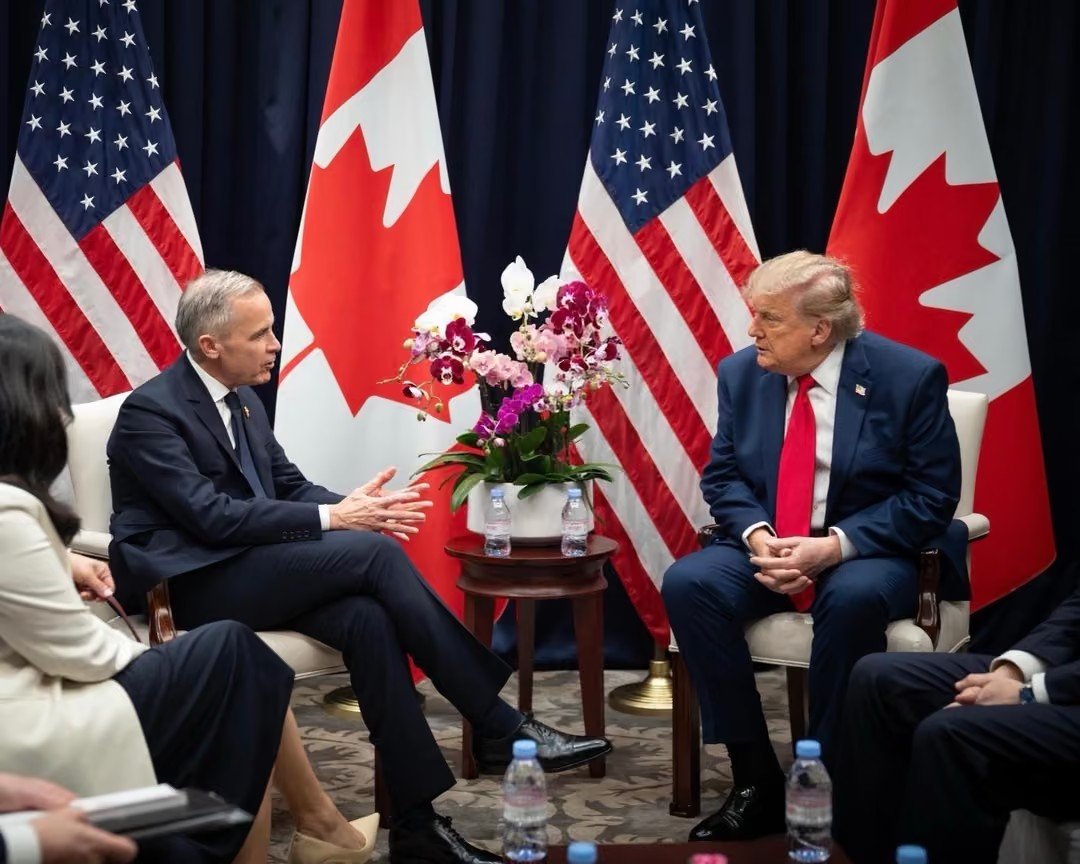
On 19 November 2026, Donald Trump, Xi Jinping, and Vladimir Putin participated in a trilateral meeting in Shenzhen, China. The event represents a particularly significant diplomatic development because it brought together the leaders of three major nuclear and military powers in a common setting, projecting an image of shared responsibility for the management of world affairs.
The political photograph of this meeting possesses a significance extending beyond the immediate results of the discussions. It represents three leaders whose understandings of sovereignty, power, security, and international governance differ profoundly, but who all have an interest in demonstrating that major international questions cannot be resolved without their participation.
The summit and its official declaration are documented by the Chinese Ministry of Foreign Affairs and the White House. The Associated Press’s analysis of the meeting highlights the gap between the symbolic importance of the encounter and the limited nature of its concrete outcomes.
The leaders emphasised United Nations reform, the reduction of nuclear risks, energy supplies, and certain principles relating to the immunity of state officials. However, the most contentious issues, particularly the war in Ukraine and the conflict involving Iran, remained without a common solution in the final declaration. The Reuters account of the Shenzhen declaration similarly underlines the largely symbolic character of the agreement and the absence of a substantial breakthrough on arms control.
This absence of substantive achievements deserves particular attention. A trilateral summit does not automatically constitute a strategic alliance. The mere fact that three leaders meet, congratulate one another, and express their commitment to world peace does not mean that their interests have become convergent. The United States wants to preserve its strategic pre-eminence and global capacity for action. China seeks to consolidate its position as a central power in an international system less dependent on Washington. Russia wants to recover recognised great-power status and obtain guarantees concerning its immediate strategic environment.
The Shenzhen summit therefore reveals a paradoxical reality: the three leaders may desire negotiated coexistence while simultaneously pursuing geopolitical objectives that place them in opposition to one another. Any potential cooperation rests more on the necessity of managing rivalries than on the existence of a common political or civilisational project.
The meeting also has a personal dimension. Donald Trump favours direct negotiating diplomacy, in which relations between leaders occupy an important position. His approach tends to regard international agreements as transactions that can be revised according to national interests and changing balances of power. Vladimir Putin values diplomacy based on recognition and status: he wants Russia to be treated as an indispensable power whose interests must be considered in every major negotiation. Xi Jinping, by contrast, favours patience, institutional continuity, and the gradual consolidation of Chinese power.
The Council on Foreign Relations’ assessment of the first trilateral meeting emphasises its symbolic importance. The summit gave considerable international visibility to the relationship among the three leaders but left unresolved several issues directly affecting their competing interests. Above all, it raises a fundamental question for American allies: is Washington beginning to prioritise its relations with rival great powers at the expense of the trust developed with its traditional partners?
This question is particularly important for Europeans and America’s Asian allies. If major powers increasingly consider bilateral relations to be the principal instrument for managing international crises, regional alliances risk becoming bargaining variables in negotiations in which their members have no meaningful participation.
The Shenzhen summit can therefore be interpreted as a transitional event. It has not yet created a new world order, but it has made visible the possibility of a tripartite diplomacy operating at the summit of the international hierarchy.
III. Donald Trump: Transactional America and the Search for a New Balance
The first actor in this configuration is Donald Trump, whose return to the White House has profoundly altered the language and priorities of American foreign policy. His approach is based on a transactional understanding of international relations, characterised by the pursuit of economic advantages, strategic concessions, and outcomes that can be presented as political successes.
This conception does not necessarily imply American withdrawal from the world. Rather, it reflects a desire to redefine the conditions governing the United States’ international engagement. Washington intends to retain decisive influence but wants its partners to assume a greater share of the economic, military, and political costs associated with collective security.
American foreign policy consequently faces a structural contradiction. On the one hand, the United States remains the world’s leading military power, possesses an exceptional network of alliances, and retains considerable influence over international financial and technological institutions. On the other hand, American society is experiencing intervention fatigue, deep political divisions, and growing criticism of the costs associated with its role as guarantor of the international order.
Trump seeks to resolve this contradiction through diplomacy based on direct negotiations. From this perspective, an understanding with Putin could reduce American expenditure associated with the war in Ukraine and allow Washington to devote more resources to competition with China. An agreement with Xi could simultaneously stabilise commercial exchanges, reduce the risk of military escalation in the Pacific, and protect American economic interests.
Such a strategy nevertheless carries considerable risks. By prioritising personal relationships and temporary transactions, Washington could undermine the credibility of its international commitments. American alliances depend not only on material interests but also on predictable commitments and confidence in the continuity of American foreign policy.
The issue is particularly sensitive for NATO, Japan, South Korea, Australia, and the Philippines. These partners have organised part of their defence policies around the American strategic guarantee. If Washington gives the impression that their interests can be negotiated directly with Moscow or Beijing, they will be encouraged to develop their own military capabilities and alternative diplomatic relationships.
This development could produce a paradox: a policy intended to reduce America’s external commitments might accelerate the fragmentation of the alliance system that has historically sustained its global influence.
American strategy must also be situated within the context of economic and technological competition with China. Advanced semiconductors, artificial intelligence, critical minerals, digital infrastructure, satellite systems, and military technologies have become central instruments of power. Tariffs and trade restrictions are no longer merely economic policy instruments; they have become integral components of national security.
The fundamental challenge is that Washington cannot afford permanent confrontation with Beijing, but neither can it accept a substantial reduction of its influence in the Indo-Pacific.
Trump may therefore seek a compromise with Xi designed to limit the risks of a major crisis without abandoning American instruments of power. Yet Taiwan, technological restrictions, supply chains, and maritime security remain structural obstacles.
Ultimately, the American president wants to be seen as the man capable of negotiating with everyone and ending conflicts that his predecessors failed to resolve. This ambition may create useful diplomatic openings. It may also encourage an exaggerated belief in the possibilities of personal agreements when the fundamental interests of the states concerned remain incompatible.
IV. Xi Jinping: Strategic Patience and the Ambition of Chinese Centrality
Among the three leaders, Xi Jinping occupies a particularly interesting position. Unlike Trump, whose diplomacy frequently prioritises immediate results and media visibility, and Putin, who seeks political and strategic recognition of Russian power, Xi operates according to a logic of long-term consolidation.
China now possesses several attributes of a systemic great power: an enormous industrial base, growing innovation capacity, a substantial domestic market, a global commercial presence, expanding financial and technological infrastructure, and rapidly modernising military capabilities. This combination enables Beijing to pursue a foreign policy that does not depend exclusively on military confrontation.
China’s ambition is to become an indispensable centre of global governance. This does not necessarily mean replacing the United States entirely in every international function. Rather, it means constructing an international environment in which no major strategic decision concerning Asia, the global economy, technology, or international institutions can be taken sustainably without Beijing’s agreement.
Xi’s strategy rests on several pillars. The first concerns economic and technological modernisation. The second involves securing energy and mineral supplies. The third seeks to strengthen Chinese influence within international organisations and financial institutions. The fourth involves developing strategic partnerships throughout the Global South, particularly in Africa, Asia, Latin America, and the Middle East.
Chinese diplomacy also seeks to present itself as an alternative to what Beijing describes as Western unilateralism. This position resonates with numerous countries wishing to diversify their economic and political relationships without necessarily breaking with the United States or Europe.
China, however, is not a universally accepted model. Its political system, territorial claims, relations with Taiwan, maritime disputes with several Asian countries, and domestic security policies generate considerable concern. Its rise also provokes balancing responses from neighbouring powers, particularly Japan, India, the Philippines, and Australia.
Xi’s interest in meeting Trump and Putin must therefore be understood through the prism of this search for centrality. Hosting the two leaders in Shenzhen enables Beijing to project the image of a power capable of bringing together the principal actors in international competition. China appears not as a peripheral participant in a Western negotiation but as the organiser of a strategic conversation whose geographical and political centre is Chinese.
The Chatham House analysis published on 18 November 2026 draws particular attention to this diplomatic advantage. The Shenzhen meeting could primarily benefit Beijing by enhancing its prestige and demonstrating that the other two powers must take its priorities into account.
This position nevertheless involves a major difficulty: China has no interest in becoming the guarantor of Russian strategic ambitions if doing so compromises its economic relations with Europe or its global commercial interests. Nor does it necessarily wish to accept an international recognition that would oblige it to share with Washington a disproportionate nuclear responsibility relative to its present capabilities.
One of the fundamental challenges of Chinese diplomacy is therefore its ability to preserve a privileged relationship with Moscow while avoiding becoming trapped in Russia’s confrontations with the West. Beijing wants Russia to remain sufficiently powerful to help constrain American strategic pressure, but not so powerful or confrontational that it destabilises the global economy.
China is consequently not necessarily interested in a New Yalta that would permanently freeze spheres of influence. It may prefer a flexible international order in which it gradually increases its influence without assuming all the costs of managing the global system.
V. Vladimir Putin: The Return of Russian Power and the Quest for Recognition
Vladimir Putin’s presence in Shenzhen carries particular significance. Since the full-scale invasion of Ukraine in February 2022, Russia has been engaged in a major confrontation with Western powers. The war has profoundly transformed its economy, diplomacy, military relationships, and strategic position.
Putin is pursuing several objectives simultaneously. He wants international recognition of Russia as a great power, the preservation of territorial gains obtained through force, the prevention of Ukraine’s integration into Western military structures, and a reduction in the ability of the United States and NATO to intervene in what Moscow considers its priority strategic environment.
Russia also seeks to demonstrate that Western sanctions have failed to isolate it completely. Its rapprochement with China, partnership with Iran, relations with several African countries, and participation in institutions such as BRICS provide opportunities for diplomatic and economic diversification.
Nevertheless, Russian power is subject to structural constraints. Its economy remains heavily dependent on hydrocarbons, extractive industries, and military expenditure. The war places considerable pressure on human and budgetary resources. Sanctions restrict access to certain technologies and complicate long-term investment. Finally, the economic asymmetry between Russia and China tends to increase Moscow’s dependence on Beijing.
This asymmetry is decisive. Russia possesses an immense nuclear arsenal, considerable diplomatic and military traditions, exceptional territorial depth, and strategic energy resources. China, however, possesses economic and industrial power on a scale that Russia cannot match.
Putin therefore needs Xi, but Xi does not necessarily need Putin to the same extent. This asymmetrical relationship could become one of the principal weaknesses of any attempted Sino-Russian-American condominium.
For Moscow, the Shenzhen summit nevertheless represents a diplomatic victory in terms of recognition. The presence of the American president alongside the Russian leader symbolically reduces the effect of the diplomatic isolation sought by Western countries. It enables Putin to reaffirm that Russia remains an indispensable interlocutor in negotiations concerning international security.
The Ukrainian question is central in this regard. American-Russian discussions on a possible settlement of the war resumed in Abu Dhabi in November 2026 after an interruption of several months. American officials referred to progress in identifying differences, but Moscow and Kyiv remained far apart, particularly regarding territorial control and security guarantees. These developments are reported in Reuters’ coverage of the Abu Dhabi negotiations, 10 November 2026.
For Putin, an agreement negotiated directly with Trump would be particularly advantageous if it enabled Russian military gains to be transformed into lasting diplomatic concessions. Such an outcome, however, would raise a fundamental question: can lasting peace be constructed by rewarding territorial changes achieved through the invasion of a sovereign state?
This question extends far beyond Ukraine. It concerns every state that might be tempted to use force to alter its borders or impose its will upon its neighbours. It is also a major test of the credibility of international law.
VI. Ukraine: The True Laboratory of a New Global Balance
The war in Ukraine is probably the issue that most clearly reveals both the limitations and possibilities of a potential new arrangement between Washington, Beijing, and Moscow. It simultaneously represents a territorial conflict, a strategic confrontation between Russia and the West, a crisis of the European security system, and a test of the resilience of the international order established in 1945.
Since February 2022, the conflict has profoundly transformed relations between major powers. Russia has sought to impose a new territorial and strategic reality through force. Ukraine has defended its independence and territorial integrity with military, financial, and diplomatic support from its Western partners. The United States and European countries have progressively transformed their assistance to Kyiv into a central element of their security policies.
The evolution of the conflict has also revealed the limitations of Western solidarity. Differences over military objectives, economic costs, the duration of engagement, and the conditions of a possible settlement have gradually become more significant. Donald Trump’s return to the American presidency has intensified these uncertainties by introducing an approach more explicitly oriented towards negotiation and compromise.
The Ukrainian question thus becomes the point at which three different conceptions of international order converge.
For Putin, the war is connected to the desire to re-establish a Russian sphere of influence and obtain Western recognition of certain strategic demands made by Moscow. For Trump, it represents an expensive conflict whose resolution could demonstrate his capacity to produce a spectacular diplomatic agreement. For Xi, it offers an opportunity to observe the limitations of Western power while avoiding excessive destabilisation of the global economy.
China occupies a particularly complex position. It maintains an important strategic partnership with Russia but does not want the war to undermine its commercial relations with the European Union. It also has an interest in preventing direct confrontation between nuclear powers, which could provoke an economic and military crisis with worldwide consequences.
Russia, for its part, could seek to exploit transatlantic disagreements to obtain an agreement with Washington that Kyiv or European capitals would not necessarily accept. A bilateral negotiation between Washington and Moscow determining the essential conditions of a Ukrainian settlement without Ukraine’s effective participation would reproduce precisely the historical problem associated with Yalta: transforming a directly affected country into an object of negotiation between external powers.
It must be emphasised that Ukrainian sovereignty is not a secondary variable in European security. It is one of the fundamental principles of international law. Article 2(4) of the United Nations Charter prohibits the threat or use of force against the territorial integrity or political independence of any state. The principle of sovereign equality is also established in Article 2(1). Both provisions can be consulted in the official text of the United Nations Charter.
A peace agreement that ignored these principles could produce a military pause without establishing the foundations of lasting security. It could encourage other powers to believe that territorial conquest can eventually be transformed into political recognition once the balance of power becomes favourable.
Ukraine is therefore not simply a problem to be resolved between Trump and Putin. It constitutes a test of the international community’s ability to preserve the fundamental principles underpinning the contemporary international order.
A durable peace should satisfy several requirements: Ukraine’s sovereign participation in negotiations, credible security guarantees, mechanisms for monitoring and verification, the resolution of humanitarian issues, economic reconstruction, and the prevention of renewed hostilities. It should also take European security into account and address the need to reduce the risks of escalation between Russia and NATO.
The danger of a New Yalta lies precisely in the temptation to replace these requirements with a territorial settlement imposed by the great powers.
VII. Taiwan and the South China Sea: The Limits of Trilateral Diplomacy
If Ukraine represents the principal point of friction between Washington and Moscow, Taiwan is probably the most dangerous issue in relations between Washington and Beijing.
The Taiwan question lies at the heart of China’s understanding of national sovereignty and territorial integrity. For Beijing, reunification represents a major historical and political objective. For Washington, maintaining stability in the Taiwan Strait is an essential strategic interest, both for the security of its Asian partners and for the military and economic balance of the Indo-Pacific.
The difficulty lies in the coexistence of several contradictory principles. The United States recognises the People’s Republic of China as the government of China while maintaining substantial unofficial relations with Taiwan and supporting its defence capabilities. Beijing regards these relations as interference in an issue that falls within its national sovereignty.
This strategic ambiguity has long contributed to preserving a degree of stability. However, China’s military modernisation, political tensions across the Strait, and intensifying Sino-American competition have made this balance increasingly fragile.
A possible agreement between Xi and Trump could aim to reduce the risks of military confrontation. Nevertheless, it is difficult to imagine Washington sacrificing Taiwan’s strategic interests without provoking a major crisis with its regional partners. Japan, South Korea, the Philippines, and Australia are closely monitoring every development in American policy.
The situation is particularly delicate because Taiwan occupies a central position in global production chains for advanced semiconductors. The island is therefore a strategic space where the military, economic, industrial, and technological interests of major powers intersect.
The issue consequently concerns much more than sovereignty and reunification. It involves control over essential infrastructure underpinning the global digital economy.
An implicit recognition of a Chinese sphere of influence in the Taiwan Strait could have far-reaching consequences. It could transform security perceptions throughout Asia and encourage a regional arms race.
The South China Sea represents another arena of confrontation. China’s maritime claims conflict with the interests of the Philippines, Vietnam, Malaysia, Brunei, and other regional states. The United States, as a maritime power and partner of several of these countries, is involved in this context to preserve freedom of navigation and prevent any single power from imposing exclusive strategic control.
The Shenzhen summit did not resolve these contradictions. Rather, it demonstrated that Beijing could host Washington and Moscow without transforming the most sensitive issues into substantive negotiating subjects. According to the Council on Foreign Relations’ assessment, Ukraine and Taiwan were largely absent from the substantive elements of the joint declaration.
This absence is revealing. The three leaders may agree on the necessity of reducing certain international risks, but they cannot necessarily agree on the principles that should govern geopolitical spaces where their fundamental interests conflict.
VIII. Europe: The Great Absentee from the Shenzhen Photograph
One of the most troubling consequences of diplomacy among the three major powers concerns Europe’s position. Europe remains a major economic, commercial, technological, and regulatory actor, but its ability to transform these resources into geopolitical power remains limited by internal divisions and strategic dependence on the United States.
The Shenzhen meeting symbolically highlighted this weakness. While the three leaders discussed international stability, security, and global governance, European leaders occupied no central position in this configuration.
Yet no sustainable security architecture in Europe can be constructed without the participation of European states. The war in Ukraine directly affects their security, economic environment, energy supplies, and strategic future.
The European Union faces a historical contradiction. It was conceived as a project to transcend national rivalries through economic cooperation and institutional construction. Its integration transformed Western Europe into an unprecedented area of peace and prosperity. However, this economic achievement has not been accompanied by genuine strategic and military unification.
Member states do not always share the same perceptions of the Russian threat, diplomatic priorities, or understanding of the transatlantic relationship. Some favour a firm policy towards Moscow, while others emphasise the need to preserve channels of negotiation. Differences concerning military expenditure, energy policy, and NATO’s future also complicate the formulation of a common strategy.
Changes in American policy have become an additional source of uncertainty. If Washington prioritises direct arrangements with Moscow and Beijing, Europeans risk finding themselves in a position where decisions affecting their security are taken without their participation.
This situation strengthens arguments in favour of European strategic autonomy. Such autonomy, however, should not be understood as a rupture with the United States, but rather as an enhanced capacity to defend European interests, including when these do not entirely coincide with American priorities.
The International Institute for Strategic Studies’ September 2026 report, The Defence of Europe in a New Era: An Assessment, highlights the fact that developing greater European self-defence capabilities remains an unfinished objective. European countries must assume increasing responsibility for their own security in the face of a persistent Russian threat and changing American priorities.
The question is also political. An Europe incapable of defending its strategic interests risks becoming a space of competition between external powers rather than an autonomous centre of international decision-making.
The problem concerns more than Russia. Europe’s relationship with China is equally important. The European Union maintains substantial commercial relations with Beijing but also expresses concerns regarding technological dependencies, commercial practices, critical minerals, and security issues.
An effective European strategy should therefore rest on three pillars: credible defence capabilities, a coherent industrial and technological policy, and diplomacy capable of maintaining relations with Washington, Beijing, and Moscow without sacrificing the fundamental principles of European integration.
A New Yalta, if it were to emerge, could only be durably accepted by Europe if Europe possessed the political and military means to defend its own voice.
IX. The Middle East: Between the Restructuring of Alliances and Great-Power Competition
The Middle East is another region in which decisions taken by the three major powers could have substantial repercussions. It remains at the centre of energy-related interests, religious and ideological rivalries, territorial conflicts, and military projection strategies.
For several decades, the United States occupied a predominant position within the regional security architecture. Its relations with Israel, Saudi Arabia, the United Arab Emirates, Egypt, Jordan, and several other states enabled Washington to maintain considerable influence. However, successive wars, energy transformations, and changes in regional balances have gradually modified this configuration.
China has taken advantage of these developments to expand its economic and diplomatic presence. Its approach is based primarily on investment, infrastructure, commercial exchanges, and the security of energy supplies. Beijing seeks to avoid direct military commitments that could draw it into regional rivalries.
The rapprochement agreement between Saudi Arabia and Iran, negotiated under Chinese mediation in 2023, represented an important moment in this evolution. It demonstrated that Beijing could play a diplomatic role in a region traditionally dominated by Washington and its partners.
Russia also possesses a strategic presence in the Middle East, particularly through its relations with Iran and its historical involvement in the Syrian question. However, the constraints imposed by the war in Ukraine limit its ability to devote substantial resources to other theatres.
The Shenzhen summit could therefore reinforce a tendency towards mutual recognition of the regional interests of major powers. Nevertheless, it would be mistaken to assume that the three leaders can divide the Middle East into clearly defined spheres of influence.
The region possesses its own political dynamics. Saudi Arabia does not wish to be reduced to an instrument of American strategy. Iran pursues security and regional influence objectives that do not coincide entirely with those of Moscow or Beijing. Türkiye, a NATO member, is developing an autonomous foreign policy combining relations with Russia, cooperation with the West, and regional ambitions. Israel also possesses its own security and diplomatic imperatives.
The Israeli-Palestinian question particularly illustrates the limitations of diplomacy conducted exclusively by major powers. A lasting solution cannot be imposed without taking into account national aspirations, political rights, security, and the concerns of the populations directly affected.
The same logic applies to the conflicts in Lebanon, Syria, and Yemen, as well as tensions involving Iran. Regional stability constructed exclusively through interstate arrangements risks leaving the underlying causes of crises untouched.
For Morocco, this restructuring is of particular interest. The Kingdom possesses a multidimensional diplomatic strategy characterised by strategic relations with the United States, historical and economic ties with Europe, growing cooperation with the Gulf countries, and expanding relations with China. The Western Sahara question, relations with Israel, infrastructure investment, energy, and regional security place Morocco in a position where the diversification of partnerships is particularly important.
In a world increasingly dominated by fluid power relationships, Rabat must preserve its negotiating capacity and avoid excessive dependence on any single centre of power. Morocco’s diversification strategy is, in this respect, a response to the fragmentation of the international environment.
X. Africa and the Global South: The Great Absentees from a Potential Global Directorate
Africa probably represents the most revealing terrain for observing contemporary transformations in global power. Long considered a peripheral space in international politics, the continent has become a major arena of economic, energy, technological, and diplomatic competition.
Africa’s demographic growth, natural resources, strategic mineral reserves, energy potential, emerging markets, and geographical position confer increasing importance upon it in the calculations of major powers.
The United States, China, Russia, the European Union, India, Türkiye, and the Gulf monarchies are seeking to strengthen their presence across the continent. Their methods and priorities, however, differ considerably.
China prioritises infrastructure, trade, industrial investment, logistics networks, and development partnerships. It has contributed to the construction of ports, railways, roads, power stations, and other strategic facilities. Its presence is also linked to access to the raw materials required by its industrial economy.
Russia places greater emphasis on political and security relations, arms sales, military partnerships, and energy cooperation. Its influence is particularly visible in certain states where relations with Western powers have deteriorated.
The United States seeks to preserve its strategic interests, expand economic exchanges, and maintain its influence within international institutions. The European Union remains an essential commercial and institutional partner, although its African policy is sometimes perceived as insufficiently responsive to the changing aspirations of African societies.
The danger of a New Yalta would be that the three major powers might regard Africa as a reservoir of resources and an arena of competition rather than as a collection of sovereign societies possessing their own development priorities.
Such an approach would reproduce certain practices of colonial diplomacy, in which the interests of local populations were subordinated to the needs of metropolitan centres and the ambitions of external powers.
Contemporary Africa, however, is no longer the continent of the colonial period. The African Union, regional organisations, African financial institutions, and new generations of political leaders possess an increasingly significant negotiating capacity. African states can diversify their partnerships, encourage competition among investors, and defend more autonomous development strategies.
The expansion of BRICS constitutes an additional instrument of diversification. The inclusion of Egypt and Ethiopia, in particular, has strengthened the group’s African dimension. Nevertheless, it would be incorrect to regard BRICS as a homogeneous bloc or as an anti-Western alliance.
The collective study published by the Carnegie Endowment for International Peace on 31 March 2025, BRICS Expansion and the Future of World Order demonstrates that the motivations of member states and partners are diverse. Some seek to reduce their dependence on Western-dominated institutions, while others simply want to increase their diplomatic room for manoeuvre without breaking their relations with Washington or Brussels.
This distinction is fundamental. The Global South is not a unified political actor. It encompasses states whose economic interests, political systems, security priorities, and international ambitions frequently differ.
India, for example, maintains relations with Russia, participates in BRICS, develops cooperation with the United States, and remains an important Western partner in the Indo-Pacific. Brazil seeks to strengthen its international mediation capacity and promote more inclusive economic governance. The Gulf states pursue strategic diversification between Western and Asian powers.
Africa should therefore seek to transform this competition into an opportunity for development. This requires strengthening continental integration, improving governance, developing local industrial capacities, and negotiating more balanced investment agreements.
The real question is not which great power will dominate the continent, but to what extent African states will become the architects of their own development.
XI. BRICS and the Emergence of an Imperfect Multipolar Order
The growing importance of BRICS constitutes one of the most significant phenomena in the contemporary transformation of the international order. The organisation has become a platform for coordination among states seeking to increase their influence in global governance and reduce certain dependencies on Western economic institutions.
Two exaggerated interpretations must nevertheless be avoided. The first presents BRICS as a perfectly coherent coalition capable of replacing the Western order. The second dismisses it as a symbolic gathering devoid of institutional capacity.
The reality lies somewhere between these two positions.
BRICS has developed mechanisms of financial and political cooperation, particularly through the New Development Bank, economic coordination arrangements, and initiatives aimed at strengthening trade in national currencies. Its expansion has also increased its geographical and political representativeness.
However, its diversity constitutes both its strength and its weakness. China and India maintain relations characterised by profound strategic competition. Brazil does not necessarily share Russia’s geopolitical ambitions. The Gulf monarchies wish to preserve their relations with the United States. South Africa seeks to maintain a relatively autonomous foreign policy.
The group therefore possesses neither a common security doctrine nor a unified foreign policy or integrated military structure.
A 2026 study published in Humanities and Social Sciences Communications, entitled BRICS Institutional Evolution and the Russia-India-China Triangle in Shaping Global Governance, highlights this ambiguity. It demonstrates that the group has acquired genuine institutional capacities, but that internal divisions limit its ability to construct a coherent alternative international order.
This observation is essential to understanding the idea of a New Yalta. Although China and Russia may favour an international order less dominated by the United States, they do not necessarily share the same institutional objectives. Russia seeks recognition of its great-power status and its security claims. China wants to strengthen its economic, technological, and diplomatic centrality. India, meanwhile, refuses to become a subordinate partner of either Beijing or Washington.
It would therefore be more accurate to speak of competitive multipolarity than of a stabilised multipolar world order.
This multipolarity may encourage greater representation of emerging countries within international institutions. However, it may also lead to fragmented rules, competing economic blocs, and intensified rivalry over strategic resources.
The reform of global governance should consequently aim to achieve a more balanced representation of the world’s different regions without replacing one hegemony with another.
XII. The Economic and Technological Dimension: The Real Battlefield of the Twenty-First Century
One of the most important aspects of competition between the United States, China, and Russia lies in the transformation of economic power into an instrument of geopolitical influence.
During the twentieth century, great powers based their influence primarily on military strength, natural resources, territorial control, and alliances. In the twenty-first century, these factors remain important, but they are complemented by new elements: semiconductors, artificial intelligence, digital infrastructure, data, satellites, telecommunications networks, quantum technologies, critical minerals, and financial systems.
Power is no longer measured solely by the number of military divisions or the size of a nuclear arsenal. It also depends on the ability to design, produce, and control the technologies that organise economic and social life.
The United States retains considerable advantages in advanced technologies, financial markets, software, scientific research, and innovation. China possesses an exceptional industrial base, large-scale production capacity, and a central position in numerous supply chains. Russia retains important assets in nuclear technology, energy, space, and military capabilities, but its economic and technological resources are more limited.
Sino-American competition is particularly concentrated in the semiconductor sector. These components are indispensable to artificial intelligence, modern weapons systems, telecommunications, and the automotive industry. Control over their production and manufacturing equipment has become a matter of national security.
Critical minerals represent another dimension of this rivalry. Lithium, cobalt, nickel, graphite, and rare earth elements are essential to the energy transition, batteries, electric motors, and military technologies. States controlling their extraction, processing, and commercialisation possess a considerable strategic advantage.
This evolution is transforming relations between major powers. Economic sanctions, technological restrictions, export controls, and industrial relocation policies are becoming instruments of geopolitical coercion.
The Shenzhen diplomacy should be understood within this context. Reducing the risk of military confrontation does not mean that economic competition will disappear. On the contrary, the three powers may seek diplomatic coexistence while continuing to engage in intense competition across strategic sectors.
The principal danger lies in excessive fragmentation of the global economy. If states construct incompatible technological systems, parallel financial networks, and completely separate supply chains, the costs of this fragmentation will be borne by businesses, consumers, and developing countries.
A sustainable global economy therefore requires a balance between protecting legitimate national interests and preserving international cooperation mechanisms.
XIII. Nuclear Weapons: Between Strategic Deterrence and the Risk of Escalation
The nuclear dimension constitutes the most important difference between Yalta in 1945 and contemporary international negotiations.
In 1945, the United States was the only power possessing atomic weapons. In 2026, several states possess nuclear capabilities, and the three powers represented in Shenzhen possess the largest or most strategically significant arsenals in the international system.
Nuclear deterrence has profoundly transformed strategic calculations. It makes direct military confrontation between major powers extraordinarily costly because uncontrolled escalation could produce an existential catastrophe.
However, deterrence does not eliminate conflict. It displaces it towards indirect forms: proxy wars, hybrid operations, cyberattacks, economic coercion, technological competition, and limited interventions.
Relations between Washington and Moscow have historically been structured by arms-control agreements. These mechanisms have helped reduce the risks of an uncontrolled nuclear arms race. Their gradual weakening, however, has created a more uncertain strategic environment.
China constitutes an additional source of complexity. Its nuclear arsenal remains smaller than those of the United States and Russia, but its development is changing the balance of deterrence. Beijing does not necessarily wish to participate immediately in trilateral negotiations imposing obligations disproportionate to the size of its arsenal.
This is precisely one of the difficulties highlighted by the Shenzhen summit: Xi does not want China to be treated as a nuclear power equivalent to the other two in negotiations that could restrict its military modernisation.
Nevertheless, arms control should be a common priority. The three powers have an interest in maintaining military communication mechanisms, avoiding miscalculations, and developing arrangements for strategic transparency.
The question extends beyond nuclear weapons. New military technologies, particularly autonomous systems, artificial intelligence, hypersonic weapons, and cyber capabilities, make international crises increasingly difficult to control.
The danger is that technological decision-making may evolve faster than leaders’ ability to understand the consequences of their choices.
A new global balance will therefore be unsustainable without credible mechanisms for managing nuclear and technological risks.
XIV. The Crisis of Multilateralism and the Future of the United Nations
The prospect of a New Yalta inevitably raises the question of the future of multilateralism. Since 1945, the international system has officially rested on a set of principles, institutions, and mechanisms designed to limit conflicts and encourage cooperation among states.
The United Nations constitutes the institutional core of this order. Its creation responded to the determination to prevent another world war and recognise the legal equality of states, irrespective of their material power.
The organisation, however, currently suffers from a fundamental contradiction. Its architecture continues to reflect the power relationships of 1945, while the contemporary distribution of power is profoundly different. The Security Council remains dominated by five permanent members whose veto rights can paralyse collective decision-making mechanisms.
This situation becomes particularly problematic when permanent members are themselves involved in international conflicts or support opposing parties.
The war in Ukraine, Middle Eastern crises, and Sino-American rivalries illustrate the difficulties confronting the system. The United Nations remains indispensable for providing a framework of international legitimacy, organising humanitarian assistance, and maintaining spaces for negotiation. Yet its ability to impose political solutions on major powers remains limited.
The temptation to develop direct diplomacy between Trump, Xi, and Putin could therefore accelerate the marginalisation of multilateral institutions. If major powers conclude that international problems should be resolved primarily through agreements between national leaders, collective mechanisms risk losing their influence.
It would nevertheless be mistaken to oppose great-power diplomacy and multilateralism systematically. Bilateral and trilateral agreements can contribute to resolving crises, provided they remain compatible with international law and do not exclude the states directly concerned.
Reform of the United Nations should particularly address the representation of Africa, Latin America, and emerging major powers, as well as mechanisms for limiting institutional deadlock.
The challenge is to adapt international institutions to the realities of the twenty-first century without abandoning the principles that justified their creation.
The United Nations Charter remains a fundamental document in this regard. It affirms that states, large or small, enjoy sovereign equality and that international disputes should be settled peacefully. It constitutes a normative safeguard against transforming the world into a system of spheres of influence distributed among dominant powers.
XV. The New Yalta and the Return of Spheres of Influence
One of the most troubling characteristics of contemporary international politics is the resurgence of the concept of spheres of influence.
During the Cold War, the world was organised around two dominant blocs. The United States and the Soviet Union sought to preserve their respective security zones and alliances. This configuration rested on a combination of nuclear deterrence, ideological competition, economic assistance, and indirect confrontation.
The disappearance of the Soviet Union in 1991 appeared to open the way towards a more open international system, dominated by the United States but gradually marked by the emergence of new powers.
The present situation nevertheless demonstrates that the logic of spheres of influence has not disappeared. It has simply changed form.
Russia demands special recognition of its security interests in its neighbourhood, particularly within the post-Soviet space. China considers East Asia a region of priority strategic interest and seeks to prevent hostile military deployments close to its territory. The United States attempts to preserve its global power-projection capabilities and traditional alliances.
This partial convergence of geopolitical conceptions does not mean that the three powers mutually recognise all one another’s claims. Rather, it reveals a tendency to consider national security inseparable from the influence exercised over surrounding geographical spaces.
The fundamental problem is that spheres of influence may become incompatible with the principle of national self-determination.
Central and Eastern Europe, Taiwan, Ukraine, the South China Sea, the Caucasus, and certain parts of the Middle East illustrate this contradiction. The states concerned possess their own interests, political trajectories, and understandings of security.
A durable international order cannot therefore rest on the automatic recognition of zones of domination allocated to major powers.
It should also be emphasised that twenty-first-century spheres of influence are not exclusively territorial. They may be economic, financial, energy-related, technological, or informational. A country may be politically independent while becoming heavily dependent on a partner for its digital infrastructure, energy supplies, or military equipment.
Contemporary sovereignty must therefore be understood as a genuine capacity for independent decision-making rather than merely as legal recognition.
The real challenge for medium-sized states and emerging countries is to preserve this autonomy in an international environment where strategic dependencies increasingly function as instruments of power.
XVI. The Human Factor: Three Leaders, Three Conceptions of Power
The personalities of the three leaders also constitute an essential element of this configuration.
Donald Trump, Xi Jinping, and Vladimir Putin embody three different forms of political leadership. Their meeting cannot be understood solely through the institutional interests of their respective countries. It must also be analysed in terms of their conceptions of power, their relationships with history, and their approaches to international relations.
Trump represents a transactional and personalised conception of politics. He favours direct negotiations, demonstrations of strength, visible agreements, and outcomes that can be presented as personal and national achievements.
Putin embodies a historical and geopolitical conception of Russian power. His vision is profoundly influenced by the collapse of the Soviet Union, which he regards as a major strategic rupture. He seeks to restore Russia’s position within the international hierarchy and prevent its geopolitical environment from being dominated by competing powers.
Xi Jinping represents a more institutionalised form of leadership, embedded in a long-term strategy. His project rests on China’s modernisation, the consolidation of Communist Party power, technological development, and international recognition of China’s status.
These three conceptions differ considerably, but they also share an important characteristic: a strong emphasis on state sovereignty, national power, and the centrality of political leadership.
The Shenzhen summit thus provides a particularly interesting representation of contemporary diplomacy: three leaders seeking to demonstrate their ability to influence world affairs without necessarily sharing a common vision of the international order.
It would nevertheless be dangerous to reduce international politics to the personalities of individual leaders. Institutions, administrations, armed forces, economic interests, public opinion, and geographical constraints continue to structure national decisions.
Trump cannot simply abandon American commitments without encountering resistance from certain institutions and partners. Xi cannot ignore China’s economic and security interests. Putin cannot disregard Russia’s military and economic constraints.
Personal diplomacy can open doors, but it cannot abolish structural contradictions between states.
XVII. Towards a World Order Without a Genuine Hegemon?
One of the most important questions raised by the Shenzhen meeting concerns the possibility of an international system in which no single power can exercise uncontested domination.
During the decade following the disappearance of the Soviet Union, the United States enjoyed an exceptional position of preponderance. This period is frequently described as the unipolar moment. Washington possessed military, financial, technological, and diplomatic superiority that enabled it to exercise considerable influence over the principal international institutions.
This preponderance has gradually eroded under the impact of several transformations: China’s economic rise, costly military interventions in the Middle East, the 2008 financial crisis, American political divisions, Russia’s resurgence as a confrontational power, and the development of new international coalitions.
China constitutes the principal structural challenge to America’s position. Its industrial and technological development has profoundly transformed economic power relations. Its global commercial presence and international investments enable it to exercise influence far beyond its immediate regional environment.
Russia, meanwhile, possesses considerable deterrence and disruptive capabilities, even though its economic weight remains inferior to that of the United States and China.
This configuration does not necessarily mean that the world has entered a perfectly balanced tripolar system. The three powers do not possess identical resources and cannot exercise the same forms of influence.
Contemporary multipolarity is instead characterised by an unequal distribution of strategic capabilities. The United States continues to dominate numerous military, financial, and technological sectors. China possesses exceptional industrial and commercial power. Russia retains considerable military and nuclear resources. The European Union exercises significant economic and regulatory influence, while India and several regional powers are strengthening their strategic autonomy.
We are therefore witnessing a transition towards a more complex international system in which several centres of power coexist without a sufficiently strong institutional consensus to organise their relationships.
This situation could produce two opposing outcomes.
The first would be the emergence of cooperative multipolarity, characterised by consultation mechanisms, arms-control agreements, reform of international institutions, and greater recognition of the interests of emerging powers.
The second would be the establishment of confrontational multipolarity, characterised by permanent rivalries, competing economic blocs, technological fragmentation, and a succession of regional crises.
The Shenzhen summit does not yet enable us to determine which of these two trajectories will prevail.
XVIII. Three Scenarios for the Future of the International Order
The evolution of relations between Washington, Beijing, and Moscow can be examined through three principal scenarios.
First scenario: A condominium of great powers.
Under this hypothesis, the three leaders succeed in establishing an informal mechanism for strategic consultation. They agree to limit certain direct confrontations, establish rules of coexistence, and negotiate arrangements concerning the principal areas of tension.
Such a system could contribute to reducing the risks of military escalation, particularly in Sino-American and Russian-Western relations. It could also facilitate certain energy, economic, and nuclear agreements.
However, it would present a considerable risk: transforming other states into objects of negotiation among dominant powers. Ukraine, Taiwan, European countries, Middle Eastern states, and African countries could be subjected to decisions taken without their effective participation.
This scenario would be the closest equivalent to a New Yalta, but it could also become a form of global directorate lacking sufficient democratic and legal legitimacy.
Second scenario: Competitive multipolarity.
Under this configuration, the three powers would continue negotiating on specific issues, but their structural rivalries would prevent the formation of a durable strategic agreement.
China would continue its economic and technological development, the United States would seek to preserve its alliances and strategic superiority, while Russia would attempt to consolidate its regional influence.
Other powers would develop diversification strategies to avoid excessive dependence on any of the three centres.
This scenario appears particularly plausible because it corresponds to the diversity of national interests and the contradictions revealed by the Shenzhen summit.
Third scenario: Systemic fragmentation.
The third scenario would involve a deterioration of international relations. Negotiations would fail, economic rivalries would intensify, and regional crises would become increasingly difficult to control.
Supply chains would gradually fragment, military alliances would strengthen, and multilateral mechanisms would lose even more of their effectiveness.
Technological competition could then become a systemic confrontation, while regional conflicts would increase the risks of escalation between major powers.
This scenario would be particularly dangerous in an environment characterised by the modernisation of nuclear arsenals and the growing use of autonomous technologies in military systems.
The choice between these trajectories does not depend exclusively on the three leaders. It also depends on international institutions, civil societies, regional partners, and the capacity of states to defend collectively the principles of sovereignty and international security.
General Conclusion: Yalta Is Not Dead, but the World of 1945 No Longer Exists
The meeting between Xi Jinping, Donald Trump, and Vladimir Putin in Shenzhen constitutes a major event in contemporary diplomatic history. It symbolises the transformation of power relationships, the rise of personalised diplomacy, and the determination of major powers to participate directly in defining the rules governing international coexistence.
Nevertheless, it would be premature to regard this meeting as the birth of a New Yalta. Differences between the three leaders, contradictions among their national interests, and the complexity of the international environment prevent the emergence, at this stage, of a genuine global condominium.
The 1945 conference took place in the exceptional circumstances surrounding the imminent victory over Nazi Germany and the necessity of rebuilding a world profoundly devastated by war. The 2026 summit takes place in a radically different environment, characterised by economic interdependence, nuclear deterrence, technological competition, and the emergence of numerous regional powers.
The true significance of Shenzhen therefore lies less in the agreements that may have been reached than in the political image conveyed by the meeting: that of a world in which three major powers seek to preserve their decision-making capacities and influence the transformation of the international order.
Yet this great-power diplomacy contains a fundamental contradiction. Leaders of the principal powers may be tempted to believe that international stability depends essentially on their own arrangements. However, no durable world order can be constructed by ignoring the interests of states that lack the military or economic power necessary to secure a place at the negotiating table.
Ukraine cannot be deprived of its right to determine its future. Taiwan cannot be reduced to a mere object of geopolitical bargaining. European countries cannot accept that their security should be defined exclusively by Washington and Moscow. African states cannot be regarded simply as reservoirs of natural resources. Middle Eastern societies cannot be condemned indefinitely to endure external arrangements that disregard their political and social aspirations.
There is also a fundamental lesson to be drawn from the history of Yalta: agreements among major powers may produce temporary stability, but they do not necessarily guarantee a just and lasting peace. The division of Europe, Cold War tensions, and successive international crises demonstrated the limitations of an international system founded on mistrust and the reciprocal recognition of spheres of influence.
The contemporary world must therefore move beyond the logic of a simple redistribution of power spheres. It requires a new equilibrium combining recognition of geopolitical realities with respect for international law, state sovereignty, collective security, and the representation of societies.
For emerging countries, particularly those belonging to the Global South, this transformation represents both an opportunity and a danger. It offers the possibility of diversifying partnerships, strengthening economic capabilities, and participating more actively in international decision-making. Yet it could also intensify dependencies and rivalries if major powers impose their priorities without taking the needs of weaker partners into account.
Morocco, in this respect, must continue to favour a diplomacy of diversification, cooperation, and balance. Its geographical and geopolitical position between Africa, Europe, the Arab world, the Mediterranean, and the Atlantic provides it with a particular capacity to engage in dialogue with several centres of power. Preserving this room for manoeuvre will constitute an essential asset in an international system undergoing profound transformation.
Ultimately, the question is not simply whether Xi Jinping, Donald Trump, and Vladimir Putin will succeed in dividing the responsibilities of global governance among themselves. Rather, it is whether they will be capable of recognising that power, however considerable, cannot indefinitely substitute for legitimacy, law, and cooperation.
The twenty-first century should not become the century of a New Yalta, in which three leaders determine the destiny of billions of individuals. It should instead become the century of more representative global governance, in which major powers assume their responsibilities without confiscating other nations’ right to determine their own futures.
The true measure of the political greatness of Trump, Xi, and Putin will therefore not be their ability to dominate the world, but their capacity to prevent their rivalries from leading humanity towards another historical catastrophe.
1. Selected bibliography
2. The Shenzhen summit and the three major powers
3. Sino-American rivalry and international security
4. Ukraine, BRICS, and the Global South
- 10. Reuters. (2026, November 10). Trump envoys bring Russia and Ukraine together for first peace talks in nine months.
- 11. Patrick, S., Hogan, E., et al. (2025, March 31). BRICS Expansion and the Future of World Order: Perspectives from Member States, Partners, and Aspirants. Carnegie Endowment for International Peace.
- 12. Naumenko, A., & Li, J. (2026). BRICS institutional evolution and the Russia–India–China triangle in shaping global governance. Humanities and Social Sciences Communications.