KAMPALA, Uganda—The Ebola outbreak sweeping Central and East Africa is fueling a hunger crisis that is increasing the risk of death for people who catch the virus.
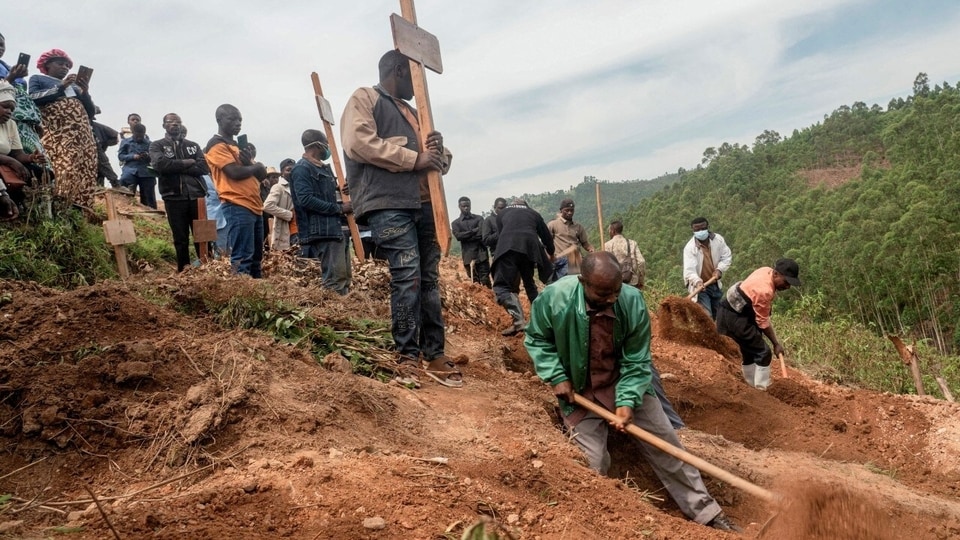
The fastest-growing Ebola outbreak in history has already killed more than 5,500 people, according to the Democratic Republic of Congo’s Health Ministry, with almost all of the deaths occurring in that country. But emergency restrictions designed to contain the virus have made it harder for farmers to work their fields and vendors to sell their produce, according to the United Nations World Food Program.
“I closed my market stall after some of my neighbors fell sick,” said Ketra Biira, whose Congolese hometown, Cantine-Aloya, has seen dozens of Ebola cases. “I am now stuck at home, with no job and almost nothing to feed my children.”
Biira said some food sellers refuse to touch cash out of fear that it might carry the virus, and she struggles to buy rice, cooking oil and other necessities.
Over the past five months, 2.3 million people have slipped into crisis levels of hunger, mainly in the Congolese provinces that make up the epicenter of the outbreak—Ituri, North Kivu and South Kivu—according to the WFP. While infection rates have stabilized in some areas, they are rising in others that are also dealing with insurgents, according to humanitarian officials.
“Patients who are already malnourished may have fewer nutritional reserves to withstand the disease,” said Bill Clemmer, a physician who works in the city of Goma for Corus International, an American charity. “Women and young children in eastern Congo are among the groups most affected by chronic malnutrition, and malnutrition may reduce their ability to withstand severe infectious diseases, including Ebola.”
In local Congolese culture, women are typically responsible for caring for the sick and performing burial rites that involve touching corpses, both of which are likely routes for transmission of the virus.
Women make up 60% of Ebola infections in Congo and very young children experience death rates more than twice that of infected adults. This outbreak, caused by the rare Bundibugyo strain, has killed seven out of 10 infected children under the age of 5, compared with roughly three in 10 adults, according to Unicef.
Congolese authorities have introduced several measures to contain the outbreak, including prohibiting travel between villages and restricting fishing because people tend to crowd around spots where boat crews unload their catches. The limits have left people with a dilemma: adhere to the rules and go hungry, or defy them and risk getting sick or spreading the disease.
After Congo restricted movement between Ebola-affected villages last month, fisherman Asifiwe Chantalia sneaked across a poorly monitored section of the border into Uganda’s Echuya National Park in search of food for his family.
The 30-year-old is now in a Ugandan jail a few miles from his village, according to local police, who wouldn’t allow Chantalia to comment while he is in custody.
“Many Congolese near the border seem desperate to enter Uganda, but we are very vigilant,” a Ugandan police spokesman said. “We are planning to repatriate all those in our custody.”
Mass starvation has been prevented so far with help from the WFP, which provides hot meals in treatment centers and food rations to victims’ families during a 21-day isolation period after their possible exposure.
“Addressing hunger is a key part of the solution,” David Stevenson, WFP’s Congo country director, said in an interview. “Food assistance is an incentive for families to seek care promptly and comply with measures that protect their communities.”
But according to Stevenson, the WFP has raised less than a quarter of the $214 million it says is needed over the next six months for food deliveries, logistics and construction of Ebola treatment centers.
“The resources we have are dangerously low,” he said. “Donors should step up and trust the process if we are to save more lives.”
In total, 3.6 million people in Congo’s South Kivu, North Kivu and Ituri provinces face a food emergency, the U.N.’s term for life-threatening hunger. This number could grow to 4.2 million early next year, according to the WFP, as more people stay in their homes to avoid spreading the virus, while an Islamic State insurgency continues to disrupt farming and the delivery of aid.
The World Health Organization last week said 11 patients in a single area of Ituri province didn’t receive food supplies for a week. U.S. charity CARE International has closed about 1,000 nutrition centers across the country.
During previous outbreaks, aid agencies ran hundreds of food-distribution points and nutrition centers, helping families secure supplies during the required 21-day isolation period.
Health workers took advantage of food distribution to talk to residents and counter misinformation and rumors about Ebola, aid officials say.
“We know how to prevent and treat malnutrition, and we know how to protect children at risk,” said Clement Nkubizi, CARE’s country director for Congo. “What is missing is the funding needed to keep these front-line services running when families need them most.”
Write to Nicholas Bariyo at nicholas.bariyo@wsj.com