Karl Mayer will showcase the versatility of its TM Weft warp knitting technology at ITMA Asia + CITME 2026 in Shanghai, presenting a new collection of WovenLike fabrics alongside technical upgrades designed to expand the machine’s capabilities in fashion and apparel production.
Developed at the company’s Textile Innovation Center in Obertshausen, the collection demonstrates how warp knitting with weft insertion can produce fabrics with the appearance and characteristics of woven textiles while retaining the manufacturing efficiency and performance advantages of warp knitting.
WovenLike warp knits combine the aesthetics of woven fabrics with properties such as ease of care, freedom of movement and crease resistance. According to Karl Mayer, the production process also offers environmental advantages over conventional weaving, particularly through reduced finishing requirements and associated wastewater treatment.
While two- and three-bar tricot machines can produce WovenLike fabrics, the TM Weft is particularly suited to processing challenging materials, including effect yarns, linen and acetate fibres.
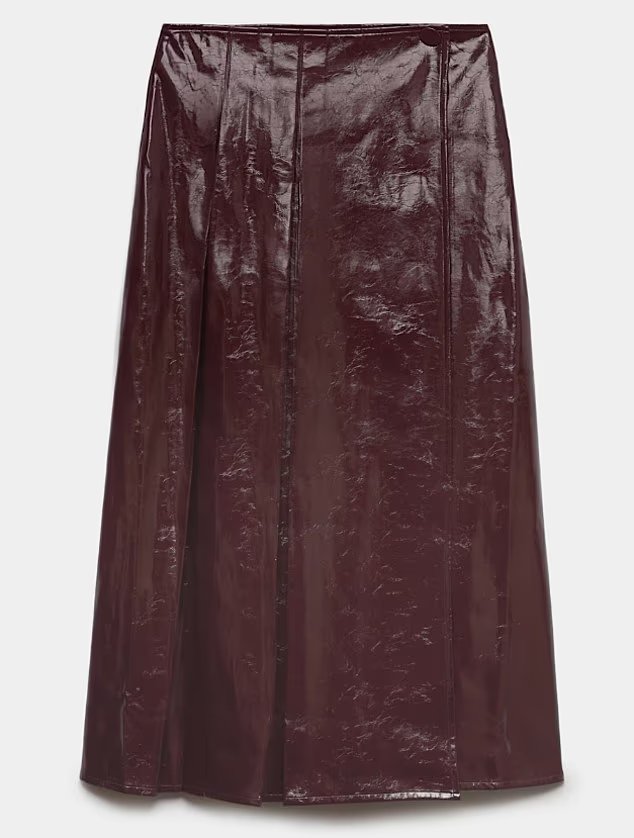
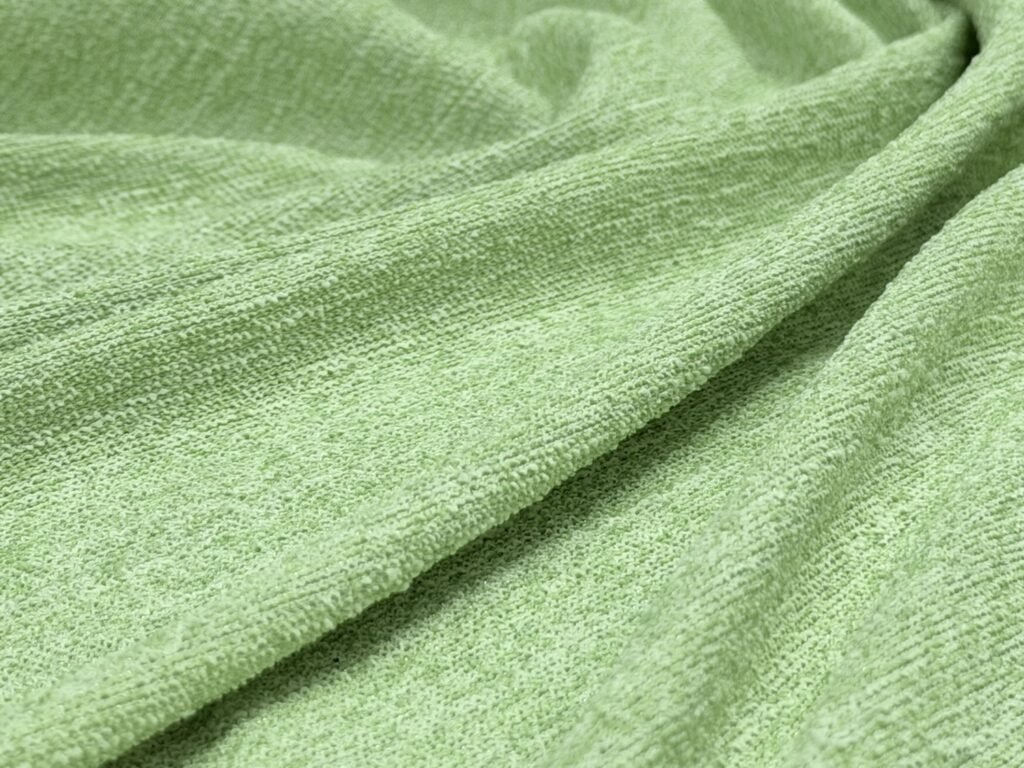
The new collection comprises two contrasting fabric ranges, illustrating the machine’s flexibility across different fashion applications, from dense, textured autumn and winter fabrics to exceptionally lightweight chiffon-style materials.

Dense fabric.
© Karl Mayer
The first range focuses on structured fabrics with sophisticated surface effects, combining warmth, comfort and distinctive aesthetics. One crêpe fabric incorporates Lycra T400 fibre to provide stretch, freedom of movement and improved fit, while another uses metallic yarns to introduce decorative accents into a delicate bouclé structure.
A further development employs a burnout technique to create partially open areas within an otherwise dense fabric surface, producing an expressive floral design with an artistic appearance.
In contrast, the second range explores lightweight, flowing fabrics inspired by crinkle chiffon, with potential applications including modest fashion and Muslim women’s clothing.
These fabrics feature crêpe-like textures, fluid drape and varying degrees of transparency, with the lightest construction weighing just 63 g/m².
Material selection plays an important role in determining their appearance and handle. Acetate provides a subtle sheen and a cool, smooth touch, while viscose creates a softer lustre and a natural feel against the skin.
The lightweight collection also includes a cotton-blend fabric featuring a clean, linear stripe design rather than the crinkled surfaces used elsewhere in the range.

Light fabric.
© Karl Mayer
Alongside the fabric developments, Karl Mayer has introduced several technical improvements to the TM Weft aimed at increasing its flexibility and performance in fashion and apparel applications.
A new E 36 gauge enables the production of finer fabrics, opening additional opportunities for lightweight and sophisticated textile constructions.
The machine also features a new EL pattern drive, providing greater flexibility and speed in pattern development. Improvements to the yarn tension system introduce continuous regulation rather than conventional tension control, simplifying operation and supporting consistently high fabric quality.
Together, these developments are intended to strengthen the TM WEFT’s position as an efficient manufacturing solution for fashion fabrics requiring complex yarn combinations, distinctive surface structures and greater design freedom.

Light fabric.
© Karl Mayer
Visitors to ITMA Asia + CITME 2026, taking place in Shanghai from 20-24 November, will be able to examine the collection at KARL MAYER’s stands at the National Exhibition and Convention Center.
The company will exhibit in Hall 4.1, Stand C18, for warp knitting technologies, and Hall 3, Stand A24, for warp preparation solutions.
A complementary product show at Karl Mayer (China) in Changzhou will provide an opportunity to see the upgraded TM WEFT operating live, demonstrating its capabilities for demanding fashion and apparel applications.
The presentations will also give visitors an opportunity to discuss fabric development, manufacturing processes and potential commercial applications with Karl Mayer’s technical specialists.