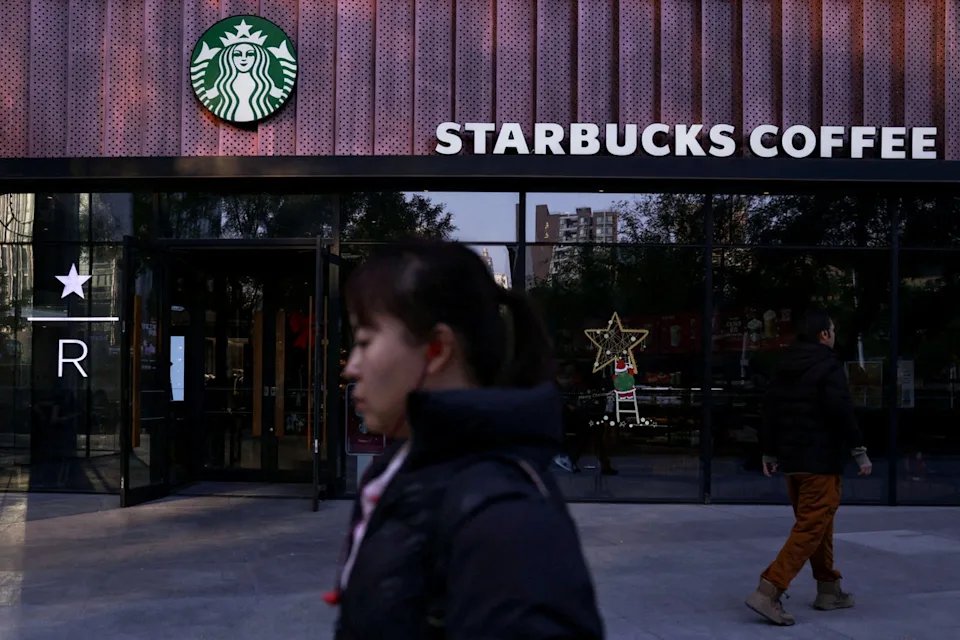
Starbucks customers in China will now have to buy something before taking a seat in its cafés, as the coffee chain tightens its rules on who can use its stores.
The policy took effect nationwide on Thursday, with Starbucks China announcing the change a day earlier and confirming that stores would display notices explaining the new arrangements.
The company said staff would receive standardised service guidelines and support to help them handle the rules courteously, according to Xinhua.
Starbucks China has also said that staff should prioritise pregnant women, people with limited mobility, and others who need assistance.
In its announcement, Starbucks China said staff would follow standardised service guidelines and communicate with customers in a friendly manner, handling “reasonable unexpected needs and special circumstances” appropriately.
Customers had been occupying seats at Starbucks cafés in China without ordering, sometimes staying for long periods, according to The Paper, which visited two outlets in Shanghai earlier this week.

Starbucks customers in China will now have to buy something before taking a seat in its cafés, as the coffee chain tightens its rules on who can use its stores (Reuters)
Staff at both cafés said the problem tended to arise in the evenings, particularly in outdoor seating areas.
During the reporters’ visits, some customers were sitting outside without having bought anything, although staff said they generally did not intervene when seats were available.
Starbucks has spent years selling more than coffee in China, building its cafés around the idea of a “third place” between home and work, where customers can meet friends, work, or linger over a drink. However, that approach has also allowed people to occupy tables for long periods without buying anything, prompting complaints from paying customers who struggle to find a seat.
The competition is particularly fierce with Luckin Coffee, which overtook Starbucks in China in 2023 in annual sales, helped by deep discounts and rapid expansion.
Luckin’s appeal lies partly in its lower prices, with its drinks costing about 30 per cent less than Starbucks’, while its app-based ordering system makes it easier for customers to pick up a coffee and leave, CNN reported.
Starbucks opened its first store in mainland China in Beijing in 1999 and now operates about 8,000 outlets across the country, making it one of its most important markets.

Starbucks has spent years selling more than coffee in China, building its cafés around the idea of a “third place” between home and work, where customers can meet friends, work, or linger over a drink (Getty)
But, sales at established stores in the country fell by 14 per cent in the 2024 financial year, followed by a further one per cent decline in 2025, according to its annual results.
The policy has prompted mixed reactions in China, with some customers welcoming the prospect of finding a seat during busy periods and others questioning whether people should have to buy something simply to sit down briefly.
“For so many years, I’ve made a habit of sitting in Starbucks when I have some free time, waiting for people. Suddenly having to make a purchase to sit down feels unfamiliar. I don’t think it’s appropriate, and it could do considerable damage to the company’s image,” a customer identified as Li told The Paper.
Another customer who went by Tang said he understood the policy, adding: “After all, it’s their shop. As for the specific rules, we’ll see once they’re implemented. I don’t think they’ll be completely lacking in human consideration.”