You can now upload your own vibe-coded apps straight to the Google Play Store and launch them from any device, without jumping through the usual hoops.
According to the Google Play October 2026 update, if you create an Android app in Google AI Studio, you can now upload it to Google Play without first upgrading to a $25 paid developer account or going through Google’s lengthy pre-approval vetting process.
But you won’t be able to share your new vibe-coded app with others, at least not straight off the bat.
Vibe-coded apps for everyone
But for your friends and family first

Google plans to roll out the ability to share with friends and family in the “coming weeks.” After that, the tech giant plans to let users “graduate” to a paid developer account, giving, at least in theory, three billion people access to your app once you pass Google’s trust and safety reviews.
There is something rather droll about Google letting you test your vibe-coded on your family before letting them rip on the rest of the world; it has to be said.
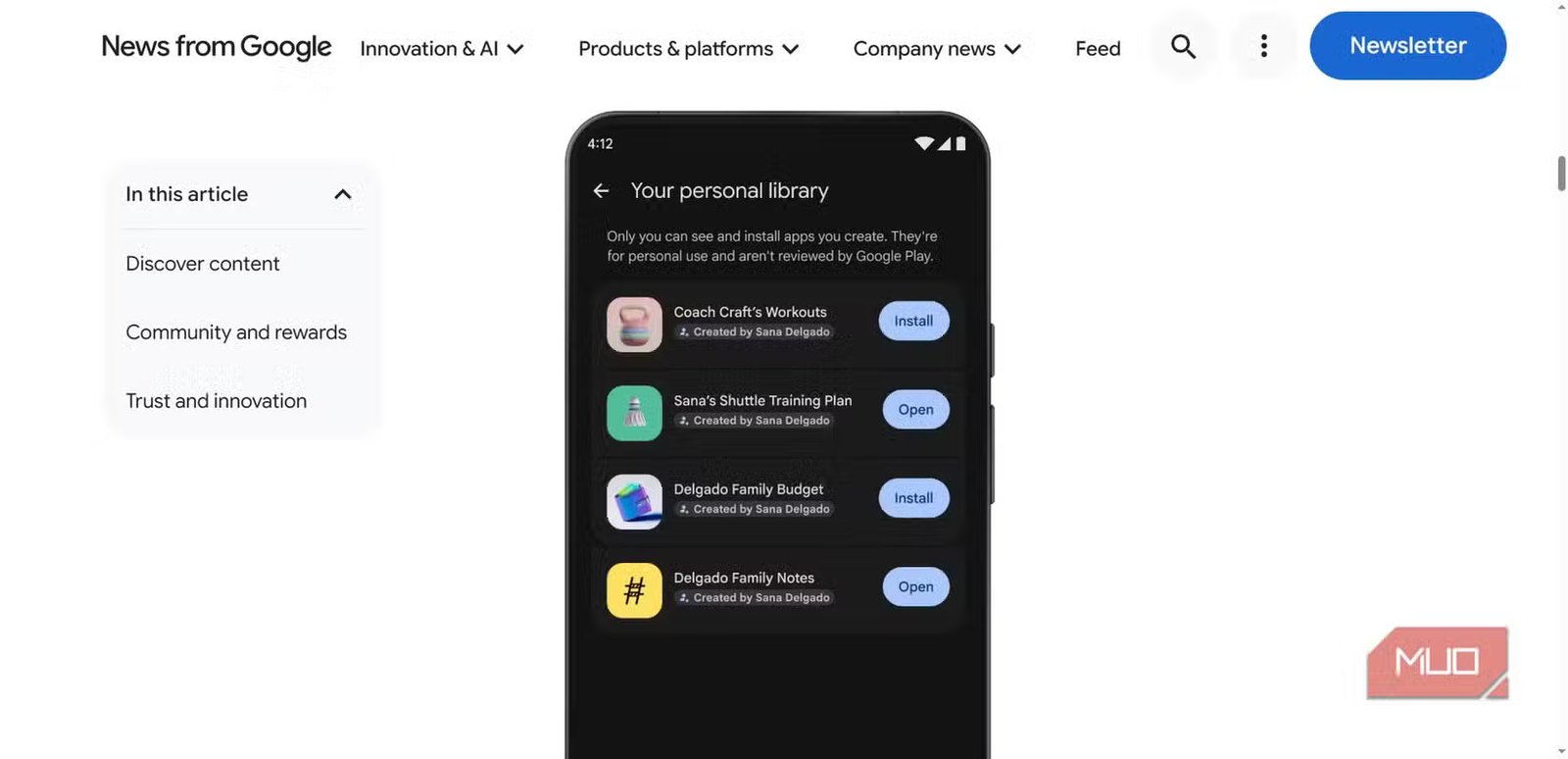
Your app will live in the “Your personal library” section, siloed away and private from other Play Store users. The feature is rolling out to users in the US, aged 18 and up.
This isn’t to say that we haven’t had vibe-coded apps on the Play Store before: quite the opposite. The sudden rise in apps available on the Play Store and App Store implies there are plenty of at least partially AI-generated apps there already. What it means is that creating a custom app for your own use, for example from your main laptop, and launching it from another device will be much more user-friendly and seamless.
What does this mean for the Play Store?
Google recently made it harder for users to install unapproved third-party apps.
Google didn’t explicitly draw the connection in the announcement, but the news comes as Google recently clamped down on sideloading, which could make it harder for small indie developers to build and share Android apps. Sideloading is the popular practice of installing APKs manually without going to an app store first.
Though Google isn’t fully banning sideloading, users will be forced to go through a process called Advanced Flow when installing apps from unregistered or unverified developers. This means waiting a 24-hour security delay, enabling Developer Options, authenticating with a PIN or password, and restarting their phone.
The controversial sideloading restrictions aren’t expected to roll out in the US until 2027, but they began rolling out at the end of September in Brazil, Indonesia, Singapore, and Thailand.