By Christopher Lewis Christopher L.
Copper
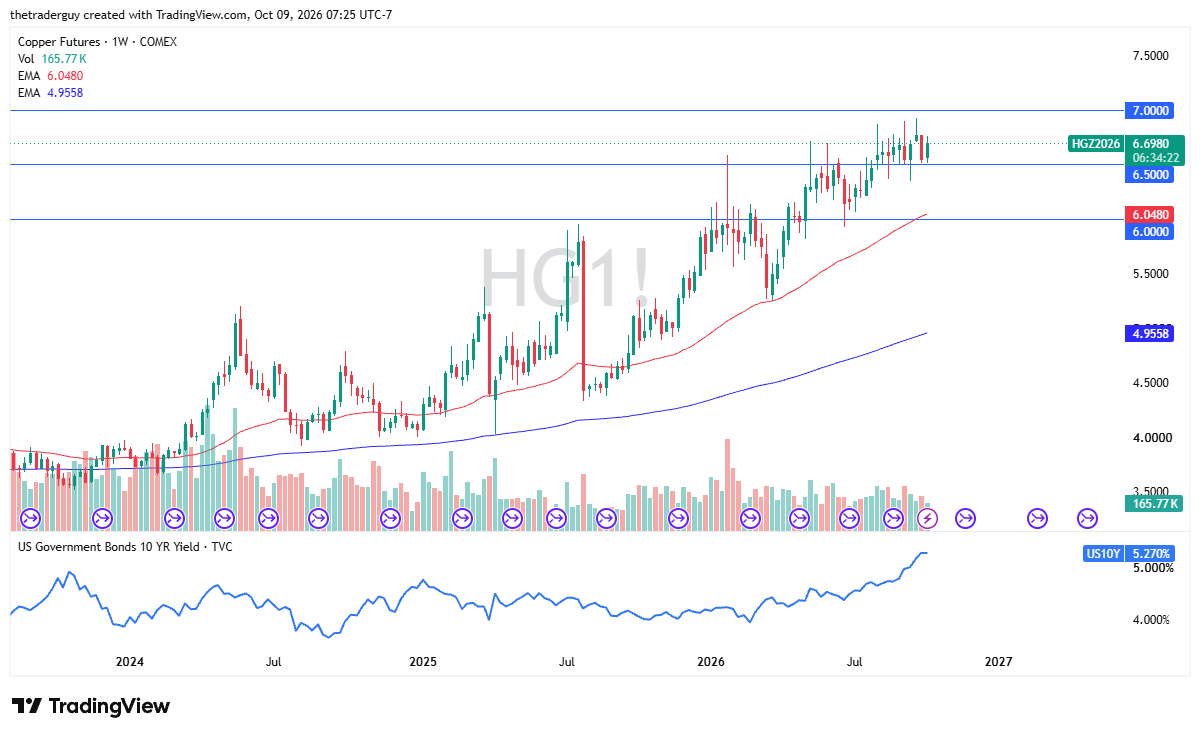
The copper market has been bullish during the week, but it has not been steady. This has been a market that has seen a lot of back-and-forth action, which does make a certain amount of sense.
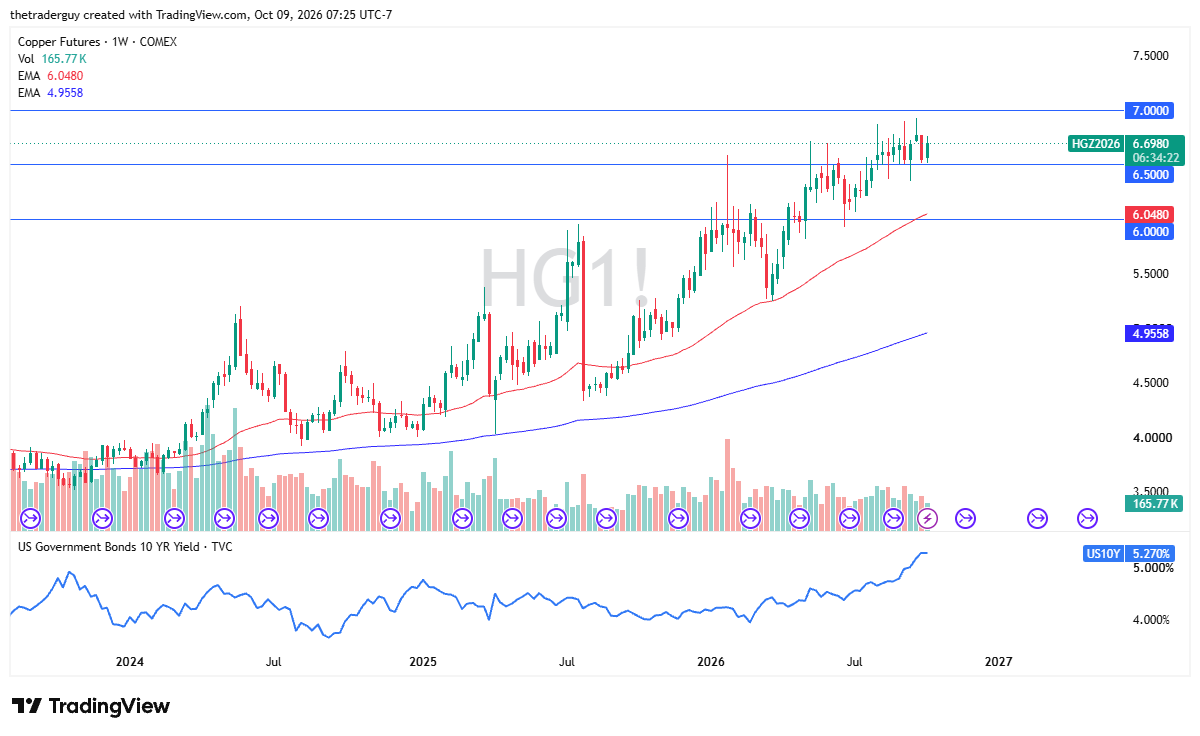
Traders are looking to take advantage of cheap copper whenever they can, with the overall story being one of electrification and, of course, the idea that AI data centers themselves could be a major driver of what happens with copper over the longer term.
With rates rising, though, it does make things a little bit difficult for copper at times, so I am watching this. The $6.50 level continues to be an area where there seems to be a lot of demand.
USD/JPY
The US dollar has rallied a bit against the Japanese yen during the course of the week. We continue to see this market show signs of the carry trade trying to come back, but in a slow and steady manner. That does make a certain amount of sense, considering that traders are challenging the Bank of Japan yet again, which has recently been a little quieter about trying to step in and intervene against the markets.
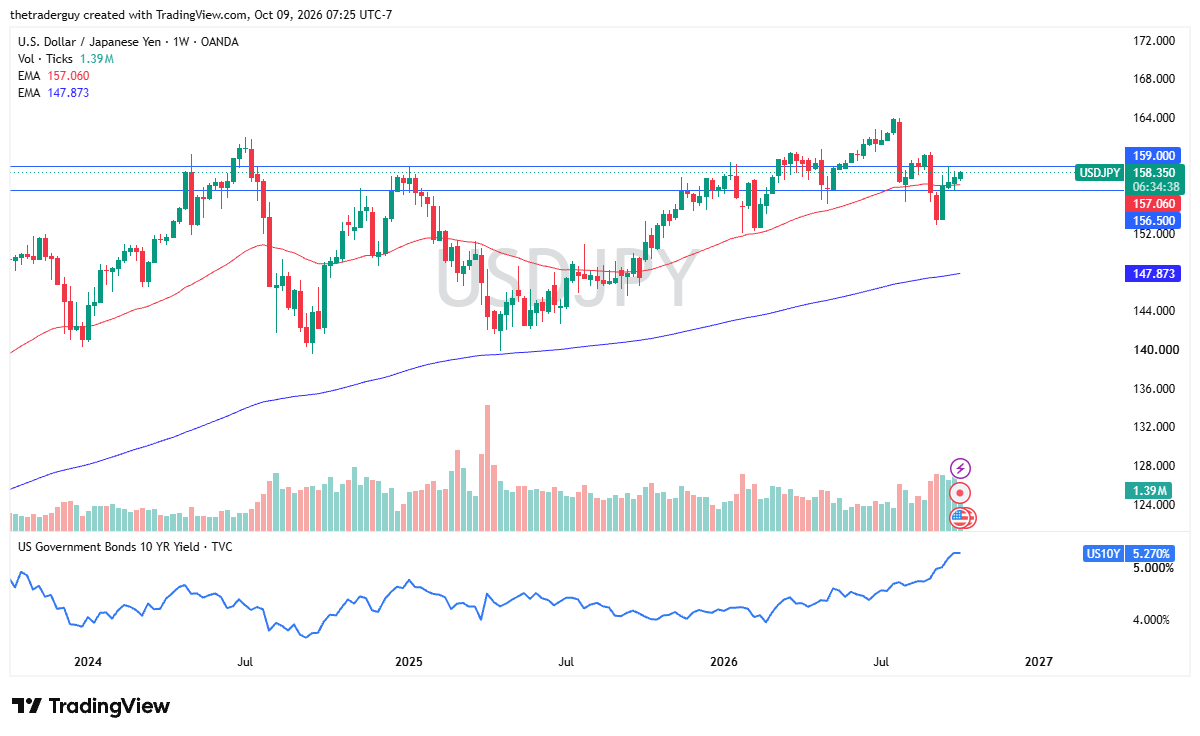
The recent moves in the bond market in the United States, and the fact that the Federal Reserve seems very likely to raise rates between now and the end of the year, do provide a bit of a lift here. Really, at this point in time, the only thing to be worried about is potential Bank of Japan intervention. But quite frankly, that probably provides limited downside.
EUR/USD
The euro has continued to fall against the U.S. dollar as debt issues, specifically in France, continue to plague the European Union. We are now below the 200-week EMA and below the 1.12 level, and could also see further degradation of the euro if this continues.
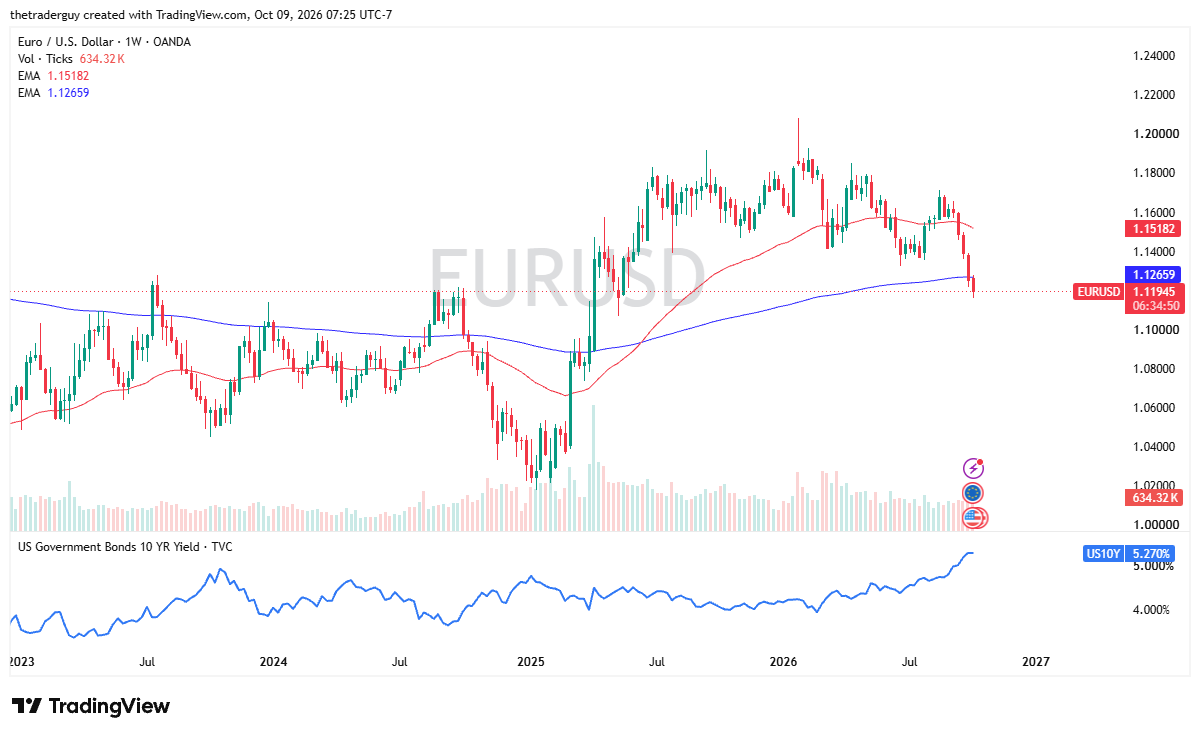
A mix of rising rates in America and rising rates due to fiscal concerns in France, spreading to Italy and Greece, continues to pressure the euro.
USD/CAD
The U.S. dollar had initially pulled back just a bit against the Canadian dollar this past week, but with the Canadian jobs number being so poor on Friday, that has changed the outlook a little bit. We are hanging above the 1.4250 level as I write this, and it is an area that previously had been important.
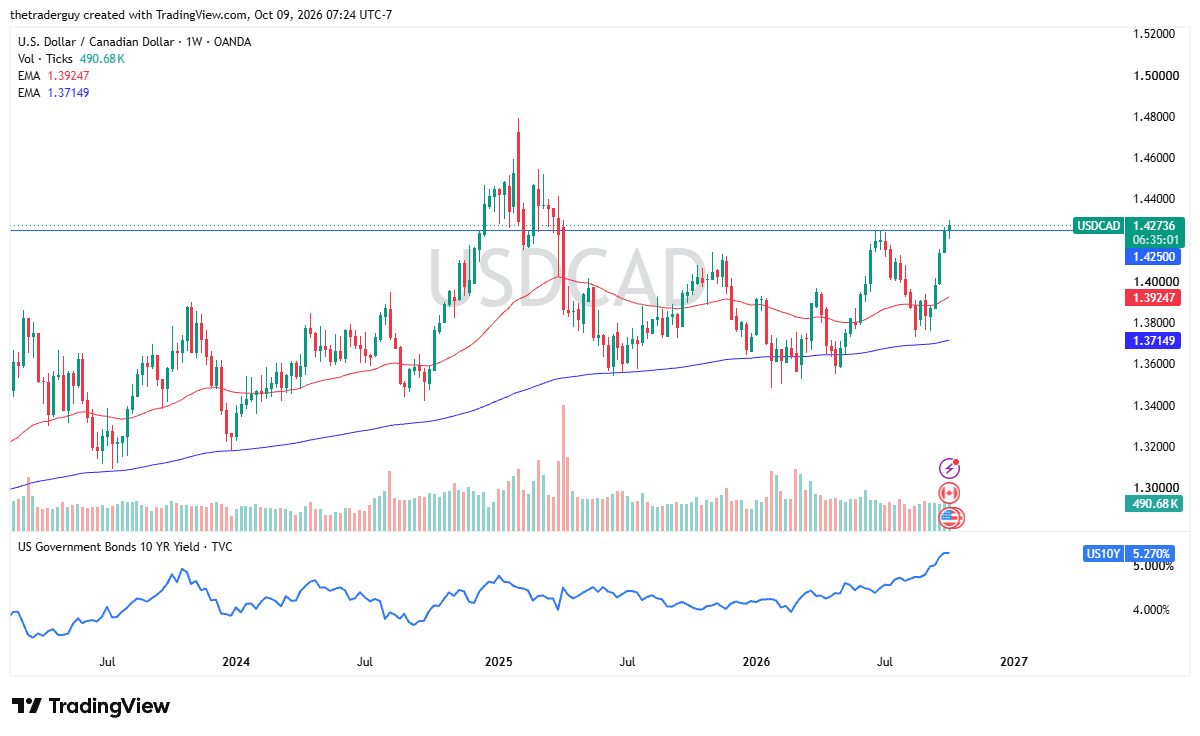
I am watching very closely to see how this plays out, but it does, for the most part, look like a market that is trying to find its way to higher levels.
Gold
The gold market has spent most of the week falling, but did recover a bit, and it now looks as if we are trying to do everything we can to rally to the upside. A lot of this will come down to whether or not markets can get a bit of relief from interest rates, specifically in the United States.
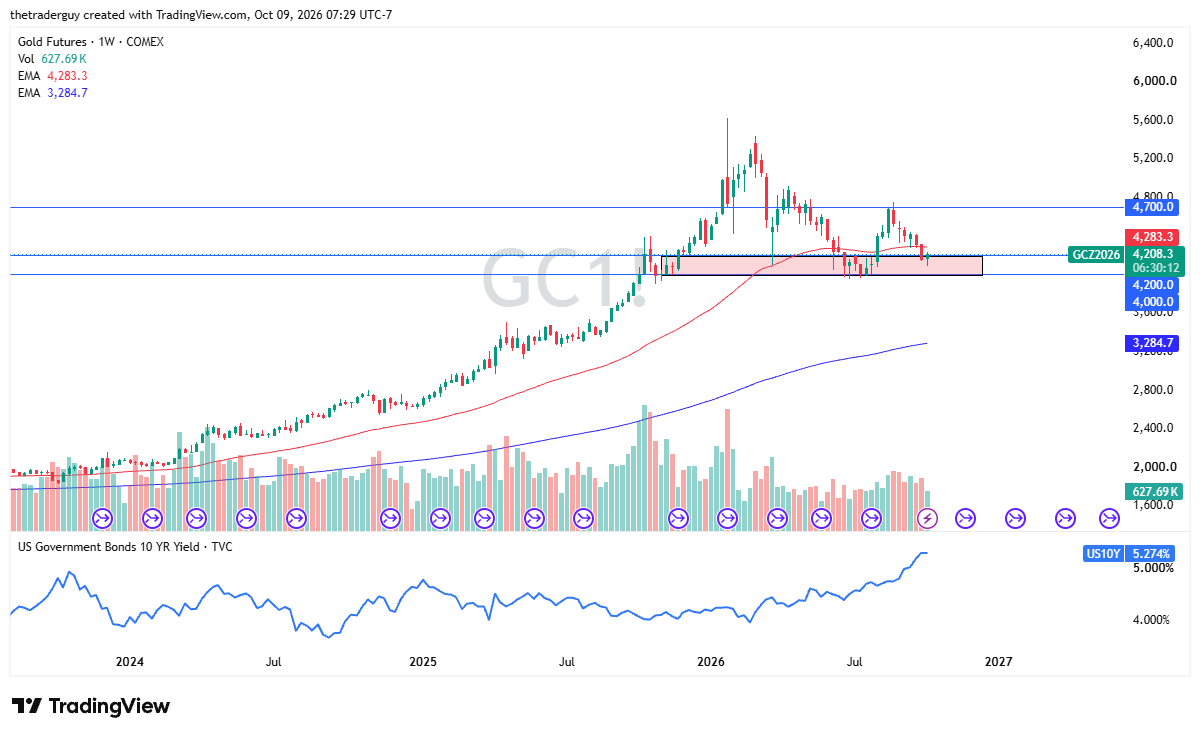
There is an area of demand between $4,200 and $4,000 that continues to support the market. This is an intriguing area. The interest-rate situation will continue to determine where we go next. Higher rates continue to hamper the gold market, but if they start to cool off, this might be an interesting place where buyers return.
AUD/USD
The Australian dollar is ever so slightly positive against the U.S. dollar for the week, but this is a market that has a little bit of a different flavor than many others, as the RBA is known to be fairly hawkish. This stands in contrast to some of the other central banks in the neighborhood, so this makes the Australian dollar the standout in the Asia-Pacific region.
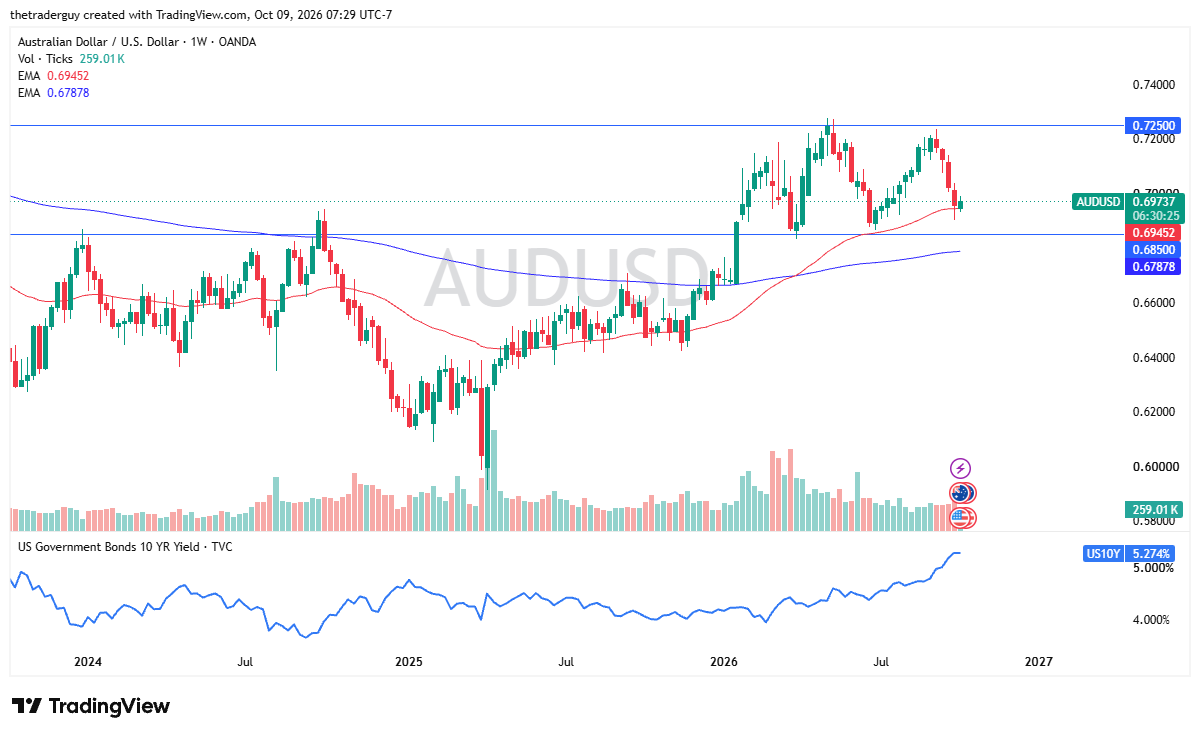
Nonetheless, technical traders will look at this as a market that is simply testing support and the 50-week EMA, so that might be reason enough to think that the Australian dollar might get a little bit of a boost as well. The 0.6850 level continues to be an area of significance, while the 0.7250 level continues to be the ceiling.
GBP/USD
The British pound finds itself at the bottom of a trading range currently, and it looks very much like a market that is trying to defend the 1.32 region. The 1.32 region is a large, round, psychologically significant figure that a lot of people will be watching closely, as the 200-week EMA approaches it as well.
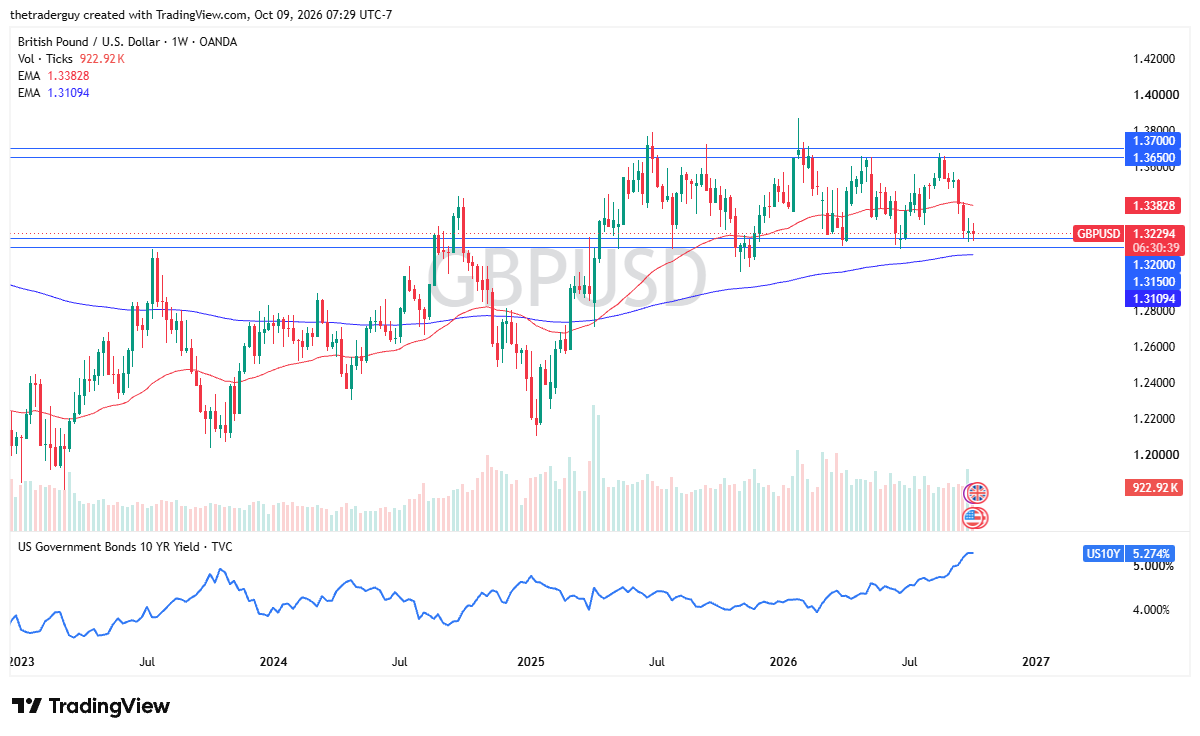
Similar interest rates in both countries keep this a fairly neutral pair, and as we are at the bottom of a range, if we get any dollar weakness at all in the market, this could be an interesting place to start buying.
USD/CHF
The U.S. dollar is slightly positive against the Swiss franc during trading this week as we continue to dance around the 0.83 level. This is an area that has been somewhat noisy and important in the past, and could very well continue to be so.
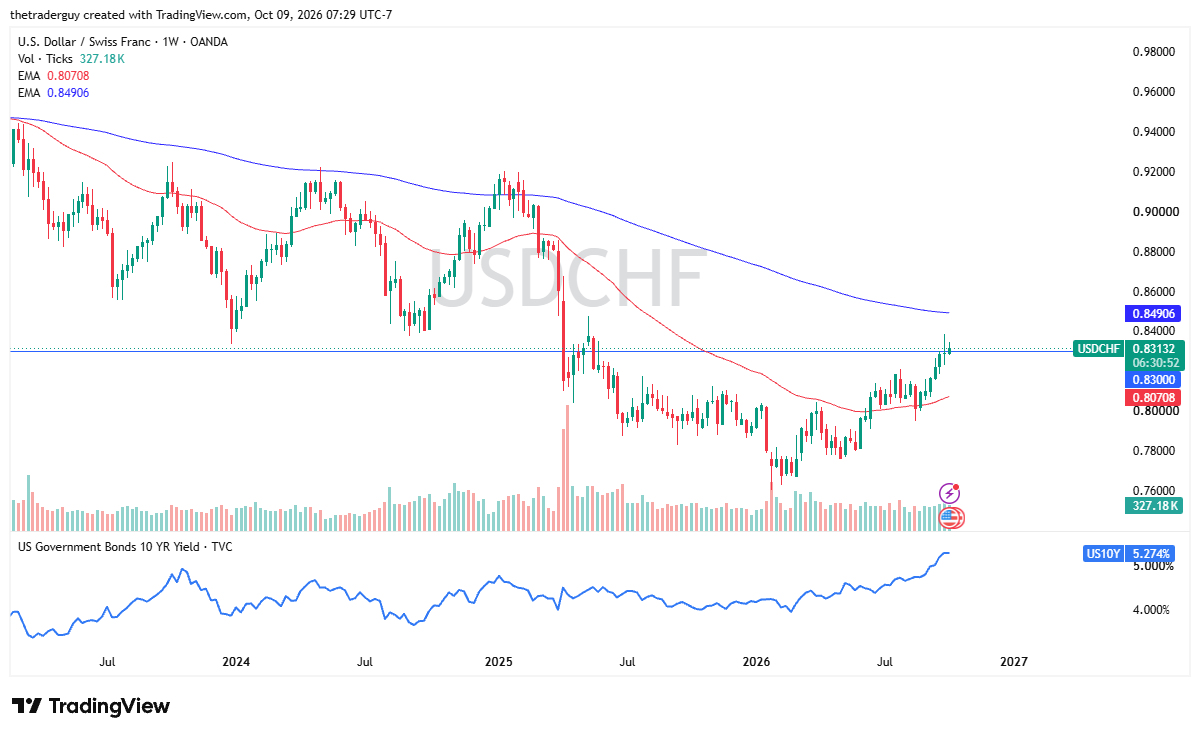
I do believe the interest-rate differential will end up being a major factor here before it is all said and done, but I also recognize that there are a lot of concerns around the world right now, and that does drive a little bit of demand for the Swiss franc. The Swiss National Bank does not like a stronger Swiss franc, though, so I do not expect to see the Swiss get involved at all. Short-term pullbacks, more likely than not, end up being buying opportunities.