Dating apps spent the better part of the last decade convincing us that romance could be outsourced to an algorithm. Swipe right, answer three prompts, upload a photograph in which you look approximately 17% more interesting than you do in real life, and wait for technology to find you a person.
Now they want us to leave the house.
The League launched in India in November 2025 and has made curated real-world experiences part of its dating proposition. Bumble partnered with Puma for a singles run in Bengaluru on November 12, 2024, followed by a Mumbai edition on February 15, 2025. Tinder hosted a pickleball mixer in Delhi on February 9, 2025. These are not just dating events in the traditional sense; they are attempts to give singles something to do while they meet each other.

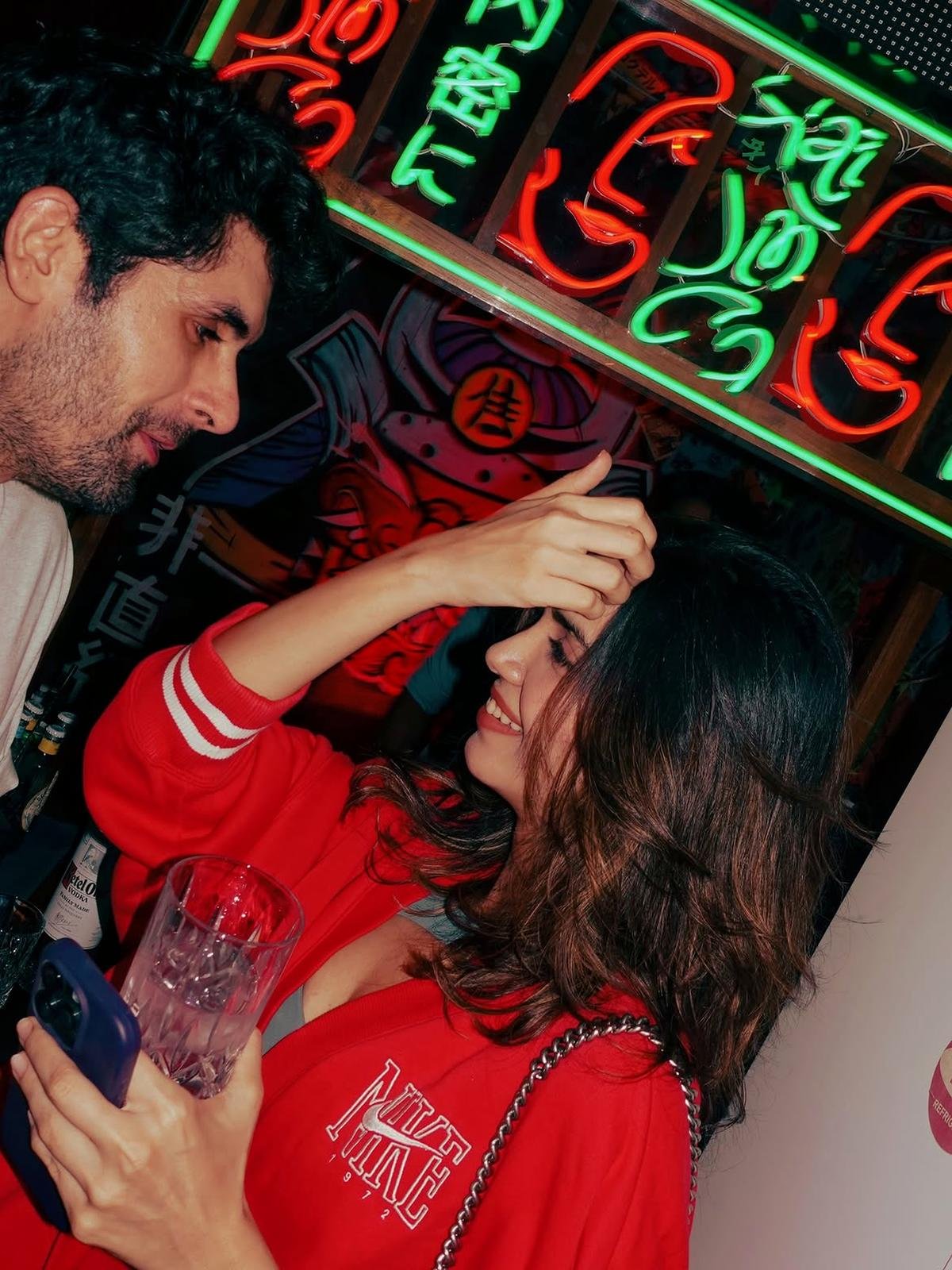
The League India singles event
| Photo Credit:
Instagram/Parth Taco
But do people actually want to be in a room full of strangers who all know why they are there?
A YouGov study commissioned by The League and reported in August 2026, surveying more than 500 single dating-app users across Mumbai, Delhi and Bengaluru, found that 69% said their dating-app conversations rarely moved beyond small talk. Ninety per cent said they would attend curated offline dating experiences, while 82% said they would take someone they met in a structured offline setting more seriously.
The formats people preferred were revealing: cultural events such as art, theatre and film topped the list at 49%, followed by professional networking events at 48%, intimate dinners at 46% and creative workshops at 45%. Around 51% said verified or screened communities were important to feeling comfortable at such events.

So perhaps nobody wants to attend a “dating event”. They want to attend an interesting event where there happen to be single people.
Shaista Vaishnav, 43, a Mumbai-based independent professional, calls herself a “singles mixer veteran”. She started attending events around 2010–11, when formats such as Mix and Mingle, Covalence and Footloose were emerging, and returned to them regularly after the pandemic.

The League India singles event
| Photo Credit:
Instagram/Parth Taco
Her verdict is less enthusiastic. “Every single event has the same trajectory. You go, you stand around awkwardly, there are some icebreakers, and more often than not, the icebreakers are a pain because they’re super random.”
But Shaista’s bigger concern is that the singles-mixer economy has itself become a business built around loneliness. She says increasingly intimate, highly priced events target people — particularly divorced or single people in their 40s and 50s — who may be looking for companionship and are therefore more willing to pay a premium. She recalls paying more than ₹12,000 for a dinner where she was expected to meet three men she says she would never have chosen to swipe right on.
For her, that is precisely where dating apps can give women more agency. On an app, she says, you choose who you interact with. At a mixer, you can end up sitting across a dinner table from someone you would never have selected yourself.

The League India singles event
| Photo Credit:
Instagram/Parth Taco
She also finds the group format limiting. Women, she says, often end up making friends with each other. “I’ve always come away from these singles events with more women friends, like acquaintances. The men are extremely awkward, and when they start talking, they’re only talking about real estate or crypto or the stock market.”
Her best experiences have involved an activity. She remembers a wine-and-cheese mixer where women stayed at tables while men rotated every 15–20 minutes. “Everyone gets to meet everyone, and during that entire thing, you’re tasting wines and having two cheeses and all. It really worked.”
Safe space
Tejaswi Subramanian, digital editor at Gaysi, an Indian queer media and community platform, makes a similar distinction. “Gaysi’s spaces aren’t necessarily designed around dating in the conventional sense. They’re more fundamentally about community-building.”
For queer people, she says, the point can be even more fundamental than finding a partner. “They might first want to experience what it feels like to be in a room where their identity is understood, meet other queer people, and develop a sense of community and confidence. Offline spaces can therefore function as a kind of low-stakes queer socialisation.”

Queer events are about community
| Photo Credit:
pixdeluxe
That means romance is only one possible outcome. “Some may meet someone they’re romantically interested in, but that isn’t necessarily the immediate or only outcome,” she says.
Anukool Kumar, senior director, India and the Middle East, Match Group, says The League’s research reflects a desire for more intentional connection. “Our goal is to create the conditions for intentional connection, both on the app and beyond it.”
The League says it has organised 30 curated offline events across its markets, with approximately 100 people attending cumulatively. These are deliberately small gatherings, reflecting the platform’s selective positioning. Its approach also extends to conversation itself: its “You Don’t Want to Date Me (…Unless You Do)” initiative with self-discovery architect Akshat Rajan uses guided prompts to push conversations beyond the standard dating-app small talk.
Yet a 28-year-old Delhi-based data engineer who has attended several singles mixers remains unconvinced. He goes because he genuinely wants to meet people — perhaps a friend, perhaps someone to hook up with — but finds that everyone is too conscious of the possibility that they are supposed to be making a move. He often prefers meeting someone on an app first, where trust can develop before the interaction moves offline.

Bumble x Puma Valentine’s event
| Photo Credit:
Special arrangement
He is particularly conscious of the safety calculations women have to make. Even if he is attracted to someone and would like to take things in a sexual direction, he says he understands why he cannot ask a woman he has just met at a mixer to come home with him. “I completely understand why they would look at me suspiciously,” he says, because women have to think about their safety in ways men often don’t. “I know the plight of women in Delhi and why they’re so on their guard.”
That, he says, can make even an apparently casual interaction complicated.
And perhaps that is the contradiction at the heart of the offline-dating boom. People want to meet in person, but they don’t necessarily want to feel as though they have walked into an audition for someone’s partner.
A fortnightly guide to love in the age of bare minimum

Published – October 10, 2026 07:29 am IST