It appears the internet has a new wellness role model. She’s 89, Italian and making lunch from scratch.
The hashtag #NonnaCore has made Nonna Pia a TikTok star, with her recipes – including homemade bread, chicken rollatini and slow-cooked tomato sauce – earning more than 56 million likes.
Nonna-maxxing is one of the key trends flagged in Waitrose’s annual Food and Drink Report, which revealed that recipe searches are spiking for traditional comfort food. Searches for lamb ragù, for example, rose by 111%, while searches for Italian baking recipes were up 180%.
‘Nonna-maxxing is Gen Z’s embrace of slow and considered living,’ says Lizzie Haywood, trend innovation manager at Waitrose. ‘Inspired by the back-to-basics approach of Italian grandmothers, customers are craving trust, clear labelling and ways to adopt the Mediterranean way of life, such as gathering around the table and eating seasonal food.’
It seems we could learn a thing or two from Italian grandmas when it comes to healthy ageing and longevity, too. Studies have consistently found that following the Mediterranean diet is associated with longer life expectancy, lower rates of chronic disease, reduced risk of some cancers and better heart health.
Here, then, are five simple ways to bring a little Mediterranean-inspired wisdom into your kitchen.
1. Make time for friends and loved ones
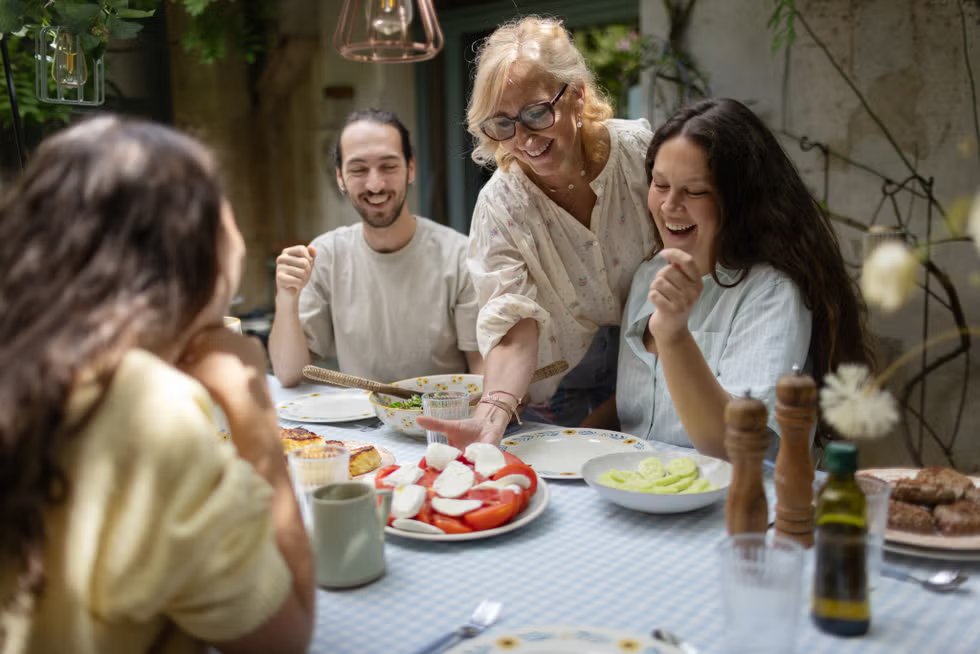
One behaviour that unites cultures around the world – including in Mediterranean countries – is sharing food. Sitting down at the same table and sharing a meal offers so much more than just food to eat – it creates a regular moment to connect.
And having friends isn’t just nice to have: there’s evidence that social connection matters for longevity, and may even physically slow the ageing process at a cellular level.
In a Taiwanese study, researchers followed 1,894 adults aged 65 and over for around 10 years. Men who ate with others two or three times a day were less likely to die during the follow-up than men who usually ate alone.
Research also shows that maintaining positive social connections is one of the most helpful factors in supporting health across your lifespan. A meta-analysis of 148 studies found that people with stronger social relationships had a greater likelihood of survival.
Try this: Make one meal a week a reason to gather – even if it’s just beans on toast with a friend.

2. Cook more meals at home
In many of the longest-living communities, meals are home-cooked. This naturally aligns with healthier cooking methods and more balanced lifestyles.
Research from a 2017 UK cohort study of 11,396 adults showed that eating home-cooked meals more than five times a week was associated with higher fruit and vegetable intake than eating them fewer than three times a week.
Frequent home-prepared meals have also been associated with a lower risk of type 2 diabetes, with researchers following more than 99,000 US health professionals across two long-running cohorts. Those reporting 11-14 meals prepared at home a week had a lower rate of type 2 diabetes than those reporting 0-6.
Try this: Swap takeaway Fridays for fakeaway Fridays and aim to cook your favourite takeaway meals from scratch instead.
3. Let seasonal vegetables take centre stage
We all know we should move more and make sure we get enough sleep. We also know we should all eat more vegetables – and seasonal, local produce is a great place to start.
Part of the appeal of seasonal veg is deliciously straightforward: when fruit and veg are in season, they can taste better. If they’ve been picked ripe and spent less time in storage, some nutrients may be better preserved, too – though this varies by crop.
The bigger win, perhaps, is variety. Eating with the seasons gives you a reason to keep changing what’s on your plate, rather than sticking to the same familiar handful of vegetables. And a more varied diet feeds beneficial gut bacteria – the gut microbiome is linked to many aspects of health.
Try this: Choose one vegetable you haven’t cooked with lately and build a meal around it.
4. Make beans and lentils a cupboard staple
Peas, beans, chickpeas and lentils are considered core staples of the Mediterranean diet – and they’re a great way to boost your intake of both protein and fibre, the latter of which is something we don’t eat enough of.
Beans and lentils are part of the plant-rich eating patterns associated with healthy ageing, too. In a study following more than 105,000 adults, higher legume intake was linked with greater odds of reaching 70 in good health.
Try this: The next time you make a tomato pasta sauce, try stirring in lentils or chickpeas.
5. Make olive oil an everyday ingredient
Olive oil is a defining ingredient in Mediterranean-style cooking. Why? Compared with other cooking oils, extra virgin olive oil has higher levels of polyphenols, vitamin E and healthy fats.
In a 2022 study published in Age and Ageing, researchers followed 1,896 Spanish adults aged 60+ for an average of 3.5 years. Those in the highest olive-oil-intake group had about half the odds of developing frailty as those in the lowest-intake group.
Try this: Keep a bottle of extra virgin olive oil by the hob, so it’s in sight – and within reach – every time you cook.
The bottom line
You don’t need to cook everything from scratch or follow a strict Mediterranean menu to tap into the Nonna-maxxing trend.
Start with the habits that feel easiest: share a meal, cook an extra portion or try a different vegetable. They’re small ways to make everyday eating more varied and sociable – and, in turn, healthier, too.