Key Points
-
A new study from Scotland’s University of Stirling found that nostalgia and family traditions can make people reluctant to adopt plant-based diets.
-
Researchers interviewed 24 meat eaters and found that their emotional attachments to traditional dishes often centered on family memories and shared experiences rather than specific ingredients.
-
Researchers suggest that recreating nostalgic family recipes with vegan ingredients could make adopting a plant-based diet easier while helping preserve meaningful traditions.
Despite the wide array of plant-based burgers—including some highly futuristic 3D-printed veggie products—stacked in grocery store freezers, the share of people who give up meat to become vegetarians or vegans hasn’t risen much, and in the U.S., the numbers have even slipped a bit. A 2023 Gallup poll found that only 4% of Americans call themselves vegetarian, while 1% say they’re vegan. That’s down from 6% in 1999, when Gallup first asked.
So what’s standing in the way of people giving up meat? According to new research, it may be your mom’s meatloaf. Or, rather, the memories baked into it.
Researchers at Scotland’s University of Stirling published a study in the journal Psychology of Human-Animal Intergroup Relations that found nostalgia and longstanding family customs make it difficult for people to imagine going plant-based. But what people clung to often wasn’t the meat itself.
Related: 36 Vegan Thanksgiving Recipes for a Plant-Based Feast
To understand how food memories shape our willingness to change, lead author Aga Kosla and psychologist Carol Jasper spoke with 24 people who regularly eat meat, asking about their favorite childhood foods and what life as a vegan might look like.
Many of those memories centered on celebrations and family rituals, from Christmas dinner to chicken soup, as one participant put it, “needs to be on Sunday because it is special.” Another participant, whom the researchers called Daniela, explained, “My mom’s cooking cheers me up. It makes me feel safe, makes me feel happy, brings me back to my childhood, makes me feel like I’m home.”

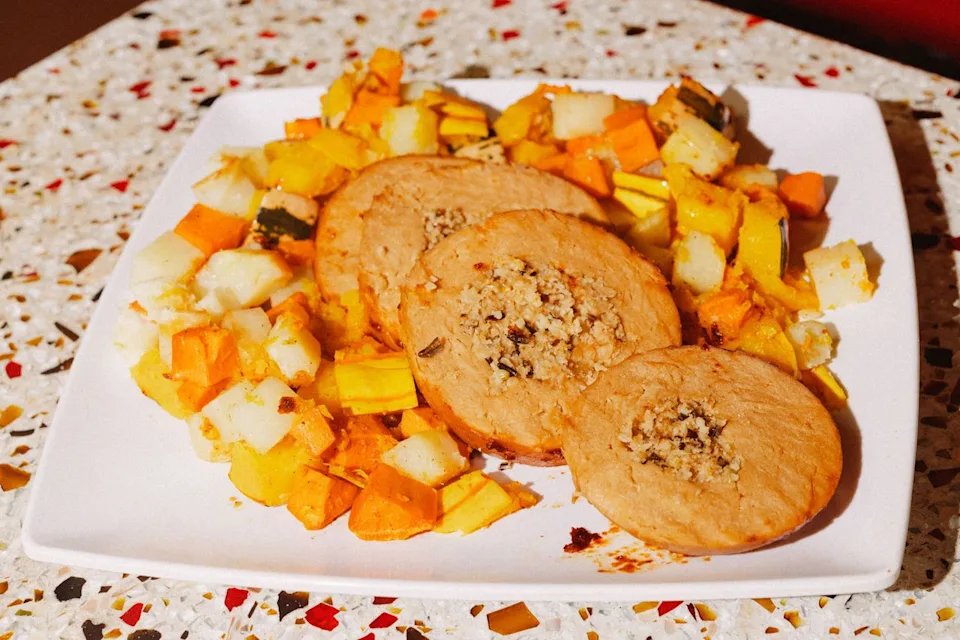
Researchers suggest that vegan versions of familiar dishes, such as replacing a holiday turkey with Tofurky, could help preserve meaningful traditions.
Credit: Mason Trinca for The Washington Post via Getty Images
When the researchers dug deeper, many participants realized their attachment was really about the people around them. One participant keeps a bird on the Christmas table year after year, despite her own verdict that “turkey is always disappointing.”
“This study highlights that resistance to plant-based diets is not simply about taste or convenience, but about maintaining continuity with the past and preserving meaningful traditions,” Kosla said in a statement. “Interestingly, participants often realized that it was the shared experience, not the specific ingredient, that mattered most.”
For those open to going vegan, it depended on who they were dining with. Participants expected their friends to easily accommodate a vegan diet, but family was another matter. Many worried that skipping traditional dishes at a holiday meal would spark tension with relatives.
How to bring a plant-based dish to a family gathering
When you want to bring a plant-based dish to a family meal, start by checking with the host. A quick chat helps you pick something that fits the menu and gets everyone excited for dinner.
-
Suggest a specific dish. For example, you could say, “I’d love to bring a mushroom gravy or a roasted vegetable side. Would either work with your menu?” This makes it easier for the host to decide.
-
Let the host know exactly what you eat. If you avoid all animal products, mention it. The term “plant-based” can mean different things to different people.
-
Bring plenty to share. Pick a dish you enjoy and are happy to offer to others. If it’s your main dish, make sure there’s enough for a filling portion.
-
Plan ahead for logistics. Check if there’s space in the oven or fridge, and bring your own serving utensil. Bringing a dish that’s ready to serve helps the host.
-
Stay friendly if people ask about your food choices. You can simply say, “I’m trying to eat more plant-based meals, and I wanted to bring something we could all enjoy.”
It’s important to note that this was a rather small sample of just 24 people, all recruited through the researchers’ personal networks, so many may share similar views. And the participants were only imagining a switch to a vegan diet, not actually making the switch. Even so, Jasper sees the findings as an opportunity to create new meaning with vegan dishes.
Related: 7 of the Best Vegan Items to Buy at the Grocery Store, According to a Plant-Based Cooking Expert
“Recreating nostalgic or culturally significant dishes using vegan ingredients can make dietary change feel more accessible. This could also help reduce the social barriers people face, particularly in family settings,” she said. “Like culinary traditions from the past, the food of the future, crafted without the inclusion of meat and other animal-derived ingredients, may also evoke a sense of nostalgia and encourage the creation of new customs that can resonate with and enrich future generations.” But somehow “mom’s meatless meatloaf” just doesn’t seem to have the same ring to it.
Read the original article on Food & Wine