Fashion stores across Hanoi are advertising discounts of up to 80% ahead of Black Friday on November 27, yet many remain nearly empty as cautious consumers question promotional deals and increasingly turn to online shopping.
More than a week before Black Friday, fashion retailers along Chua Boc, Pham Ngoc Thach and Thai Ha streets in Hanoi have rolled out promotions offering discounts of 50% to 80%.
Despite the eye-catching banners and aggressive markdowns, however, foot traffic remains surprisingly light.
A survey of Chua Boc Street, one of the capital’s well-known fashion shopping areas, found clothing and footwear stores displaying prominent signs advertising discounts of 50%, 70% and even 80%.
Some retailers have also placed racks of discounted clothing outside their storefronts in an attempt to attract passersby.
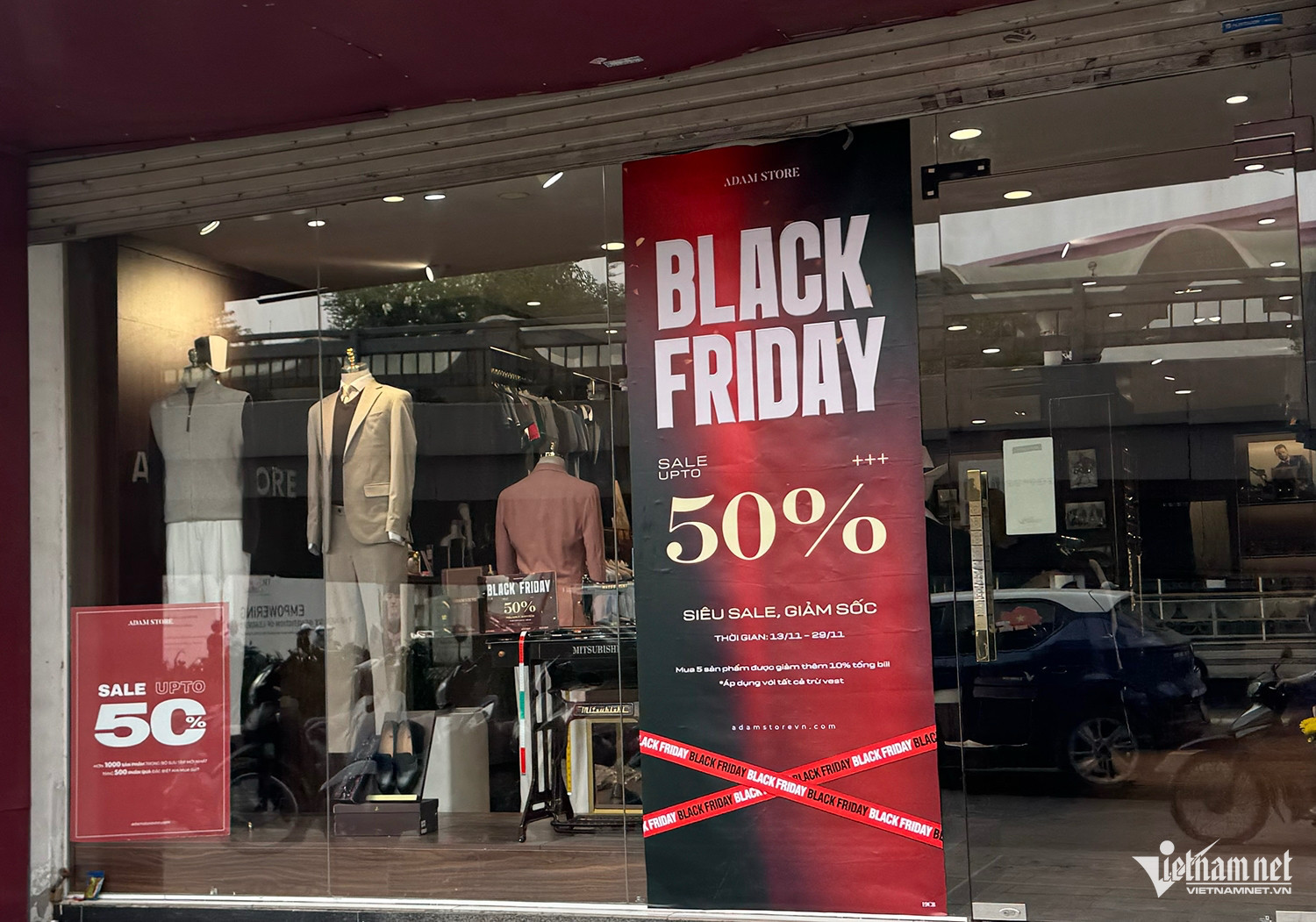
Yet few shoppers appear interested. Most stores remain quiet, with little sign of the shopping rush typically associated with major sales events.
At one menswear store advertising a 50% discount, customers could be counted on one hand. A handful of visitors browsed the merchandise before leaving without making purchases.
A women’s fashion chain promoting discounts of up to 80% also had only a few customers looking through its collections.
Similar scenes were observed along Pham Ngoc Thach and Thai Ha streets, where promotional banners lined storefronts but did little to generate a lively shopping atmosphere.
Many stores saw only occasional visitors, despite the approaching Black Friday shopping season.
Shoppers grow increasingly skeptical of Black Friday deals
Many Vietnamese consumers say Black Friday no longer generates the excitement it once did.
With household budgets under pressure, buying additional clothing and footwear has become a lower priority for many families.
Past shopping experiences have also made some consumers more cautious about heavily advertised promotions.
Shoppers say the steepest discounts often apply only to leftover inventory, outdated designs or items with limited color and size options. Newer collections, meanwhile, typically receive much smaller price reductions.
Nguyen Minh Trang, a 29-year-old office worker in Hanoi’s Dong Da area, said she used to eagerly hunt for Black Friday bargains but has largely stopped participating in recent years.
“I’m no longer interested in Black Friday because many stores advertise discounts of 70% to 80%, but those deals usually apply to just a few outdated items, leftover stock from previous seasons or clothes made from very poor-quality fabric,” Trang said. “The newer, more attractive items are discounted by only 10% to 15%. Some stores even raise their original prices before cutting them, so the final prices aren’t much cheaper than usual.”
Le Hoang Nam, a third-year student at Thuyloi University, believes the growing frequency of promotional campaigns has also reduced Black Friday’s appeal.
With retailers offering discounts throughout the year, shoppers no longer feel the same urgency to wait for a particular sales event.
Nam said buying the same jacket or pair of shoes through an e-commerce platform can sometimes be 20% to 30% cheaper than purchasing it at a physical store, particularly when discount vouchers and shipping promotions are combined.
For retailers, launching promotional campaigns in mid-November is intended to attract customers, boost revenue and clear inventory before the end of the year.
Linh, the manager of a fashion store, said her business had little choice but to introduce discounts early to stimulate demand.
However, she acknowledged that customer turnout during recent promotional periods had fallen short of expectations.
During Black Friday 2025, her brand launched several sales campaigns beginning in mid-November, but in-store purchasing activity remained subdued.
According to Linh, fashion retailers are facing mounting pressure from rental and staffing costs while competing with e-commerce platforms and livestream shopping channels.
Consumers can now compare prices, collect discount vouchers and place orders online with relative ease, reducing the advantages traditionally associated with shopping at physical stores.
For Hanoi’s fashion retailers, even discounts of up to 80% are proving insufficient to bring shoppers back in large numbers.
Duy Anh