Former Nvidia Corp. Chief Executive Officer Jensen Huang agreed to brief Congress next month on his affair with a suspected Chinese spy, responding to US lawmakers’ demands for answers about a scandal that has engulfed one of the world’s most valuable companies and its former billionaire leader.
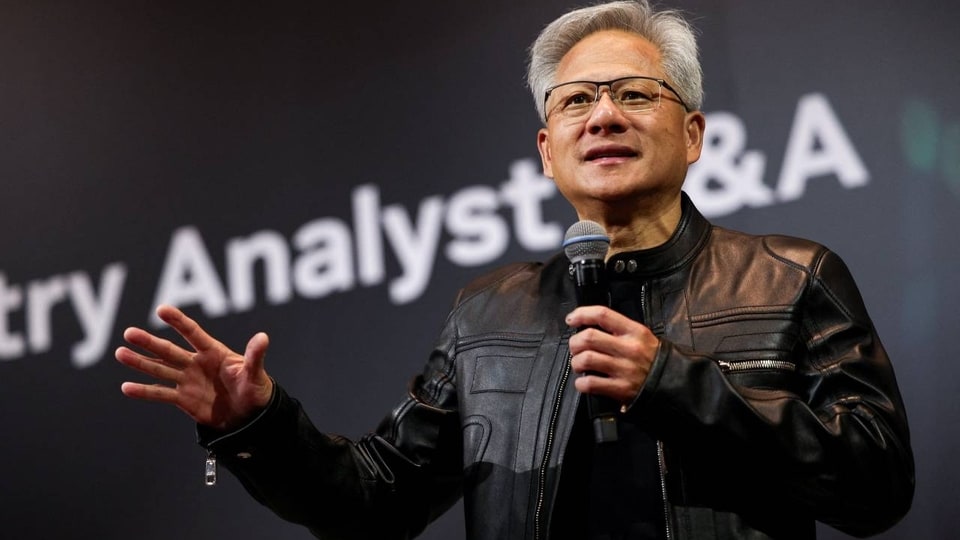
Huang will appear before a joint meeting of the House Intelligence, Foreign Affairs and China Select committees on Dec. 1, according to a statement from the panels’ chairmen. Huang accepted the invitation under the threat of a possible subpoena from Foreign Affairs Chairman Brian Mast and China panel chair John Moolenaar last week to compel him to show up.
Nvidia General Counsel Tim Teter has also agreed to testify before the committees on Dec. 2, the lawmakers said. The appearances are expected to be behind closed doors.
ALSO READ: Jensen Huang owns ‘serious mistakes’, says he would be honoured to return as Nvidia CEO
“We look forward to hearing from Jensen Huang and Tim Teter on their roles in a potential breach of our national security,” Moolenaar, Mast and House Intelligence Chairman Rick Crawford said in their statement. “The American people need answers on Mr. Huang and Nvidia’s role in allowing dangerous PRC actors to access our most advanced chips, as well as the role of a potential Chinese intelligence asset in this scandal,” the said, referring to the People’s Republic of China.
Spokespeople for Huang and Nvidia had no immediate comment in response to the lawmakers’ statement. On Monday, the company said in a statement “We look forward to meeting with the chairmen on Dec. 2.”
Revelations that Jensen Huang had an affair with Alice Huang, a former executive at Singapore-based Megaspeed International whom the US suspects of being a Chinese spy, have forced a reckoning for the company that’s played a critical role in driving the AI boom. Megaspeed has been under US investigation for possible export control violations. The company has denied any wrongdoing, while Alice Huang is now in China.
Even before Jensen Huang’s resignation, Moolenaar, Mast and Crawford had asked the Nvidia chief to appear before their panels to discuss the chipmaker’s security practices and his interactions with the Megaspeed executive.
“That’s going to be a very important meeting to understand to what degree privileged information was accessed,” Moolenaar said on Nov. 15 during an appearance on CBS’s Face the Nation. He added that the hearing will help lawmakers determine how Alice Huang “influenced Nvidia’s philosophy” toward pushing for US export control and artificial intelligence policies that favored China’s continued access to the company’s chips.
Nvidia’s board has launched an internal inquiry into its former CEO’s relationship with Alice Huang, though it has also said that it doesn’t believe national security or company secrets were compromised. Federal law enforcement authorities have an espionage investigation underway, along with the probes of possible chip smuggling.
Efforts by the company to intervene in inquiries risk drawing scrutiny from US lawmakers. In late summer 2025, Teter called the head of a Commerce Department bureau that enforces export curbs to ask whether the agency had played a role in the detention of Alice Huang by Singapore authorities, Bloomberg News has reported.
Nvidia has said in response to the Bloomberg reporting on Teter’s call that it regularly consults with government officials to answer questions and provide information.
Moolenaar, along with the heads of the House Intelligence and Foreign Affairs panels, have also asked Teter to appear next month to answer questions about the company’s adherence to export controls and news reports about what the lawmakers characterized as the company’s “interference in US export controls policies and investigations.”
The disclosures about Huang have strengthened a push by lawmakers from both parties to include chip export control measures in defense legislation that must pass before the end of the year.
In the past, Nvidia has been able to use its lobbying clout to stave off tougher export limit proposals on Capitol Hill. But in the fallout from the scandal, the chipmaker has “lost a lot of credibility” in the debate about how restrictive export controls on advanced AI chips should be, Moolenaar said last week.
Mast, whose panel has oversight of AI chip sales, has frequently disagreed with Nvidia over export control policy. At one point in January, he accused the company and its chief executive of fighting to sell millions of chips to Chinese companies and challenged Huang to debate him on Fox News.
Democratic lawmakers have vowed to intensify congressional scrutiny of Huang and Nvidia, along with other Silicon Valley companies, when they formally take House and Senate control in January.
A particular focus for the incoming majority will likely be Huang’s close ties with President Donald Trump. Since Trump’s return to power last year, Huang has made frequent White House visits, received state dinner invitations and even hitched a ride on Air Force One to China in May.
The chip magnate’s lobbying of Trump paid off late last year when the president loosened export curbs to clear the way for sales of an earlier generation of Nvidia chips to Chinese customers.