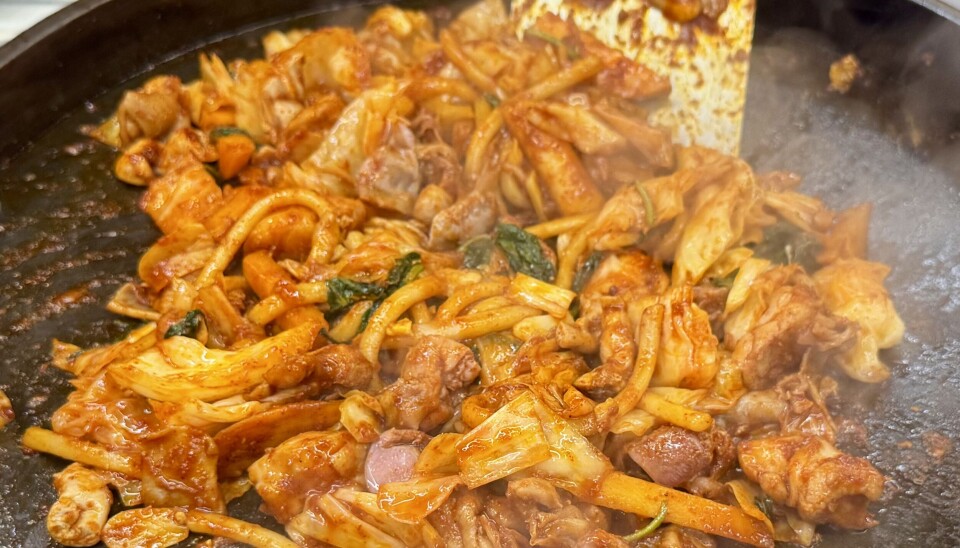
The love for meat is cooling down. Like a grill’s charcoal embers that once blazed but are slowly dying out. Households spent 11.9 percent less on beef and 7.9 percent less on pork in real terms last year compared to their 2022 to 2024 average, according to a new analysis of grocery data, as Koreans turn to simpler one-bowl meals and eat less overall.
The country has been nicknamed a “meat republic” and “black hole for samgyeopsal,” the latter for its devotion to pork belly. So what is happening at the Korean dinner table?
Moon Jung-hoon, the director of the Food Business Lab at Seoul National University, first sensed a change in the winter of 2024.
“I met the head of a pork processing company. […] He said that [the company’s] samgyeopsal inventory was building up,” he said. “That seemed strange to me, so I started researching.”
Moon published his findings in his book “Food Trend 2027,” published on Nov. 4. Analyzing grocery shopping data from the Rural Development Administration, which covers 1,247 households in the greater Seoul area, he found that the average number of beef and pork purchases fell 10.5 percent and 6.7 percent, respectively.
The shift goes beyond meat. Using Opensurvey’s data to compare the past two years with the most recent one — June 2025 to May of this year — Moon found that the average number of meals per person fell from 15.2 to 14.7 a week; the total number of food items eaten per person also dropped from 43.1 to 40.6 per week. That works out to about 25 fewer meals and 130 fewer dishes a year.
Moon calls today’s Korea a “reduced-eating society,” one that is cutting both how much and how often it eats. And to see how Korean tables are changing, he started his research at a restaurant.
Out with the grill, in with the bowl
At a barbecue restaurant in Seosan, South Chungcheong, on Nov. 3, owner Kim Eun-kyeong sighed before speaking.
“Fewer customers come for company dinners and family gatherings. But [this decline] is not something that started yesterday,” Kim said. “So I’ve cut the meat that I order by a third, from 30 million won [$22,470] worth a month a year ago to 20 million won now. Samgyeopsal is still our best-selling dish, but demand for it has dropped noticeably more than for other cuts such as pork neck or ribs.”
The same day, at a sundaeguk (Korean blood sausage soup) restaurant in Goyang, Gyeonggi, middle-aged men sat alone; each ordered a bowl of soup and a bottle of soju. Young women brought down the establishment’s average age, and most were dining alone. Sundaeguk restaurants are known as a haven for solo diners.
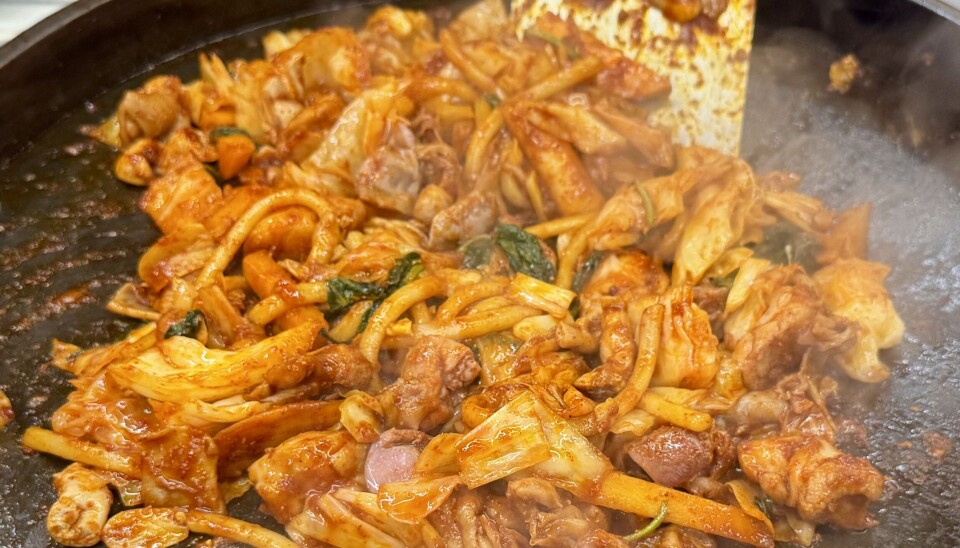
Using Opensurvey’s Food Diary (translated), a weekly log of everything panelists eat at home and when dining out, Moon compared how often each dish was eaten in the most recent year to the average of the previous two years. The diary has accumulated 2.5 million entries since 2016.
Per 10,000 responses, consumption of grilled pork, including samgyeopsal, fell 7.3 percent. Pork soups such as sundaeguk and dwaeji gukbap (pork and rice soup), on the other hand, rose 7.3 percent, and suyuk (boiled pork slices) increased 7.3 percent.
“[Sundaeguk] is easy to eat alone,” said Lee Hwa-yeon, an office worker dining at the sundaeguk restaurant. “One bowl costs about 10,000 won, so you suffer less from ‘lunchflation.’”
Lunchflation, a portmanteau of “lunch” and “inflation,” refers to the soaring cost of eating out at lunchtime, a growing burden for Korean office workers.
Such gukbap, or soup served with rice, now sits at the center of the new Korean table. Per capita consumption of gukbap dishes rose 10.3 percent overall, led by a 14.9 percent increase among solo diners such as Lee.
This trend extends to home kitchens.
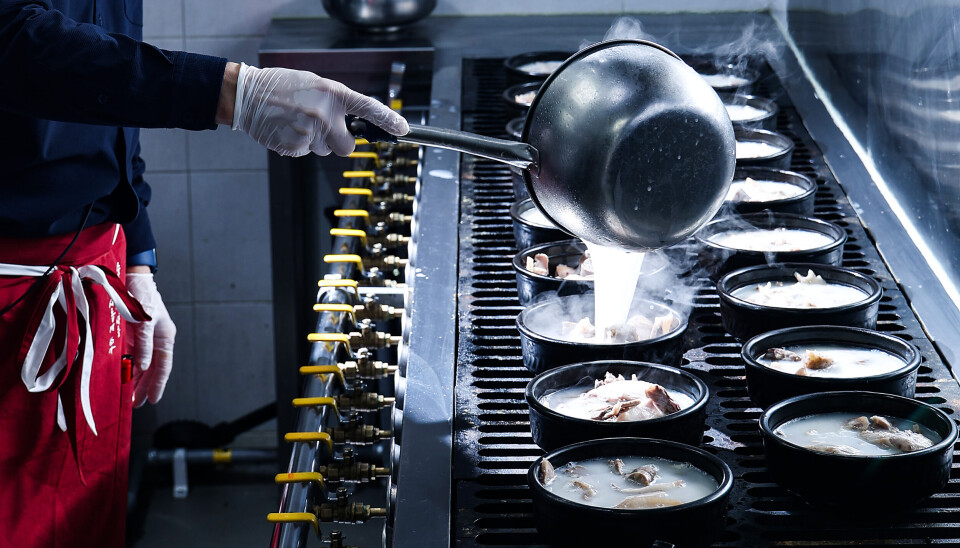
“Notably, cases of cooking gukbap at home rose 39.8 percent, which, along with the rise of single-person households, seems to reflect a growing preference for ‘one-hand dishes’ that can be eaten easily in a single bowl at home,” Moon said. “In that respect, the rise of hamburgers, with consumption up 7.6 percent, stands out as well.”
A meat-loving nation cools off
But meat has hardly vanished from Korean tables.
On a rainy Nov. 1, members of a hiking club who had just finished a ridge trail on Mount Bukhan debated where to go afterward.
“Sundaeguk and soju, or samgyeopsal and soju?” they asked each other. Either way, it was meat.
Koreans have long loved meat. King Sejong (r. 1418-50) of the Joseon Dynasty (1392-1910) was known to love meat. Even in the late 17th century, when the population was only 15 million, about 1,000 cattle were slaughtered a day. Royal bans on slaughtering cattle did little to curb the appetite.
“Koreans have loved meat since long ago,” Chung Hae-kyung, a professor emeritus of food and nutrition at Hoseo University, said.
“You can tell how much they love it just from the fact that they call fish ‘water meat,’” she added, referring to the Korean word for fish, mulgogi.
A customer surnamed Song at the Seosan barbecue restaurant put it more simply: “Any meat is good meat. I love it, no matter what.”
That appetite, however, is starting to fade.
Moon noted that meat’s decline is notable precisely because Koreans are embracing high-protein diets.
“Meat purchases and consumption have fallen relatively less than those of other ingredients,” he said. “But it’s still somewhat surprising, given how diets that cut carbohydrates and increase protein are becoming more popular.”
So why has the love for meat cooled?
“Once a country becomes developed, consumption of meat, especially red meat, plateaus at some point, while that of white meat, or poultry, increases,” Lee Moo-ha, a professor emeritus of agricultural biotechnology at Seoul National University, said.
“People cut back on livestock products to reduce greenhouse gas emissions, consider animal welfare for ethical reasons and worry about cardiovascular disease from eating too much meat. The Organisation for Economic Cooperation and Development and the Food and Agriculture Organization have also analyzed [this pattern]. On top of that, as the middle-aged population, the biggest meat-eating age group, becomes older […] consumption naturally declines. Korea is at that point now.”
Eggs step up as rice steps back
Among protein sources, beef has shrunk the most. Overall spending on chicken fell 5.4 percent, and purchases of that meat declined 6.8 percent. Only chicken breast held up, with consumption rising 13 percent, according to the Food Diary data.
Instead, many Koreans are now reaching for eggs.
On a train on Nov. 2, Kim Mi-hyeon and three friends were peeling 10 hard-boiled eggs.
“You have to cook them slightly underdone like this — just for seven minutes. That way, [the egg] doesn’t get stuck in your throat,” one said.
“Or you can just wash it down with soda,” another replied.
“I bought an egg cooker. It’s easy to make boiled eggs, and they’re easy to eat,” Kim Mi-hyeon said. “I carry them around and eat one whenever I get hungry.”
Real spending on eggs rose 10 percent last year compared to the 2022 to 2024 average, while purchases fell only 1.5 percent, according to the Rural Development Administration’s grocery data.
“Looking at the relationship between spending and purchase frequency, people likely bought larger quantities at once, and they may also have chosen pricier premium products,” Moon said.
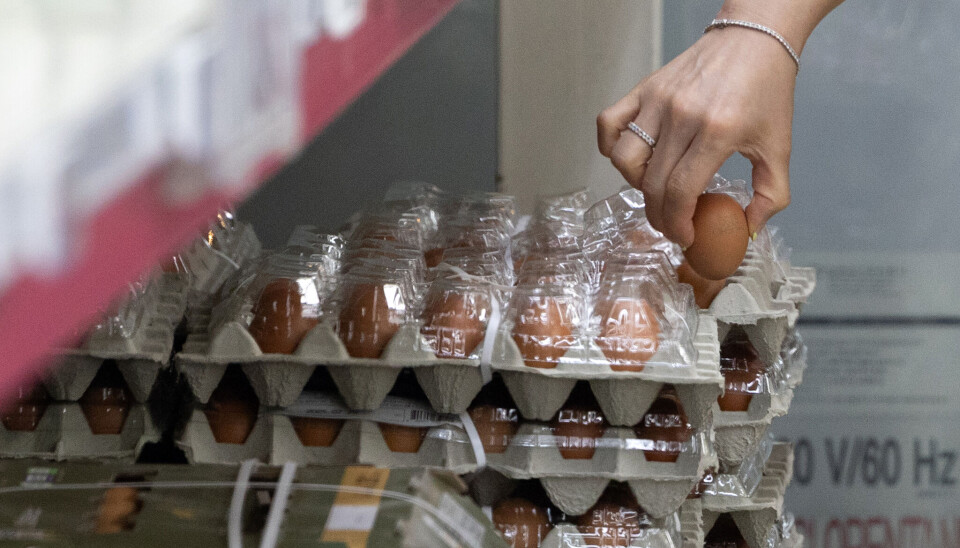
Consumption of boiled and roasted eggs rose 41.4 percent in the most recent year compared to the previous two, according to Food Diary data, and cases of boiling eggs at home rose 46.9 percent. Convenience stores sell two boiled eggs for 2,600 won — not exactly cheap, which helps explain why more people are buying egg cookers.
Even for seasoned solo diners, eating alone at a barbecue restaurant is a challenge, and grilling at home is a hassle.
As a result, Koreans are increasingly skipping dishes that take extra effort, including traditional home-cooked staples. Per capita consumption of gomtang (beef bone soup) and galbitang (short rib soup) — both of which require the cook to prepare the rice separately — fell 11.5 percent, according to Food Diary data. Stews dropped 9 percent, and plain rice 8.6 percent.
“New consumption patterns are emerging, with those of bread and sandwiches centered on delivery and those of jajangmyeon [noodles in black bean sauce] on dining out. Meanwhile, menus that were at the heart of the traditional diet, such as plain rice, soups, stews and grilled pork, are all declining,” Moon said. “That’s something self-employed business owners and food companies should pay attention to.”
Additionally, people remain wary of carbohydrates, so much so that the 2022 per capita rice consumption — at 56.7 kilograms (125 pounds) a year — fell below that of beef, pork and chicken combined, or 58.4 kilograms.
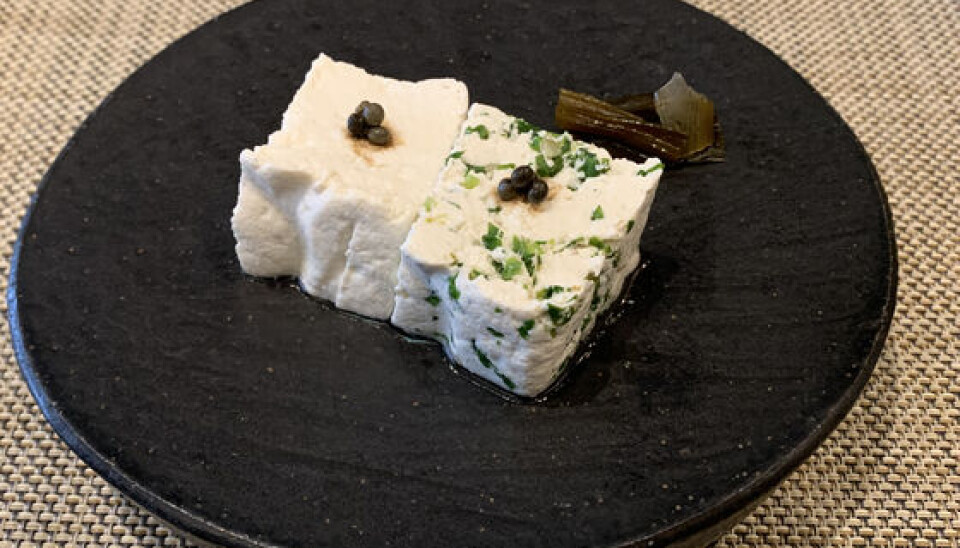
Among side dishes, consumption of jang (fermented sauces) and jeotgal (salted seafood), eaten with rice, fell the most — by 14.9 percent. Grilled tofu, which can stand in for rice, rose 20.2 percent.
The hiking club on Mount Bukhan ended up at a samgyeopsal restaurant, and in what was admittedly an unusual case, the 18 members ordered only three bowls of rice.
The decline is also evident in instant rice portions. A single bowl weighed 0.21 kilograms when the product first went on sale in 1996 and has since shrunk to 0.11 kilograms.
Total calorie intake has also fallen. Average daily intake dropped 263 kilocalories, from 2,175 in 2015 to 1,912 in 2024, according to a national health and nutrition survey by the Korea Disease Control and Prevention Agency. The share of calories from carbohydrates fell from 64.2 percent to 56.8 percent, while the share from protein rose from 14.7 percent to 16.6 percent.
In other words, Koreans are decreasing their total calorie intake while lowering the share of carbohydrates and raising the shares of protein and fat.
They are not just choosing particular foods or nutrients; they are eating less altogether. Koreans have sharply cut what they see as unnecessary, including desserts, down 13.5 percent, and late-night snacks, down 11.3 percent, and are keeping the number of side dishes to a minimum, down 7.7 percent.
“The number of food items is falling faster than the number of meals,” Moon said. “It’s not that skipping meals alone has reduced the total number of foods but that the variety and number of items eaten at each meal are also decreasing.”
BY KIM HONG-JUN [lee.jian@joongang.co.kr]