Key Points
-
Jensen Huang resigned as Nvidia CEO and president last week.
-
Huang has been involved in multiple affairs, one of which reportedly involved a Chinese spy and Nvidia chips being sent to China.
-
Who leads the business moving forward remains a big question mark, but that doesn’t change Nvidia’s strong underlying financials.
- Motley Fool Issues Rare “Total Conviction” Buy Alert ›
Last week was a turbulent one for tech giant Nvidia (NASDAQ:NVDA), as the scandal surrounding Jensen Huang proved to be worse than initially feared. Amid reports of multiple affairs and the possibility that one of them may have involved a Chinese spy and been tied to billions of dollars’ worth of Nvidia chips being sent to China, the tech CEO resigned from his position.
Entering trading on Monday, the stock had fallen to below a $4 trillion market cap. It wasn’t all that long ago that it was well over the $5 trillion mark. The recent developments have created plenty of uncertainty around Nvidia’s business, with there being ample question marks around who will run the business and what impact a change in leadership might have on its operations.
Missed AI’s “Act 1”? Act 2 Could Be 15x Bigger. Most investors think they missed the AI boat because they didn’t buy Nvidia in 2005. But according to our analysts, we’re only at the end of “Act 1″—the R&D phase. “Act 2” is the global rollout. Continue »
Although the stock is down big, here’s why investors shouldn’t panic and rush for the exits.
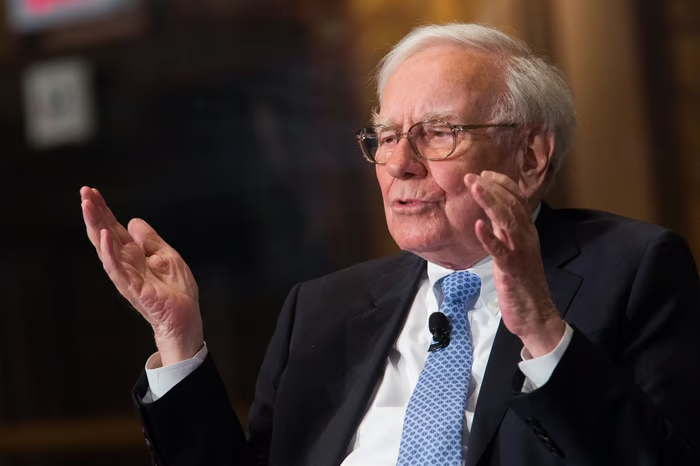
Jensen Huang. Image source: Nvidia.
A change in leadership does not mean the business is doomed
Huang co-founded Nvidia and has been integral to its growth over the years. His departure from the company leaves a big hole in the business, but that is arguably the case for any company that loses its visionary leader. Businesses, however, are built to last beyond just their founder’s tenure.
Bill Gates hasn’t been the CEO of Microsoft for decades, Jeff Bezos stepped down from Amazon five years ago, and when Steve Jobs died 15 years ago, I thought Apple might be in big trouble. In all of these situations, a tech company lost its CEO and a person who had been integral to its long-term growth, and in each situation, it has continued to do well under new leadership.
The concern around Nvidia is likely tied to how abruptly the fallout with Huang happened and a lack of a succession plan. While that has created plenty of question marks moving forward, that doesn’t mean the business is in deep trouble by any means.
Why now might be an excellent time to buy Nvidia’s stock
For the time being, Colette Kress is Nvidia’s interim CEO. Kress, who has been the company’s chief financial officer, undoubtedly has a wealth of knowledge at Nvidia and has strong connections that can help her run the ship while the Board of Directors searches for a replacement. There are, however, even calls for Huang to be reinstated as the company’s CEO.
What happens next with Nvidia is a big question mark. But what likely won’t change is that the company will be a key player in the artificial intelligence build-out, and its chips will remain integral for tech giants. That’s what’s of key importance for investors.
Uncertainty and fear can create some amazing buying opportunities, and this may be one of them. With the tech stock down more than 30% from its high, now may be an optimal time for long-term investors to buy shares of Nvidia.
Should you buy stock in Nvidia right now?
Before you buy stock in Nvidia, consider this:
The Motley Fool Stock Advisor analyst team just identified what they believe are the 10 best stocks for investors to buy now… and Nvidia wasn’t one of them. The 10 stocks that made the cut could produce monster returns in the coming years.
Consider when Netflix made this list on December 17, 2004… if you invested $1,000 at the time of our recommendation, you’d have $335,171!* Or when Nvidia made this list on April 15, 2005… if you invested $1,000 at the time of our recommendation, you’d have $1,000,640!*
Now, it’s worth noting Stock Advisor’s total average return is 823% — a market-crushing outperformance compared to 208% for the S&P 500. Don’t miss the latest top 10 list, available with Stock Advisor, and join an investing community built by individual investors for individual investors.
*Stock Advisor returns as of November 16, 2026.
David Jagielski, CPA has no position in any of the stocks mentioned. The Motley Fool has positions in and recommends Amazon, Apple, Microsoft, and Nvidia. The Motley Fool has a disclosure policy.