Spain will always remember the summer of 2026 as the one in which they lifted the World Cup for the second time, beating Lionel Messi’s Argentina.
Ferran Torres is the player who won them that title with his goal 16 minutes into extra time of the final in New Jersey. But Pau Cubarsi is the one who saved it.
That’s because, in the 120th minute of the game, with Spain 1-0 up, Cubarsi produced a defensive intervention for the ages to prevent the contest from going to penalties.
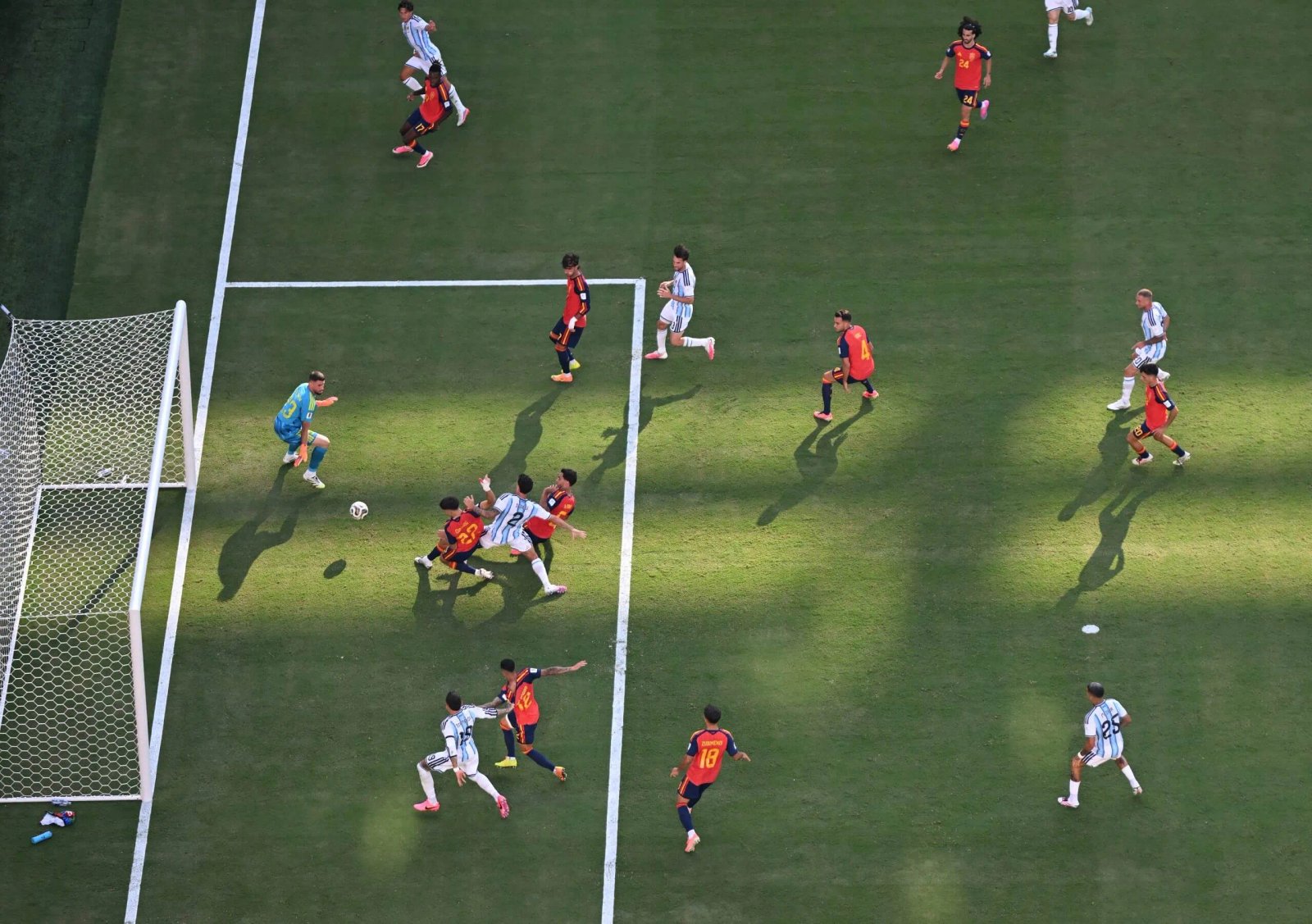
Argentina were yet to register a shot on target when Messi suddenly found Giuliano Simeone with an outside-of-the-boot pass. The Atletico Madrid winger sent a ball across goal and Marco Senesi appeared to be in the perfect position to tap home — until Cubarsi appeared out of nowhere. The 19-year-old centre-back took the ball off Senesi’s toes before he had a chance to shoot, sending it out for a corner. Team-mates Unai Simon and Mikel Merino celebrated as if Spain had scored.
Ten minutes later, with the World Cup secured, Cubarsi was named the best young player of the World Cup. Now, he is breaking down that breathtaking move in an exclusive interview with The Athletic.
“I remember Messi with the ball by the edge of the box and Simeone making a run behind our back line,” the Barcelona centre-back says. “There was a little disconnection, but as soon as Messi made the pass, I took a quick glance at my surroundings to orient myself.
“I spotted Merino next to me and Senesi trying to attack the space between Merino and myself. I realised Senesi was in a dangerous position and, as soon as Simeone started the motion to cross the ball, I knew I had to jump to Senesi with everything I had in me and let God decide what would happen.
“I kicked the ball out and fell to the pitch, totally exhausted. I kept my head buried on the grass, not even looking back. I realised there was no crazy noise in the stands and then raised one of my eyes to check our own goal.
“The ball was not in the back of the net, and I exhaled in relief. My first thought was: ‘OK, one less action to defend before becoming a world champion’.”
Pau Cubarsi’s game-saving intervention (Jewel Samad/AFP via Getty Images)
Cubarsi can dissect every frame of that last-minute tackle, but the moments after referee Slavko Vincic blew the final whistle at MetLife Stadium are a blur.
It unleashed wild celebrations among the Spanish players. While Cubarsi was jumping around and singing with his team-mates, a Spanish football federation official came up to him and told him he had been recognised as the tournament’s standout youngster.
“I was astonished,” he says. “You try to realise what you’ve done, although it’s difficult. I was not really thinking whether I could win it (the best young player award) before the final. I knew there was a chance because not many young players get to the World Cup final, but my only aim was to be at my best and help Spain become champions.”
Cubarsi had played a crucial role even before his late intervention. In the 93rd minute, he was on the receiving end of an Enzo Fernandez tackle that sent the defender flying and led to the Argentina midfielder being sent off.
“There was a loose ball, 50-50 tackle and both of us went full-on,” explains Cubarsi. “I got to the ball first and then got flipped around in the air, but I don’t even remember it. I found out about it as soon as my body hit the ground. When I was in the air, I felt like my mind was floating, too. I hurt my wrist a bit, but in a World Cup final, adrenaline keeps you going through anything.”

Pau Cubarsi is sent flying by Enzo Fernandez (Al Bello/Getty Images)
At such a young age, Cubarsi has grown into a commanding defensive presence for club and country.
He has made 141 appearances for Barcelona since making his debut in 2024 aged 17, and has won 24 international caps. Tonight (Sunday), he is expected to lead Spain’s defence as the world champions face England at Atletico Madrid’s Metropolitano stadium.
This week, Cubarsi added to his trophy cabinet when he was named the 2026 Golden Boy, an award organised by Italian outlet Tuttosport for the best under-21 player in world football.
“When you’re young, awards like the Golden Boy or the Kopa trophy (the Ballon d’Or’s under-21 award) are dreams and I am so pleased to have won this one now,” he says. “It means our season with Barca and Spain was very good, but also that I am on the right track.”
Last month, he finished second in the Kopa standings. The award went to his fellow 19-year-old star and graduate of Barca’s La Masia academy, Lamine Yamal, for a third consecutive year. But this time, only two votes separated the winger from Cubarsi. As Yamal received the honour at London’s Palladium Theatre last month, he told the audience Cubarsi should have lifted the trophy.
Cubarsi also finished 12th for the Ballon d’Or and was the highest-placed centre-back. No defender made the top 10.
“Us defenders are not too eye-catching,” he says. “People prefer strikers or wingers, or anyone who scores and assists — and I get it. The ones who play in defence do more of the dirty work. I would like to see our roles a bit more recognised. Not for me, but to see any defender getting the plaudits they deserve, because we do a very important job.”
That is especially true of Cubarsi. He is the third most-used player by Barca coach Hansi Flick this season (1,142 minutes). Having played nine La Liga games this season, he leads the team for interceptions (13), blocked shots (four), aerial duels faced (37) and won (27, meaning a 73 per cent duel success rate) and passes completed (858).
“When I was a kid, I looked up to Carles Puyol,” he says, before referencing another legendary ex-Barca defender.
“My role models are Puyol and Gerard Pique. I like both profiles: the gritty defender and the ball-playing one. Pique played more of a role in the build-up, but Puyol was key in terms of mentality and character.
“I have looked up a lot to (Liverpool’s) Virgil van Dijk in recent years. But I also tend to look at myself a lot and analyse my performances.
“I am very self-critical when I make a mistake. During the game, you are aware of every action — whether you’ve been good or not. I am very self-demanding and beat myself up with stuff I can polish from my game, in a positive way.
“Not that the next day I lose confidence — quite the opposite. I keep going with the same mindset and try to minimise mistakes.”

Lamine Yamal and Pau Cubarsi are both graduates of La Masia (Pedro Salado/Getty Images)
Cubarsi is expressive on the pitch, but very different off it. His personality was forged away from the bright lights of Barcelona — he is from a tiny rural village in the north-east of Catalonia, Estanyol, population 195.
His family own a carpentry business in the village that has been running for generations. Cubarsi’s father worked there and the youngster spent part of his childhood watching and helping him in the workshop. Since Cubarsi Jr’s remarkable rise, however, those days are long gone.
“The family business is still going, my uncle and cousin are running it,” he explains. “My dad is not working there anymore, so he can come to the games with me and enjoy his life.
“Both my parents have retired. The fact I could help with that, as a son, makes me very proud. We can enjoy this life all together, because if I’m where I am right now, it is because of the sacrifices they made.”
Cubarsi now lives in an apartment on the outskirts of Barcelona that he used to share with his older sister, Irene. This season, he is living alone for the first time, as Irene found a new job in nearby Girona.
“I will have to cook a bit more, but that’s fine,” he says. “I’m actually not bad at cooking — I’m far from a Michelin-star chef, but I enjoy cooking different types of pasta, eating a lot of rice and preparing fish in the air fryer. I have my own resources!
“I’m taking English lessons, too. I like to practise it and I’m getting better. I can understand everything and with Flick, I speak in English every day. I am not at the point of being able to do a full interview in English yet, but I’m getting there.” (This interview was conducted in Catalan).
Cubarsi’s parents, Robert and Gloria, still play a hugely important role, even if they are based near the family’s hometown.
Each year, Barca sponsor and Spanish car brand Cupra gifts each member of the squad a new vehicle. Last season, as Cubarsi had just turned 19, his parents told him to take the family’s old car instead of the new one. Cubarsi’s dad kept the Cupra instead.
“I like cars, and every now and then I look at new ones,” says Cubarsi. “But my parents don’t like the idea of me being just 19 and driving around in an extravagant car. They told me to wait some more, get older, gain more experience and then I’ll have time to buy a fancy car.”
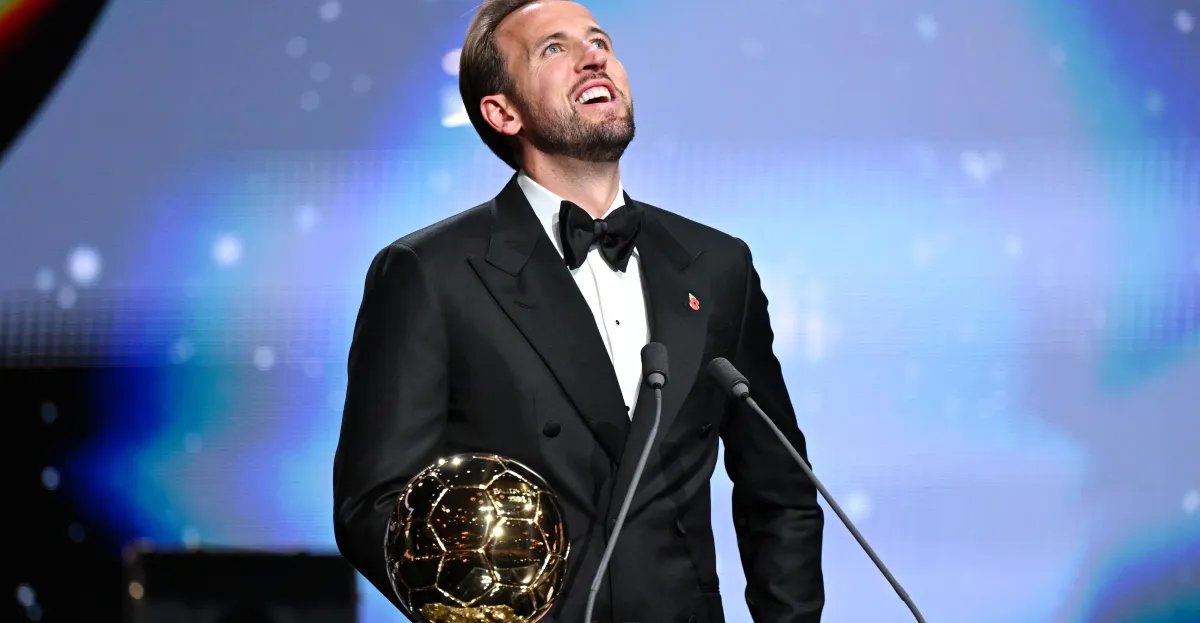
So Cubarsi is seemingly not old enough to drive a fast car, but good enough to be trusted with stopping the 2026 Ballon d’Or winner, Harry Kane. The duel between the pair could help decide tonight’s Nations League match.
“I have played two times against Kane, and it’s very tough to mark him,” Cubarsi says. “He is such a clever player, everybody can see it, but physically he is big, strong and uses his body so well. I would say Kane is my favourite England player. (Barca team-mate) Anthony Gordon as well, of course.
“I’ve always followed the Premier League. If I had to pick a favourite stadium? I’d like to play in a big Champions League night at Anfield. That has to be an impressive experience.”
There is a lot more to come for the fresh-faced Cubarsi.