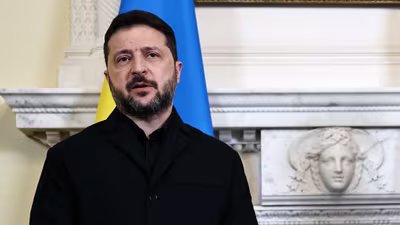
Ukrainian President Volodymyr Zelenskyy has ruled out amending the country’s Constitution to establish a neutral status, arguing that such a move would fail to provide Ukraine with lasting security guarantees.
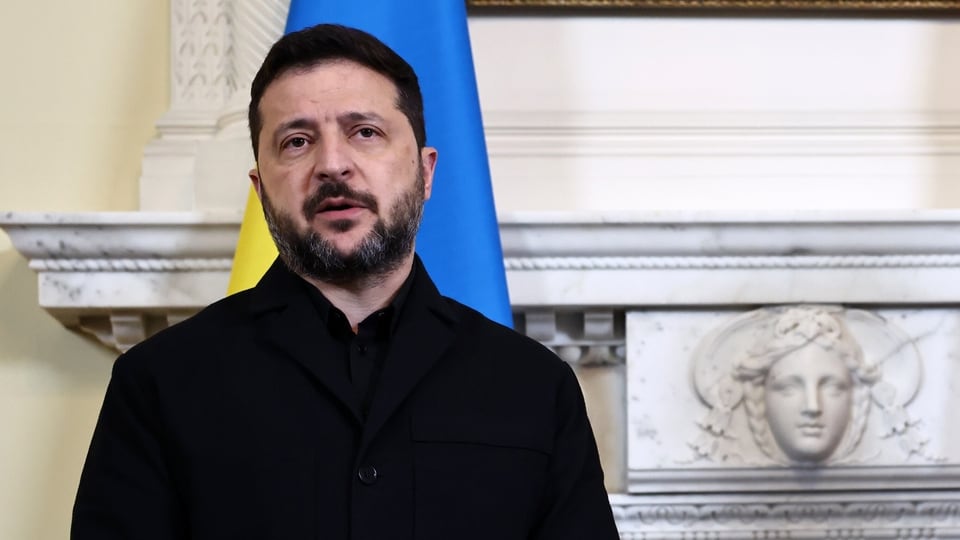
Zelenskyy told Interfax on Friday that Ukraine was not currently part of NATO but would not make neutrality a constitutional requirement. He also reiterated that Kyiv intended to join the European Union (EU), adding that its membership plans had been made clear at every level.
“If Putin expects Ukraine to have its neutrality enshrined, that won’t happen. We’re not in NATO right now anyway. If neutrality generally means that we’re not in NATO, then we’re already in that status. So what will ensure our long-term security? If they assume we won’t be in the EU, well, we actually will be – that’s been made clear at every level. For now, Ukraine is not a member of any alliance. And enshrining neutrality means you’re amending your country’s Constitution, and Ukraine won’t go down that path,” Zelenskyy told reporters on Friday, according to an Interfax-Ukraine correspondent.
Zelensky cautions against discussing European security before war ends
The Ukrainian president also described discussions about a new European security framework before the end of the war as dangerous.
He said the US had raised the possibility of developing a different security arrangement for Europe and the rest of the world after the conflict. However, Zelenskyy stressed that the issue should not become the central focus of ongoing negotiations.
He pointed to what he described as concerning remarks by Russian President Vladimir Putin about changing borders in Europe, saying they reflected Moscow’s broader plans to reshape the continent’s security arrangements.
“My concerns are underscored and confirmed by the dangerous signals Putin sent yesterday regarding borders and so on. The fact that Putin wants to change borders in Europe is a fact. I am confident that this is part of his concept for revising security guarantees in Europe. This is dangerous because, in my view, it is precisely such things that lead to the outbreak of wars or escalations,” Zelensky said.
Ukraine flags possible Russian demands over NATO presence in Europe
Zelensky suggested that Russia could raise objections to the deployment of NATO forces, particularly American troops, in Finland, Sweden, Hungary and the Baltic states.
He argued that any discussions on a revised European security arrangement must involve all European NATO members rather than being decided by an individual country.
He also outlined the sequence Kyiv believes should guide the peace process: a ceasefire first, followed by an end to the war and security guarantees for Ukraine. Only after these steps, he said, should countries consider changes to Europe’s wider security framework.
Russia’s document outlines demands for European security structure
The remarks come amid reports about Russia’s position on Europe’s future security arrangements during negotiations in Abu Dhabi.
According to The New York Times, Moscow circulated a document dated November 10 setting out its demands. The publication obtained a copy from one of the negotiators, while another source familiar with the discussions confirmed its authenticity. The document did not carry official letterhead or a signature and was described as an unofficial statement of Russia’s position.
The report said Moscow had repeated several demands it first presented in December 2021. These included moving NATO troops and military bases back to the alliance’s 1997 borders, stopping Western arms supplies to Ukraine and ruling out further NATO expansion.
Russia also introduced additional demands, including a requirement for France and the United Kingdom to rule out using nuclear weapons to defend other European countries.
The document reportedly stated that Ukraine could join the EU only if it agreed not to participate in the bloc’s common defence policy.
During the Abu Dhabi negotiations, Russian representatives also referred to the Cold War-era division of Europe into spheres of influence between the US and the USSR as a possible model for the continent’s future security structure.