For the better part of the last four years, no trend has captured the attention and capital of investors quite like the evolution of artificial intelligence (AI). Empowering software and systems with the tools to make split-second, autonomous decisions is a $22.5 trillion global addressable opportunity through 2031, according to IDC.
Nvidia (NVDA -2.01%) is at the center of this addressable market. Nvidia’s several generations of graphics processing units (GPUs) are what make AI-accelerated data centers tick, and its CUDA software platform is central to maximizing the potential of these GPUs and keeping clients loyal to its brand. In other words, there were tangible reasons behind Nvidia’s ascent to a greater-than-$5 trillion market cap.
But as of the closing bell on Nov. 12, Nvidia stock has plummeted 32% from its all-time intra-day high of $243.37, set on Oct. 6. The latest downside catalyst is the resignation of co-founder and now-former CEO, Jensen Huang.
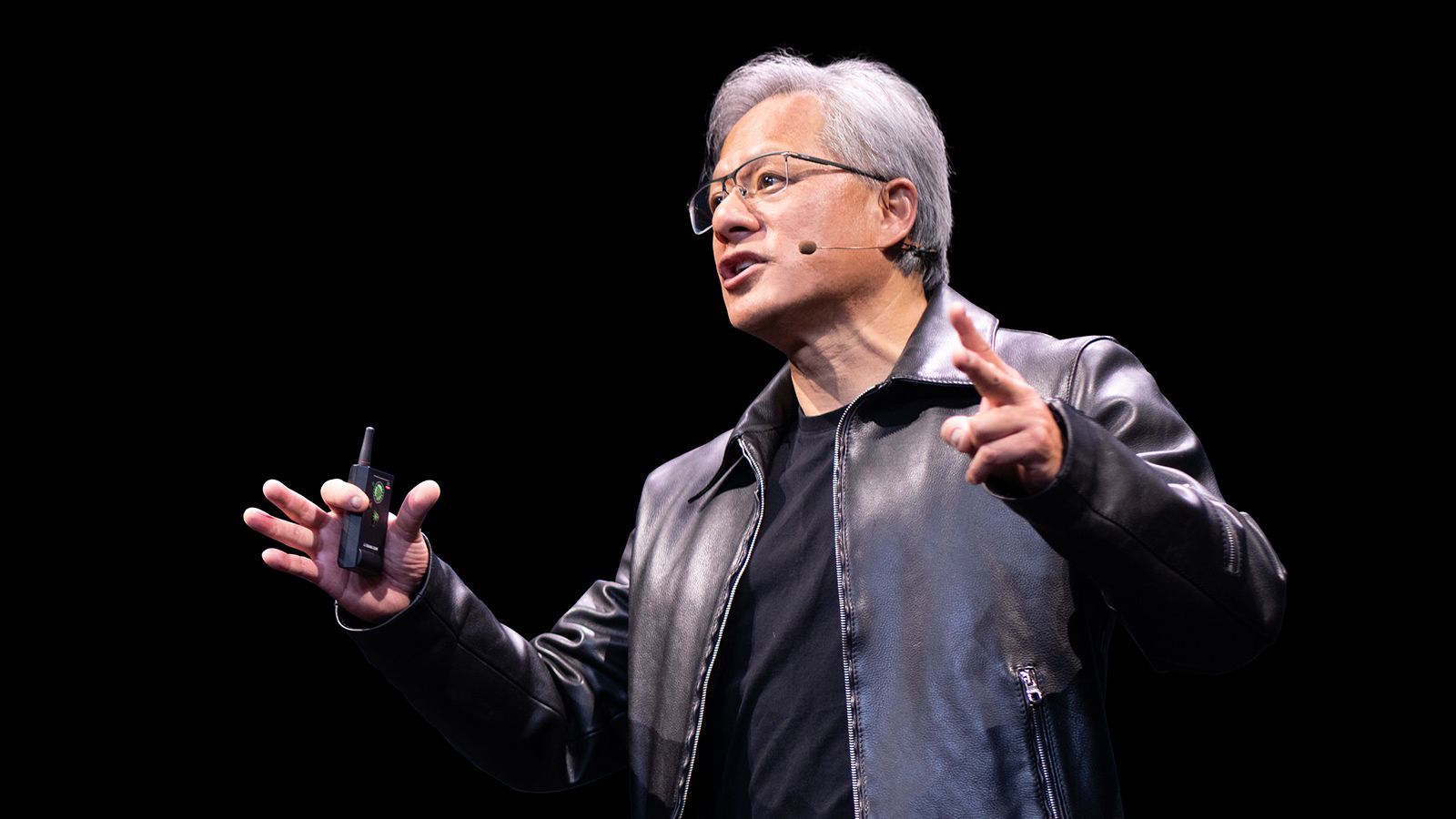
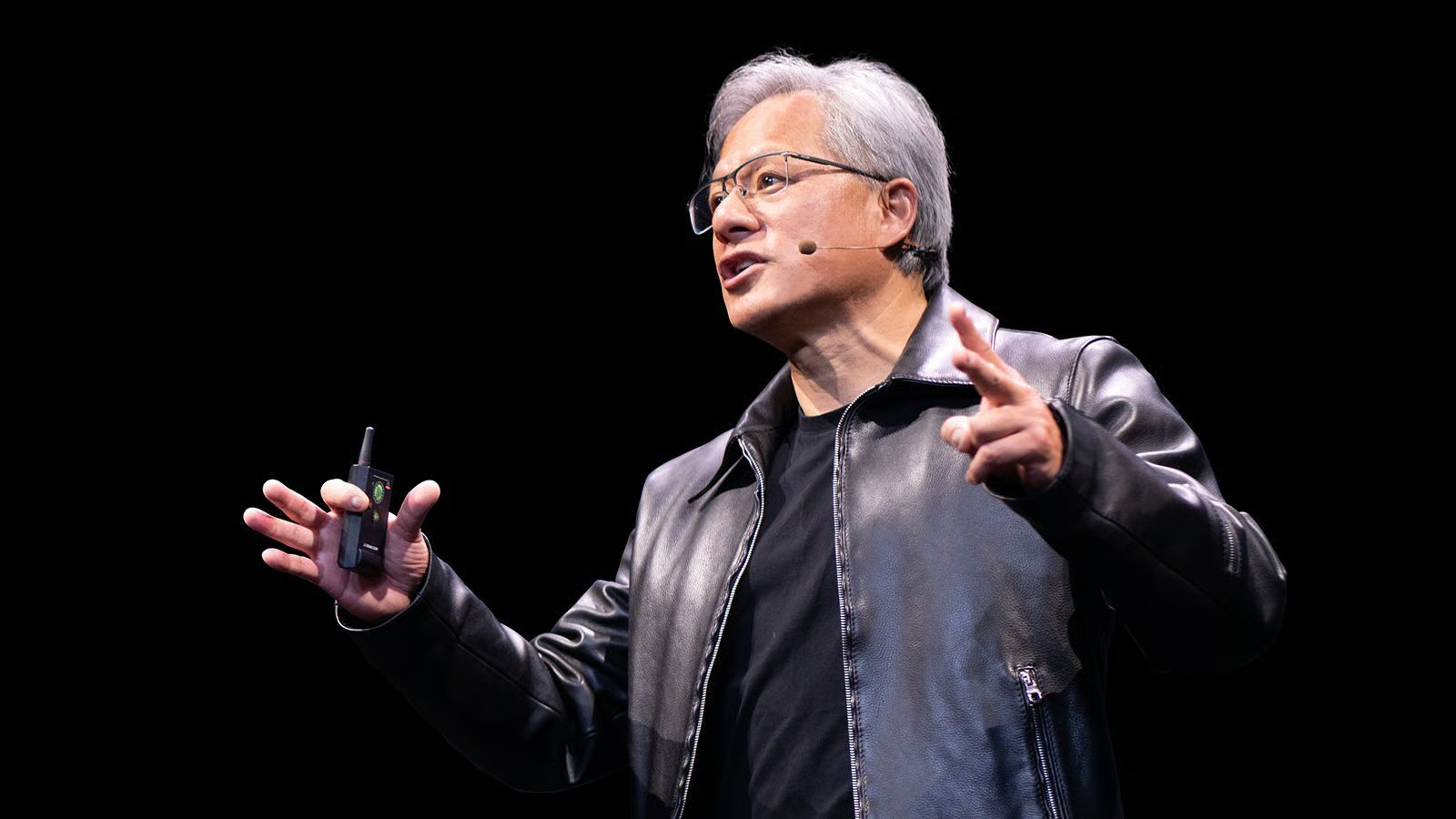
Jensen Huang’s resignation creates a host of problems for the trillion-dollar company he built. Image source: Nvidia.
While Nvidia stock hasn’t been this fundamentally cheap in a long time, there are half a dozen reasons to believe that the face of the AI infrastructure build-out can plunge another 50%.
1. Jensen Huang’s resignation strips Nvidia’s identity
On Nov. 12, Huang resigned following the admission of an affair with an alleged Chinese spy, as well as reports of a separate extramarital affair with an Nvidia employee who reported to him. Unfortunately, his resignation doesn’t end the controversy or questions at the company he built from the ground up.
For starters, external investigations will continue, despite Huang’s resignation. This includes congressional investigations into national security issues, potentially including Nvidia’s dealings with China. In short, Huang’s departure doesn’t put an end to any legal ramifications Nvidia might face.
BREAKING: Nvidia, $NVDA, CEO Jensen Huang has resigned as CEO, President, and member of the Board of Directors, effective immediately. https://t.co/IJE8wWvcrR
— The Kobeissi Letter (@KobeissiLetter) November 12, 2026
Huang’s departure also strips Nvidia of its identity. He was arguably the face of the AI revolution and was instrumental in orchestrating countless large-scale investments, which some Wall Street analysts have described as “circular.” Without Huang at the helm, collaborations may slow.
Lastly, Huang’s resignation is a blow to investors’ and businesses’ trust in Nvidia. As Warren Buffett once opined, “It takes 20 years to build a reputation and five minutes to ruin it.”
2. A gubernatorial blue wave can stymie the data center build-out
Midterm elections also dealt Nvidia and the AI infrastructure build-out a surprise blow.
On the one hand, prediction markets correctly forecast that Democrats would sweep Congress. What wasn’t expected was the gubernatorial blue wave. Democratic candidates flipped five gubernatorial seats held by Republicans, including in Texas, Georgia, and Ohio.
NVDA Nvidia
$162.85-$3.34 (-2.01%)
NASDAQ · As of 4:00 PM ET 11/13/26
President Donald Trump favors as little AI regulation as possible and has cautioned that he’ll “veto everything” that comes to his desk from a Democrat-led Congress. Meanwhile, most Democratic lawmakers prefer to limit data center expansion and beef up the vetting/testing of large language models.
While Trump’s veto works on Capitol Hill, it’ll offer no solace in core data center build-out states, such as Texas, Georgia, and Ohio, where Democratic governors could slow or halt new approvals. That’s bad news for all AI hardware stocks, including Nvidia.
3. Signs point to the Fed getting more aggressive with its rate-hiking cycle
We’re also seeing evidence that the Federal Reserve may get more aggressive with its fourth rate-hiking cycle of the 21st century.
In addition to the normal inflationary factors observed in an expanding economy, President Trump’s tariffs, the Iran war, and even the AI infrastructure build-out are contributing to persistently elevated inflation.
The AI boom is transforming one of the biggest deflationary forces into a key source of US inflation:
Import prices for computer and electronic products surged +7.4% in the first 6 months of 2026, to 77.1 points, the highest since January 2016.
This also marks a +8.0% YoY jump, the largest annual increase on record.
This represents a historic reversal from a downtrend which persisted for over two decades.
Between 2006 and 2019, computer and electronic product import prices fell -30%, as improving technology and manufacturing efficiency consistently pushed costs lower.
Now, the AI investment boom is straining manufacturing capacity for semiconductors, servers, and electronic components, as companies race to build out AI infrastructure regardless of cost.
The AI revolution has flipped technology from a long-term source of deflation into a major driver of inflation.
— The Kobeissi Letter (@KobeissiLetter) July 21, 2026
Insatiable demand for Nvidia’s GPUs, coupled with ongoing supply shortages, has afforded the company never-before-seen pricing power. Unfortunately, this margin-fueling pricing power has worked its way down the line to everyday consumers. Higher costs for central processing units, hard disk drives, memory, and so on have lifted the prevailing inflation rate.
If the Federal Reserve starts aggressively raising interest rates, making borrowing costlier, it would likely clobber the prominently debt-financed AI data center build-out.
4. The bond market is sending unmistakable warning signs about hyperscalers and neoclouds
The bond market gives AI investors reason for pause, as well.
While some hyperscalers and neoclouds are financing their AI data center expansions with cash on hand, many are turning to corporate debt issuances. When public companies issue debt, it’s typically priced at a par value of $1,000, which financial websites commonly express as $1. When a corporate bond trades at or near its par value, it indicates that traders expect a company to meet its debt obligations.
Credit markets are flashing WARNING SIGNS across the AI trade:
Oracle, $ORCL, 5-year credit default swap (CDS) spread has surged to ~263 basis points, while SpaceX’s has risen to ~203 basis points, both at record highs.
At the same time, CoreWeave’s $CRWV, 5-year CDS is up to a record 982 basis points.
This comes as tech companies have issued nearly $500 billion in new debt this year to finance AI infrastructure, with 9 US investment-grade bond deals worth at least $25 billion each.
The growing debt burden is colliding with uncertainty over whether AI revenues will justify the enormous spending.
As a result, investors are increasingly demanding higher compensation to take on credit risk.
Oracle’s market-implied 5-year default risk has risen above 20%, compared with around 16% for SpaceX and more than 7% for Nvidia.
The pressure could intensify further, with Goldman Sachs projecting hyperscaler debt issuance to jump from $250 billion in 2026 to a massive $420 billion in 2027, as 35% of next year’s capital spending is expected to be debt-funded.
The AI boom is now testing credit markets, as investors begin repricing the risks behind Big Tech’s unprecedented borrowing spree.
— Global Markets Investor (@GlobalMktObserv) October 14, 2026
However, bond prices for several prominent hyperscalers and neoclouds have been plunging throughout 2026, sending bond yields notably higher. The 2056 notes issued in June by Elon Musk’s Space Exploration Technologies (SPCX -0.59%) recently hit an all-time low of $0.83, while Nvidia’s 2060 notes reached a record low of less than $0.62 on Nov. 12.
The bond market is sending an unmistakable warning that the AI build-out and/or the companies behind it aren’t sustainable.

Image source: Getty Images.
5. AI bubble-bursting events have been the norm for more than three decades
History can also serve as an excellent teaching tool for those investors willing to listen.
Dating back to the advent and proliferation of the internet in the mid-1990s, every next-big-thing innovation has navigated an early-innings bubble-bursting event. This includes the internet, genome decoding, nanotechnology, 3D printing, blockchain technology, and the metaverse.
The reason these bubbles form is that retail investors consistently overestimate how quickly new technologies will be adopted and/or optimized. AI doesn’t have an adoption problem. Nvidia’s triple-digit data center sales growth in its fiscal second quarter (ending July 26) confirms that businesses have welcomed this technology with open arms, just as they did with the internet.
But businesses weren’t able to optimize internet-driven solutions until well after the dot-com bubble had burst. All game-changing technologies need ample time to mature, and it’ll likely be years before businesses begin maximizing the returns of their hefty AI investments. This leaves the stock market, and Nvidia, exposed to a possible bubble-bursting event.
6. History says premium stock market valuations aren’t sustainable
Last but certainly not least, history tells us that ultra-premium stock valuations aren’t sustainable.
While Nvidia’s valuation has, as noted, come way down, the S&P 500‘s (^GSPC -0.40%) Shiller Price-to-Earnings (P/E) Ratio, also known as the Cyclically Adjusted P/E Ratio (CAPE Ratio), reached its second-highest multiple in 156 years in early June. The AI data center build-out, led by Nvidia, is a big reason for this parabolic increase in stock valuations.
Stock Market Shiller PE Ratio on the verge of taking out its Dot Com Bubble all-time high 🚨 🤯 👀 https://t.co/CtCmSgWnLt
— Barchart (@Barchart) July 11, 2026
History shows that CAPE Ratios above 30 have historically, without fail, foreshadowed declines of 20% to 89% in Wall Street’s major stock indexes. Consider it one of Wall Street’s virtually surefire red flags.
If history rhymes yet again, the companies that led the S&P 500 higher, such as Nvidia, would likely be among the hardest hit.
Though some investors see this 32% drawdown as a buying opportunity in the wake of Jensen Huang’s resignation, I view it as the start of a much steeper decline in Nvidia stock.
Where to invest $1,000 right now
When our analyst team has a stock tip, it can pay to listen. After all, Stock Advisor’s total average return is 831%* — a market-crushing outperformance compared to 209% for the S&P 500.
They just revealed what they believe are the 10 best stocks for investors to buy right now, available when you join Stock Advisor.
See the stocks ›
*Stock Advisor returns as of November 14, 2026.