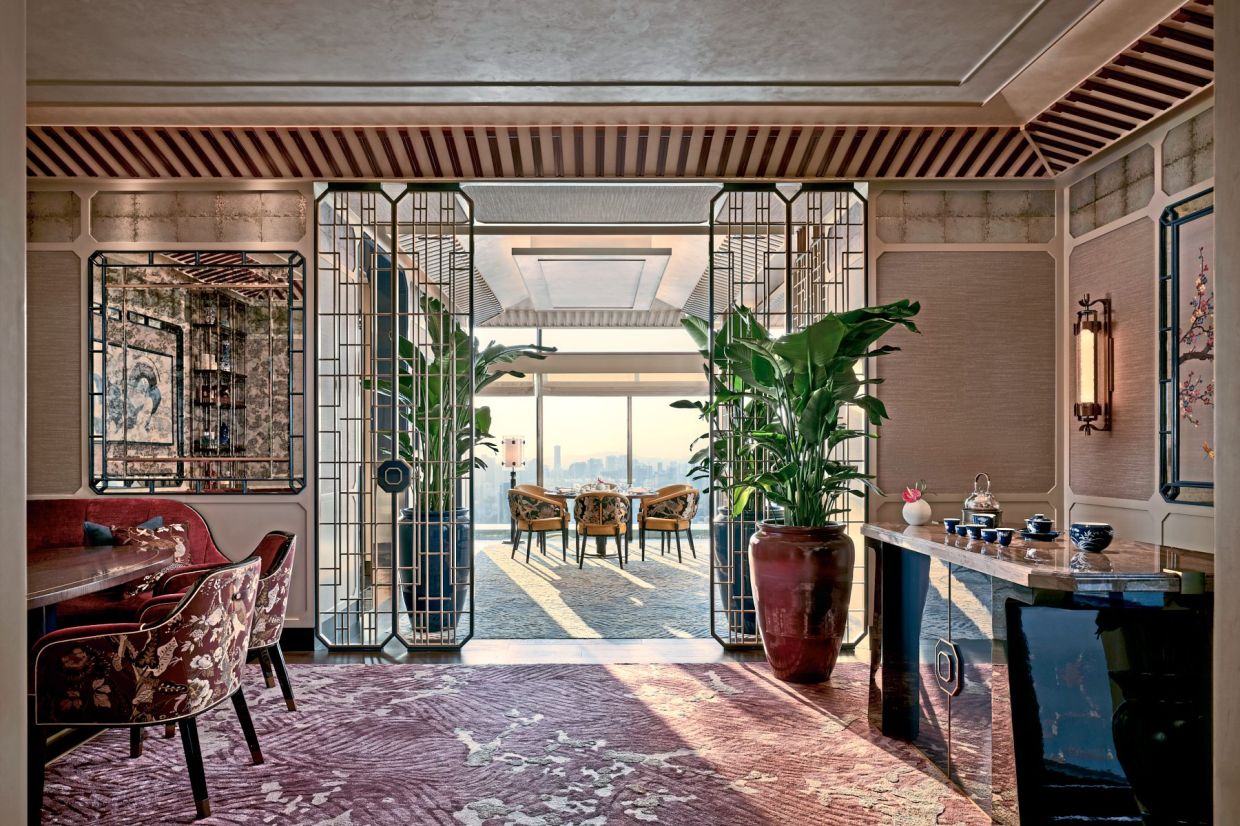
Nestled high up on the 55th floor of Tower 1 of Singapore’s Marina Bay Sands is Cantonese culinary enclave Jin Ting Wan. The restaurant has only been in operation for one year and yet recently earned a prestigious Michelin star.
But perhaps even more awe- inspiring is the fact that the eatery’s sommelier Joe Yang netted the Michelin Guide Singapore Sommelier Award, the first time the award has been given to a sommelier at a Chinese restaurant in Singapore.
Yang has been instrumental in introducing diners to Chinese wine pairings and under his stewardship, the eatery now offers nearly 150 Chinese wines, the most extensive collection in Singapore, with some varietals not available anywhere else.
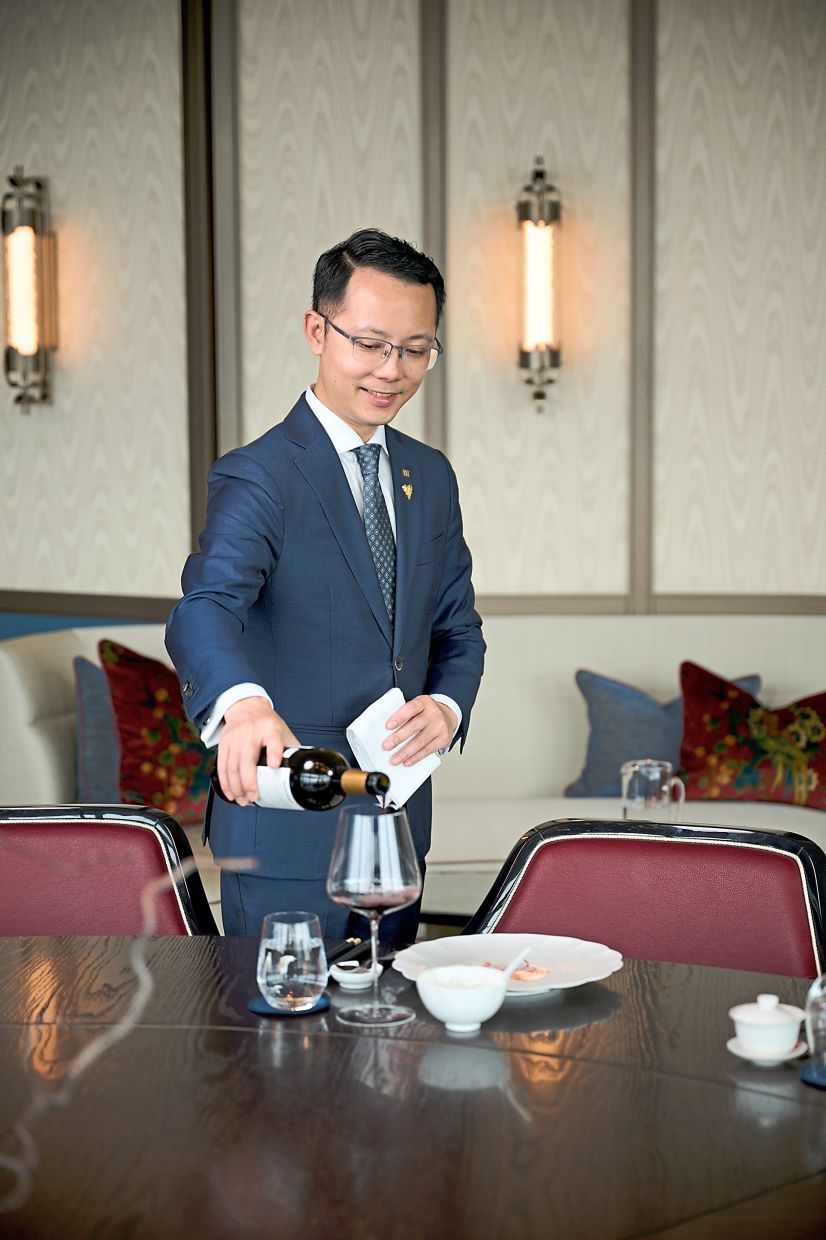
“My approach is built on direct relationships. Whenever possible, I speak personally with the wineries and visit them.
“We do not select a wine simply because it is rare or Chinese. It must have quality, a strong sense of place and a meaningful story. I want the collection to feel rooted in culture and craftsmanship, rather than novelty,” he says.
Yang is a Guangdong, China native who studied hotel management, which in turn inspired his interest in wines. He began taking wine more seriously when he won the Macau Sommelier Challenge – even though he was working a front desk job then and wasn’t actually a sommelier yet. Following that victory, Yang went on to work at many salubrious Michelin-starred restaurants including Alain Ducasse at Morpheus in Macau, before joining Jin Ting Wan.
He says the culture of pairing alcoholic drinks with food isn’t new in China or Chinese cuisine, but the choice of drink in ancient times was traditional baijiu (Chinese distilled spirit) or huangjiu (Chinese rice wine); as opposed to classical Western connotations of wine.
Yang himself grew up on baijiu as his father and grandfather enjoyed imbibing and built a large collection of these tipples in their homes. But he also now feels that the increasing number of wine-growers in China has led to an increased consumer base keen to understand the nuances of Chinese wines.
“The modern relationship between Chinese cuisine and Chinese grape wine is comparatively new because the country’s fine wine industry is still developing.
“For many years, the range and quality of Chinese wines available made it difficult to build meaningful pairings across the breadth of Chinese cuisine. That has changed considerably. Chinese wineries are now producing with greater quality, diversity and regional character, so we can begin applying the classic pairing principle that food and wine sharing a geographical or cultural origin can complement one another,” he says.
At the restaurant, Yang’s pairing philosophy is that the cuisine always comes first – the wine is there to support the dish, not overpower it.
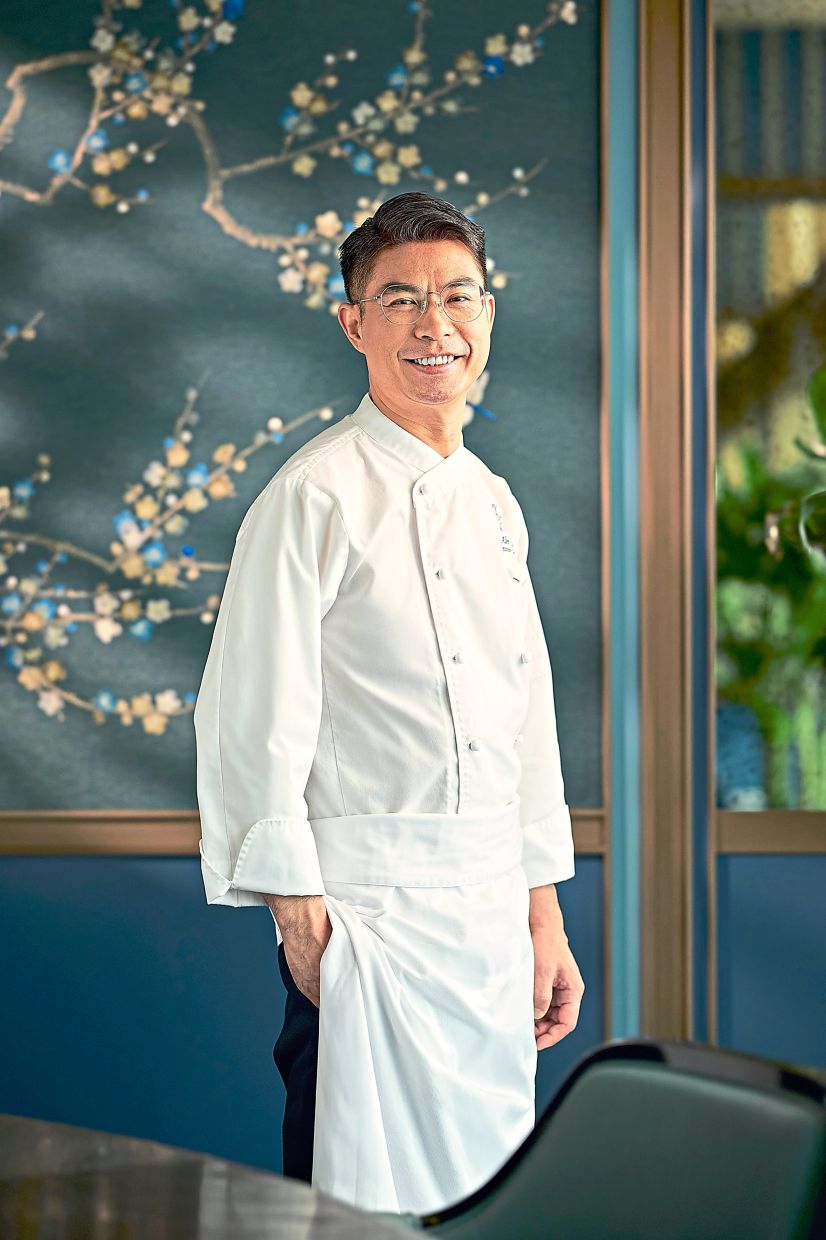
The Cantonese food at the eatery – which spans the rich regional traditions of the Guangdong province – is ably navigated by executive chef Albert Li.
Li is a Guangxi (southern China) native who has worked at Michelin-starred eateries like the two-starred Imperial Treasure Fine Chinese Cuisine in Shanghai. At Jin Ting Wan, he supervises a team of 50 and is dedicated to redefining Chinese fine-dining.
To begin a meal here, go for the Poached Hokkaido Squid with Peanut & Garlic Chilli Oil (S$58/RM184) which utilises rocket squid (Japanese flying squid) that has been gently poached in order to retain its original texture to fullest effect.
This is a stand-out dish: the squid is buoyant with a pronounced bounce and spring in its step and this liveliness is propelled by the chilli oil, garlic and peanut in the configuration which, when combined, offers a fiery soul and nutty overtures.
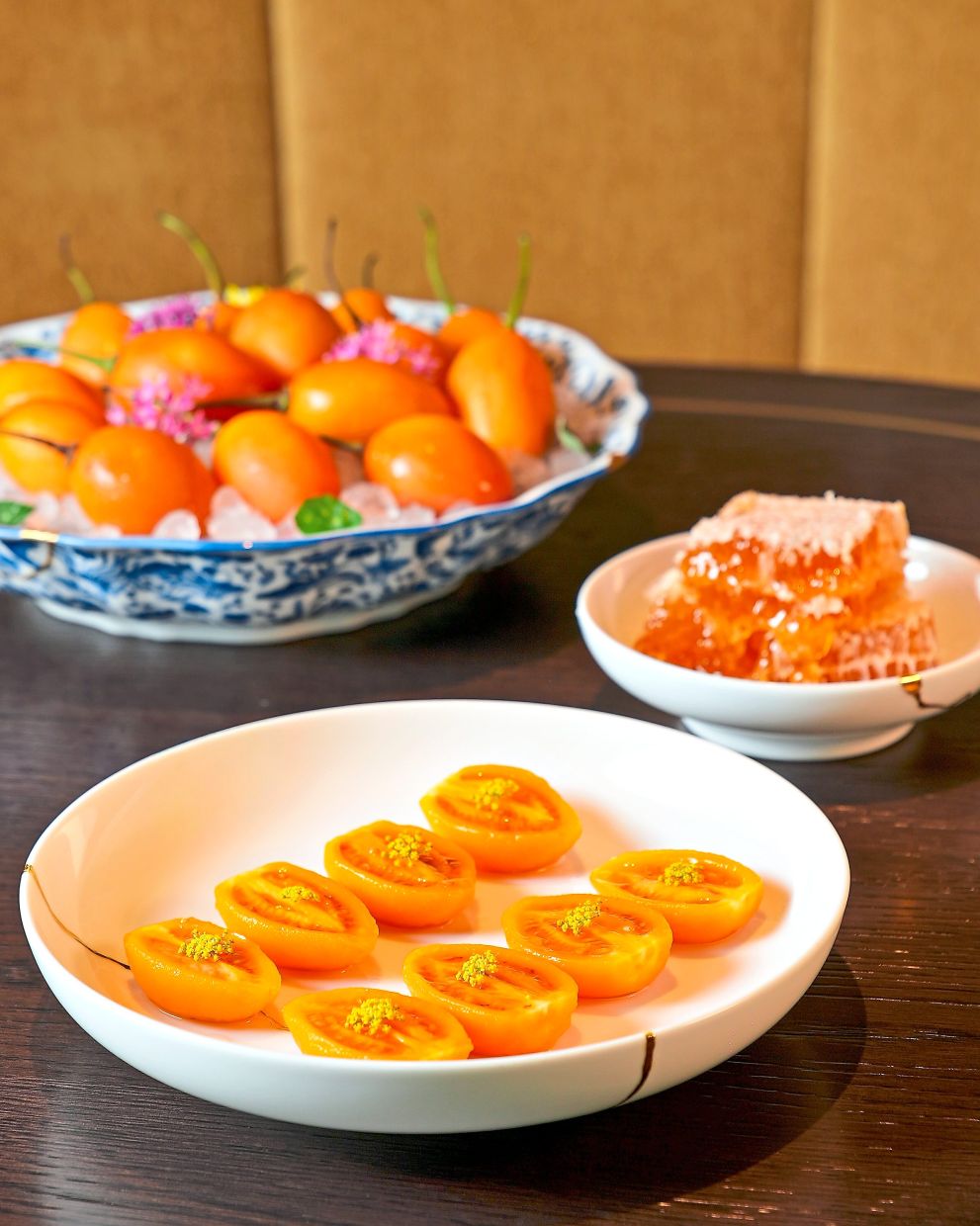
Follow this with the charms of the Chilled Tamarillo with Osmanthus Honey (S$48/RM152). Tamarillo is an egg-shaped tree fruit which Li has cleverly marinated in osmanthus honey, resulting in a plush, lush fruity experience with the sweetness of honey embedded in its structural underpinnings, giving it a fairytale feel – like it was plucked straight out of Enid Blyton’s The Faraway Tree.
Yang’s first pairing is the Canaan Winery Chapter & Verse Sauvignon Blanc 2022 (S$32/RM101 a glass), which hails from a winery in the Hebei province in the northern part of China where the grapes are grown on a mountainside slope over 1,000m above sea level. The cool weather is what keeps the grapes free from fungal diseases and is also what – in Yang’s opinion – makes it one of the best Sauvignon Blancs in China at the moment.
The wine certainly lives up to its reputation – delivering crisp, fresh notes, a hint of acidity and fruity bursts of passionfruit in its structural underpinnings – offering a light yet cheery opening to the meal.
Move on to one of the eatery’s signature must-haves, the Roasted Pipa Duck with Tangerine Peel and Water Chestnut (S$98/RM300, which has to be pre-ordered one day in advance).
The dish pays homage to the pipa duck of Shunde in Guangdong and features a 90-day-old Irish duck seasoned with 15-year-aged tangerine peel. The duck is flattened and roasted to perfection and cut to resemble the shape of a traditional pipa lute. Only the skin is served and this is stuffed with water chestnut, prawns and duck meat.
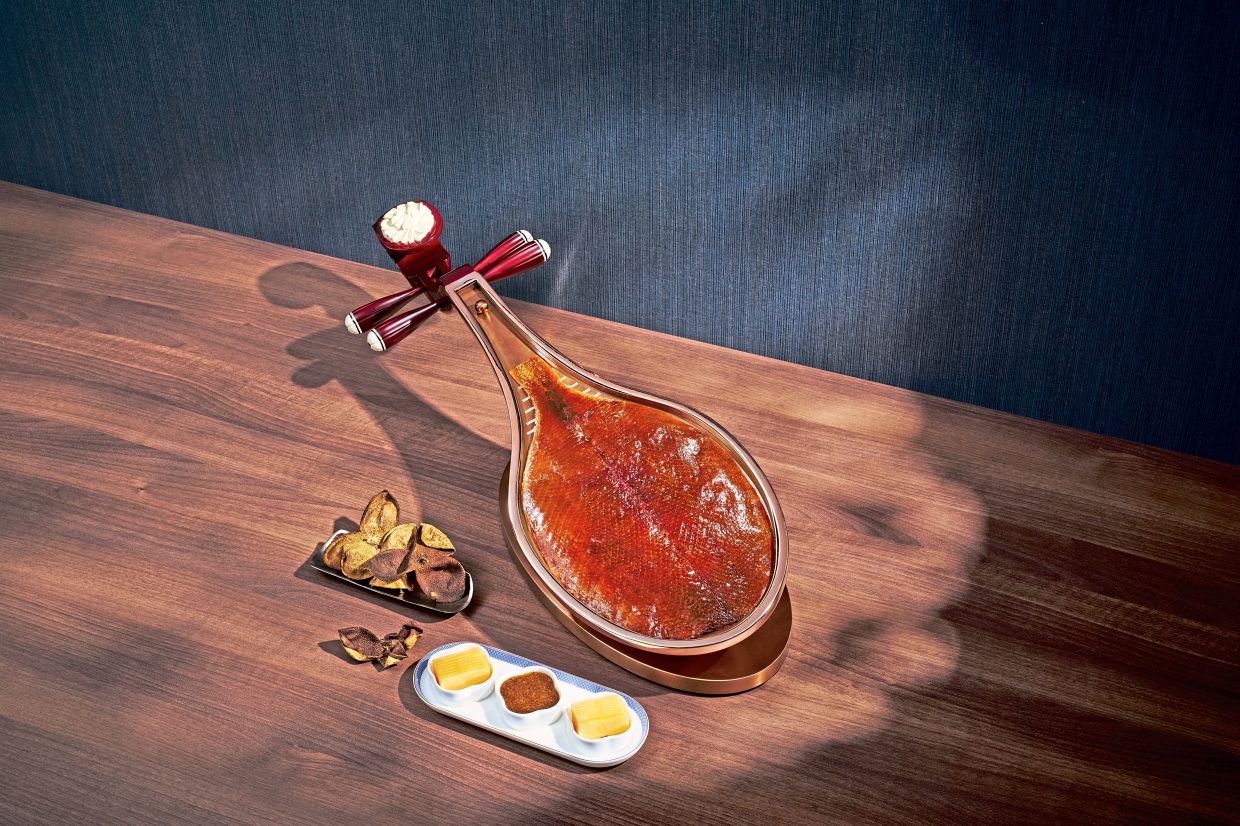
The golden, crispy, waxy skin on the duck looks like something only a dream could configure; not reality. And yet here it is – beautifully crackly to the touch, unctuous and so decadent, you’ll store this in your memory as one of those brief, beautiful interludes in life where heaven and earth collide.
To match the superior qualities of the duck, Yang has paired it with the Fei Tswei Owners’ Reserve Pinot Noir 2021 (S$240/RM760 a bottle) from the Ningxia region, which has become one of China’s most important wine-producing areas. The wine also won the gold award at the Wynn Signature Chinese Wine Awards 2024 – a competition with more than 800 entries every year.
This is an elegant, fulsome wine with a sophisticated finish and notes of cherry and red plums gilding this experience and providing an uplifting, euphoric finale.
End your meal with the limited-time Hairy Crab Fat & Roe with Steamed Organic Wuchang Rice and 10-Year Aged Zhenjiang Vinegar (S$68/RM215), available until the end of November.
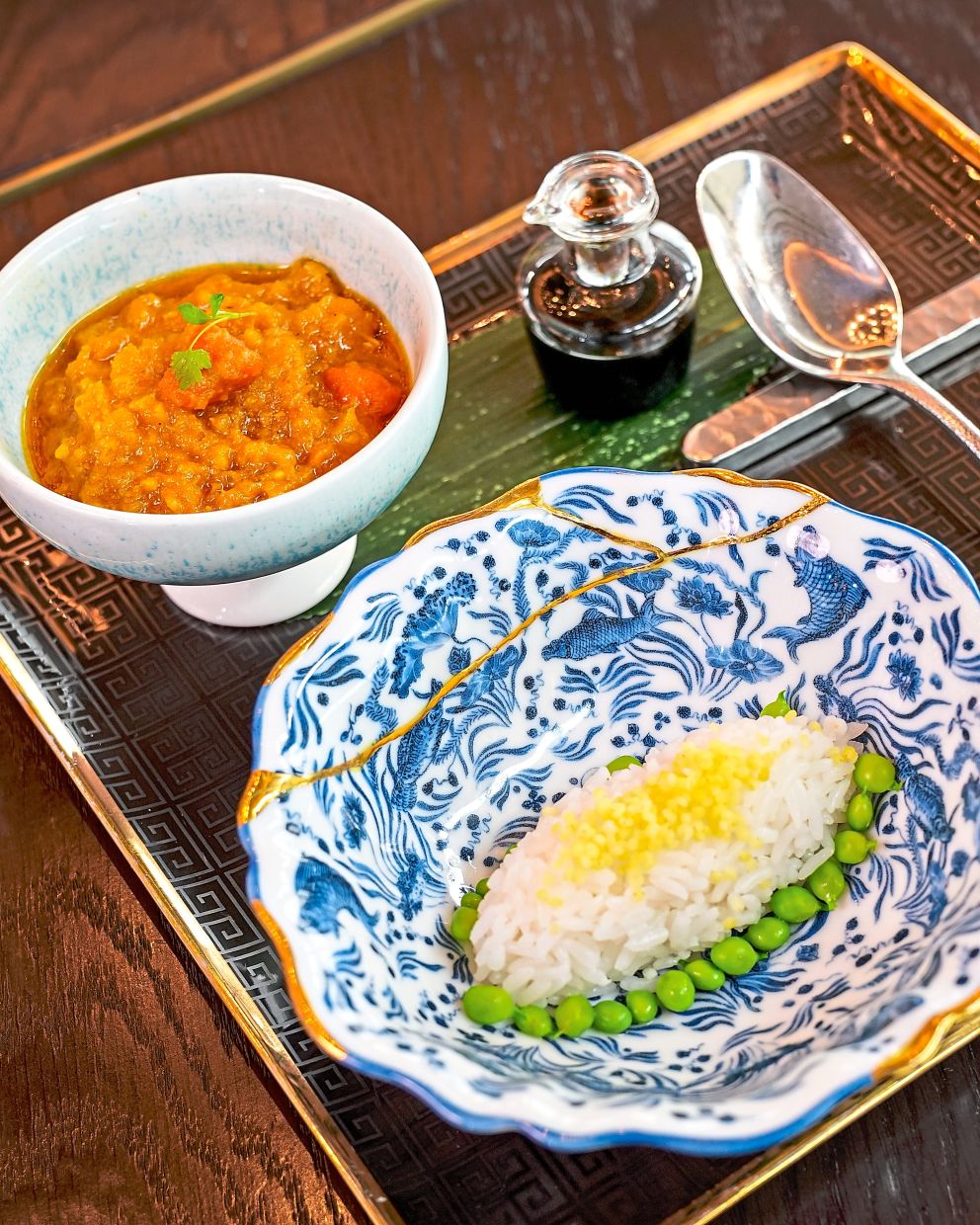
The proportion of hairy crab roe and fat is 50g against 30g of the famed Wuchang rice (grown on fertile black soil in China). Stir the roe and rice together and expect to exclaim loudly or be lulled into total silence.
Because this is a dish that is absolutely sensational – all that oleaginous roe clings to the rice kernels like a limpet, unwilling to let go and consequently saturating the rice with pure opulence.
It’s a clear winner – one of those dishes where the race to the podium finish is a no-brainer because the champion is so evident from the very beginning.
End the intoxicant portion of your meal with the Dongqu 2009 vintage (S$48/RM152 a glass), available exclusively at Jin Ting Wan. This is a luxury, single-vintage Shaoxing wine handcrafted using glutinous rice and water from the Jianhu lake in Shaoxing and aged in clay urns for decades.
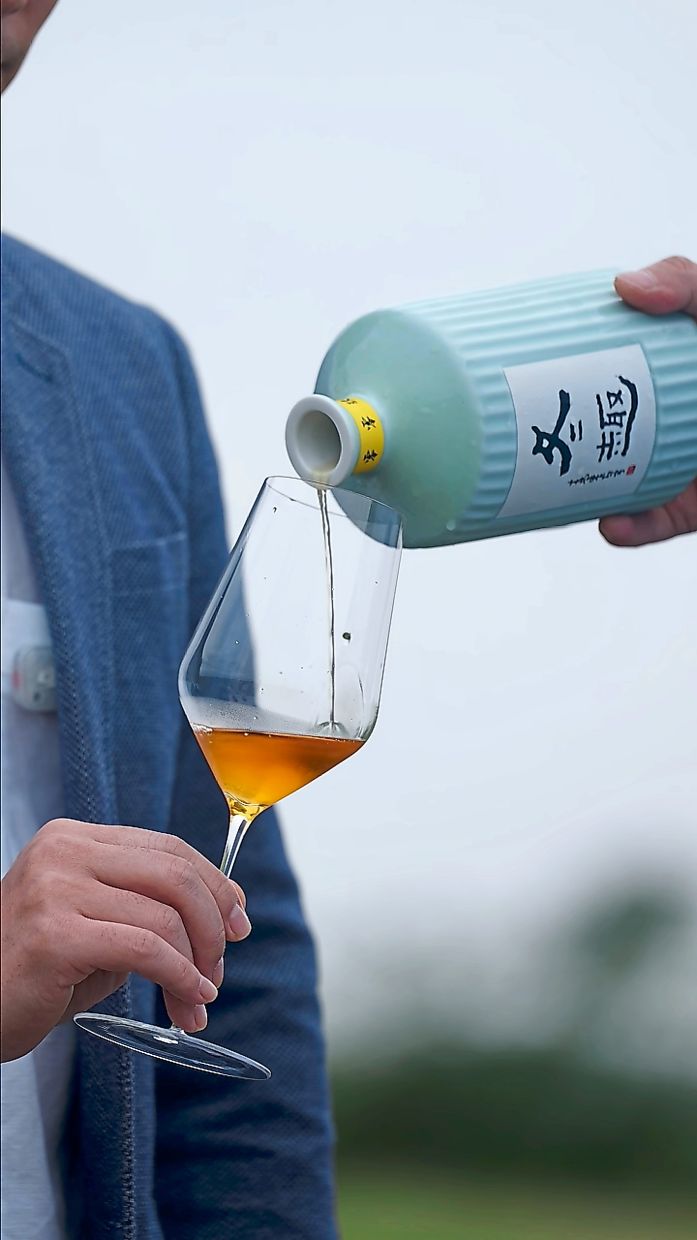
The amber liquid that is poured is oh-so addictive – mildly toffee-esque, tangy, mellow with hints of preserved plum and candied orange peel lurking within.
Ultimately, a meal at Jin Ting Wan is a working theory of how Chinese cuisine and Chinese grape wines can co-exist in symbiotic harmony, delivering meals and tipples that resonate with diners because they also serve up something far more crucial: a hefty dose of Chinese culture.
Jin Ting Wan
10 Bayfront Avenue
Level 55, Marina Bay Sands Tower 1
018956 Singapore
Tel: +65-6688 9969
Open daily: 11.30am to 2.30pm; 5.30pm to 9.30pm
