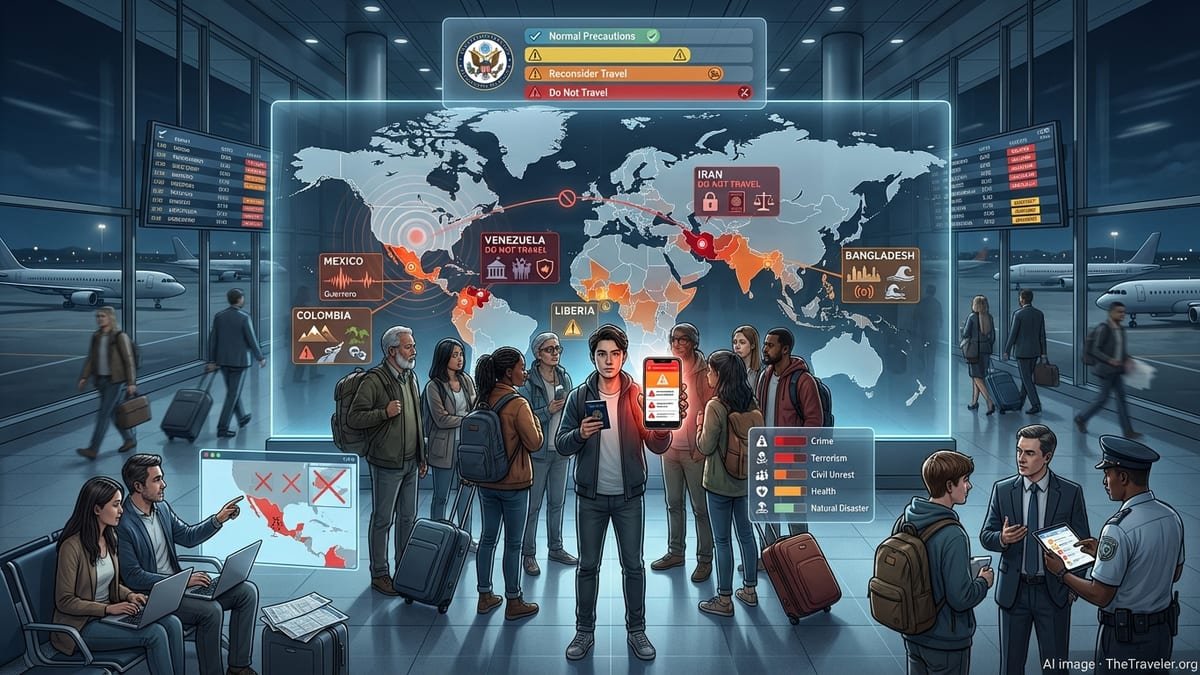
The United States currently has its strictest Level 4 “Do Not Travel” advisory in place for 11 African countries, underscoring how conflict, terrorism, crime and health crises are reshaping the security map for travelers across the continent.
Get the latest news straight to your inbox!
What the Level 4 Travel Warning Means
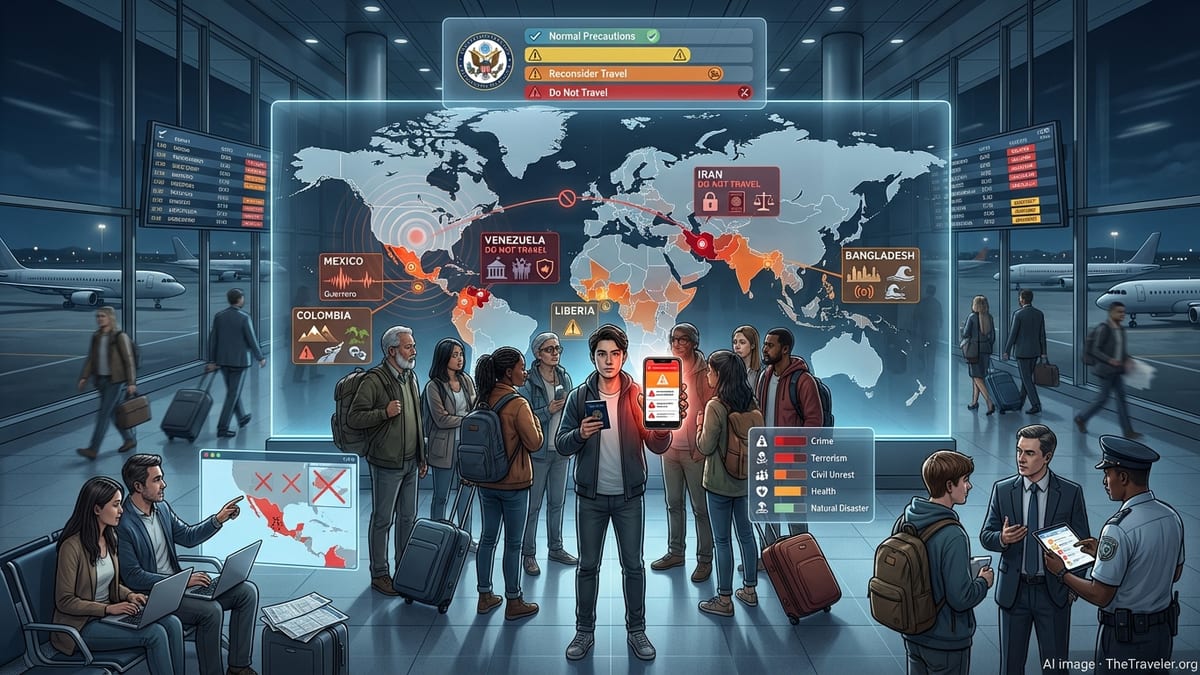
Publicly available guidance from the U.S. Department of State describes a Level 4 advisory as the highest warning category, reserved for destinations where there is a greater likelihood of life-threatening risks and where the U.S. government may have very limited ability to provide assistance in an emergency.
Explanatory material on the travel advisory system notes that Level 4 alerts are used when conditions such as active conflict, widespread violent crime, terrorism, kidnapping, severe civil unrest, major disease outbreaks, natural disasters or wrongful detention make travel significantly more dangerous than in most other destinations.
Travelers are advised not to visit countries under a Level 4 advisory, or to depart as soon as it is safe if already present. The notices are advisory in nature rather than legal bans, but many universities, study-abroad programs, NGOs and corporate security teams treat a Level 4 designation as a trigger for postponing or canceling travel.
The State Department’s advisory framework also allows for different levels within a single country. A nation may have an overall Level 2 or Level 3 rating while specific regions are designated Level 4. In the case of the 11 African countries now on the highest list, the Level 4 warning applies countrywide.
The 11 African Nations on the Level 4 List
Live tracking of the State Department’s advisories based on the public data feed shows that, as of November 10, 2026, 24 countries and territories worldwide carry a Level 4 “Do Not Travel” warning, including 11 in Africa.
Independent compilations drawing on the same official feed identify the African countries at Level 4 as Burkina Faso, Central African Republic, Chad, Democratic Republic of the Congo, Libya, Mali, Niger, Somalia, South Sudan, Sudan and Uganda. Each has its own advisory page detailing the specific security and health concerns driving the decision.
Coverage focused on East and Central Africa highlights that Uganda, Somalia, South Sudan and the Democratic Republic of the Congo are subject to the highest advisory level on account of overlapping risks that include terrorism, armed groups, violent crime, and limited medical capacity in some regions. Further west, the Sahel states of Burkina Faso, Mali, Niger and Chad are flagged for persistent jihadist violence, military takeovers, and attacks on civilians and security forces.
North African Libya and Sudan, together with the landlocked Central African Republic, round out the list. Public information on these advisories points to long-running armed conflict, political instability and an elevated risk of detention, carjacking, and clashes between rival forces, often in areas where consular support for foreign nationals is extremely difficult.
Security and Health Risks Driving the Warnings
The reasoning sections on individual advisory pages cite a mix of risk categories, including armed conflict, terrorism, crime, kidnapping, civil unrest and health threats. In Uganda, recent reporting points to concerns over terrorist attacks, armed robberies and home invasions, as well as an Ebola outbreak that has strained the country’s health system and complicated emergency support for foreign visitors.
In Somalia and parts of the Sahel, active insurgencies by armed groups are a major factor. Publicly available analyses of those advisories note frequent attacks on security forces and civilians, roadside bombings, and the potential for foreigners to be targeted or caught in crossfire. Some areas are effectively outside government control, which reduces the ability of any state to assist travelers in distress.
Countries such as South Sudan, Sudan and the Central African Republic are also contending with internal conflicts and humanitarian crises. Reports describe situations where clashes can flare with little warning, and key infrastructure, including airports and major roads, can be shut down or damaged. In such environments, even routine medical evacuations or consular evacuations may be extremely challenging.
Crime and kidnapping risk weigh heavily in parts of the Sahel belt, where armed banditry, carjacking and roadside ambushes have been documented on highways linking major towns. Advisory summaries for some of these states emphasize that both locals and foreigners have been victims, and that security incidents have occurred even during daylight and on routes once considered relatively safe.
How the Expanded List Affects Travelers and Airlines
The decision to maintain or assign a Level 4 advisory does not automatically suspend commercial flights, and published schedules show that airlines continue to operate limited services to several of the affected capitals. However, the warnings tend to reduce demand from leisure travelers and can prompt companies, universities and charities to rethink sending staff or students.
Travel insurance providers pay close attention to advisory changes. Industry guidance explains that many standard policies restrict coverage for trips to countries under a Level 4 warning, particularly when incidents are linked to war, terrorism or civil unrest. Travelers considering routes that transit these countries are increasingly advised to read fine-print exclusions or seek specialist security coverage.
Some African governments have responded in the past to adverse travel advisories by stressing that risk levels vary within their borders and that popular tourism hubs may remain calm even when a country’s overall rating is high. Commentators also note that local businesses dependent on tourism can be significantly affected when a key source market labels a destination “Do Not Travel,” even if visitor numbers from other regions remain stable.
For U.S. citizens and other international travelers, the growing number of African countries on the highest warning list adds complexity to overland itineraries that cross multiple borders, such as trans-Sahel or East Africa road journeys. Overland routes may traverse several Level 4 states in succession, raising logistical and insurance hurdles even for experienced travelers.
What Prospective Visitors Should Do Now
Public information from the State Department and other governments stresses the importance of checking the latest advisory for each destination immediately before booking and again just before departure, since levels and wording can change rapidly in response to security or health developments.
Travelers who still plan to visit or transit countries near Level 4 destinations are encouraged in widely circulated guidance to register with consular enrollment programs where available, share detailed itineraries with family or employers, and research contingency options such as alternative routes or exit points if conditions deteriorate.
Published safety advice also recommends monitoring local and international media, avoiding demonstrations and political gatherings, and paying close attention to curfews or movement restrictions that may be imposed with little notice. In regions affected by disease outbreaks, health-focused advisories emphasize up-to-date vaccinations, strict hygiene measures and contingency planning in case medical care is difficult to access.
While the Level 4 designations for the 11 African countries highlight serious and often long-running crises, analysts note that conditions are not static. Some destinations have previously moved down the advisory scale as security or health situations improved. For now, however, the highest warning level for these nations serves as a clear signal that travelers face elevated risks that warrant careful scrutiny before any trip is planned.