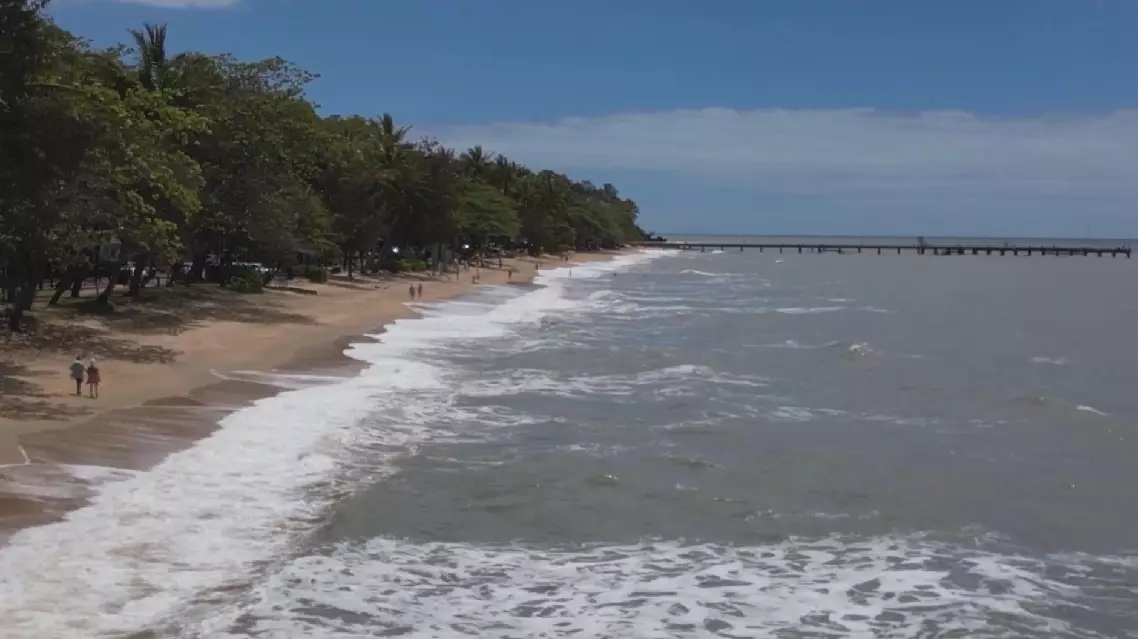
Australia is vying to capture a larger portion of China’s outbound tourism, with tour services increasingly seeking to understand and reach out to prospective Chinese travelers.
With the Mid-Autumn Festival and National Day separated by only three working days this year, some travelers used three days of leave to link the two breaks into a 13-day holiday, leading to longer trips and a surge in bookings for long-haul journeys. Australia is one of the most popular destinations.
On a recent rain-soaked morning, tour guide Pan Li picked up a family from east China’s Fuzhou at a luxury resort in Far North Queensland and brought them into the Daintree Forest, the world’s oldest surviving tropical rainforest. There, he gave them an in-depth tour of the forest’s history and wildlife, all in Chinese.
Pan Li is among the first Mandarin-speaking graduates of a new course designed to help guides better explain the region’s history and culture to visitors.
“When we do the tour in the rainforest, you don’t just take guests to take a walk there and you say oh, this is a palm tree, and this is a banana tree, whatever. You want to tell them more stories behind the nature, I mean, about how the rainforest was formed and also our indigenous people, rainforest Aboriginal people, how long they have been living here,” he said.
These specialized services, along with China’s extended National Day holiday, have sparked a surge in tourism in Queensland.
“Right now it is helping to make us busy, it’s keeping my staff busy. We’ve had to put on extra staff,” said Richard Berman-Hardman, general manager of Skyrail Rainforest Cableway in Cairns, Queensland.
Many tourism operators in the state have recognized that in order to maximize their draw, they need to have a presence on Chinese social media.
“The investment we’ve made in, obviously, maintaining a RedNote page and profile and ensuring that the content that we’re distributing on RedNote and via Chinese social media understands the nuances of the market,” said Ben Woodward, director of sales and marketing at CaPTA Group, which operates some of North Queensland’s leading wildlife parks, tours and attractions.
Before the COVID-19 pandemic, China was Australia’s biggest source of international visitors. Afterward, recovery was slow, particularly in destinations like Cairns, which still lacks direct round-trip flights from the Chinese mainland.
In response, operators began making investments in marketing to Chinese travelers, and Queensland rapidly began to reap the benefits.
“Since then, the entire Queensland tourism industry has been incredibly active. I personally travel to China as part of sales missions, I have staff who are China market specialists,” said Richard Berman-Hardman.
Businesses in Australia are adapting to make Chinese visitors feel more at home. One thing an increasing number of tourism related businesses across the region are doing to help attract visitors from China is by accepting Alipay and WeChat Pay, making it much easier for them to make payments. They are also adapting to a changing market, as more Chinese travelers move away from traditional group tours.
Home to two World Heritage sites, including the Great Barrier Reef, the region is particularly well suited to independent travellers building their own itineraries, a group represented by a growing number of young Chinese people.
“So for medium haul destinations like Cairns and the Great Barrier Reef, it becomes much more around the free and independent traveler, the driver traveler, the multi-day itinerary,” said Mark Olsen, Chief Executive Officer of Tourism Tropical North Queensland.
This year, Chinese visitors are once again the region’s highest-spending international tourists in Tropical North Queensland.
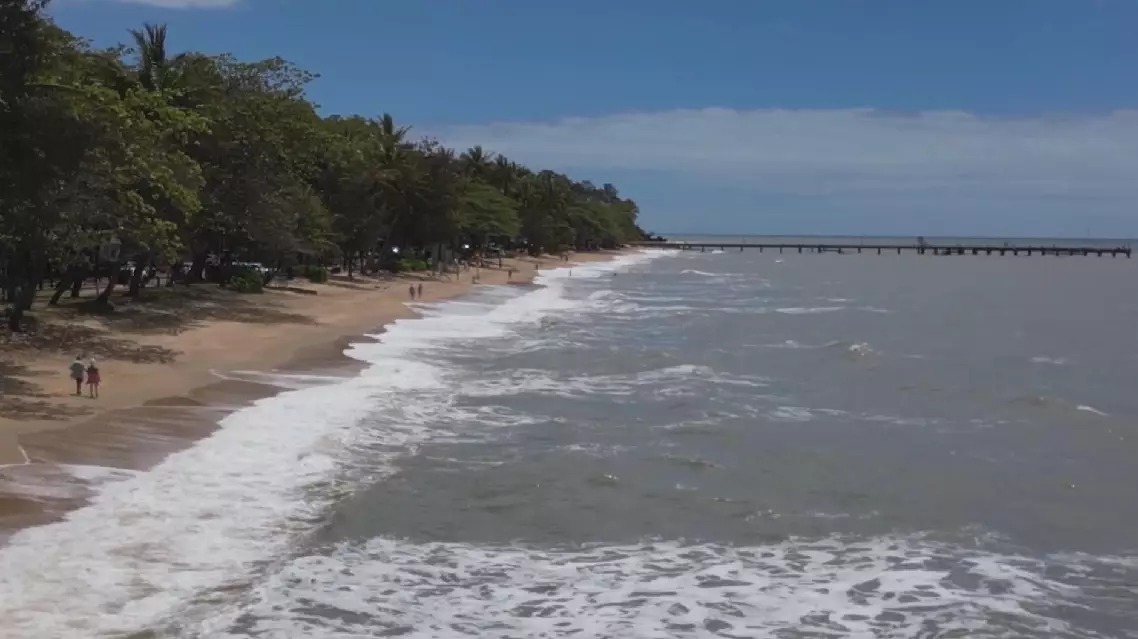
China’s extended holiday boosts tourism in Australia
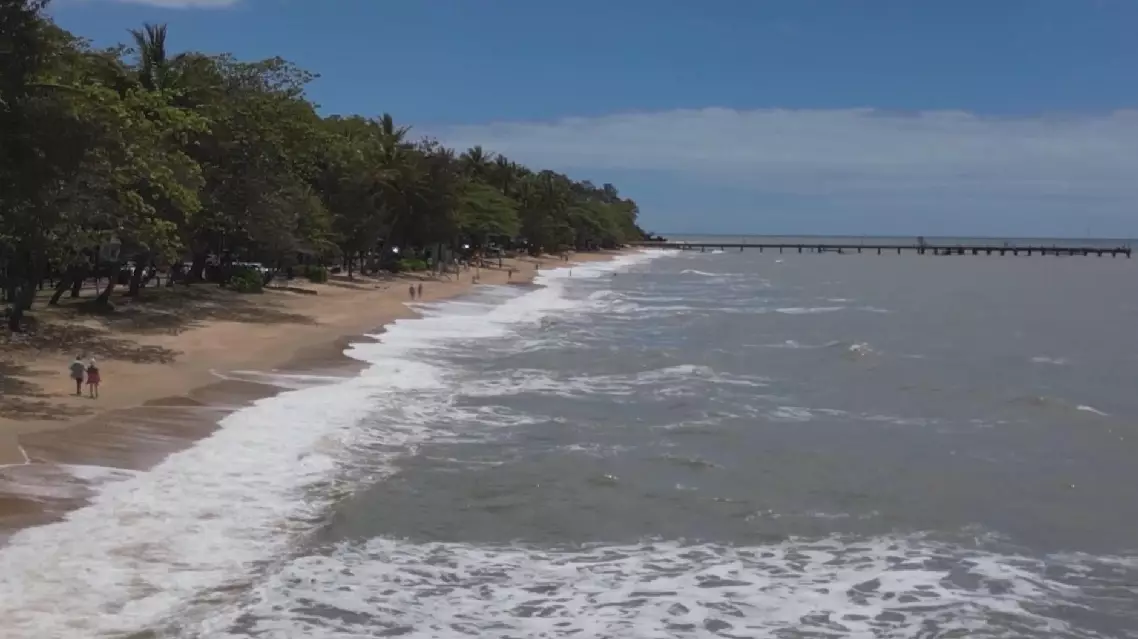
China’s extended holiday boosts tourism in Australia
After more than three months at sea, members of China’s 16th Arctic Ocean expedition have jointly created a painting that captures both the triumphs and trials of polar scientific research.
Organized by the Ministry of Natural Resources, the expedition deployed four ships, Xuelong, Xuelong 2, Jidi, and Tansuo 3, to study extreme environmental changes in the Arctic against the backdrop of accelerating global warming. On September 29, Xuelong and Xuelong 2 returned to Shanghai after completing their missions.
During the voyage, China Media Group (CMG) reporters aboard Xuelong invited nearly 100 crew members to collaborate on a canvas, sharing their experiences. The painting depicts the difficulties and challenges they faced, the honors and expectations of their research, and the images of those dedicated to science.
Before any crew member ever picked up a brush, the Arctic had already sketched the background with its extreme weather. Strong winds, torrents, and a harsh environment posed major challenges for the researchers.
“After staying outside for some five or ten minutes, our hands would already be frozen red. When we reached the trough of the waves [on a boat], it would look as if the waves were coming right over our heads,” recalled Zhu Chengwei, an expedition member.
Despite the hardship, the researchers successfully tested and used domestically produced advanced ocean observation equipment in polar research — one of their proudest moments, which they recorded on the canvas.
Qin Chuan, captain of the Xuelong ocean team, chose to paint a domestically produced monitor float.
“This is an Argo float we deployed, which automatically monitors ocean profiles. It has great significance for understanding the basic marine environment, and it’s made in China,” he said.
Xie Haixiang, director of the Xuelong laboratory, sketched a fundamental research equipment for the trip.
“I will draw a CTD (Conductivity, Temperature, and Depth instrument). The CTD is the most important equipment for ocean surveys, providing the most basic data and water samples,” he said.
“Only by carrying equipment onto the Arctic sea ice yourself and lowering the instruments, can you get what you want. For instance, we take a little ocean water, and analyze what’s in it, to understand the changes each year. Global warming needs to be understood through different dimensions,” recalled researcher Zhu.
Beyond the canvas, what stands out even more striking are the moments of dedication: veteran members leading newcomers onto the ice, a group holding its ground in level-8 gales and heavy snow, and 30 people relaying to recover equipment stuck in the ice.
The most important element, beyond any record or image in the painting, is this group of expedition members who fear no hardship.
“Whenever I think of the polar spirit, countless images of those standing at the very front would flash before my eyes,” Zhu said.
“What we have done today will benefit future generations. Although we are doing something that may seem very insignificant, I believe it will surely prove its worth in the future,”said Ning Wenfeng, another team member.
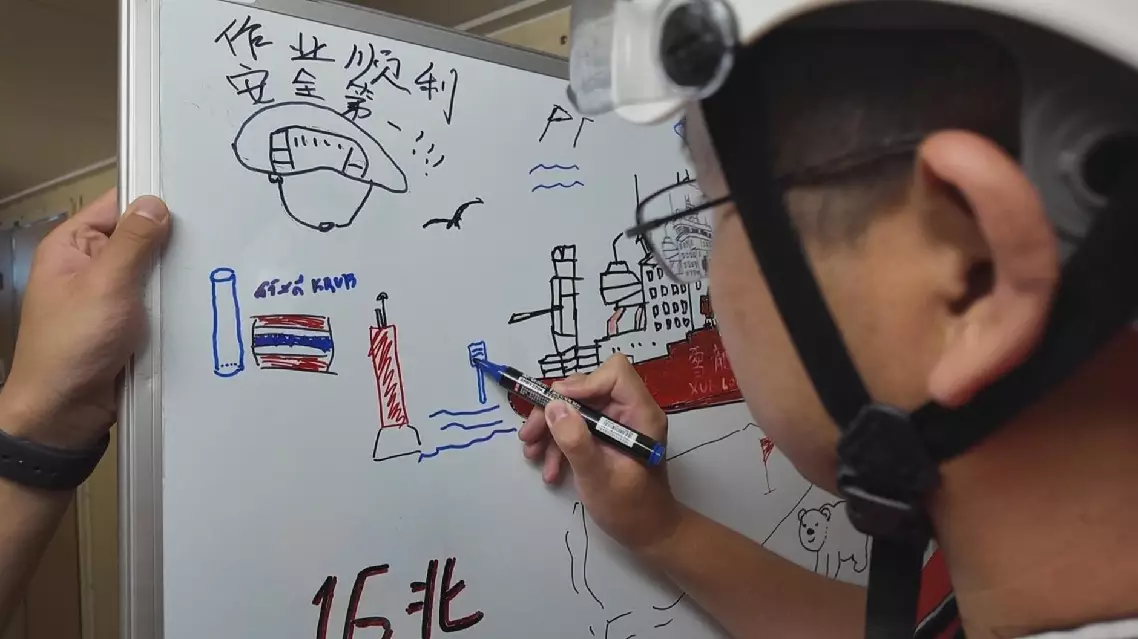
China’s 16th Arctic expedition crews paint portrait of proud polar expedition moments, hardships