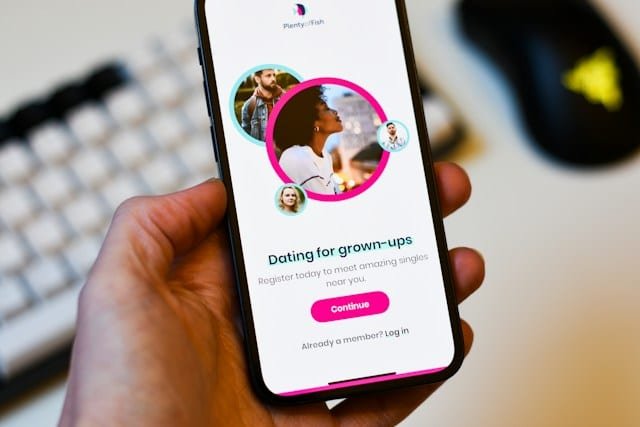

A man opens a swipe app on a Sunday evening, likes 100 profiles over half an hour, and by Friday has 2 matches, one of which never replies. A woman in the same city likes 15 profiles that evening and matches with 6 of them before she puts her phone down. Both outcomes are close to the medians in a recent analysis of uploaded swipe data, and they describe a market in which one side has more options than it can use and the other has very few.
Uneven Gender Ratios
Men outnumber women on most mainstream apps. Market research cited by Statista estimated that about 62% of users of the most popular dating apps in 2024 were men. In the United States and India the share was closer to 70%, and in Europe it reached 85%. At those ratios each woman sees far more potential matches than each man, and each man competes with more rivals for the same likes. Of the swipe histories uploaded to the analysis service SwipeStats, 67% came from men, although the service notes that women are less likely to share their data.
Match Rates by Gender
SwipeStats, which analyzes swipe histories that users upload, examined more than 7,000 profiles and 294 million swipes from one large swipe app. The median man matched with 2.04% of the profiles he liked, while the median woman matched with 41.27%. The average man in the sample sent nearly 7 times as many likes as the average woman, about 15,600 against 2,300, while women received more than twice as many messages.
Earlier research reached a similar result. A 2016 study by Gareth Tyson and colleagues at Queen Mary University of London created test profiles in London and recorded how real users responded. Men in the study had a match rate of about 0.6%, and women about 10%. The authors described a feedback loop in which men grew less selective to get any matches at all, and women grew more selective because almost anyone they liked would like them back.
Smaller Active Pools
Fewer people are opening the apps each month. The largest dating company told investors in 2026 that the share of its users who pay was rising because the number of monthly active users was falling faster than the number of payers. A shrinking pool hurts the side of the market that already has the lowest match rates. Every active woman’s departure removes a profile that several men were competing for, while a departing man has less effect on the women who remain, since they already see more profiles than they can review.
Platforms Matched to Intent
Low odds on the largest apps push some men to look elsewhere. They may try smaller services built around a narrower purpose, such as sugar daddy websites, sites for single parents or sites for military members. Each has a far smaller membership than a mainstream app, and the gain in shared intent comes with fewer profiles nearby.
AI-Written Profiles and Messages
In Norton’s 2025 survey of online daters in the United States, 60% of current users said they believed they had held a conversation with someone whose messages were written by AI. Interest in using it was also high, with 64% saying they would consider using AI to write pick-up lines and 63% saying they would use it to build a profile. Norton also reported that 40% of people currently on a dating app had been targeted by a scam. Use is already common among younger daters. One survey reported by Yahoo found that 82% of Gen Zers and 87% of millennials were using AI in their dating lives.
A user who suspects that a match’s messages came from software has a reason to wait before agreeing to meet. Each extra round of messages adds days between a match and a date, and some conversations stall before they reach that point.
Scams and Fake Profiles
The Federal Trade Commission received about 64,000 reports of romance scams in 2023, with reported losses of $1.14 billion and a median loss of about $2,000 per person, the highest of any imposter scam it tracked. Newsweek reported about 42,400 reports of online romance scams in the first nine months of 2024, and the agency’s data for the same months of 2025 showed about 55,600 complaints with losses above $1.16 billion. Likes spent on fake profiles never reach a person who might have replied.
Unwanted Contact
In a 2022 Pew Research Center survey, 56% of women under 50 who had used dating sites or apps said they had received a sexually explicit message or image they did not ask for, and 43% said someone had kept contacting them after they said they were not interested. Another 37% had been called an offensive name, and about 11% said they had received threats of physical harm. Unwanted contact also drives some people off a platform. In an Australian survey of 3,000 adults, women who faced online harassment and abuse were more likely than men to be upset by it, at 56% against 36%, and more likely to leave a site or switch off their device as a result. Departures after that kind of contact make an app’s gender ratio more lopsided.
Profile Quality and Photos
The 2016 London study also tested what improves results. Adding more photos to a profile raised the number of matches, and the effect was strongest for men, who start from the lowest match rates. First impressions of traits such as trustworthiness, dominance and attractiveness can form from a glimpse of 100 milliseconds or less, and researchers at the University of York found that a smiling expression was the strongest cue for a face looking approachable. Large eyes signaled youth, and dominance was linked partly to a more masculine face shape. The study’s co-author, Tom Hartley, noted that first impressions increasingly come from the images people post on their online profiles.
Pressure on the Apps in 2027
Men outnumber women by more than 2 to 1 on American apps, and most current users suspect that at least some of their conversations were written by software. Both trends lower the odds of a match for the people who stay. If the apps cannot change the ratio of men to women, what can they offer either group that makes another year of swiping worth the time?